- Category
- Inversions
- Level
- beginner
- Hold
- 5–10 breaths, or 30 seconds to 1 minute
- Type
- Asana
- Breath
- Breathe slowly and evenly; let each exhale send the hips a little higher and back.
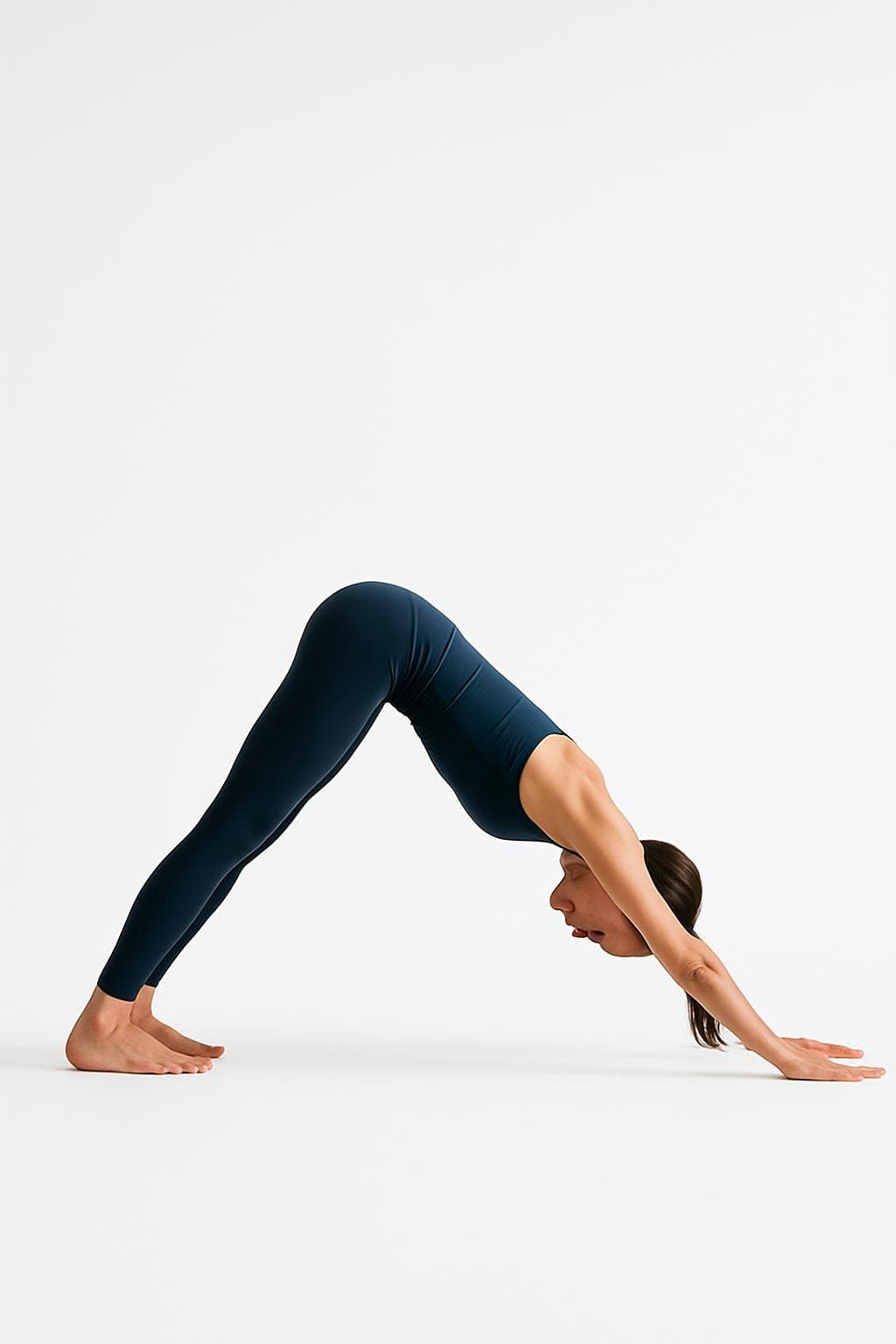
Downward-Facing Dog
Adho Mukha Svanasana — "downward-facing dog posture"
Also known as: Down Dog
The most practiced pose in modern yoga: an upside-down V that stretches the whole back body while building shoulder and arm strength. Simple to attempt, surprisingly hard to do well.
Step by step
- 1Start on your hands and knees, wrists under your shoulders and knees under your hips.
- 2Spread your fingers wide and press evenly through your palms and knuckles.
- 3Tuck your toes, lift your knees off the floor, and send your hips up and back.
- 4Keep your knees bent at first and focus on lengthening your spine from wrists to tailbone.
- 5Slowly straighten your legs only as much as your hamstrings allow — heels do not need to touch the floor.
- 6Let your head hang between your upper arms, ears in line with your biceps.
- 7Breathe steadily and press the floor away with your hands.
Benefits
- ✓ Stretches the hamstrings, calves, and shoulders in one shape
- ✓ Strengthens the arms, wrists, and upper back
- ✓ Lengthens the spine after sitting or standing all day
- ✓ Acts as a gentle, accessible inversion with the head below the heart
- ✓ Serves as a resting and transition pose in flowing sequences
Make it yours
- · Keep a generous bend in your knees — a long spine matters more than straight legs.
- · Place your hands on a chair seat or blocks to reduce the load on wrists and hamstrings.
- · Pedal your feet or lift your heels high to soften tight calves.
Take care
- Approach with care if you have wrist pain, carpal tunnel symptoms, or a shoulder injury.
- If you have high blood pressure, glaucoma, or other eye conditions, keep the hold short and check with a professional you trust before holding your head below your heart.
- In late pregnancy, many people prefer a shorter hold or a hands-on-chair variation.
This is general practice guidance, not medical advice. If something hurts, ease out of it.
Props that help here
- Yoga blanket — Folded under the hips in seated poses, under the knees in kneeling ones, under the shoulders for shoulderstand. A firm household blanket works too. find one
- Wrist wedge — Reduces the wrist angle in plank, chaturanga, and arm balances. Worth trying before concluding your wrists can't do this. find one
Affiliate links — we may earn a commission at no cost to you. All gear recommendations