Every yoga pose, honestly explained
148 poses with plain-English steps, Sanskrit names, modifications, and the styles each pose belongs to. Filter by category or level, or search by name.
148 of 148 poses
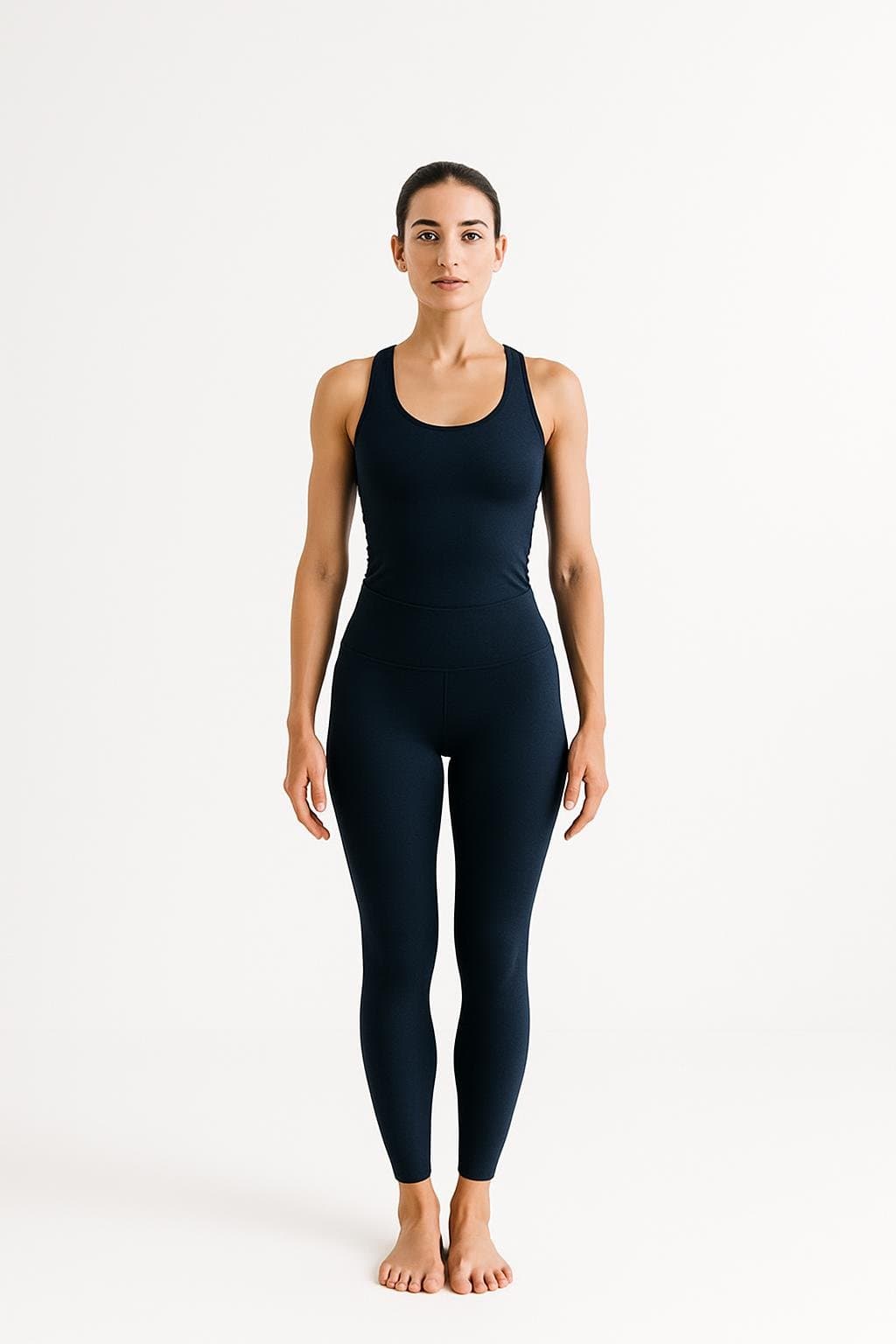 Mountain Posebeginner
Tadasana
The baseline of every standing pose: stand tall, weight even, whole body quietly at work. Mountain looks like nothing and teaches everything about posture.
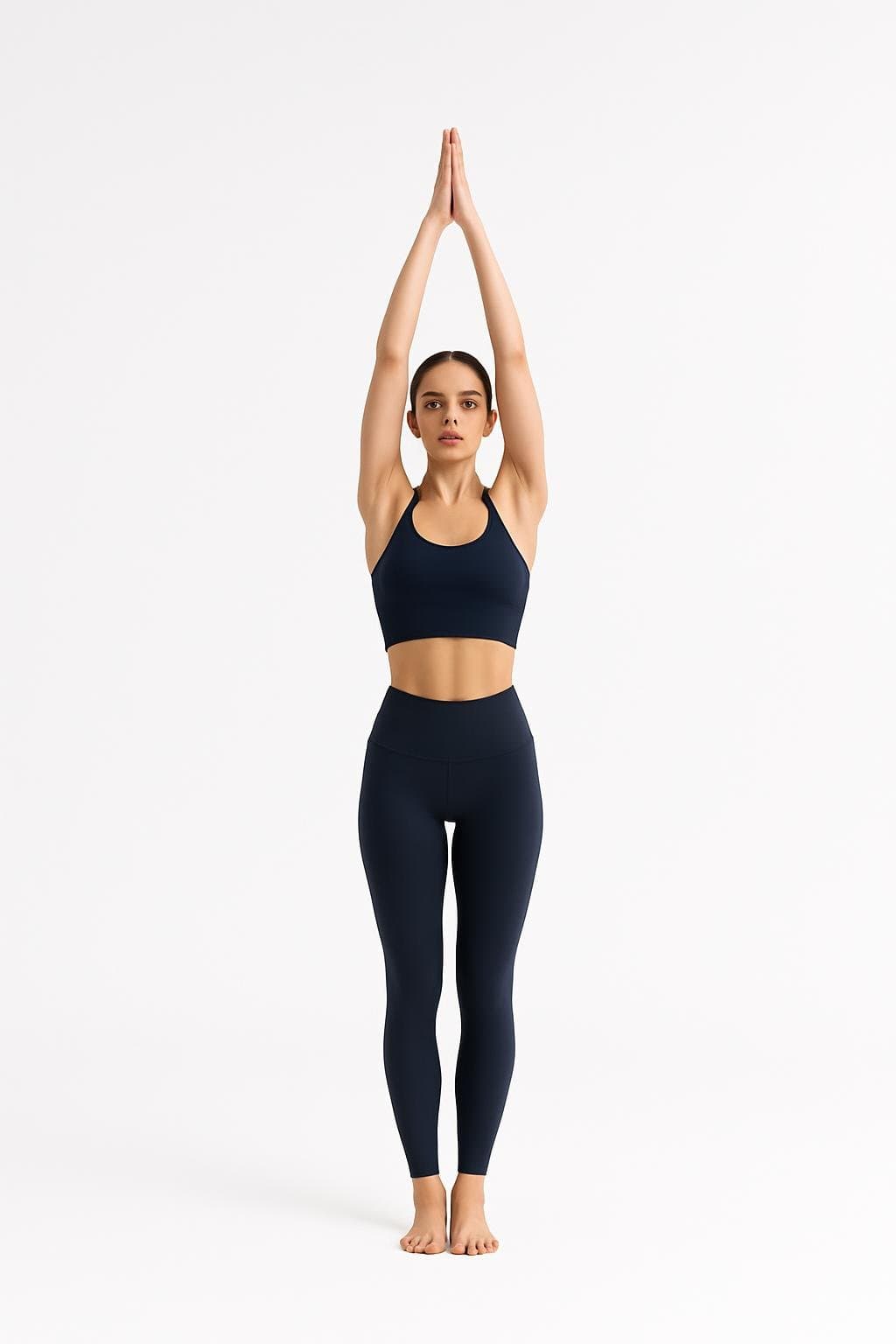 Upward Salutebeginner
Urdhva Hastasana
Mountain Pose with the arms swept overhead — a full-body reach that opens every sun salutation. Simple, but it wakes up the whole side body.
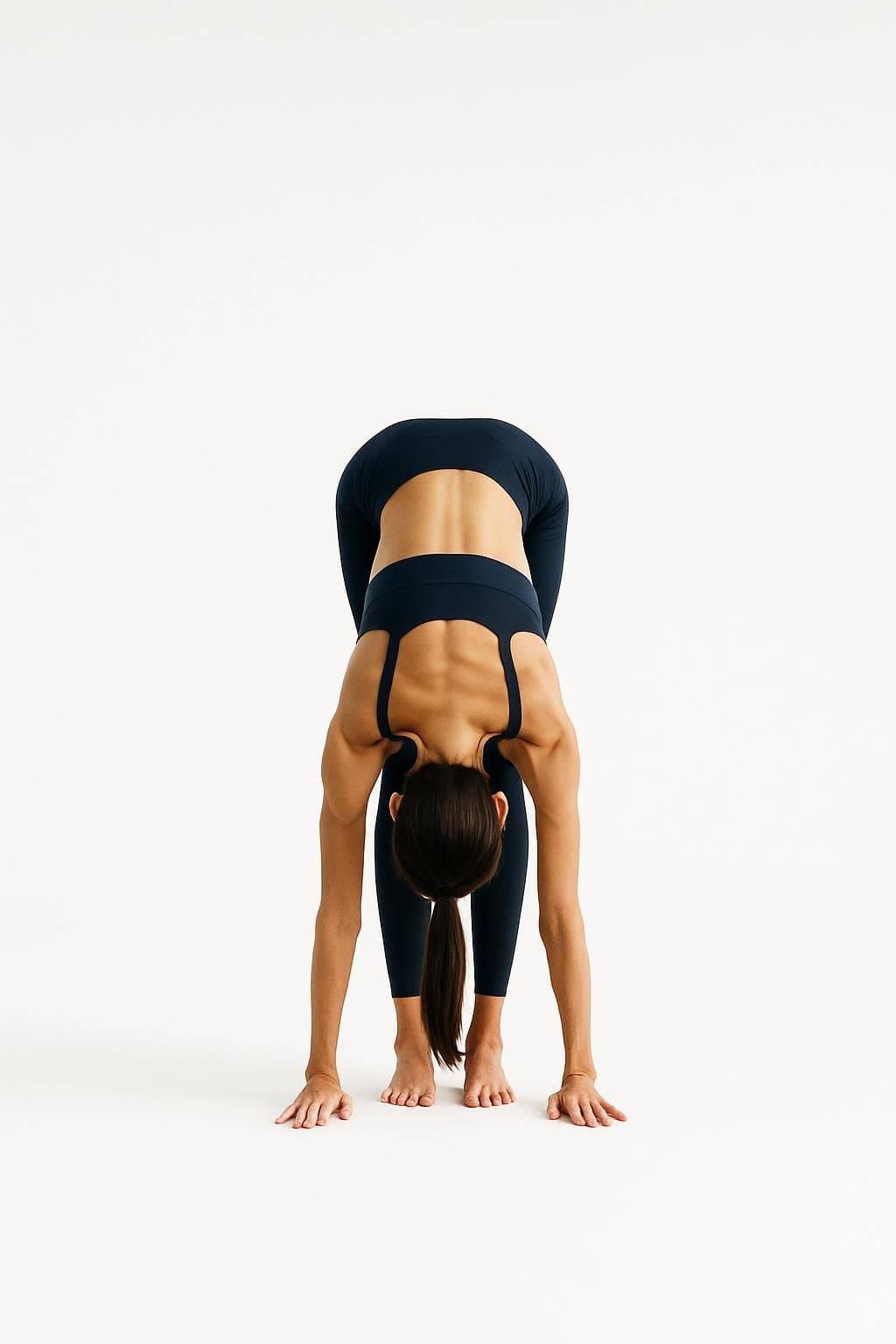 Standing Forward Foldbeginner
Uttanasana
Hinge at the hips and let your upper body hang. This everyday fold stretches the whole back of the body and gives the neck and shoulders a break.
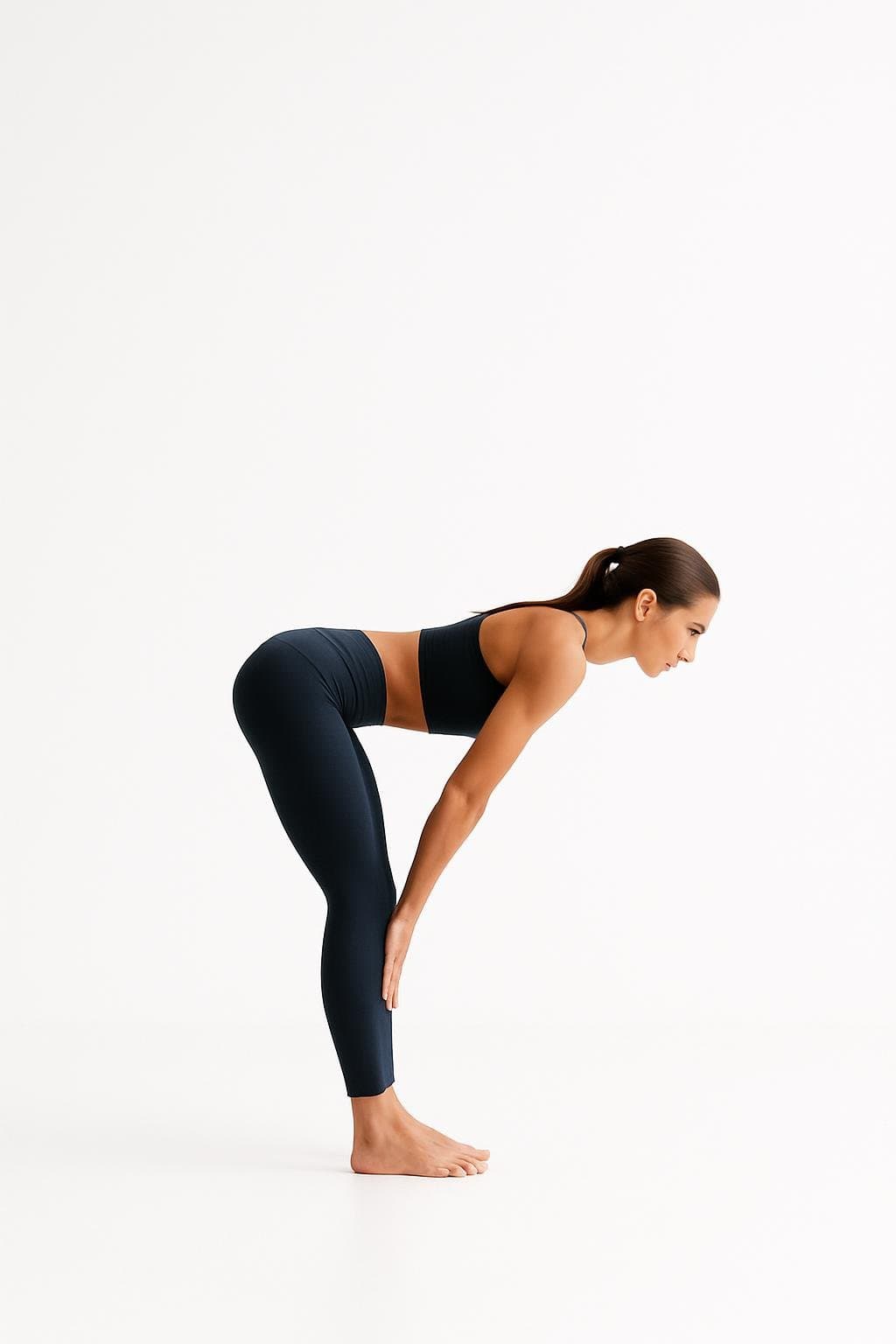 Halfway Liftbeginner
Ardha Uttanasana
The half-lift between forward folds: spine long, chest reaching forward, hands on shins or the floor. It teaches you what a truly flat back feels like.
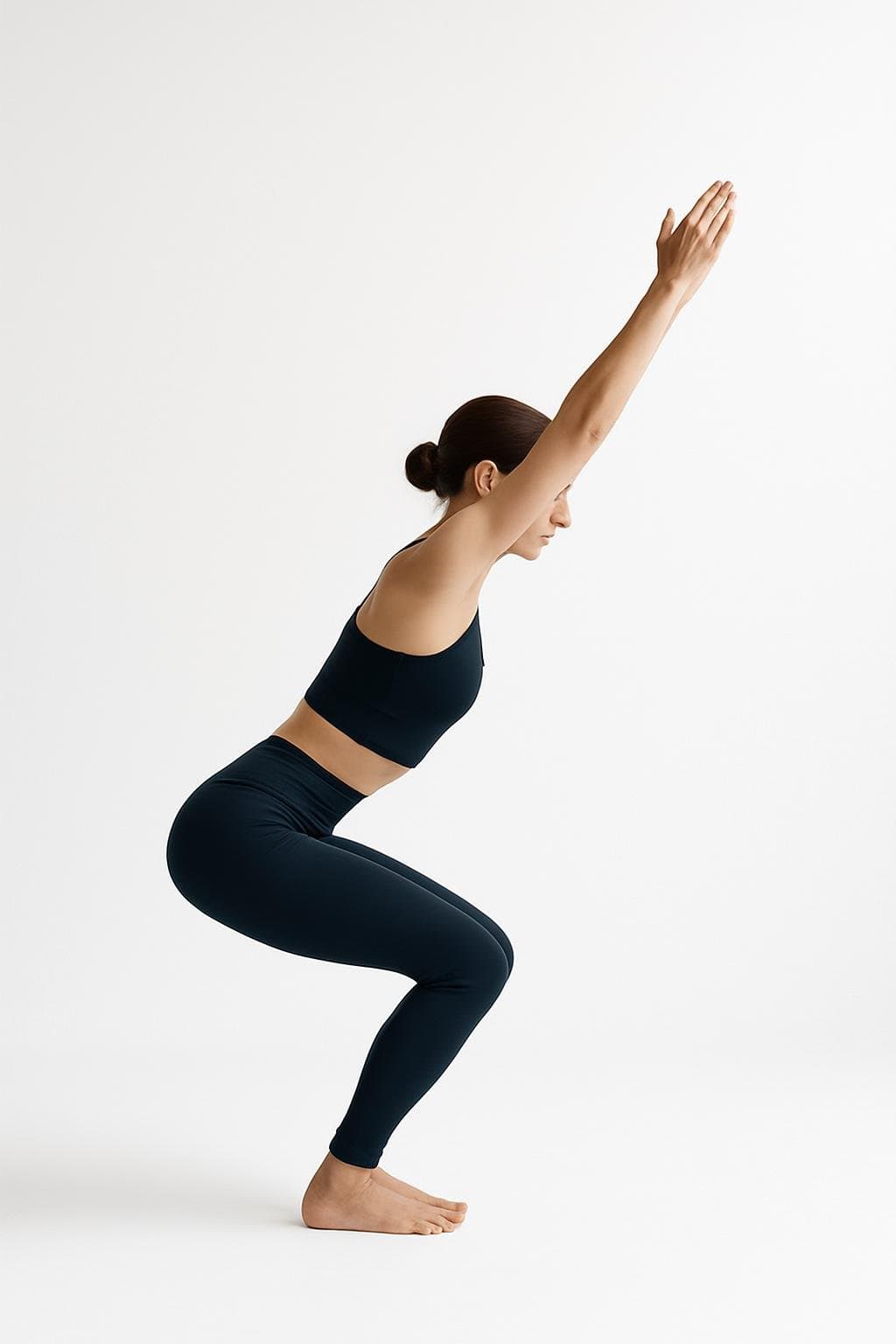 Chair Posebeginner
Utkatasana
Sit back into an invisible chair with your arms reaching overhead. Chair Pose builds heat fast and strengthens the legs, back, and shoulders all at once.
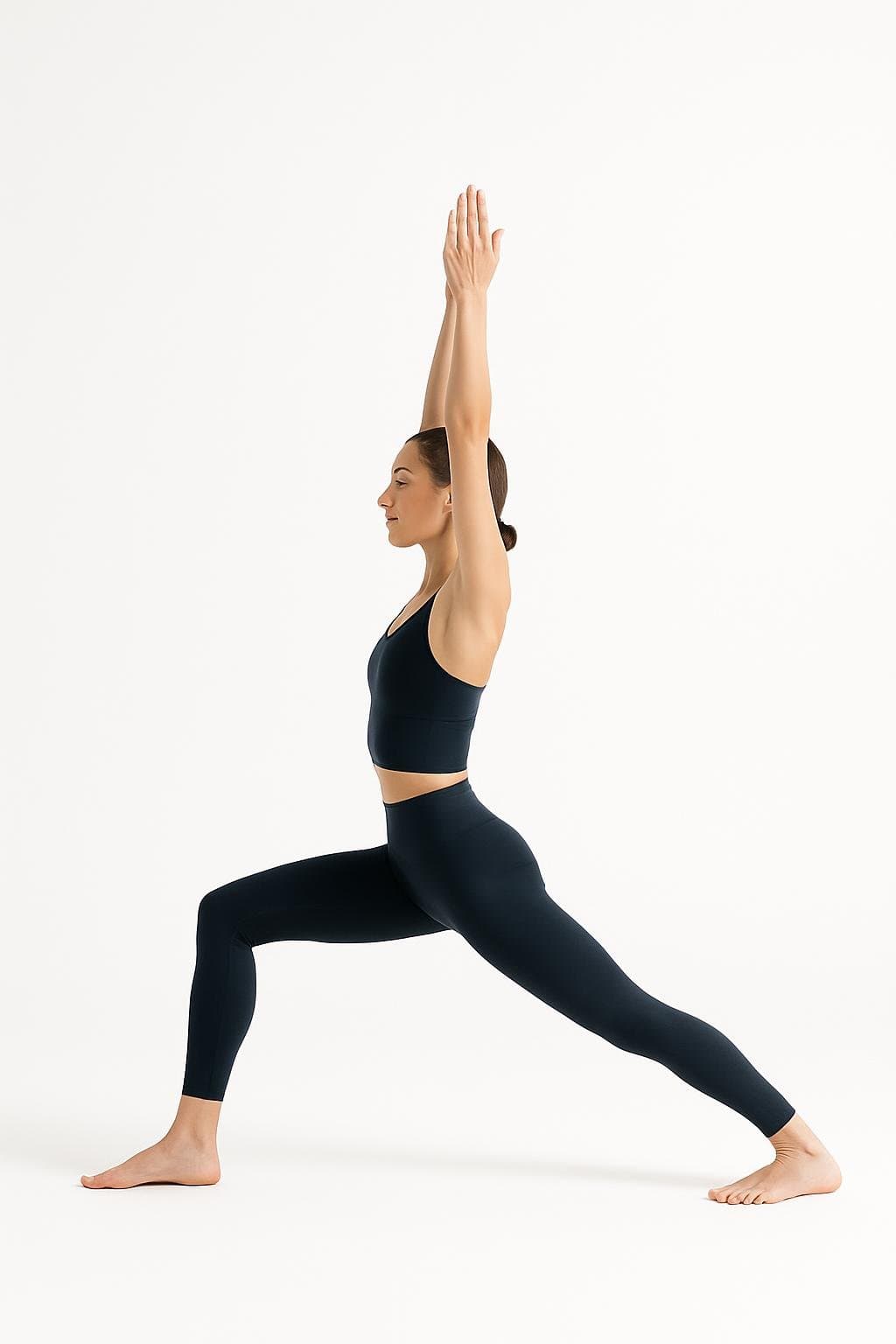 Warrior Ibeginner
Virabhadrasana I
A strong lunge with the hips squared forward and the arms reaching overhead. Warrior I builds leg strength while opening the chest and the front of the back hip.
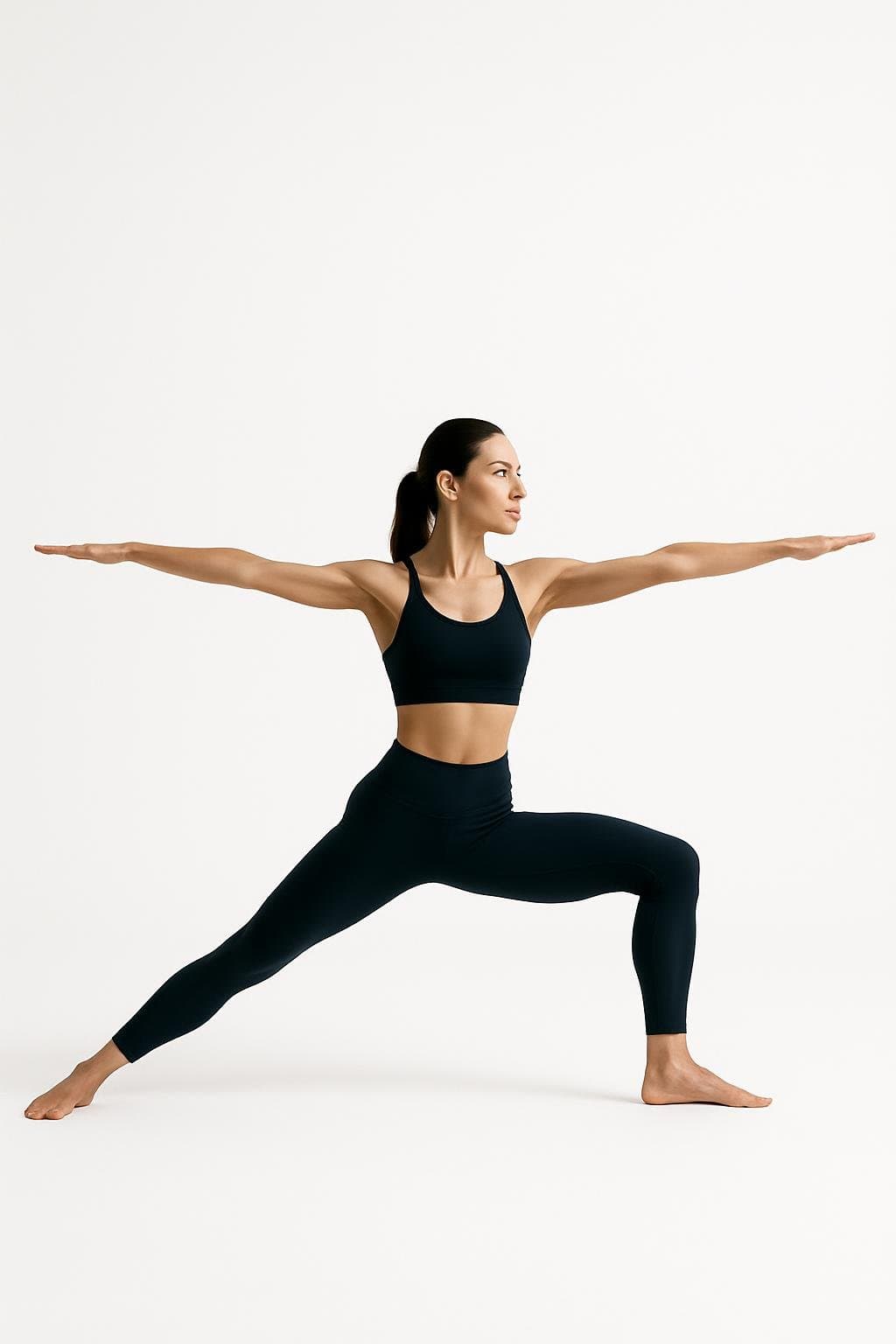 Warrior IIbeginner
Virabhadrasana II
A wide, grounded stance with arms stretched in opposite directions and gaze over the front hand. Warrior II is the home base of most standing sequences.
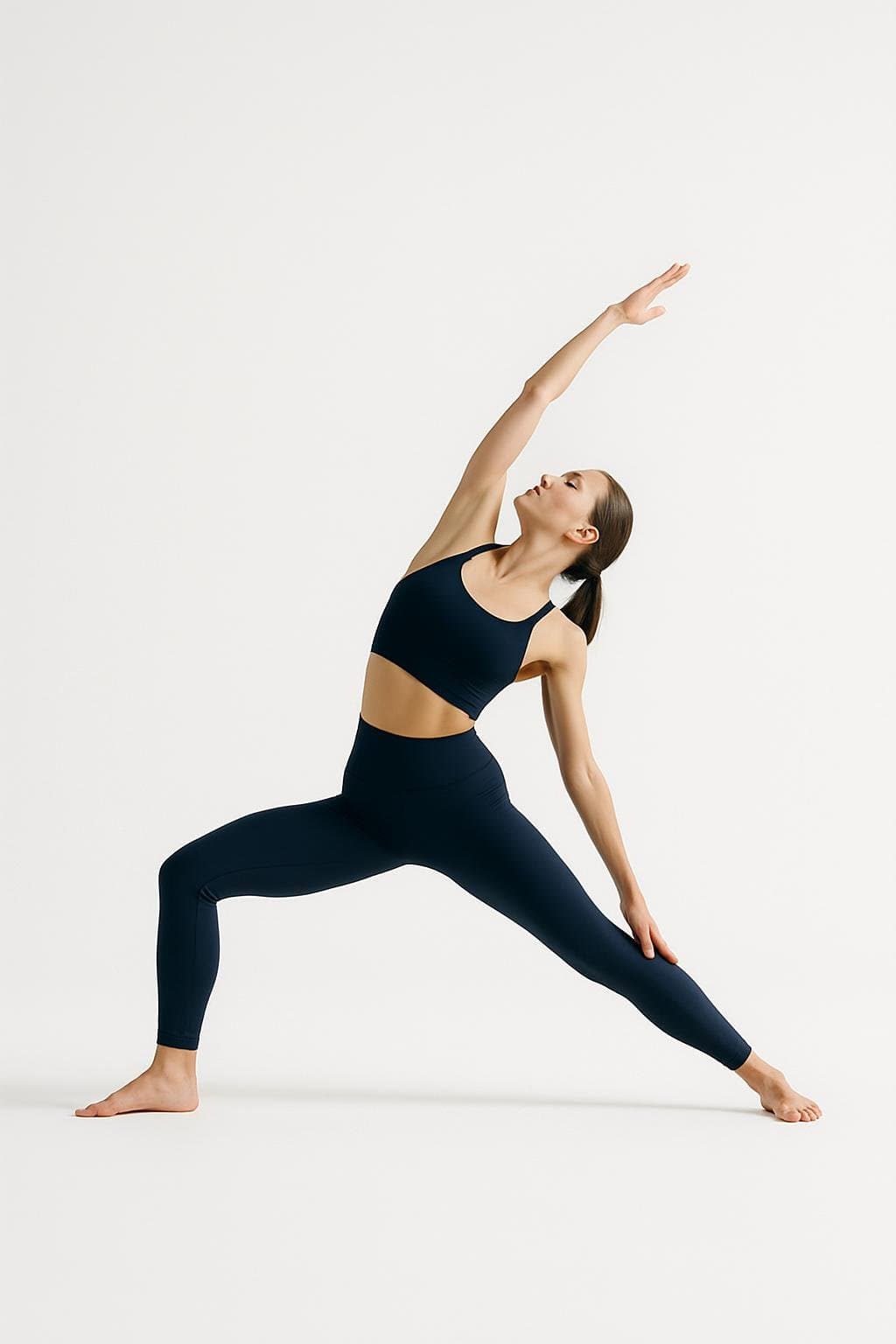 Reverse Warriorbeginner
Viparita Virabhadrasana
From Warrior II, the front arm sweeps up and back into a long side stretch while the legs stay strong. A satisfying opener for the side waist.
- Humble Warriorintermediate
Baddha Virabhadrasana
Warrior I with the hands clasped behind the back and the torso folded inside the front leg. It asks for leg strength, shoulder opening, and balance all at once.
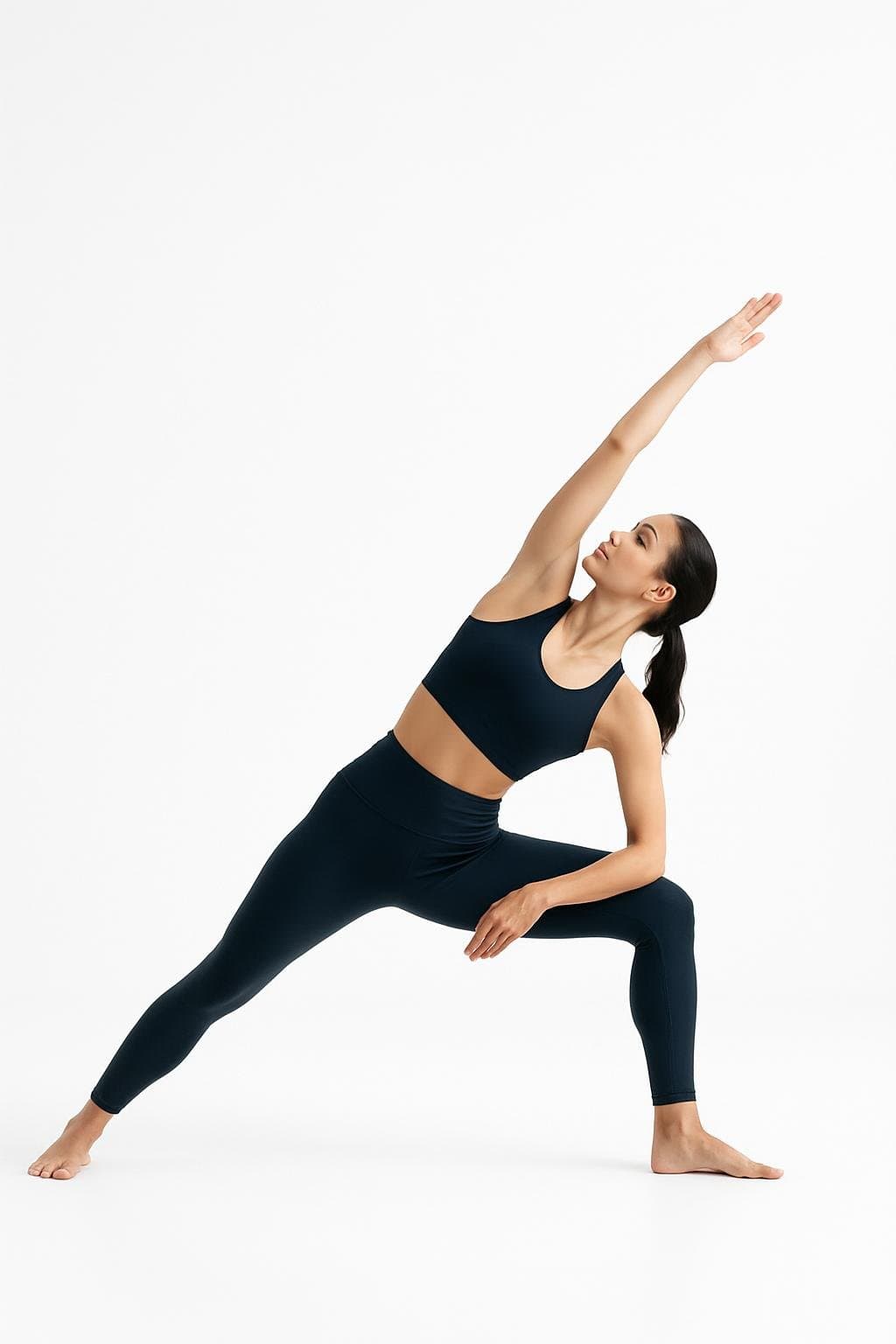 Extended Side Anglebeginner
Utthita Parsvakonasana
One long line from back heel to top fingertips over a bent front leg. Extended Side Angle strengthens the legs while opening the whole side body.
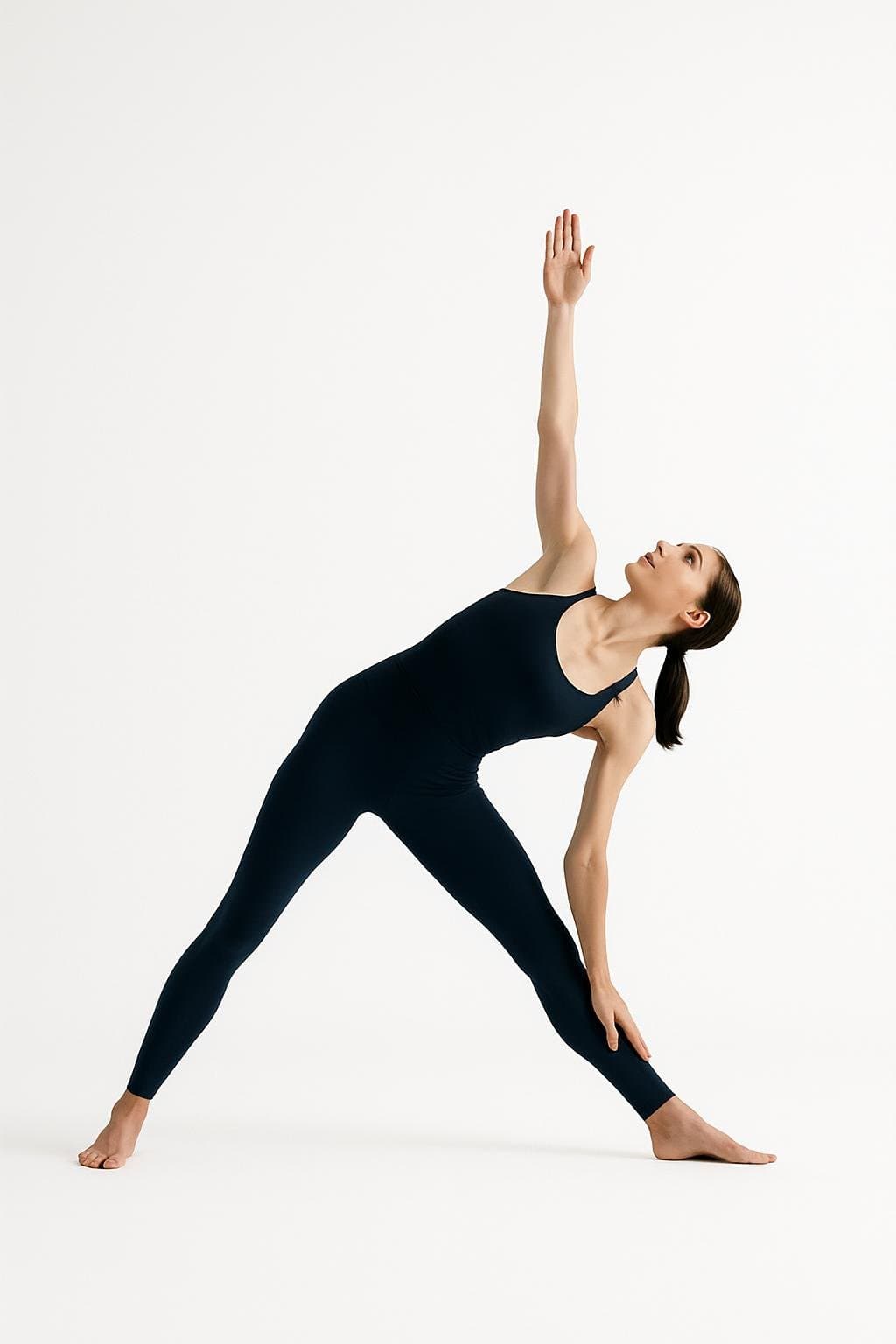 Triangle Posebeginner
Utthita Trikonasana
Straight legs, long spine, arms in one vertical line — Triangle stretches the hamstrings and side body while teaching you to lengthen instead of collapse.
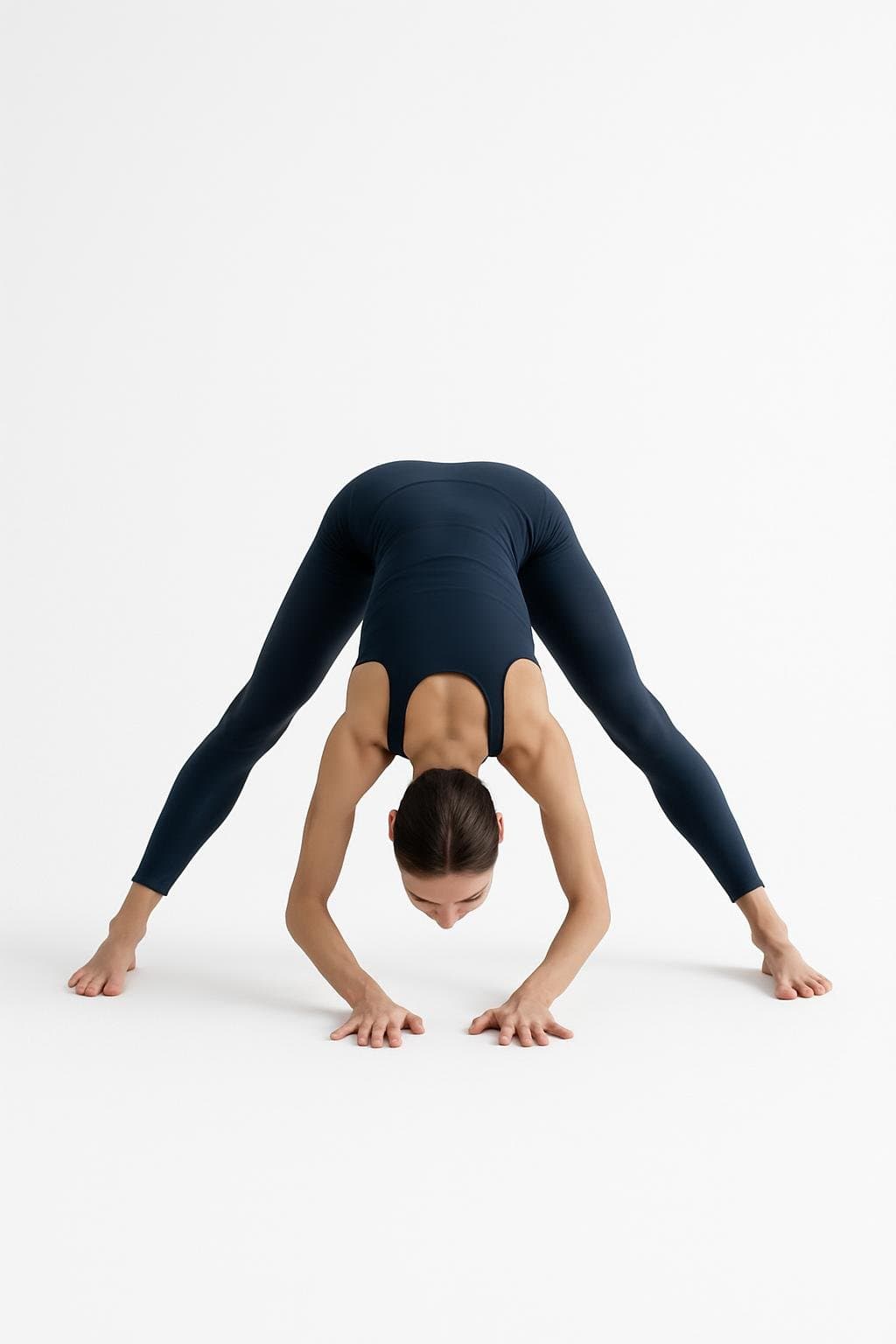 Wide-Legged Forward Foldbeginner
Prasarita Padottanasana
Feet wide, fold down the middle. This straight-legged fold stretches the hamstrings and inner thighs and is gentler on the lower back than a narrow fold.
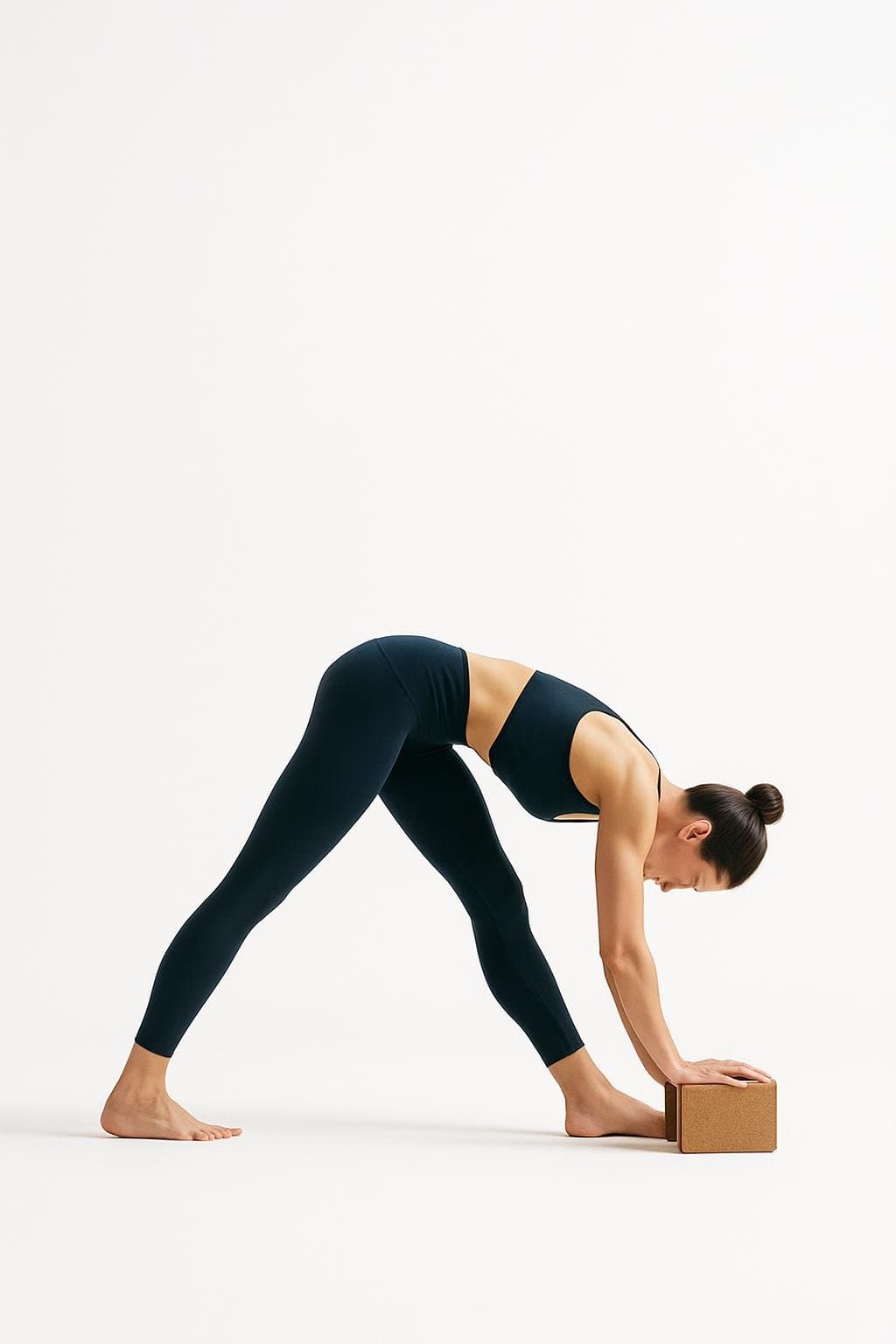 Pyramid Poseintermediate
Parsvottanasana
A straight-legged fold over the front leg with the hips squared. Pyramid gives the hamstrings an honest stretch and quietly tests your balance.
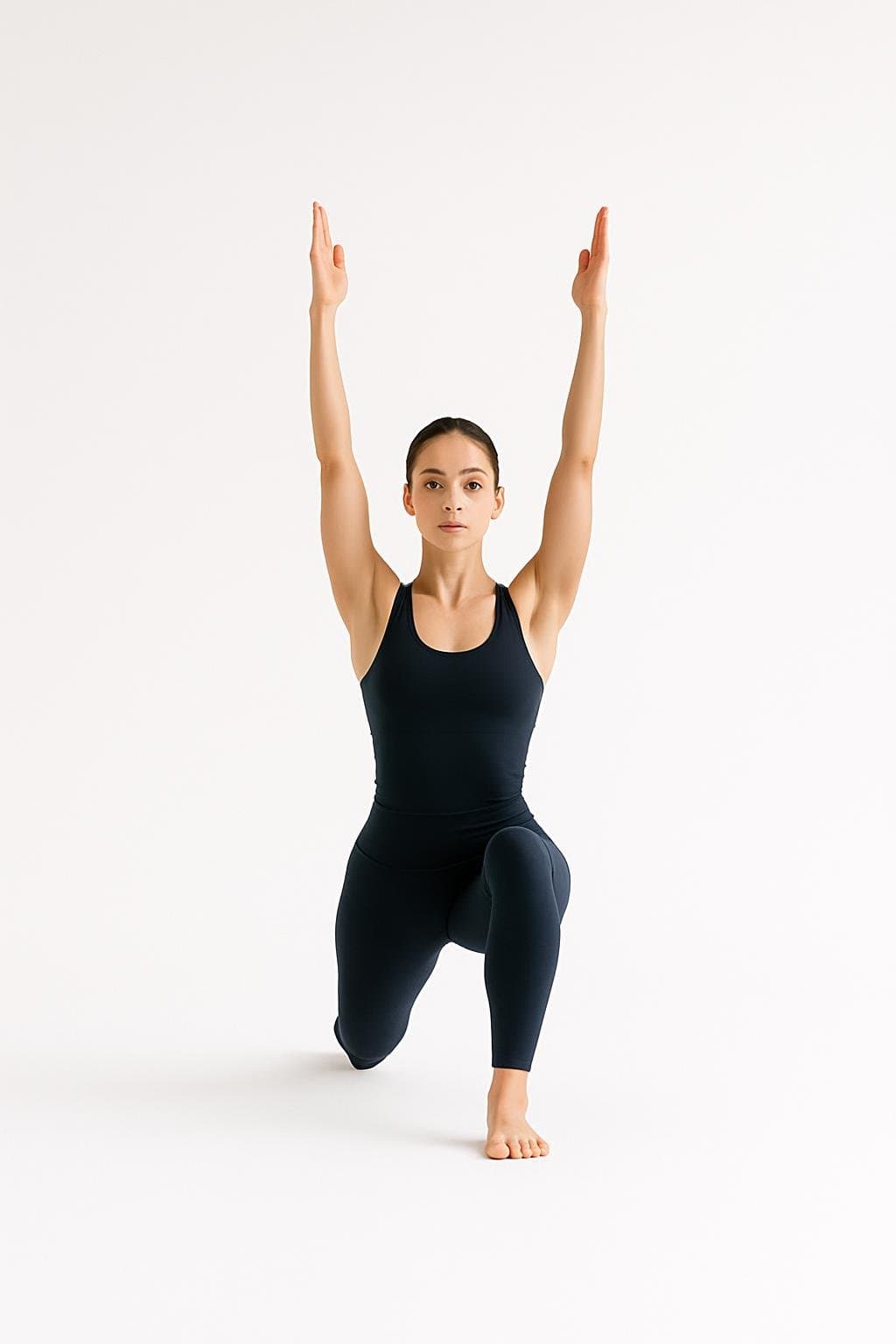 Low Lungebeginner
Anjaneyasana
A kneeling lunge that targets the hip flexors of the back leg — one of the most useful stretches there is for people who sit all day.
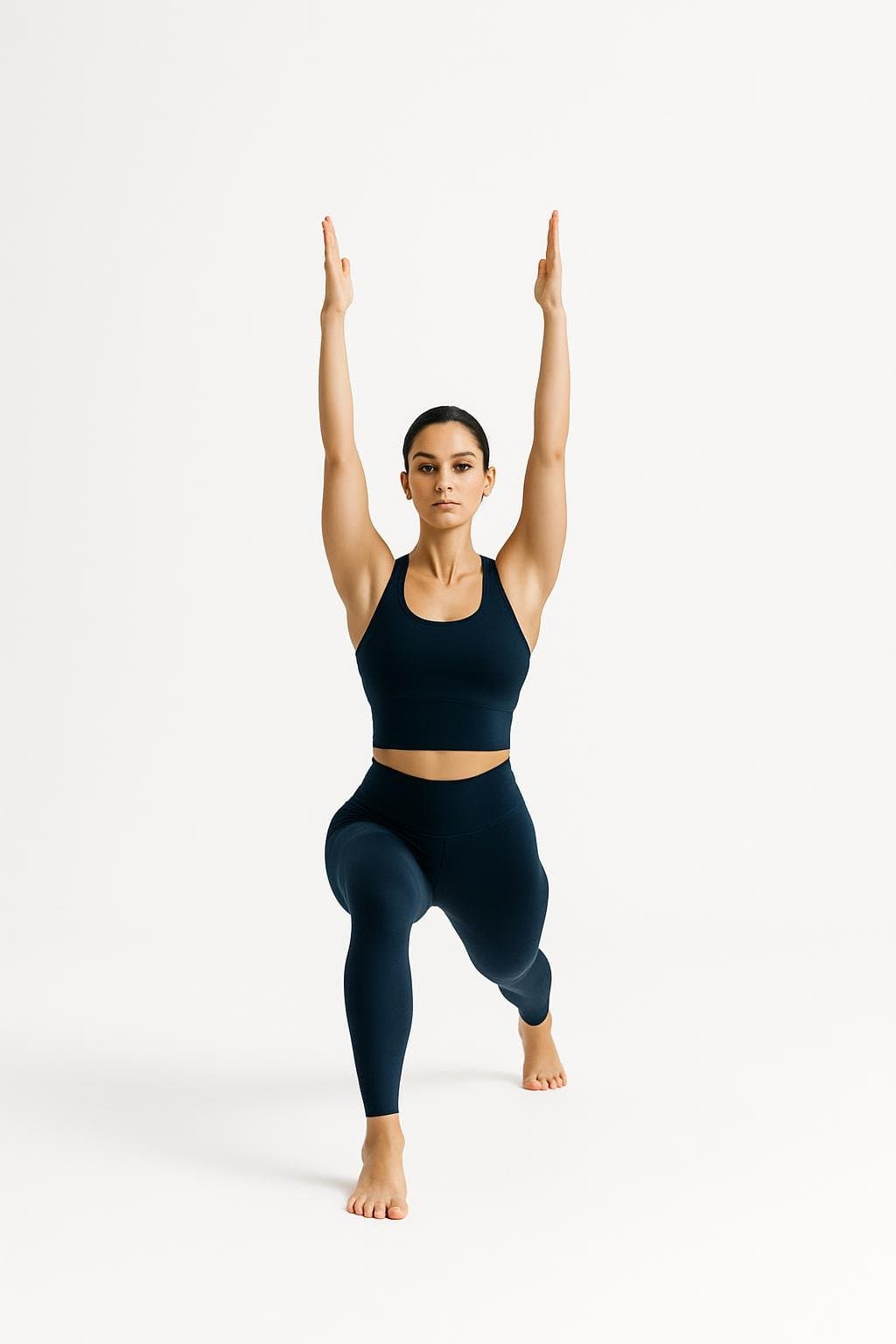 High Lungebeginner
Utthita Ashwa Sanchalanasana
A lunge on the ball of the back foot with arms reaching high. High Lunge builds serious leg strength and balance without asking the hips to square like Warrior I.
- Lizard Poseintermediate
Utthan Pristhasana
A deep lunge with both hands inside the front foot, often lowering to the forearms. Lizard goes straight after the hips and doesn't pretend otherwise.
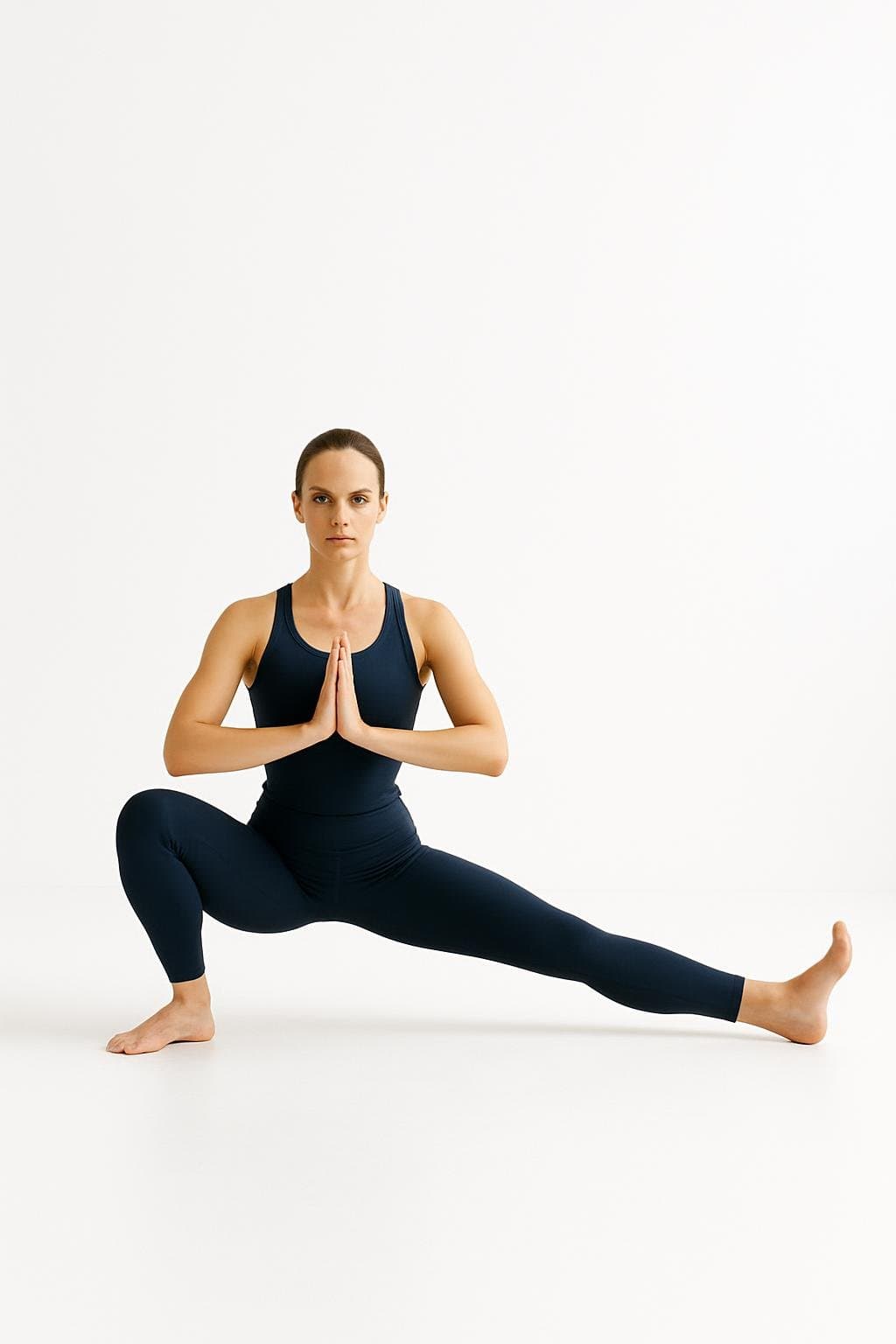 Side Lungeintermediate
Skandasana
A deep squat over one leg while the other stretches straight to the side, toes lifted. Side Lunge opens the inner thighs and challenges ankle mobility.
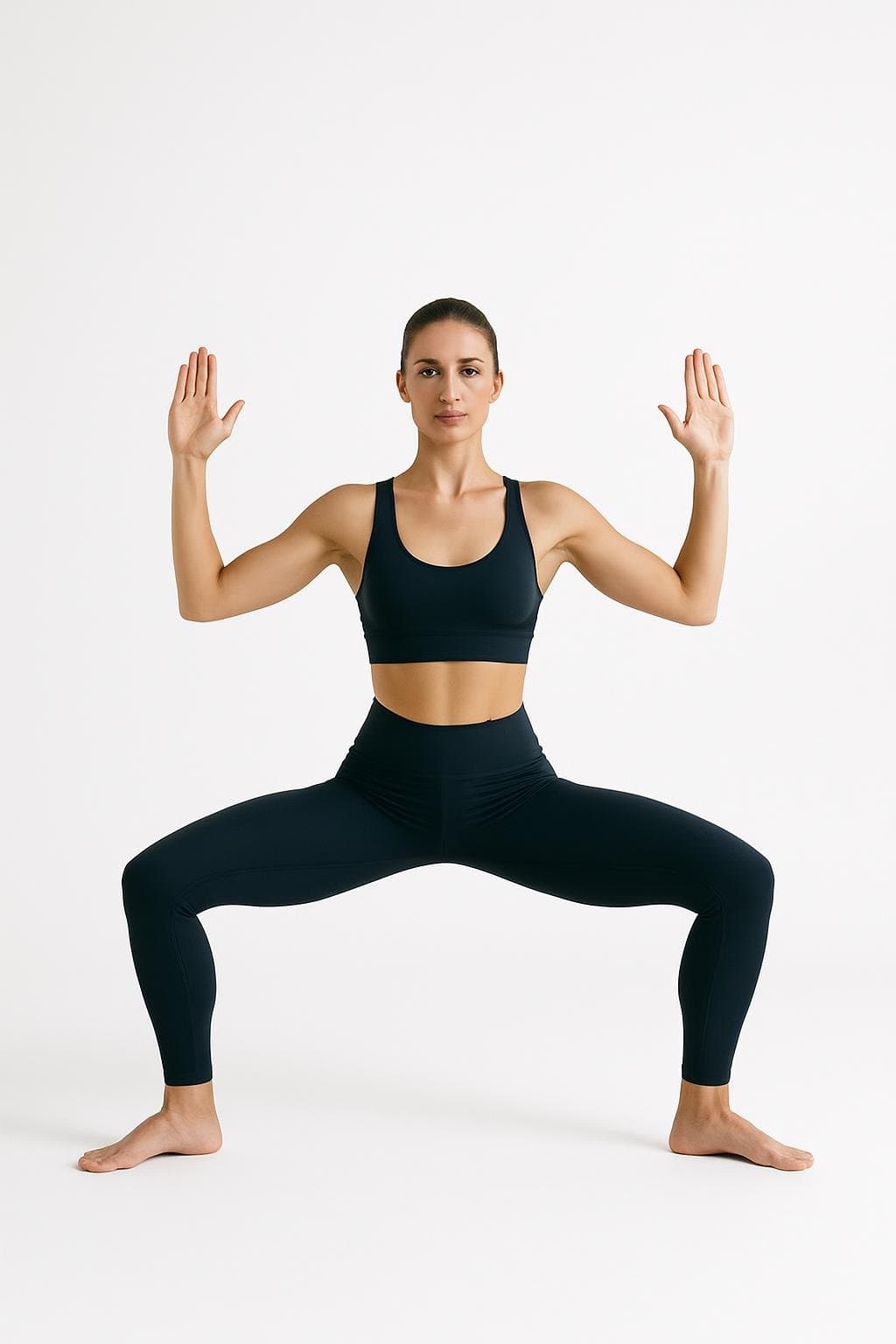 Goddess Posebeginner
Utkata Konasana
A wide squat with the toes turned out and arms in a goalpost shape. Goddess builds heat in the legs and opens the hips without needing much flexibility.
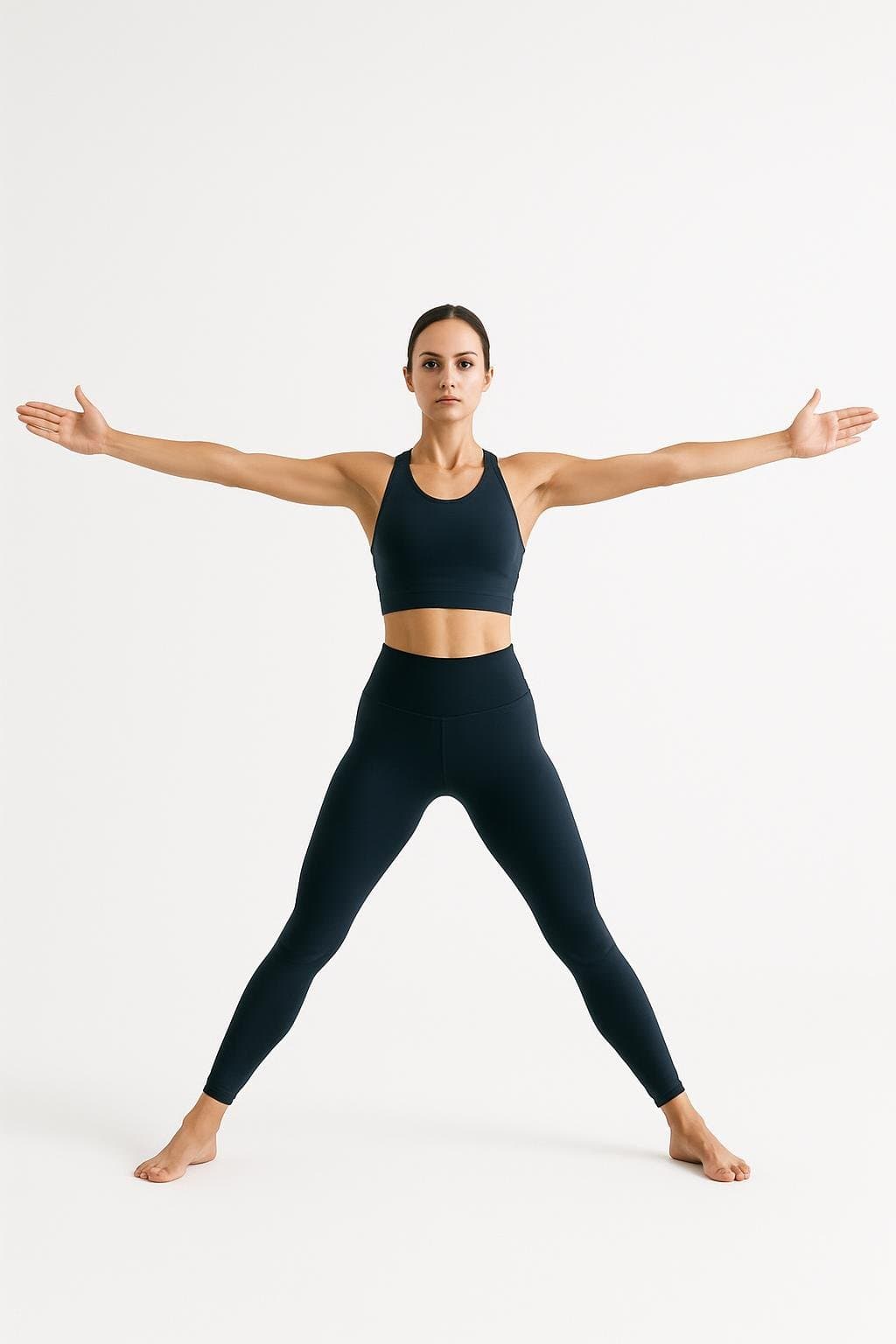 Star Posebeginner
Utthita Tadasana
Feet wide, arms wide, everything reaching outward — a five-pointed star. A simple, expansive pose that resets posture between stronger standing work.
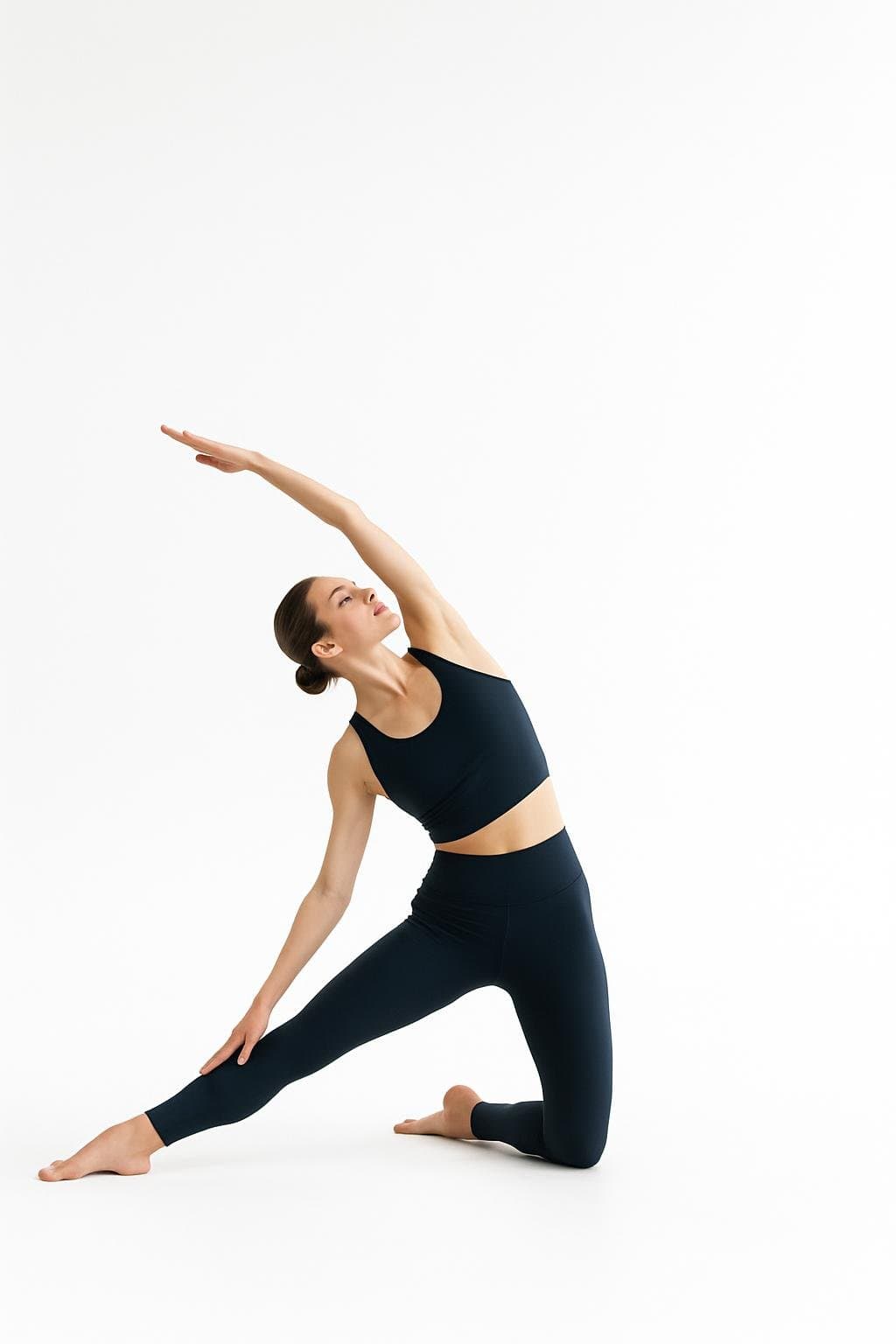 Gate Posebeginner
Parighasana
Kneel on one leg, stretch the other to the side, and arc up and over it. Gate Pose is one of the clearest side-body stretches in yoga.
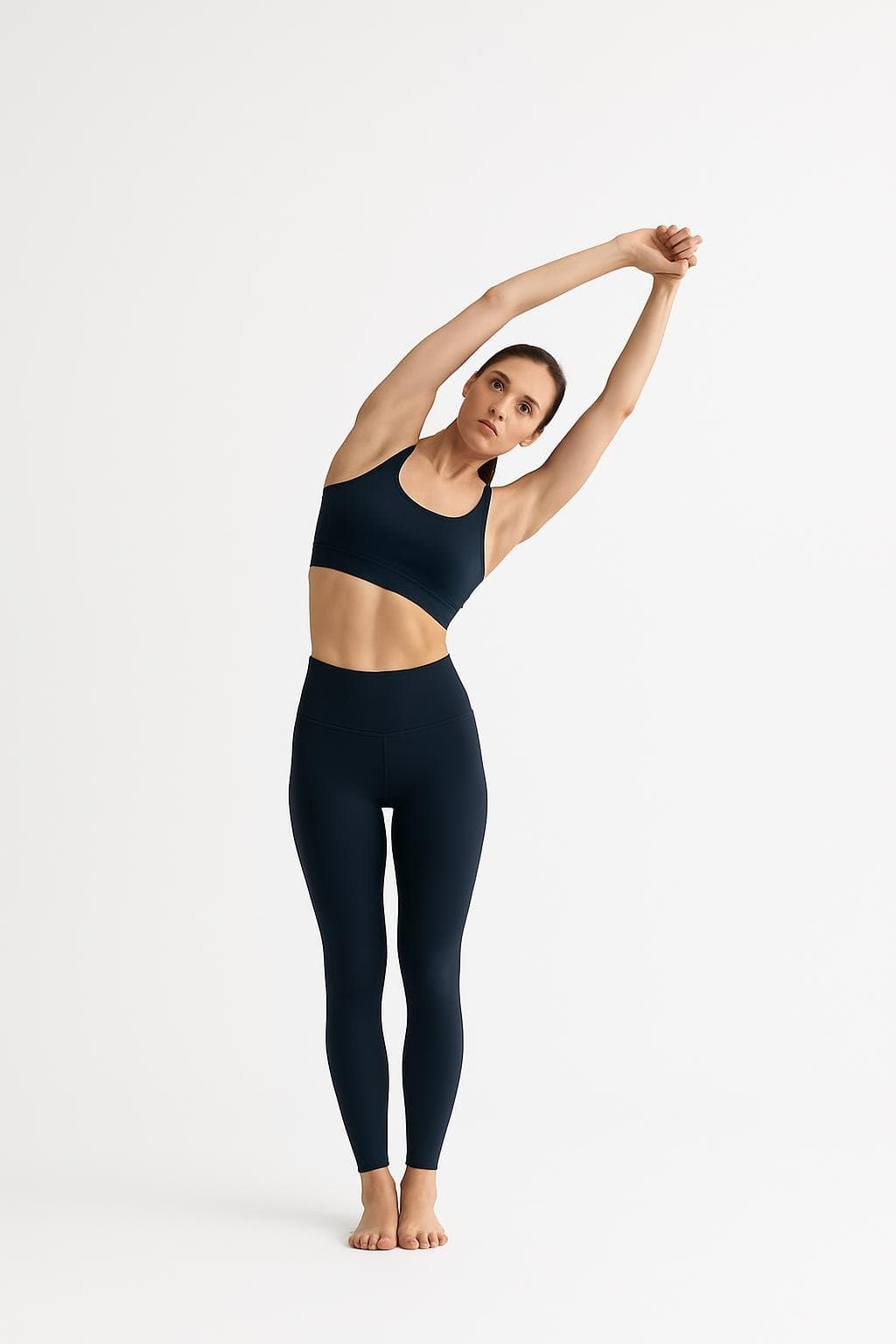 Standing Side Bendbeginner
Indudalasana
Reach both arms overhead and lean to one side in a long crescent. A quick, honest stretch for the side waist that fits anywhere in a practice — or a workday.
- Big Toe Poseintermediate
Padangusthasana
A standing forward fold holding your big toes, using the arms to gently deepen the stretch. A staple of the Ashtanga standing sequence.
- Hand-Under-Foot Poseintermediate
Pada Hastasana
Fold forward and slide your palms under your feet, toes touching your wrists. The body weight on the hands gives the wrists a rare, welcome stretch.
- Standing Separate-Leg Stretchintermediate
Dandayamana Bibhaktapada Paschimottanasana
The Bikram-style wide-legged fold: grip your heels from the outside and draw the crown of your head toward the floor between your feet.
- Standing Separate-Leg Head-to-Kneeintermediate
Dandayamana Bibhaktapada Janushirasana
From a short wide stance, hands in prayer overhead, you round forward to touch forehead to front knee. A Bikram staple that compresses the front body and stretches the back.
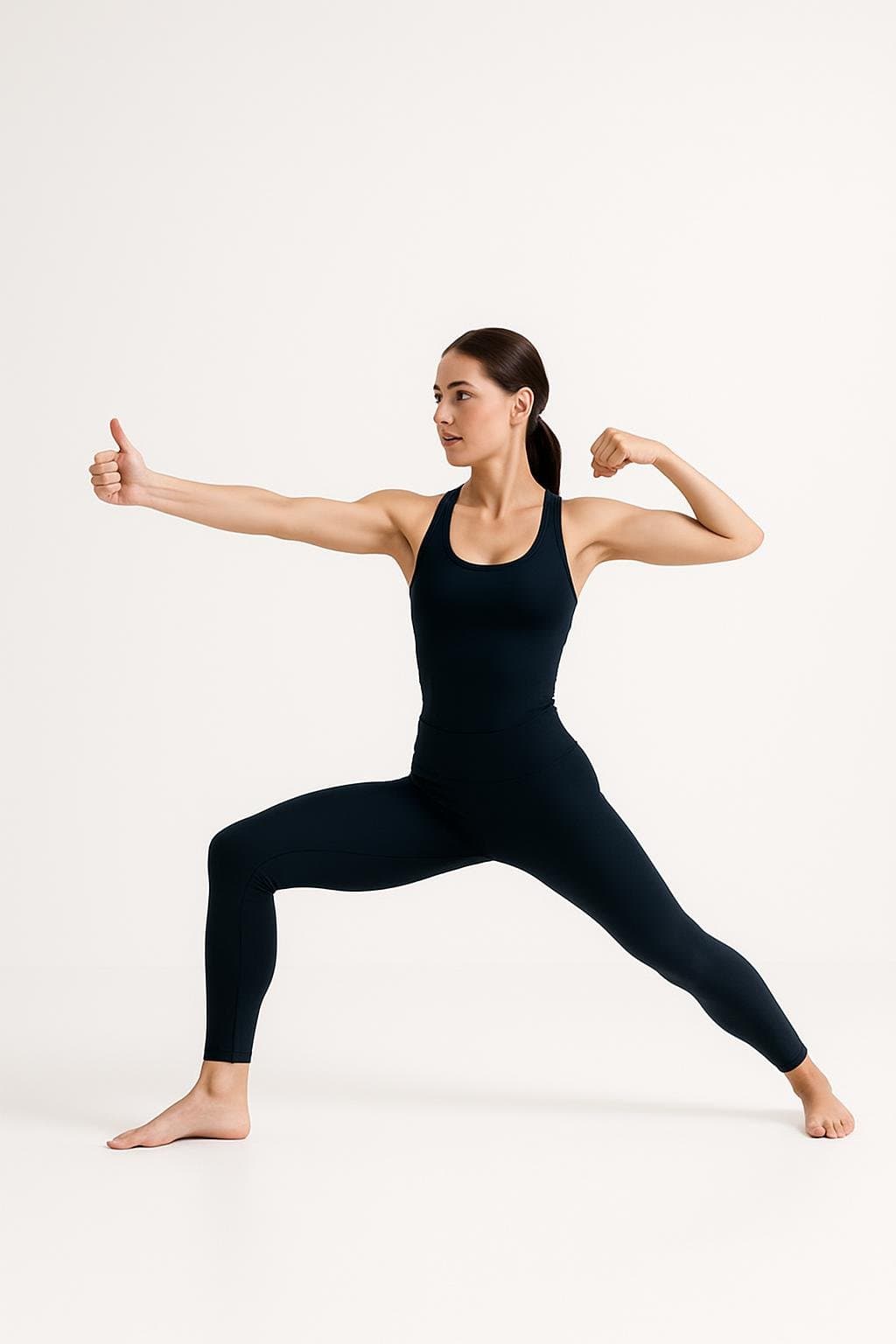 Archer Posebeginner
Akarna Dhanurasana (standing variation)
A standing lunge where one arm reaches forward and the other draws back like pulling a bowstring. Steady legs, open chest, unwavering gaze.
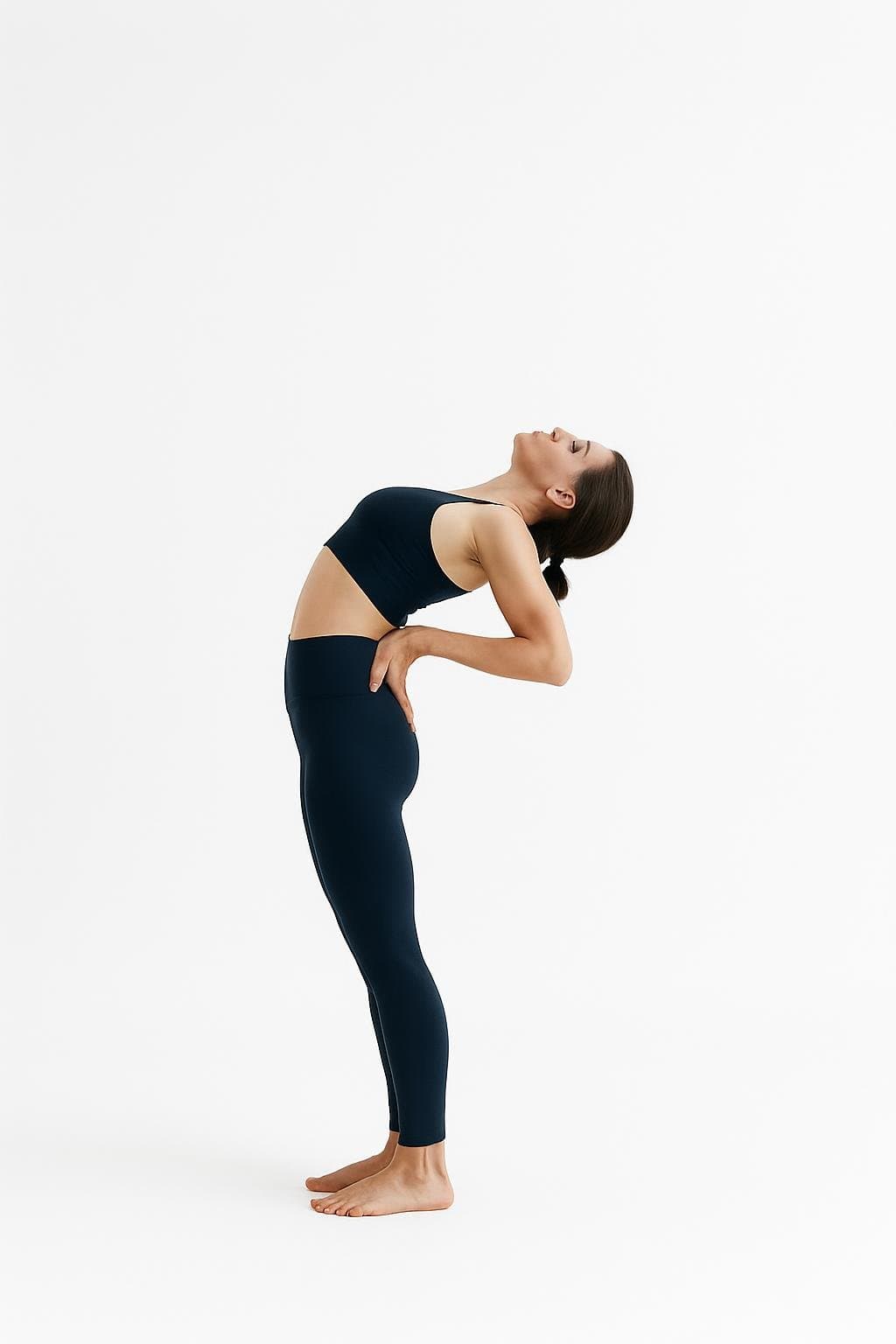 Standing Backbendbeginner
Anuvittasana
A gentle standing arch: hands support the lower back or reach overhead as the chest lifts and opens. The everyday antidote to hunching forward.
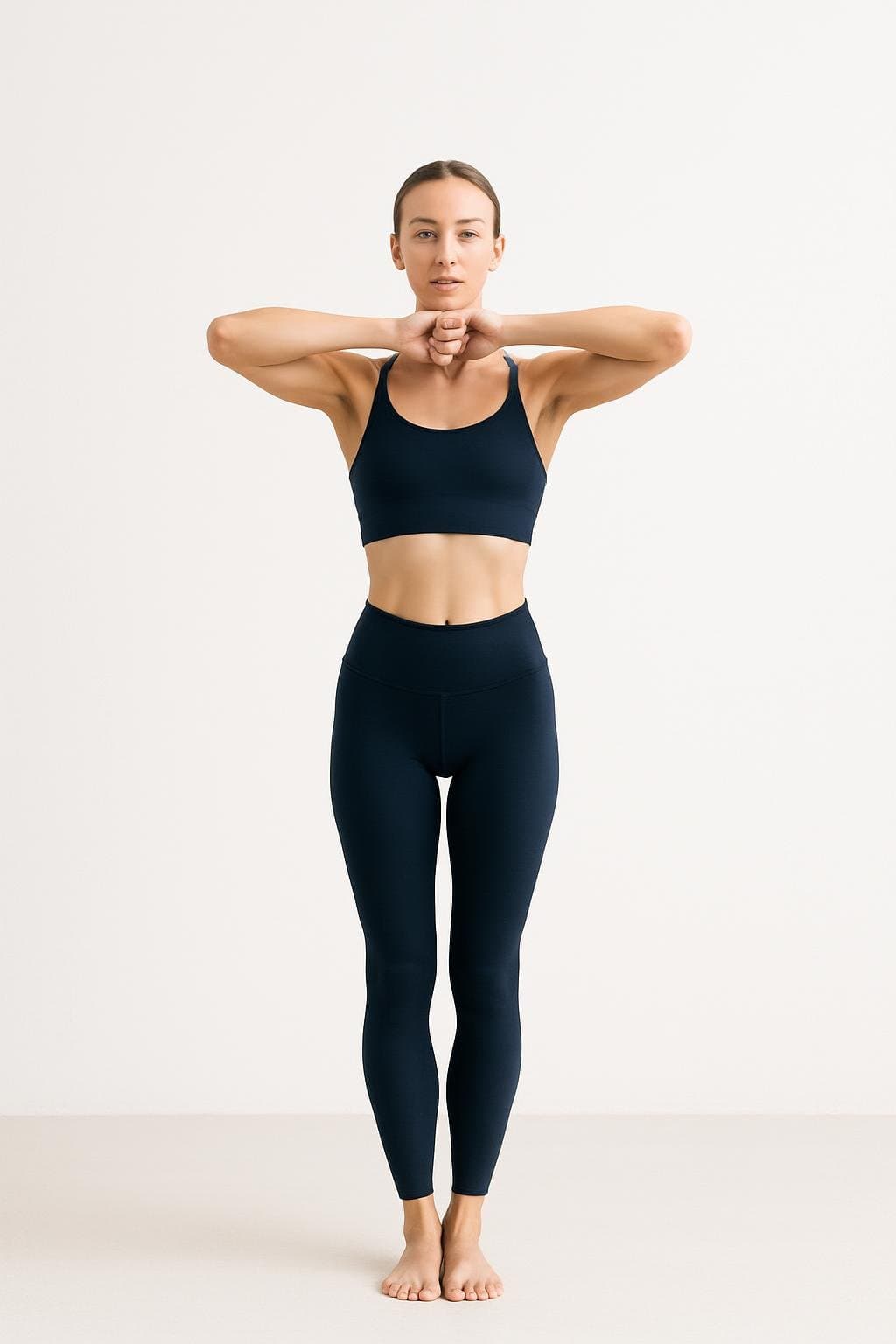 Standing Deep Breathingbeginner
Pranayama
The slow, full breathing exercise that opens a Bikram-style class: knuckles under the chin, elbows rising and falling with a long six-count inhale and exhale.
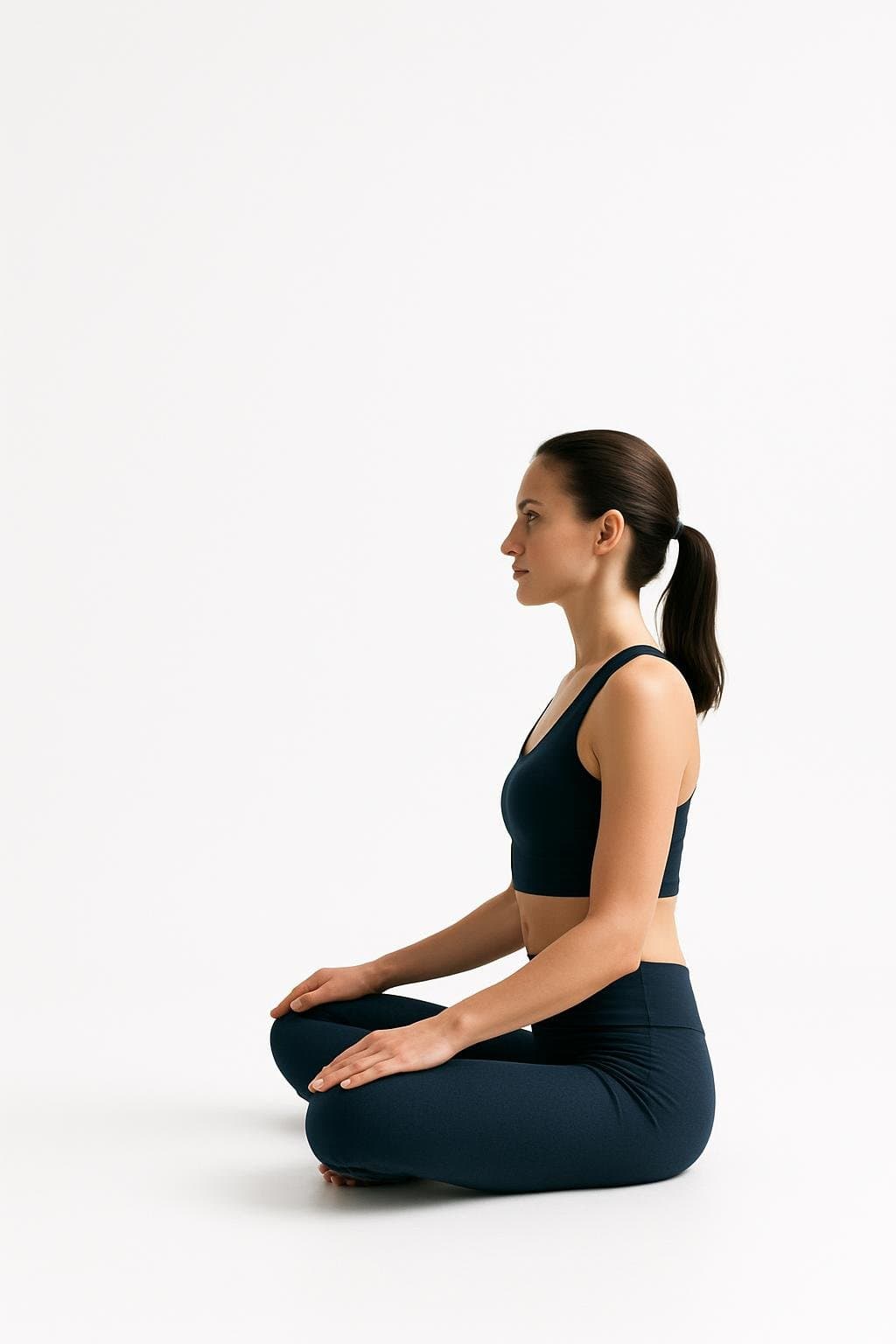 Easy Posebeginner
Sukhasana
A simple cross-legged seat for breathing, meditation, and the start or end of practice. "Easy" refers to the shape, not the sitting — most adults need a lift under the hips to stay comfortable.
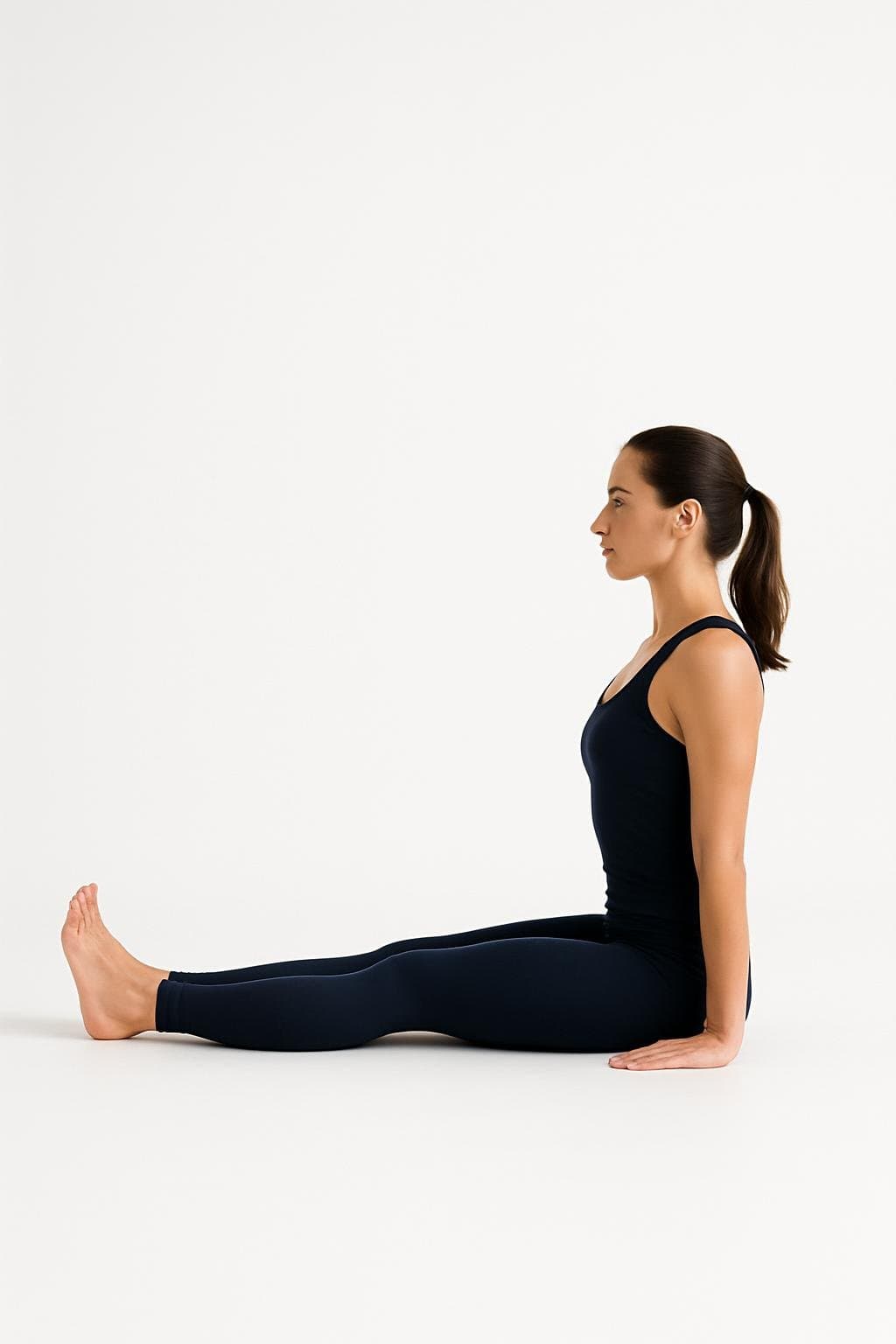 Staff Posebeginner
Dandasana
The seated equivalent of Mountain Pose: legs straight out, spine tall, whole body quietly active. Staff Pose is the reference point every other seated pose starts from.
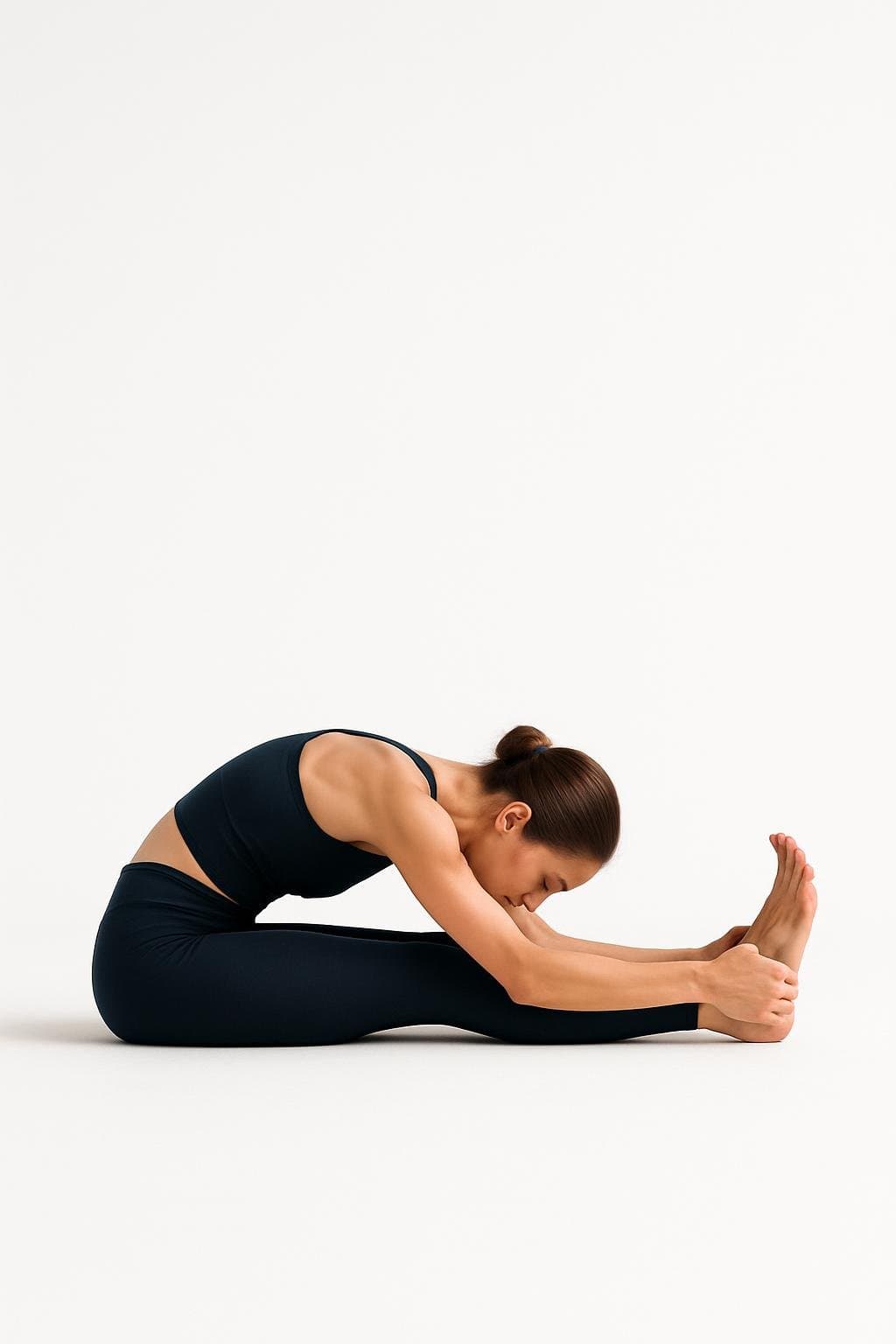 Seated Forward Foldbeginner
Paschimottanasana
A full fold over straight legs that stretches the entire back of the body, from heels to neck. The work is in folding from the hips and being patient — not in grabbing your feet.
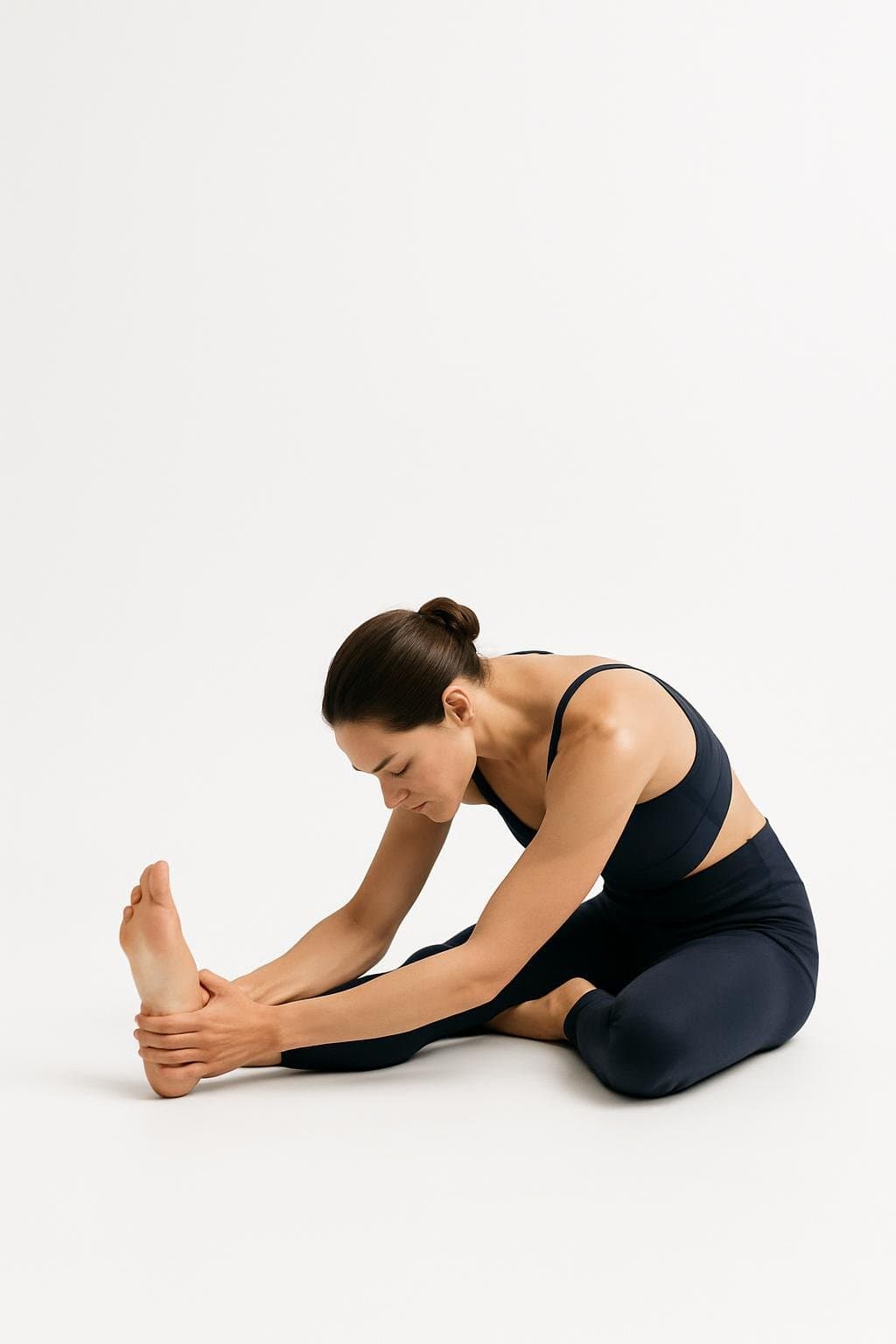 Head-to-Knee Posebeginner
Janu Sirsasana
A one-leg-at-a-time forward fold: one leg straight, the other bent with the foot at the inner thigh. Folding over a single leg makes it gentler and more adjustable than the full seated fold.
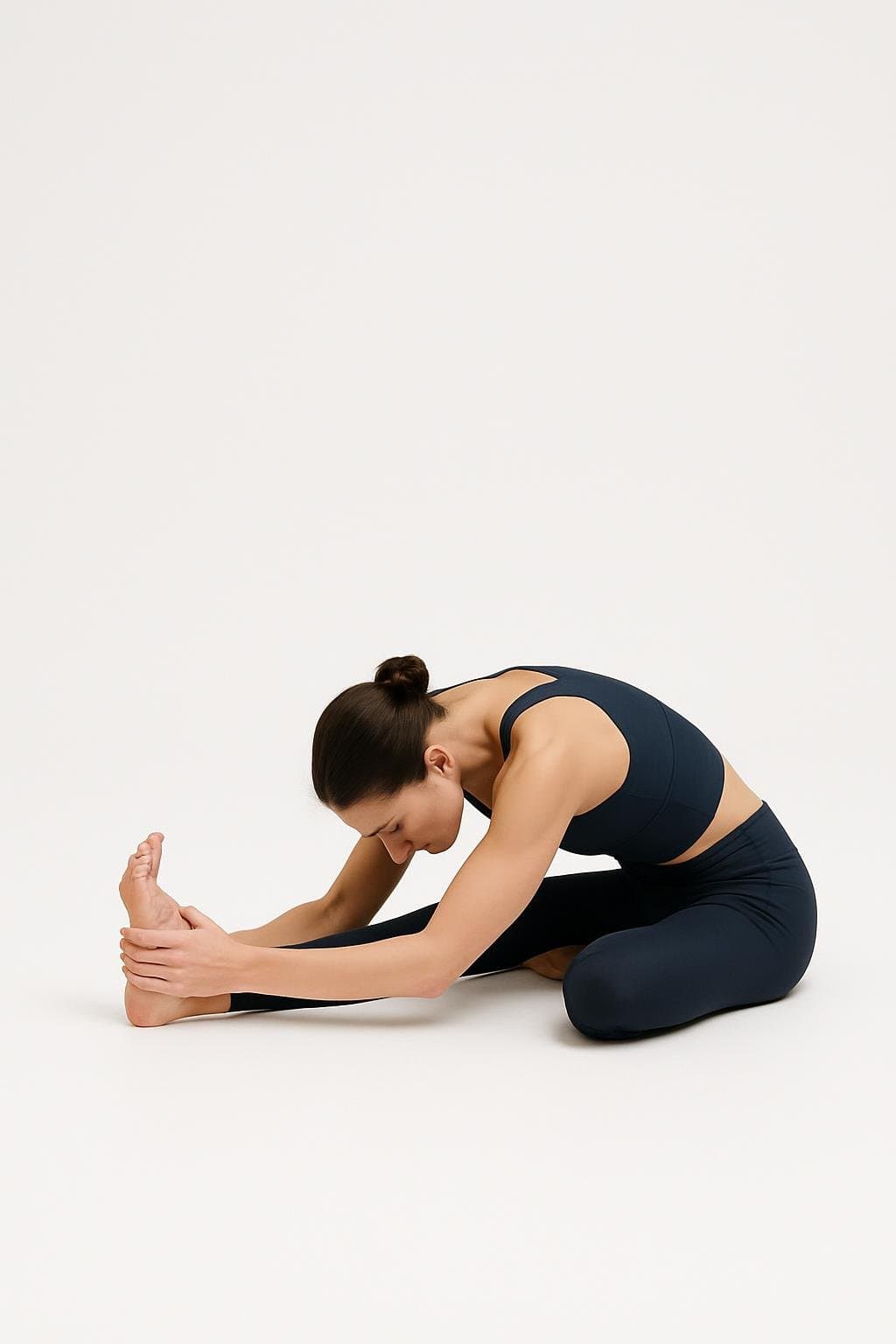 Three-Limbed Forward Foldintermediate
Trianga Mukhaikapada Paschimottanasana
A forward fold with one leg straight and the other folded back beside the hip, as in Hero Pose. The asymmetry challenges your balance and asks a lot of the folded knee, so props are your friend here.
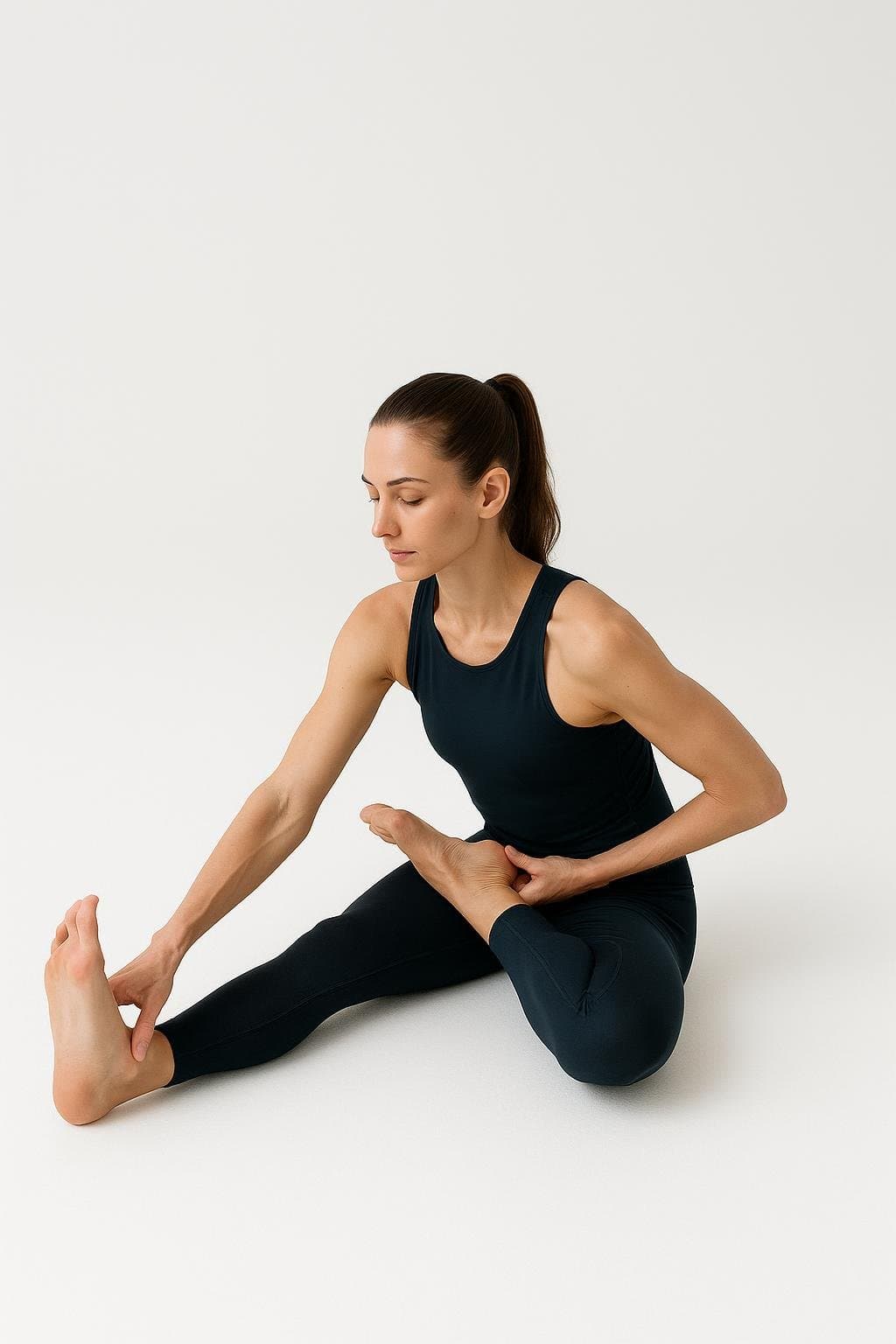 Half-Bound-Lotus Seated Forward Foldadvanced
Ardha Baddha Padma Paschimottanasana
A forward fold with one leg in half lotus and the same-side arm wrapped behind the back to bind the foot. This is an advanced Ashtanga pose that demands genuinely open hips — build it in stages and never crank the knee.
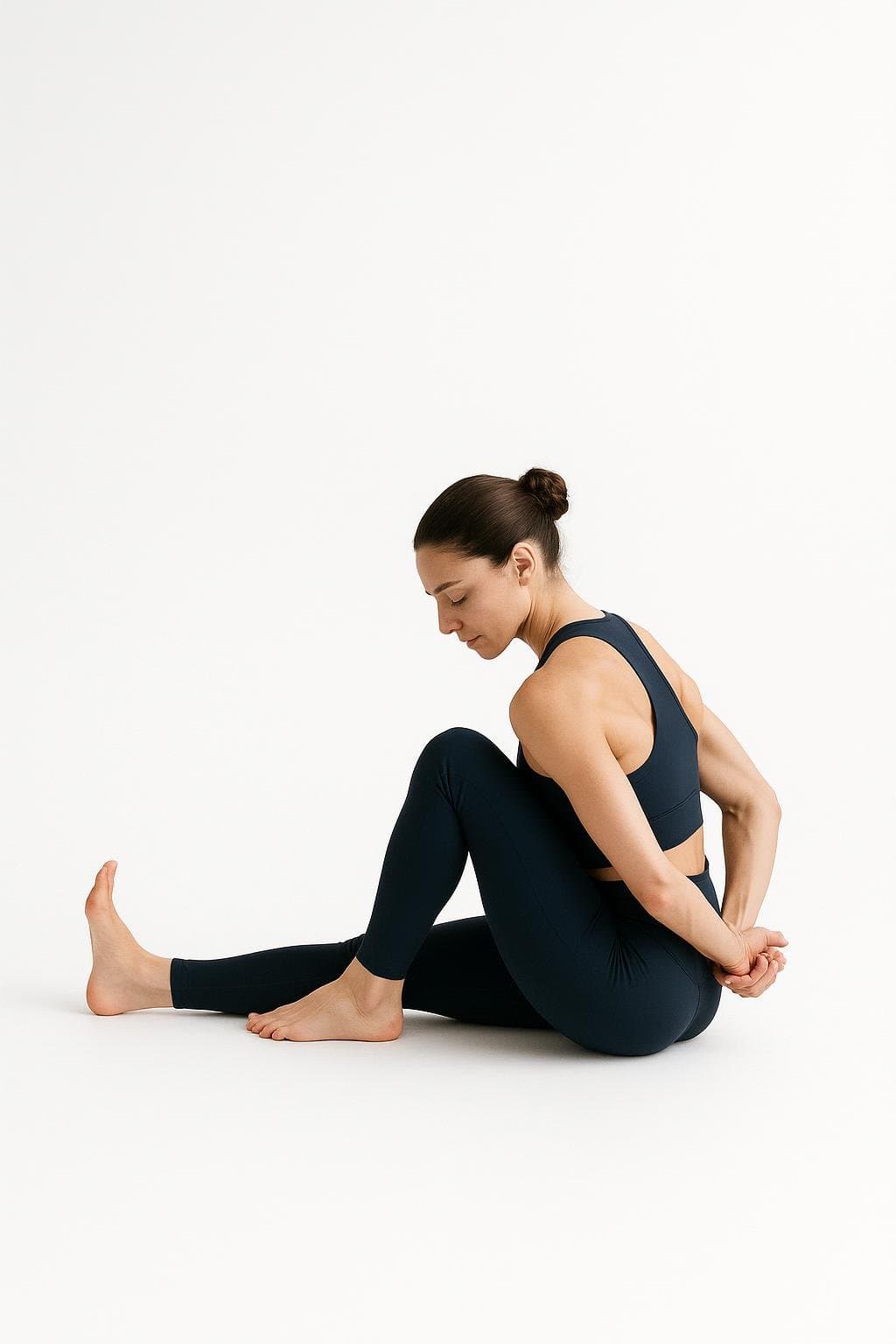 Marichi's Poseintermediate
Marichyasana
A seated fold with one knee bent upright, foot planted, and the arms wrapped around the shin to bind behind the back. The bind looks like the point, but the fold over the straight leg is where the pose lives.
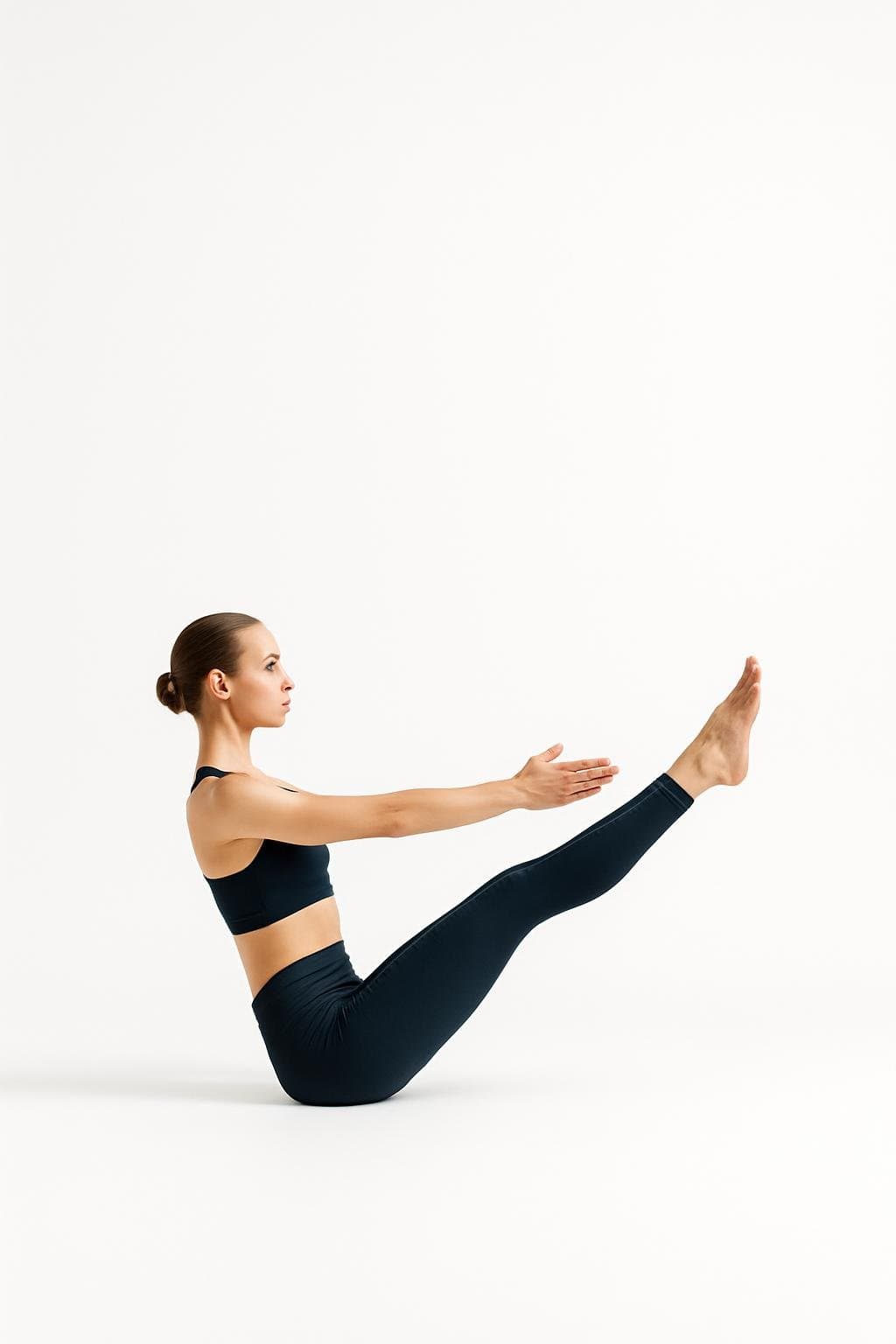 Boat Poseintermediate
Paripurna Navasana
Balance on your sitting bones with legs and chest lifted into a V. Boat is honest, hard core work — a bent-knee version with a lifted chest beats straight legs with a collapsed back every time.
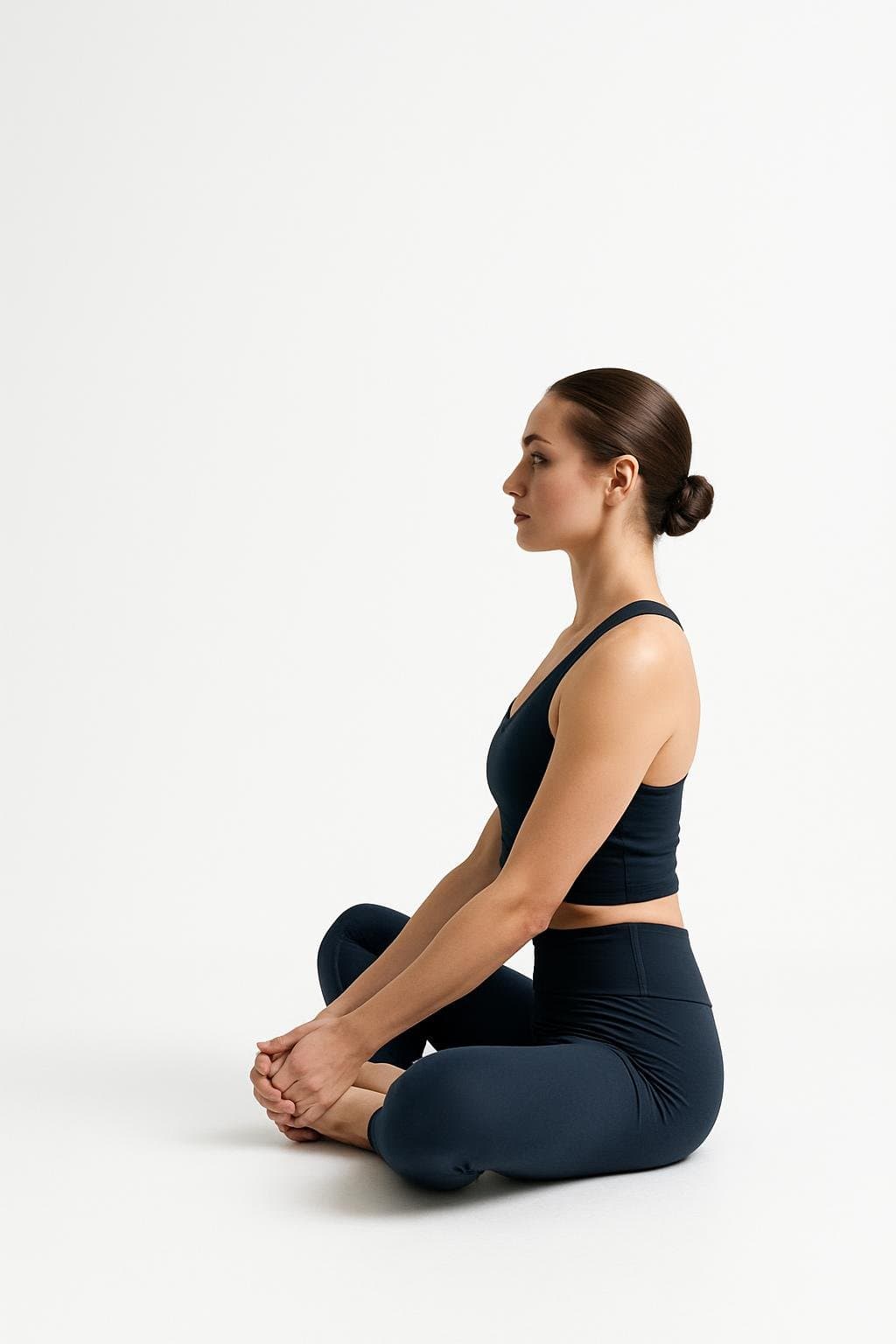 Bound Angle Posebeginner
Baddha Konasana
Soles of the feet together, knees wide — the classic hip and inner-thigh opener. Where your knees hover is up to your hips, not your effort, so let props do the holding.
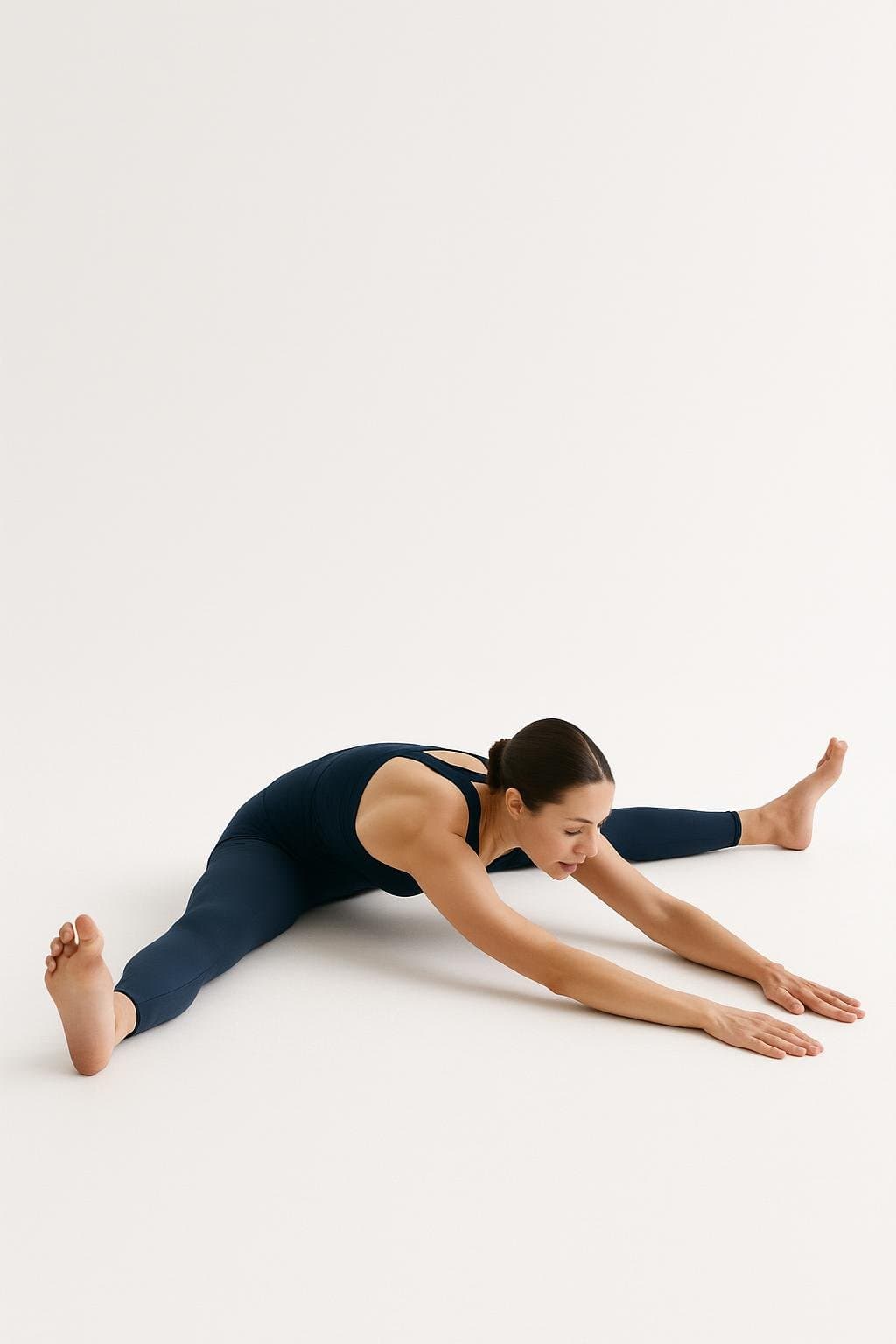 Wide-Angle Seated Forward Foldintermediate
Upavistha Konasana
Legs wide, torso folding forward between them. Range here varies enormously between bodies — an upright spine with legs wide is already the pose; the floor is optional.
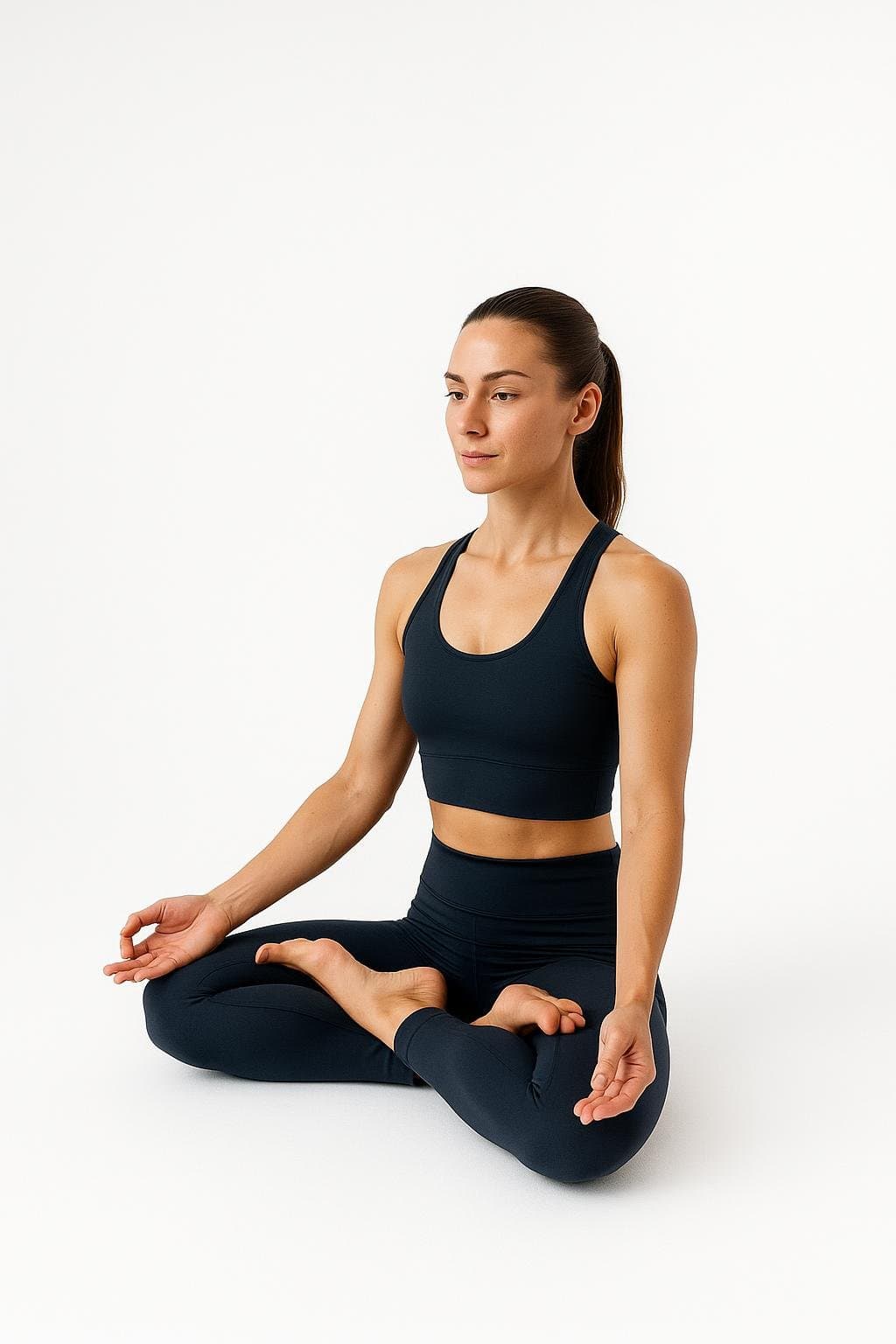 Lotus Poseadvanced
Padmasana
Each foot rests on the opposite thigh in the classic meditation seat. Lotus requires unusually open hips — for many bodies it is a years-long project or simply not the right shape, and no meditation benefit depends on it.
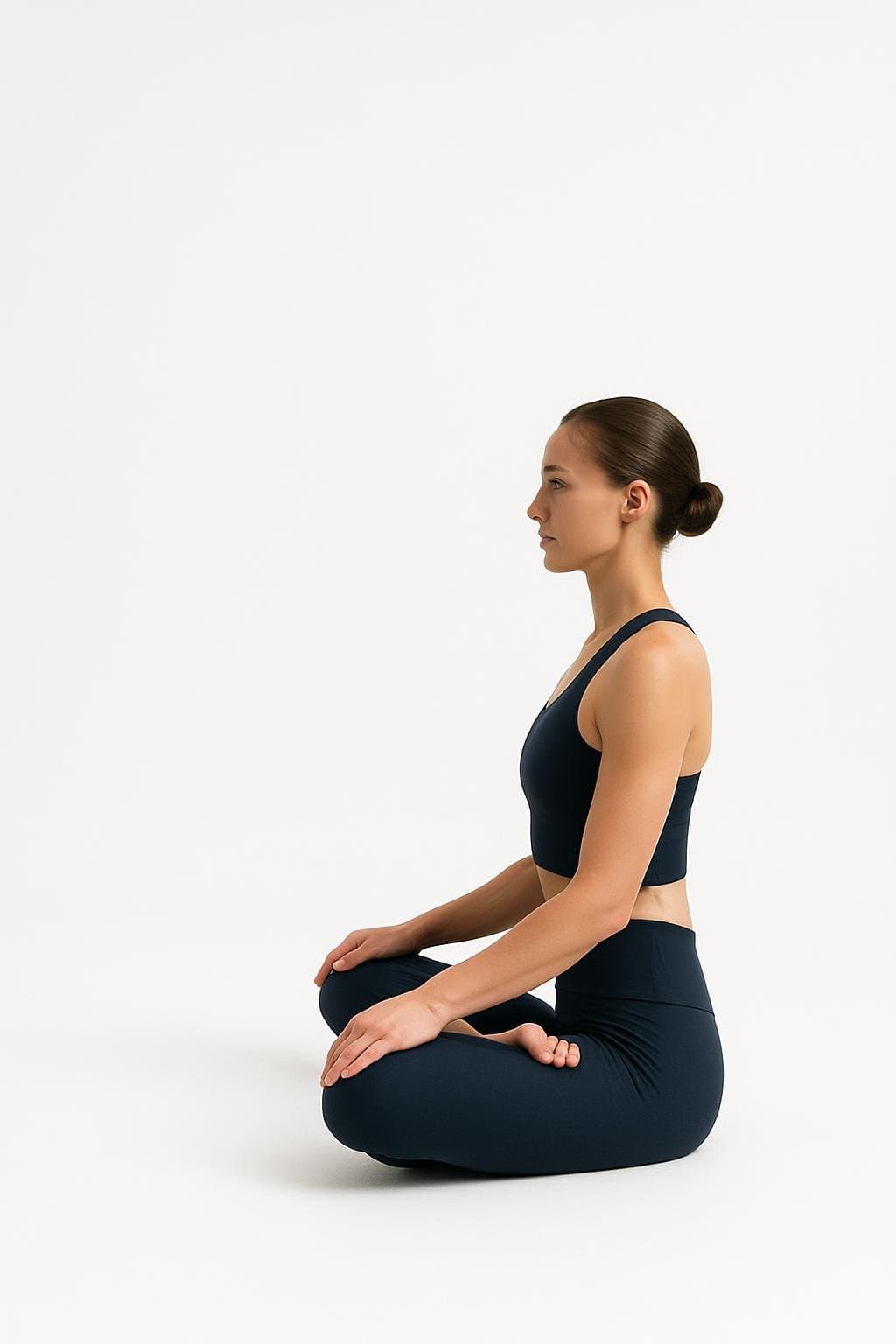 Half Lotusintermediate
Ardha Padmasana
One foot on the opposite thigh, the other tucked below — the honest middle step between Easy Pose and full Lotus. A stable, sustainable meditation seat in its own right.
- Bound Lotusadvanced
Baddha Padmasana
Full Lotus with each arm wrapped behind the back to hold the opposite foot. This asks for open hips and open shoulders at once — an advanced shape with no shortcut, traditionally paired with a forward bow.
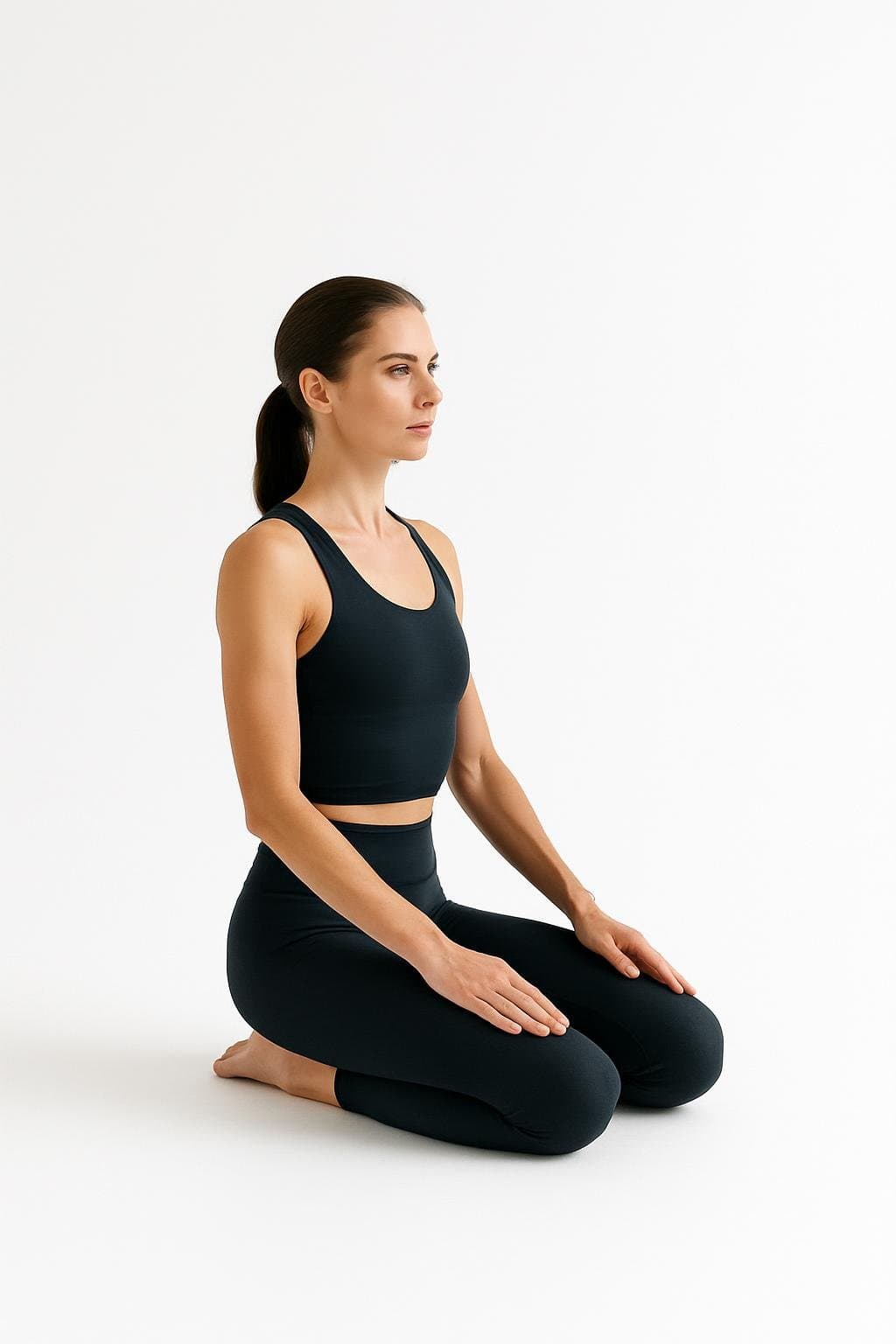 Hero Posebeginner
Virasana
Kneel and sit between your heels with the spine tall. Hero is a wonderfully grounded meditation seat and a quiet stretch for the thighs and ankles — with a block under the hips it works for almost everyone.
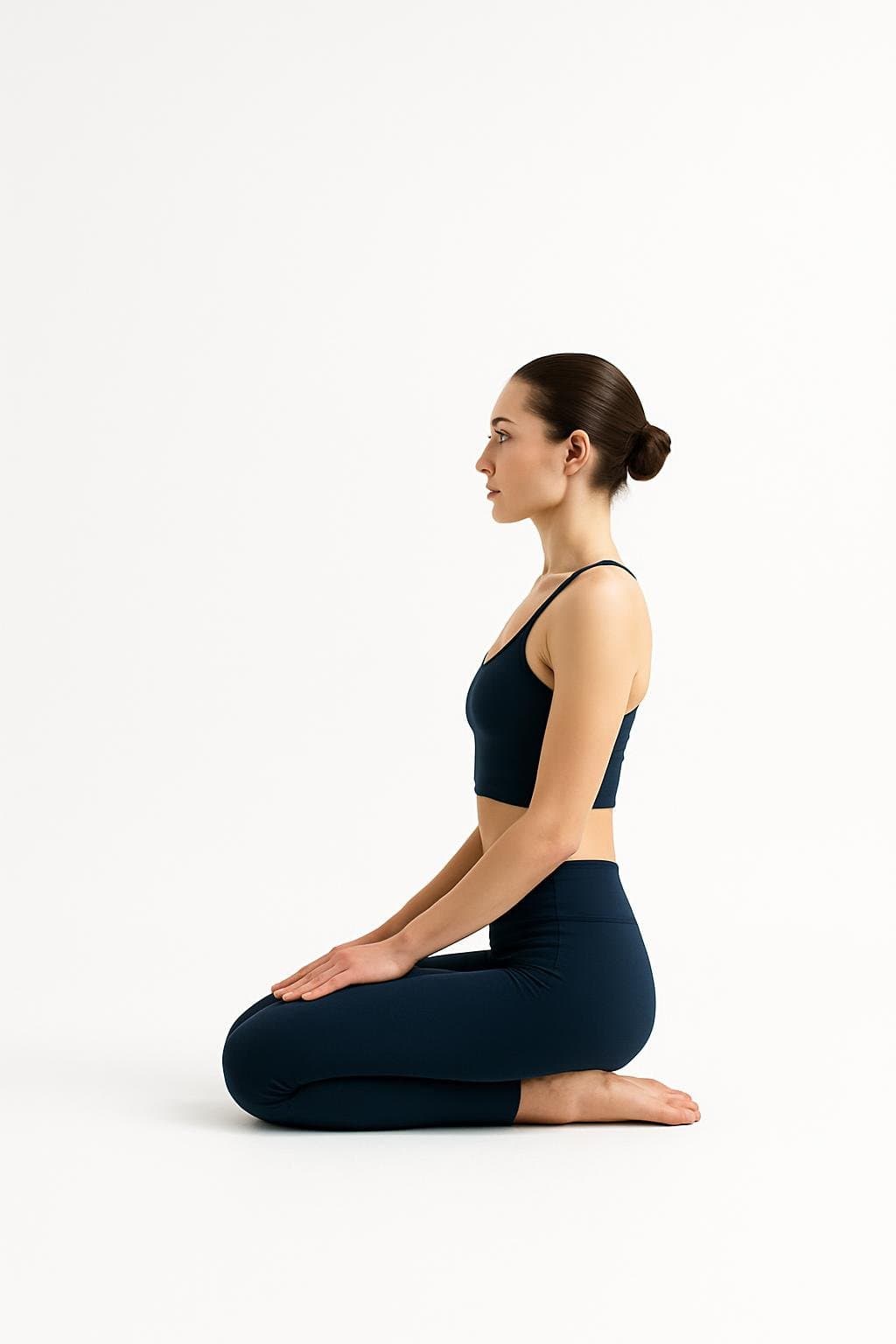 Thunderbolt Posebeginner
Vajrasana
A simple kneeling seat with the hips resting on the heels. Thunderbolt is the everyday sitting posture of much of the world and the traditional seat for several breathing practices.
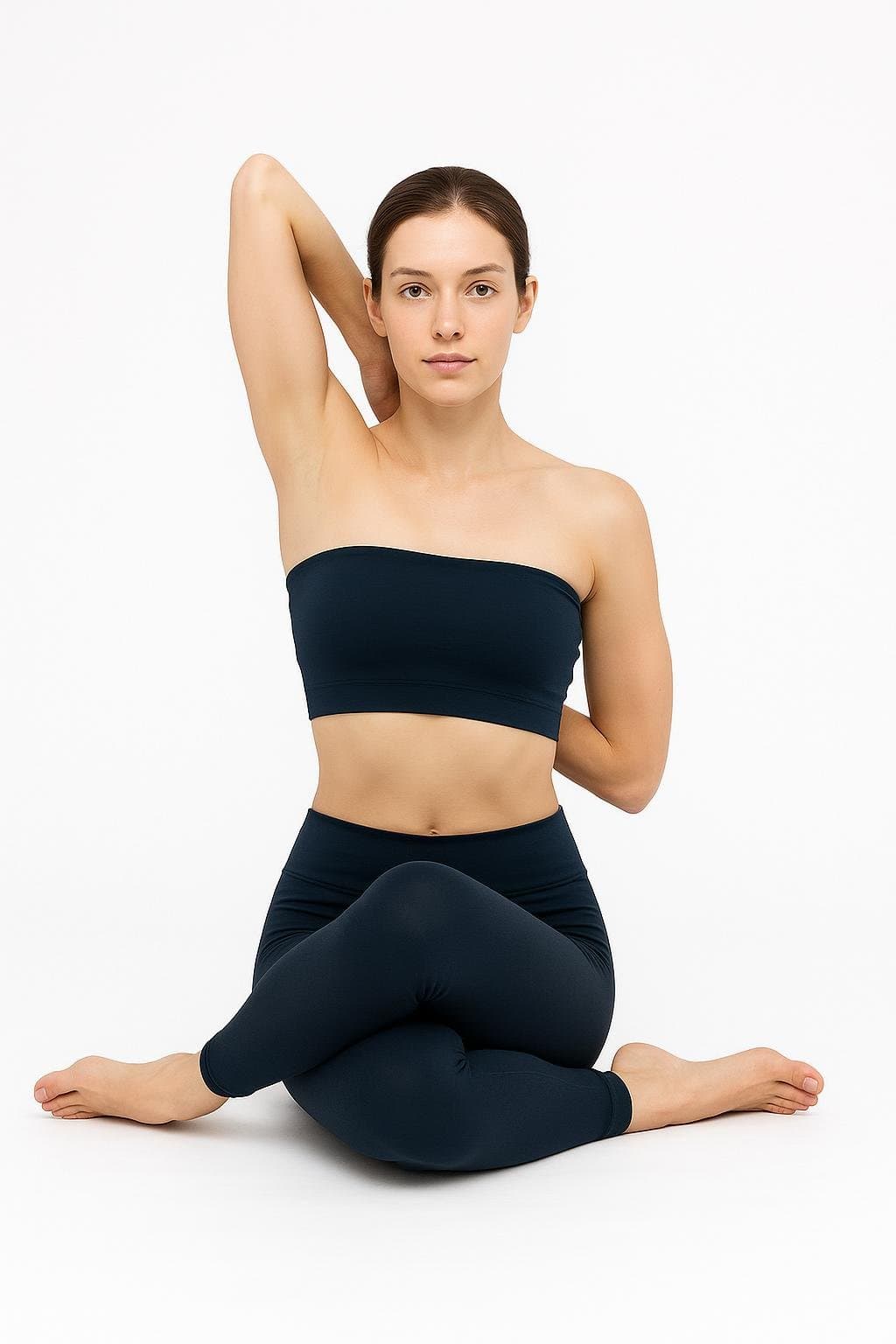 Cow Face Poseintermediate
Gomukhasana
Knees stacked one over the other, one arm reaching over the shoulder and the other up the back to clasp. It stretches hips and shoulders at once, and almost nobody's hands meet on both sides — that's what straps are for.
- Fire Log Poseintermediate
Agnistambhasana
Shins stacked parallel like two logs, one ankle over the opposite knee. One of the most direct outer-hip stretches in yoga — intense for most people, so build the shape with props rather than force.
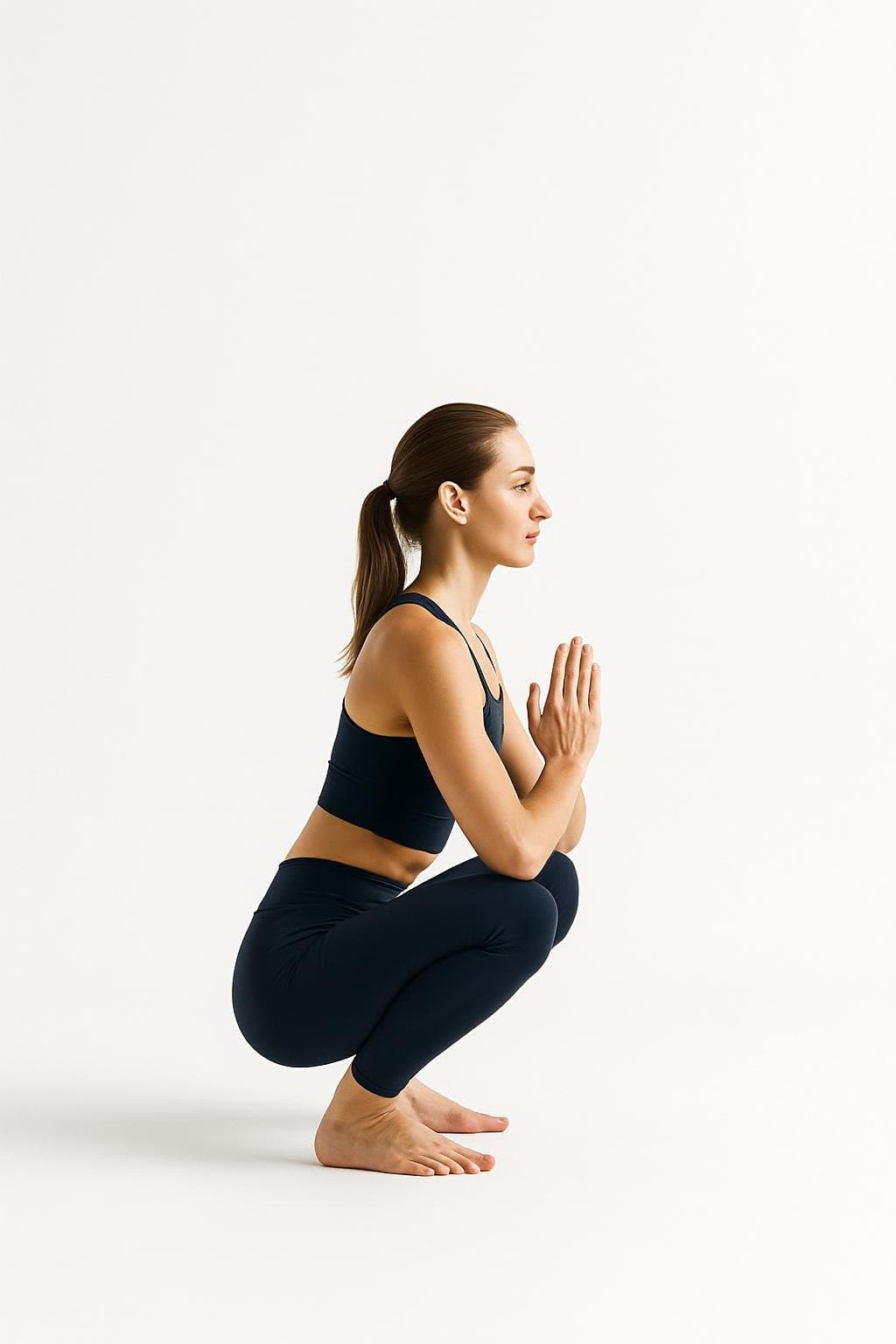 Garland Posebeginner
Malasana
A deep squat with the feet flat, heels down if they'll go, and palms together at the chest. Garland restores a resting position most adults have lost — a blanket under the heels brings it back within reach.
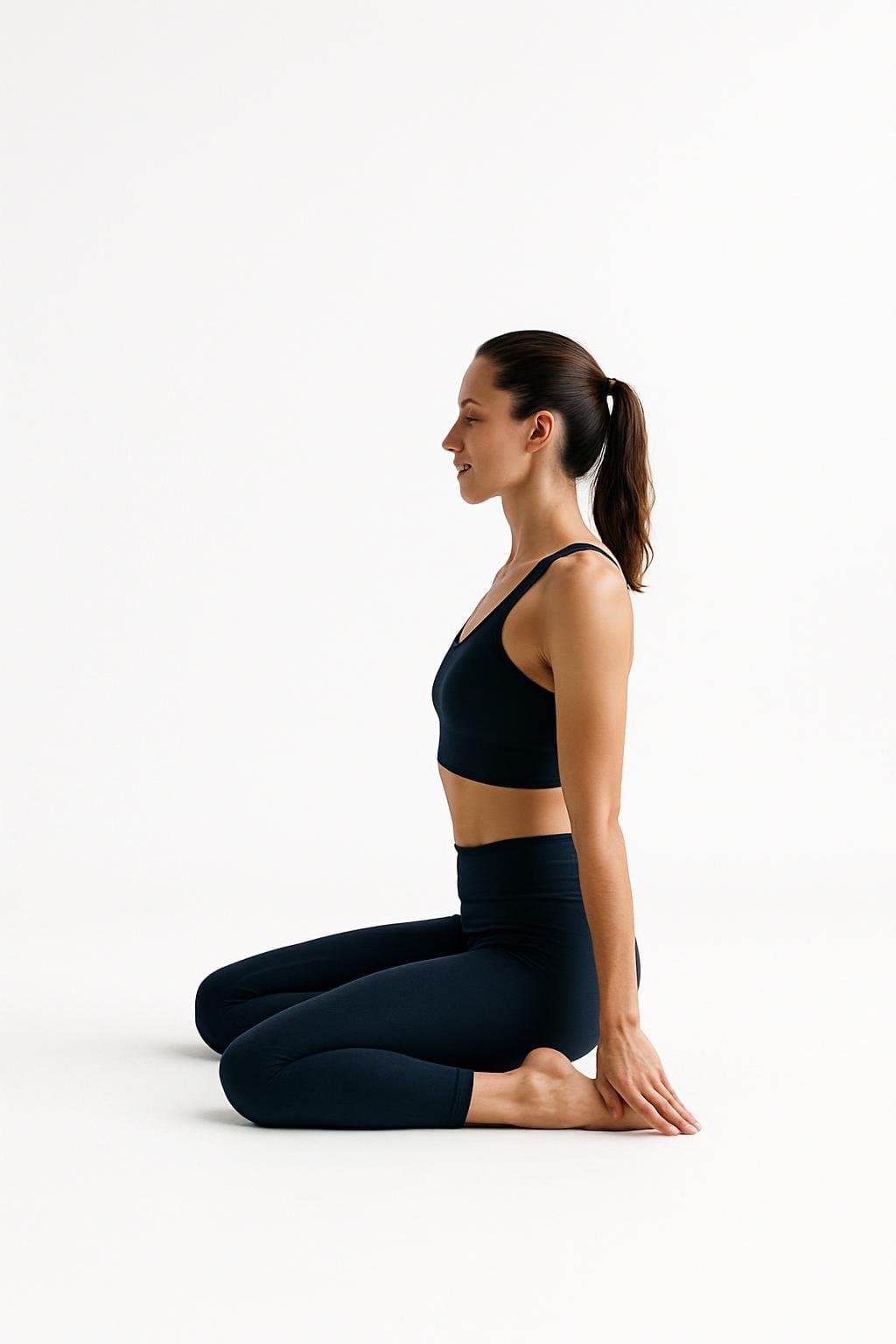 Deer Posebeginner
Mrigasana
One leg folded in front, the other folded behind, both knees bent at roughly right angles. A gentle Yin staple that reaches both internal and external hip rotation without asking much of the knees.
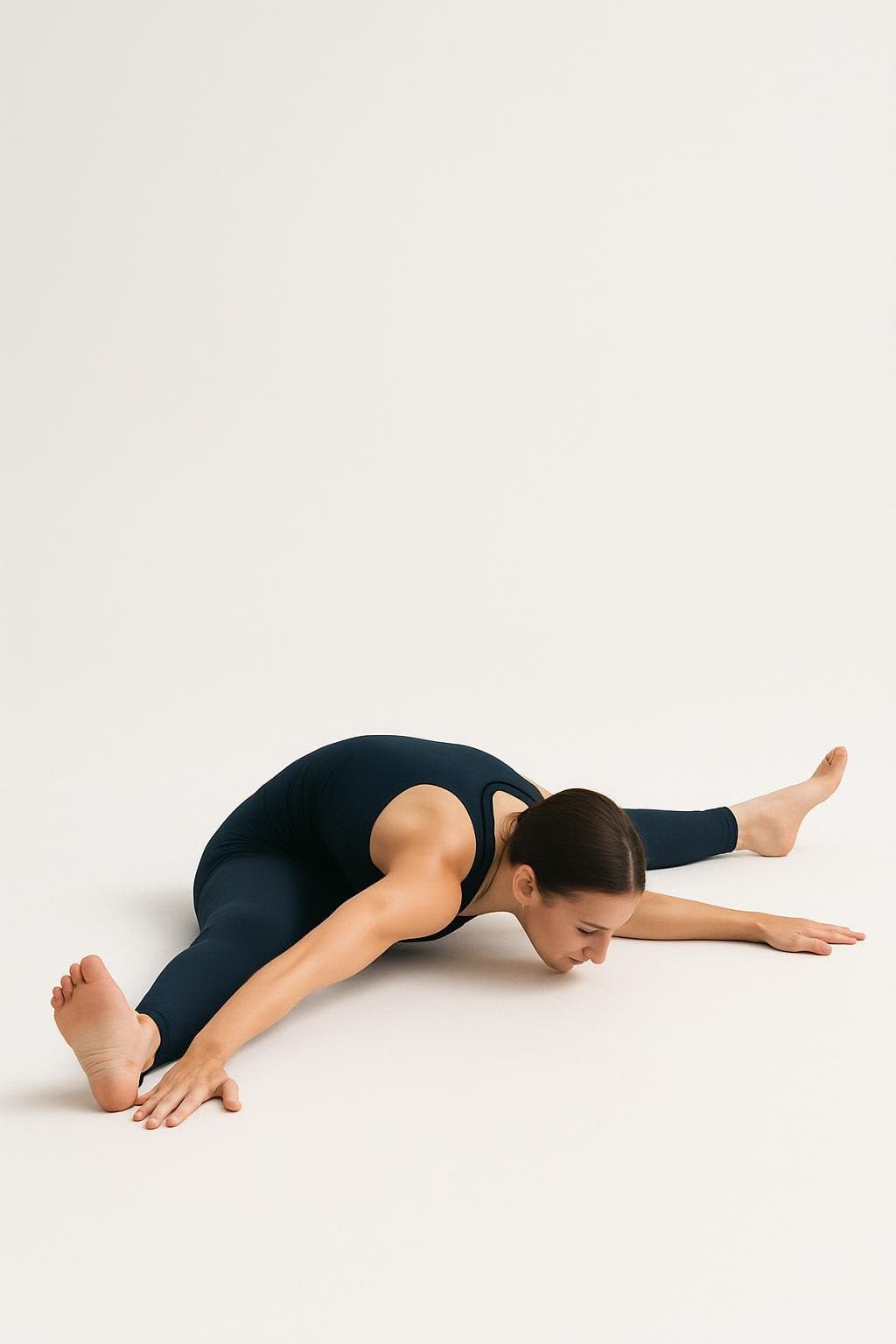 Tortoise Poseadvanced
Kurmasana
A deep forward fold with the arms threaded beneath the knees, torso lowering toward the floor. Tortoise demands very open hamstrings, hips, and back — approach it as a slow, multi-year fold rather than a shape to force.
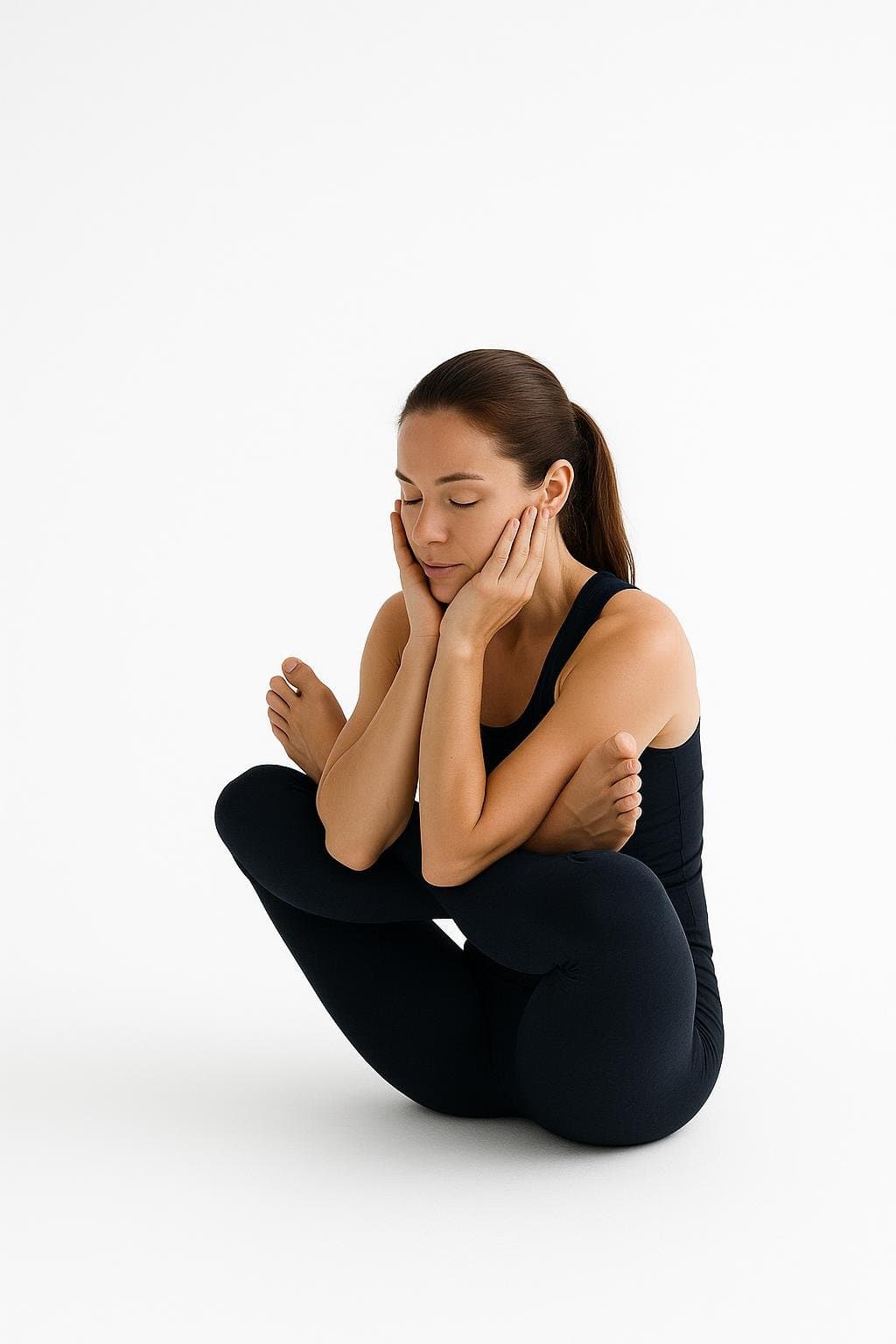 Embryo Poseadvanced
Garbha Pindasana
From full Lotus, the arms thread through the gaps behind the knees and the hands rise to the face, folding the body into a compact ball. An advanced Ashtanga pose that entirely depends on a comfortable, pain-free Lotus.
- Compass Poseadvanced
Parivrtta Surya Yantrasana
One leg extends up and behind the shoulder while the opposite arm arcs overhead to hold the foot, the chest spiraling open. Compass needs open hamstrings, hips, and side body all at once — the strap version is the real pose for most practitioners.
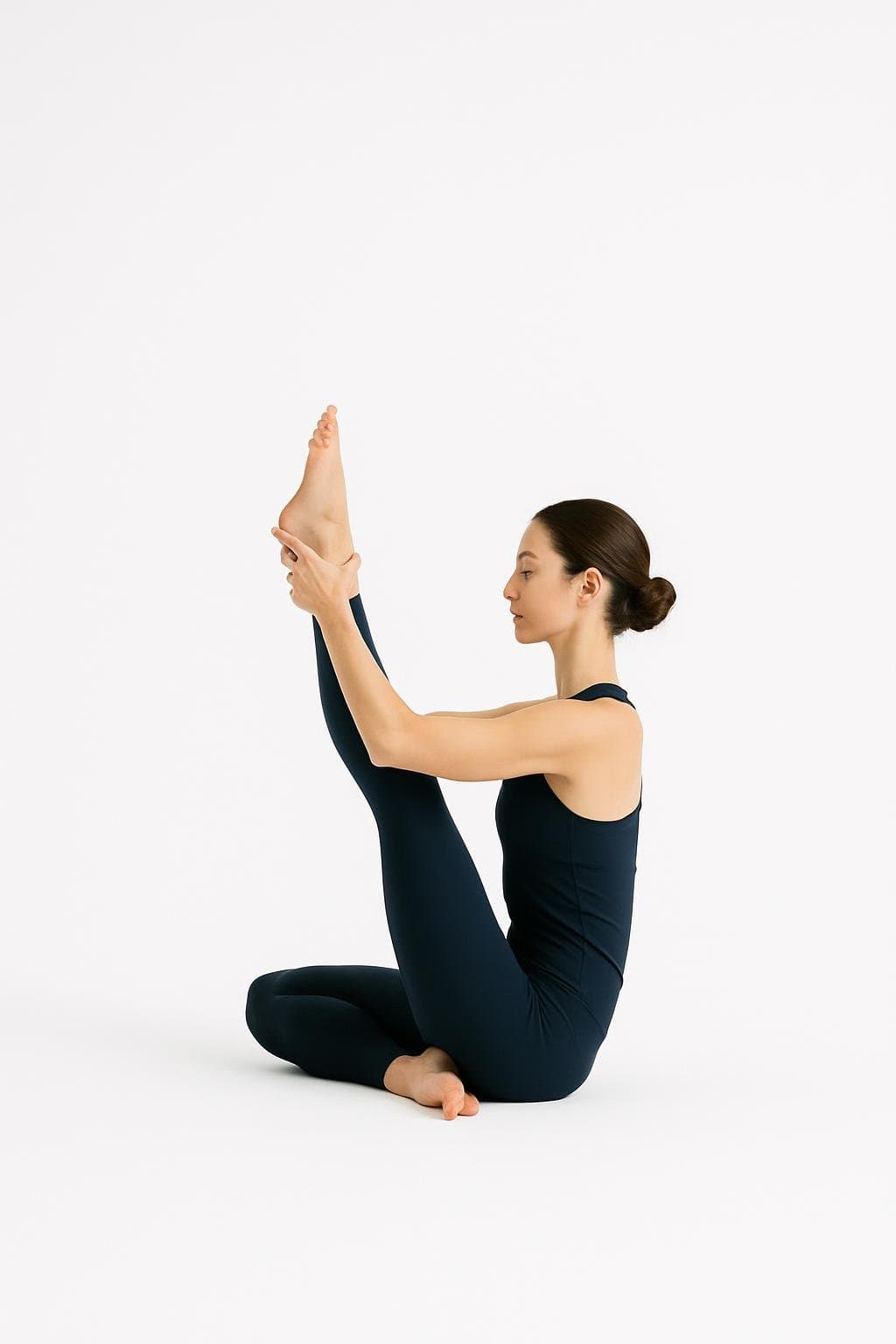 Heron Poseadvanced
Krounchasana
Seated with one leg folded back and the other held straight up toward the face. Heron is a concentrated hamstring stretch stacked on a Hero-style knee fold — a strap and an upright spine beat a rounded grab at the foot.
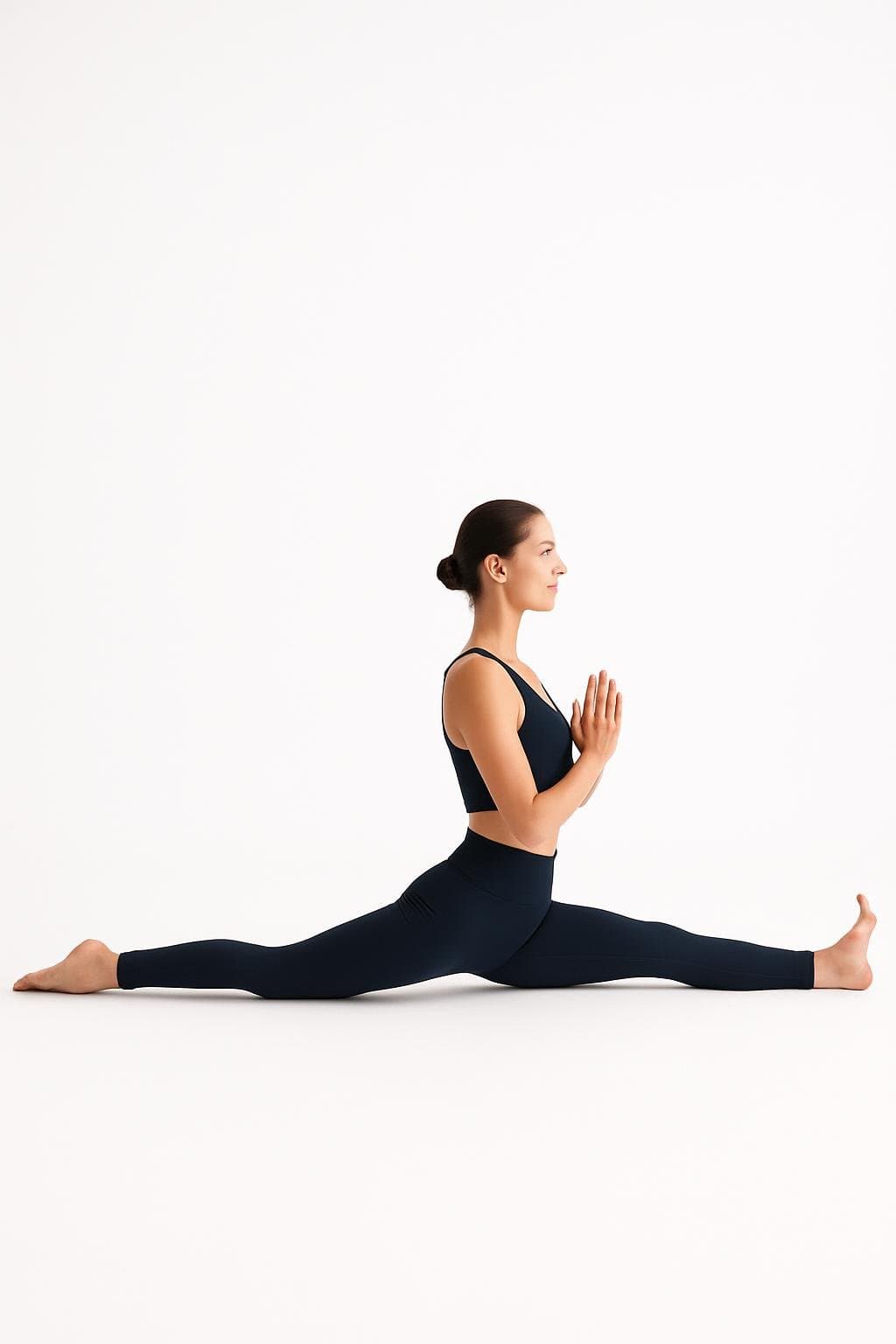 Front Splitadvanced
Hanumanasana
One leg forward, one leg back, pelvis lowering toward the floor. The full split is a long-term project in hamstring and hip-flexor length — the blocks-and-bolster version delivers the same stretch at every stage.
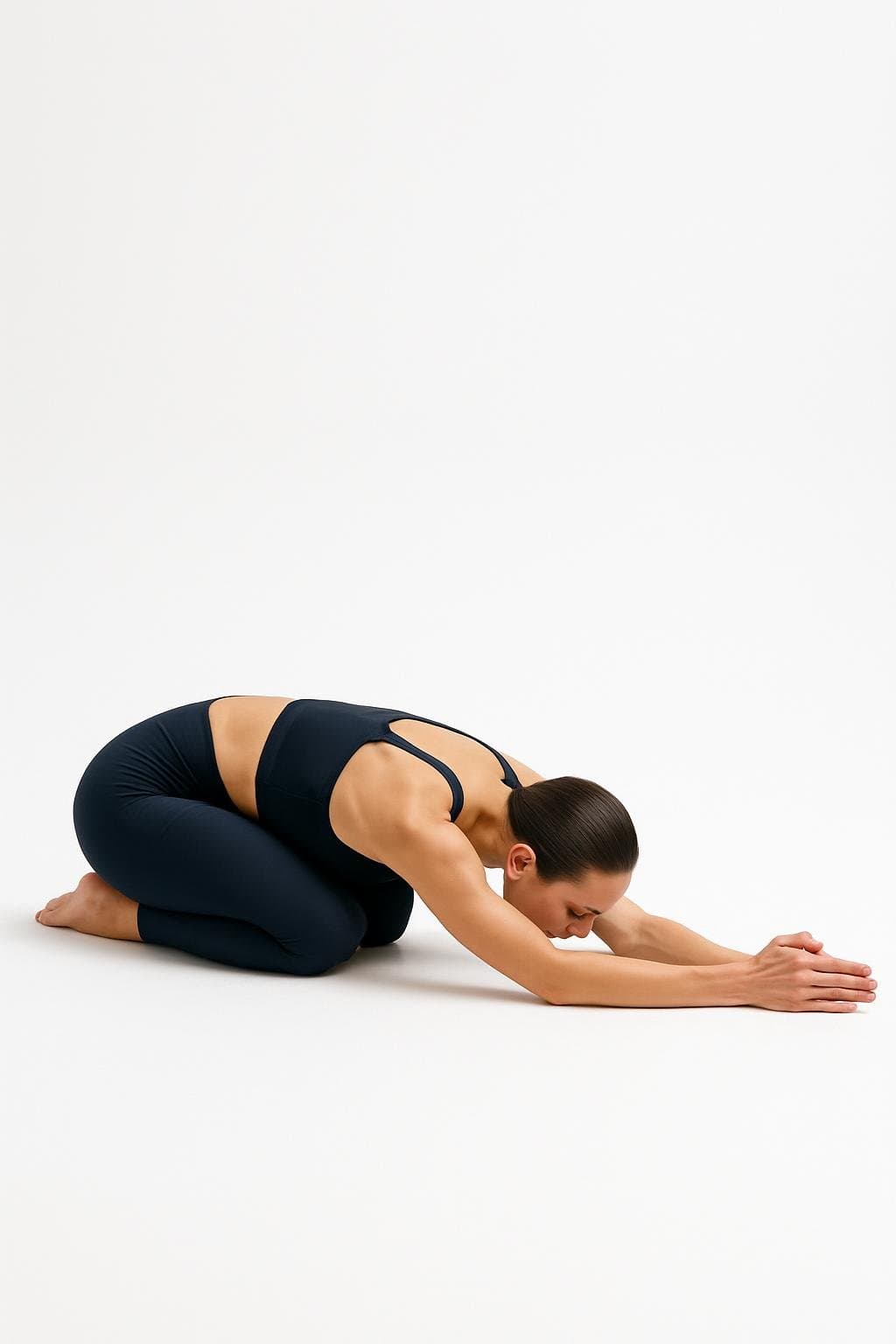 Half Tortoise Posebeginner
Ardha Kurmasana
Kneeling with hips on heels, arms stretched long overhead, palms together, forehead to the floor. A Bikram-series resting pose that stretches the shoulders and spine while the body settles.
- Rabbit Poseintermediate
Sasangasana
A kneeling forward curl: crown toward the floor near the knees, hands holding the heels, spine rounded into a full arc. Rabbit is the counterpose to deep backbends like Camel — the pull on the heels does the work, not pressure on the head.
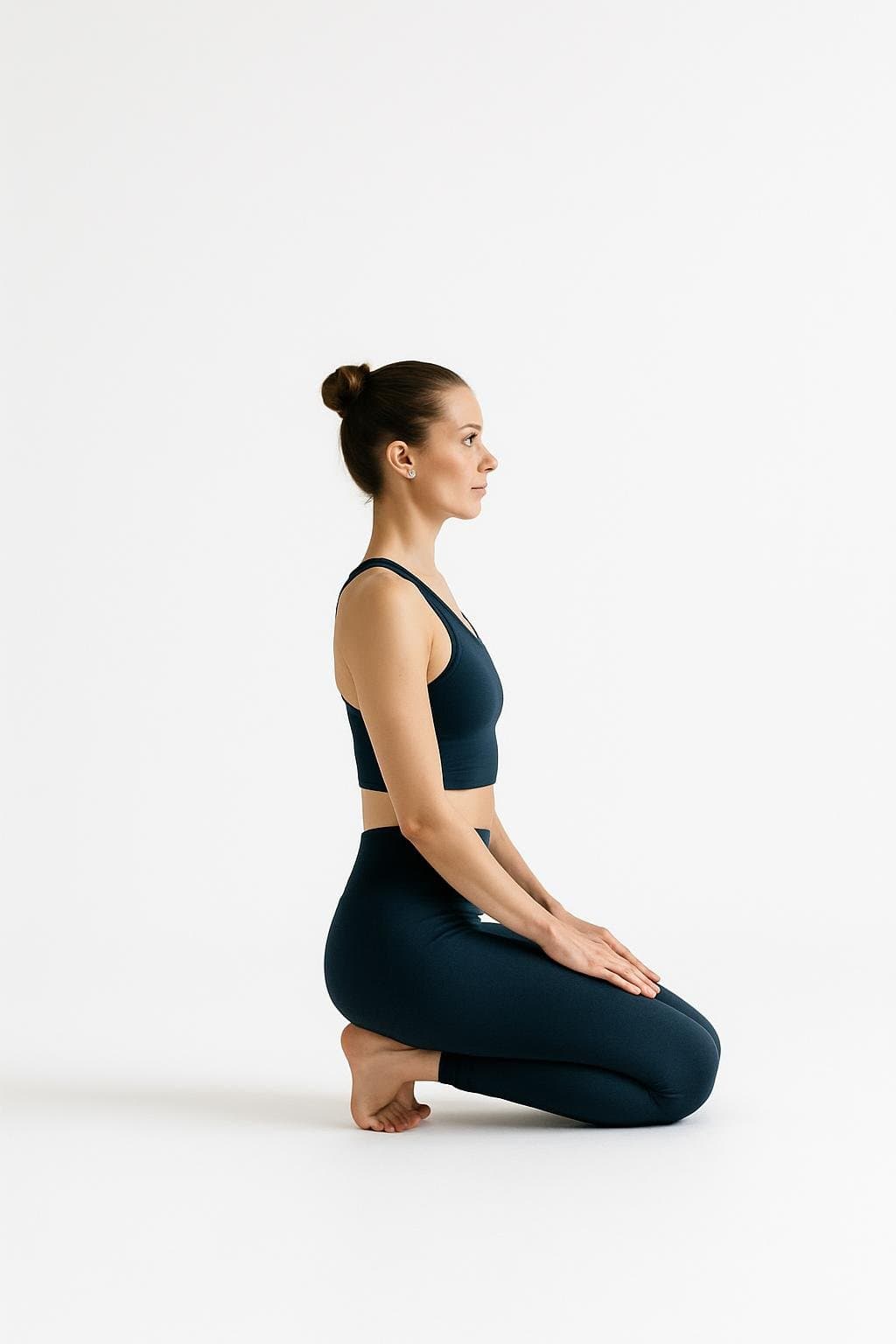 Toe Squatbeginner
Vajrasana (toes tucked)
Kneel, tuck all ten toes under, and sit back on your heels. Simple to describe and famously intense to hold — a Yin staple that wakes up the soles of the feet and toes like nothing else.
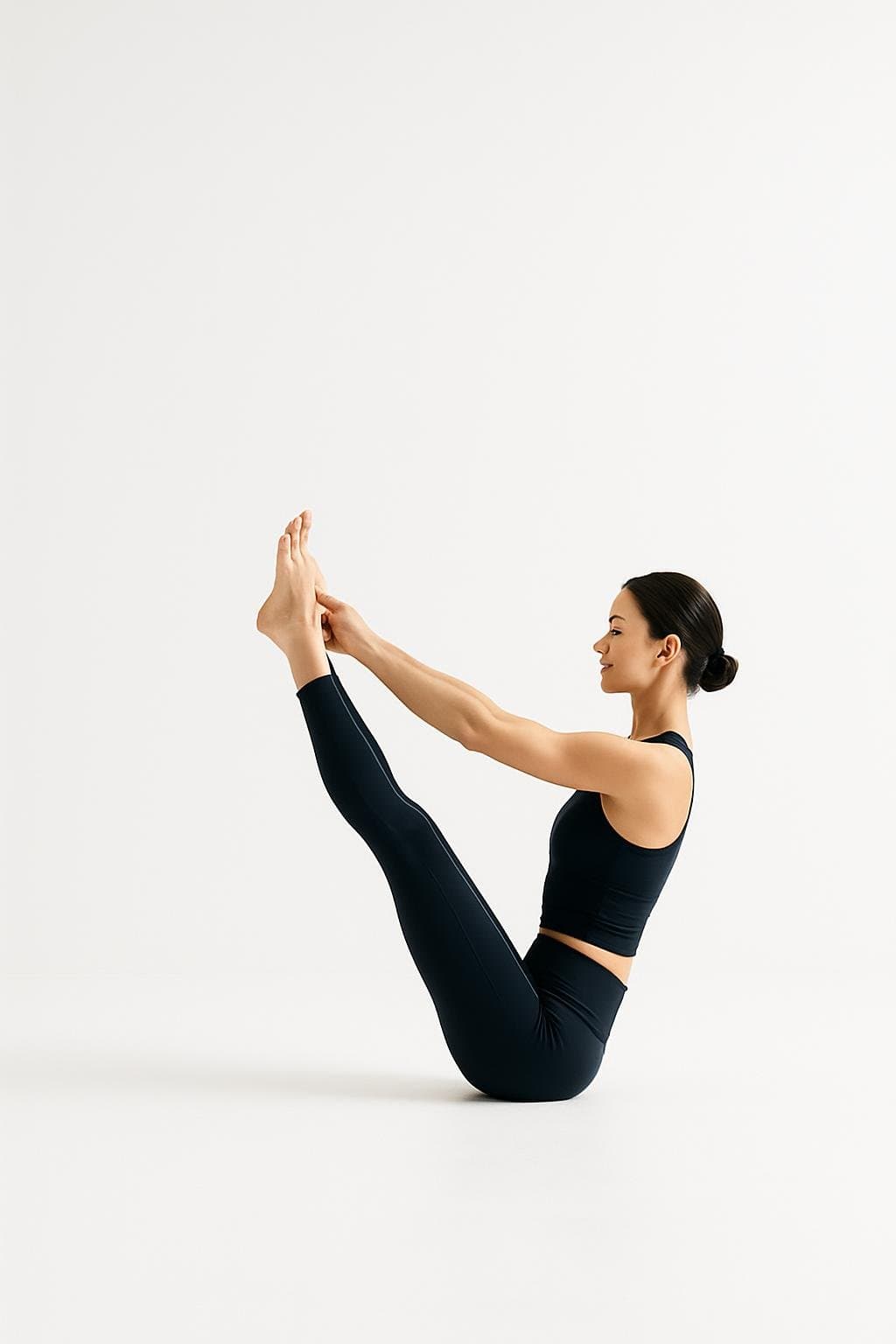 Both-Big-Toes Poseintermediate
Ubhaya Padangusthasana
Balance on your sitting bones holding both big toes, legs straight and chest lifted into a V. It's Boat Pose with a grip — the balance point behind the sitting bones matters more than how straight the legs are.
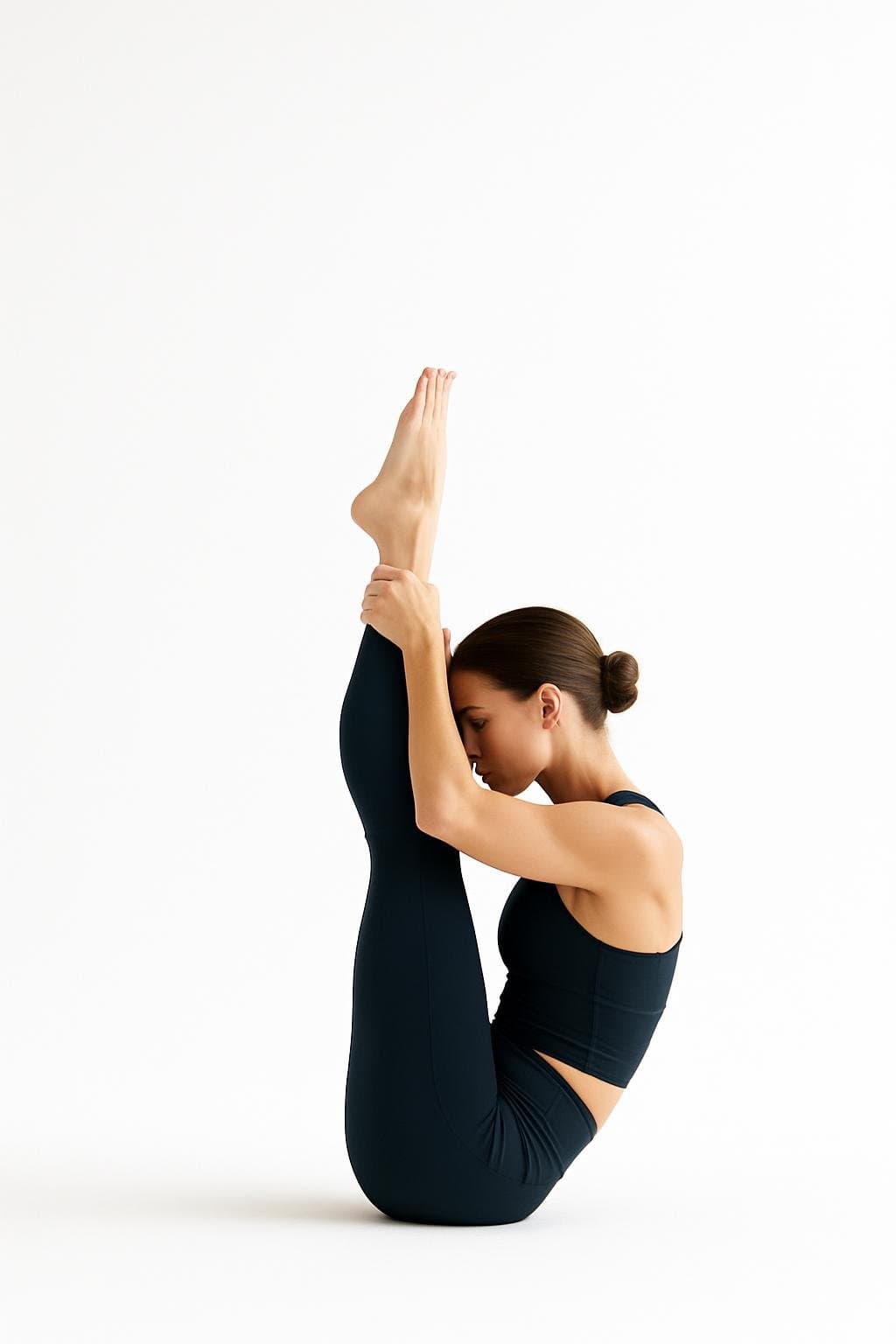 Upward-Facing Forward Foldadvanced
Urdhva Mukha Paschimottanasana
A seated forward fold turned skyward: balancing on the sitting bones, legs vertical, torso drawn up against them. It combines the full fold's flexibility with Boat Pose's balance — flexibility first, then the balance.
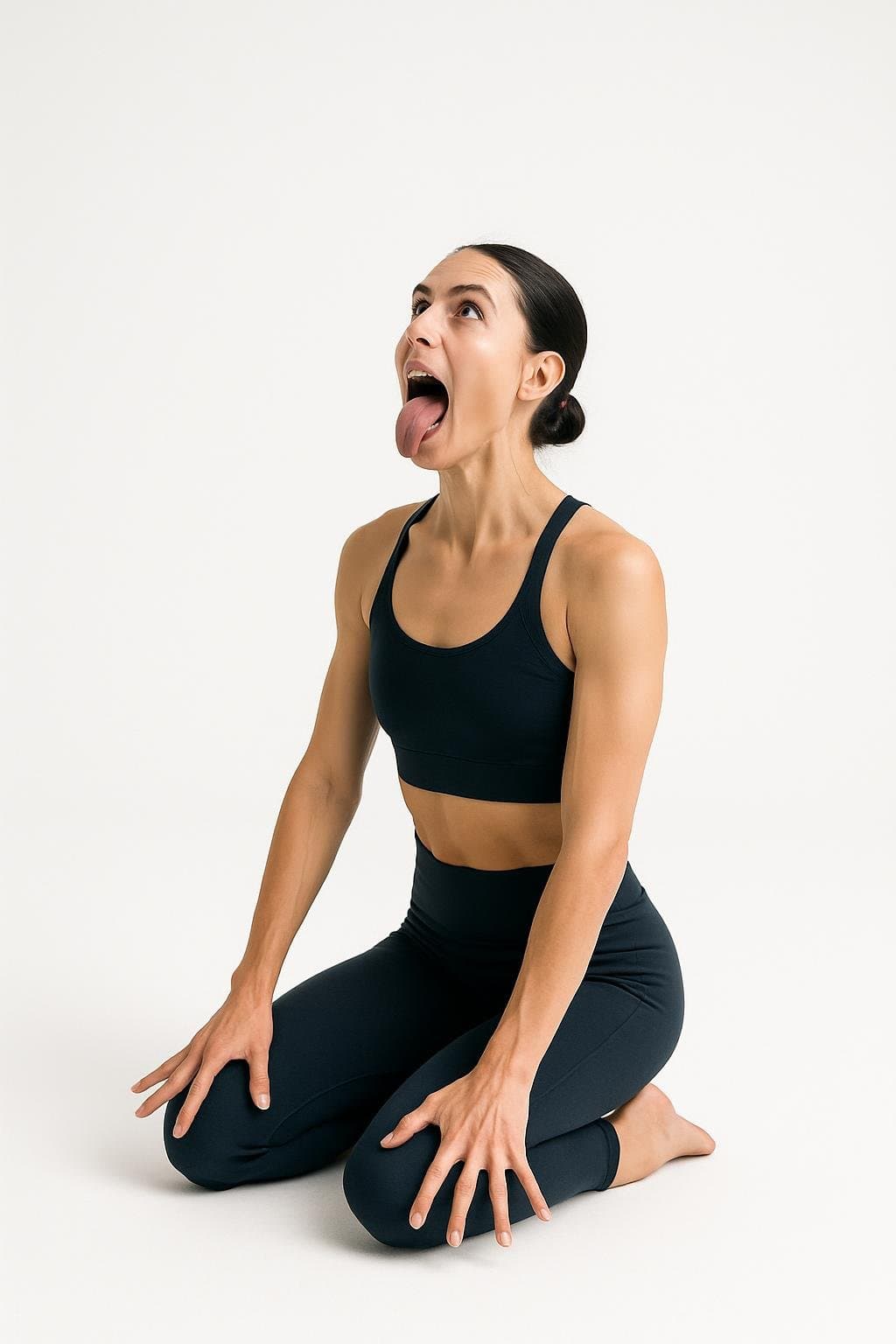 Lion Posebeginner
Simhasana
Kneel, inhale deeply, then exhale with a roar: mouth wide, tongue stretched out, eyes lifted. Lion is deliberately undignified — it releases the face, jaw, and throat, and it's very hard to take yourself too seriously while doing it.
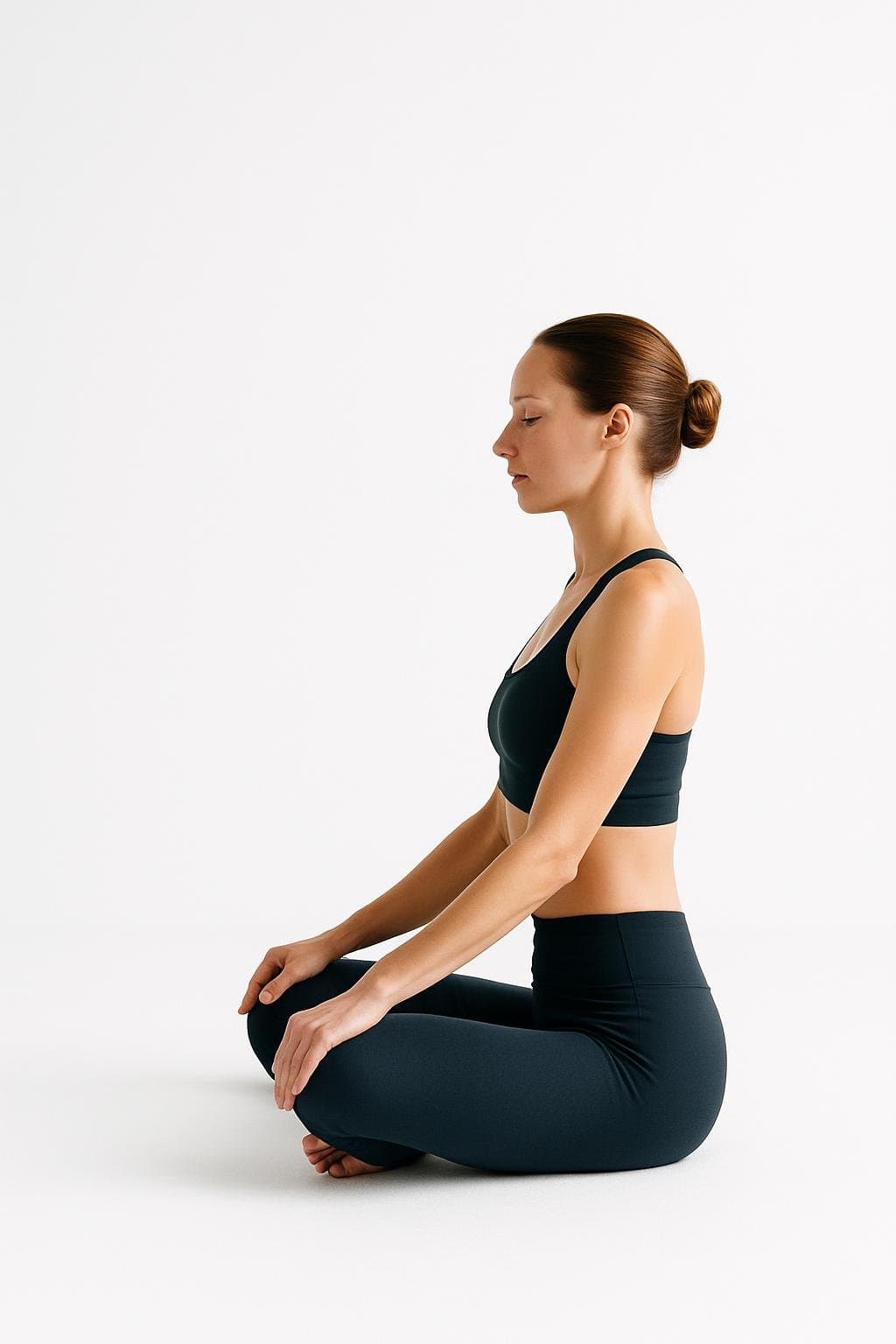 Skull-Shining Breathintermediate
Kapalabhati
Rapid, sharp exhales driven by the belly, with passive inhales in between. Kapalabhati is an energizing, warming breath practice — learn it slowly and on an empty stomach, and let the exhale do all the work.
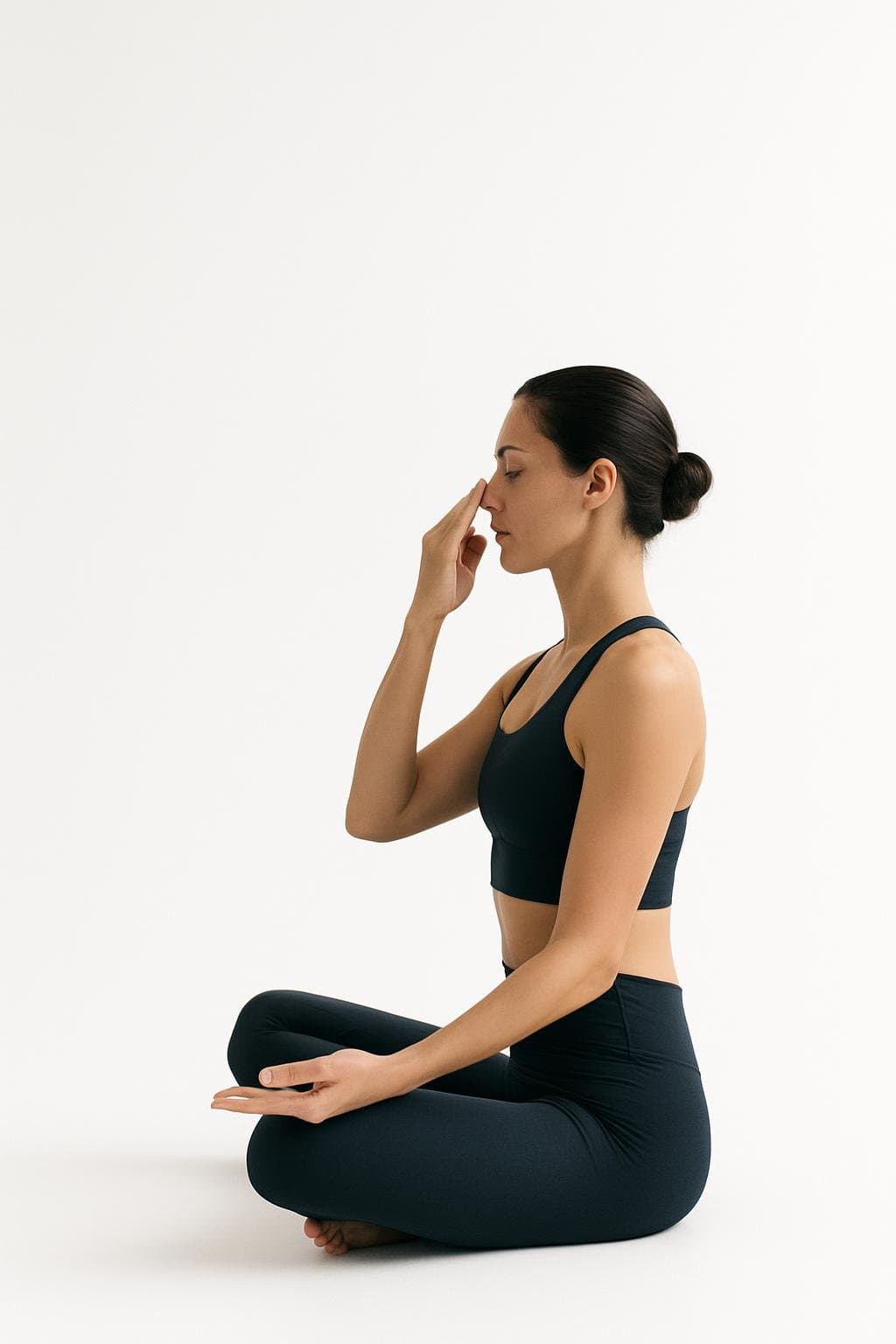 Alternate-Nostril Breathingbeginner
Nadi Shodhana
Breathe in through one nostril, out through the other, alternating in a slow, even rhythm guided by your fingers. One of the most reliably settling breath practices — good before meditation, sleep, or anything that needs a steady head.
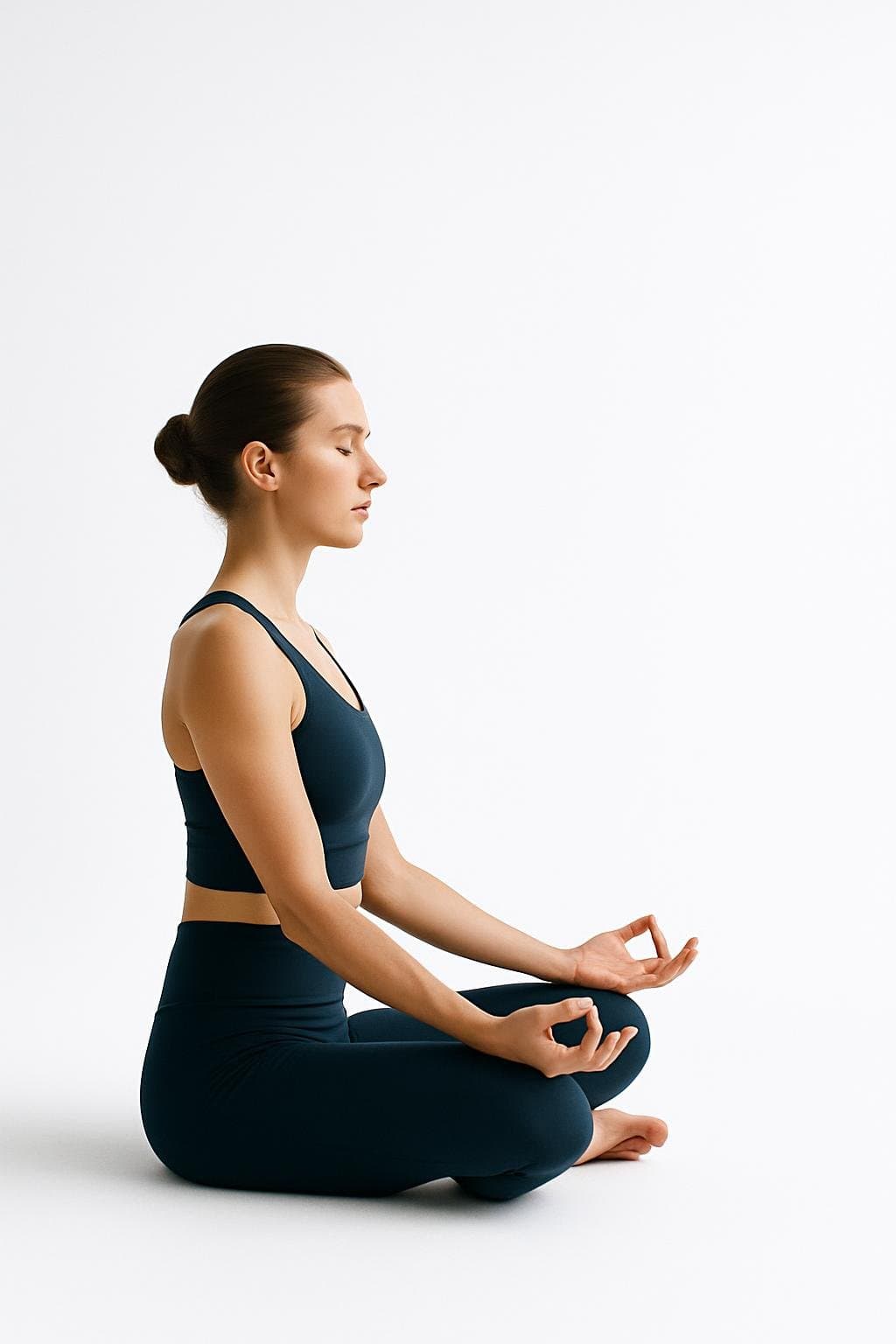 Ocean Breathbeginner
Ujjayi Pranayama
A slow nasal breath with the throat slightly narrowed, producing a soft ocean-like sound. Ujjayi is the soundtrack of Vinyasa and Ashtanga practice — audible enough to follow, never forced enough to strain.
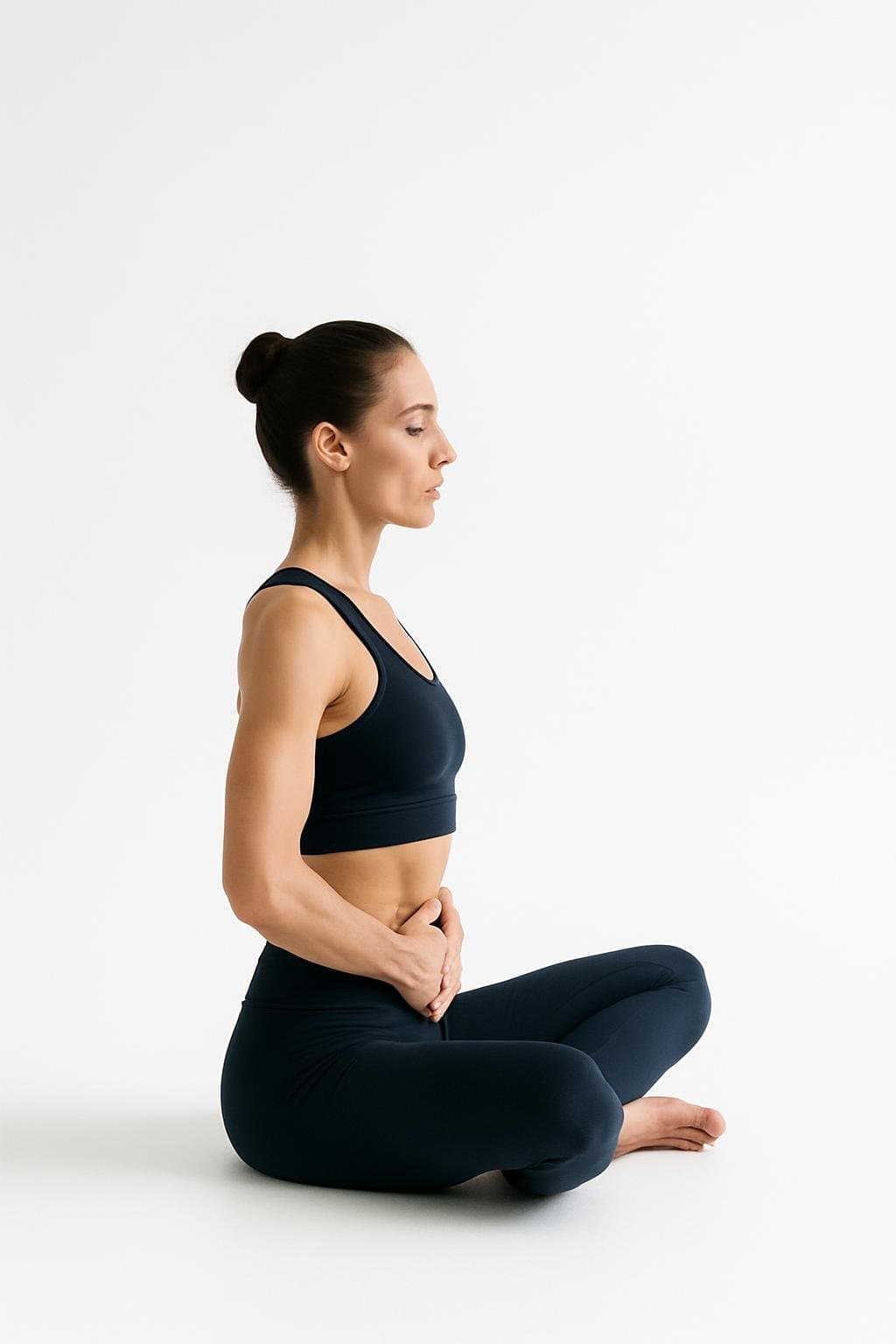 Breath of Fireintermediate
Agni Pran
A rapid, rhythmic breath with equal, active inhales and exhales pumped from the navel — the signature breath of Kundalini yoga. It's related to Kapalabhati but continuous and balanced, and it deserves the same cautions.
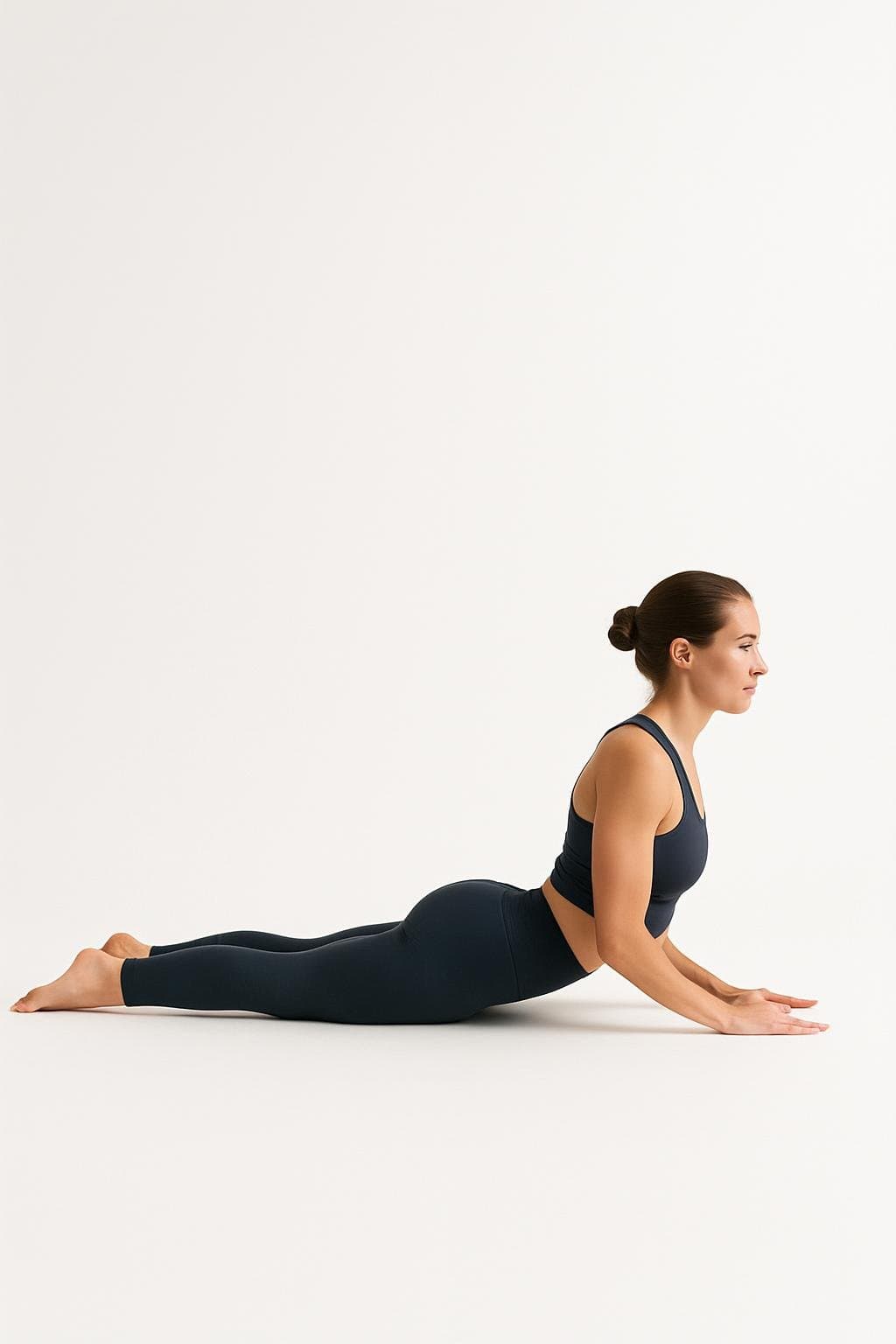 Cobra Posebeginner
Bhujangasana
A gentle prone backbend where the chest lifts and the legs stay grounded. Cobra is the everyday backbend most people meet first, and it rewards patience more than height.
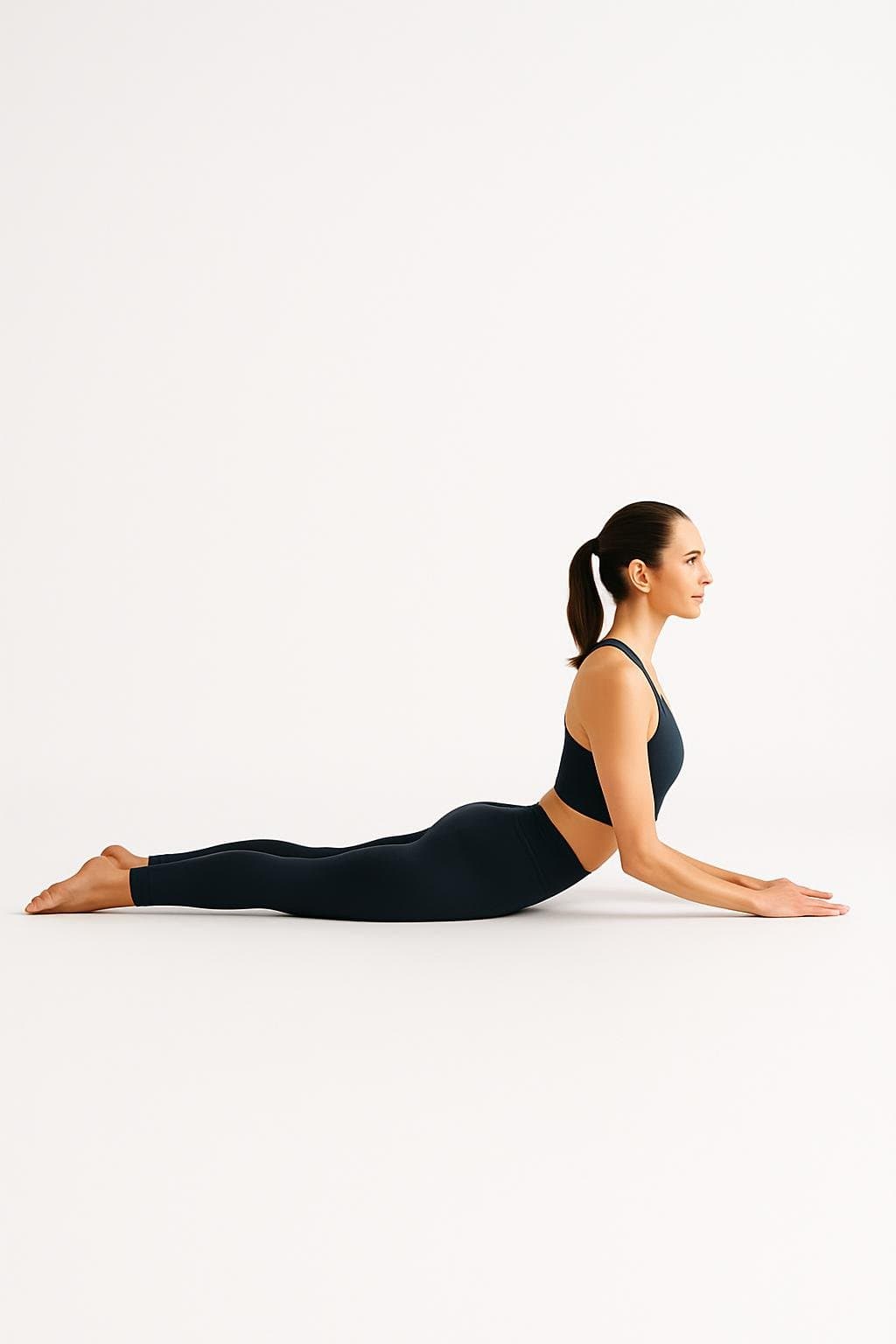 Sphinx Posebeginner
Salamba Bhujangasana
A forearm-supported backbend that lets the spine curve gently without much effort. Sphinx is the mildest prone backbend and a staple of slow, yin-style practice.
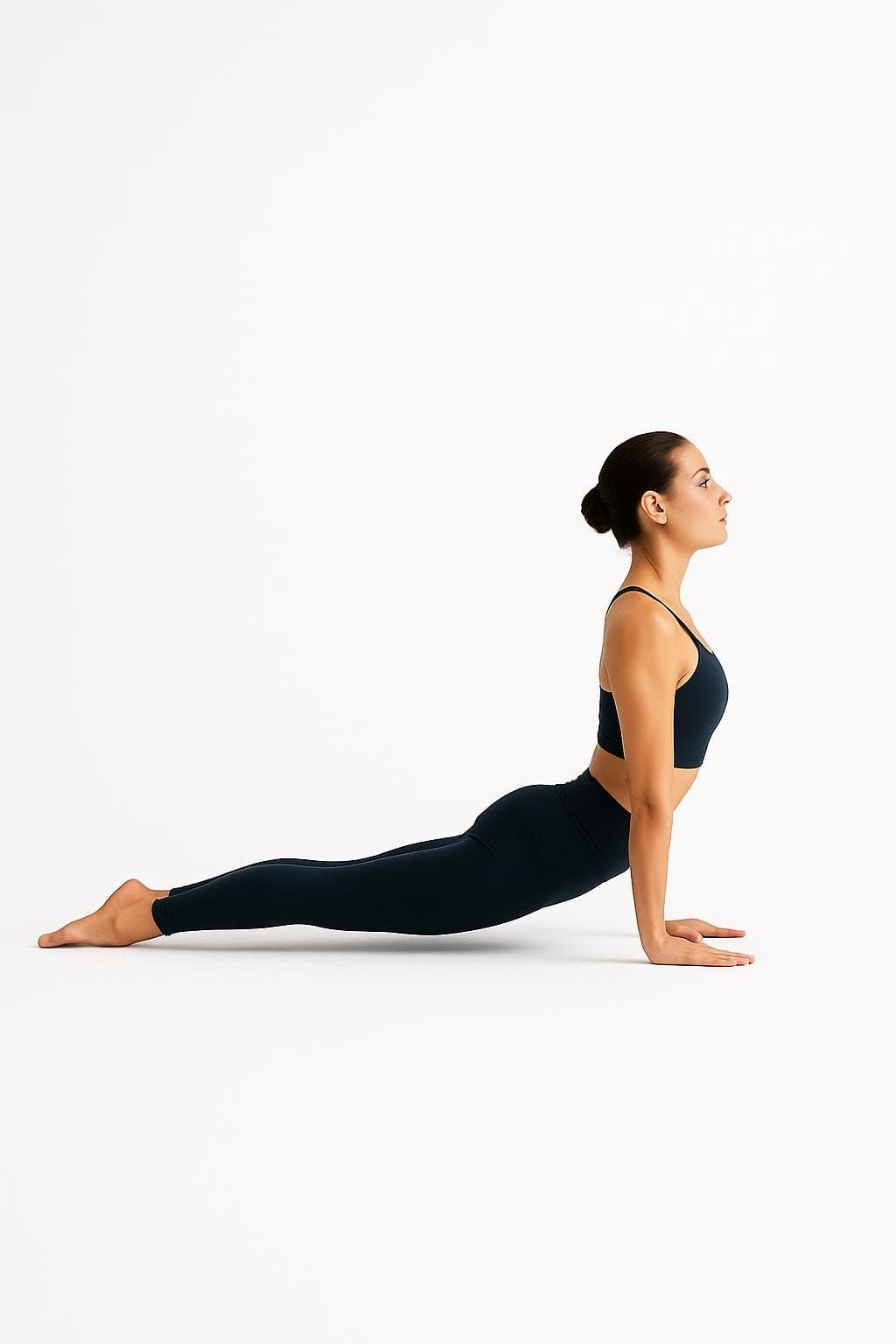 Upward-Facing Dogbeginner
Urdhva Mukha Svanasana
The flowing backbend of vinyasa practice: arms straight, chest open, thighs lifted off the mat. Stronger than Cobra, it asks the whole body to work, not just the spine.
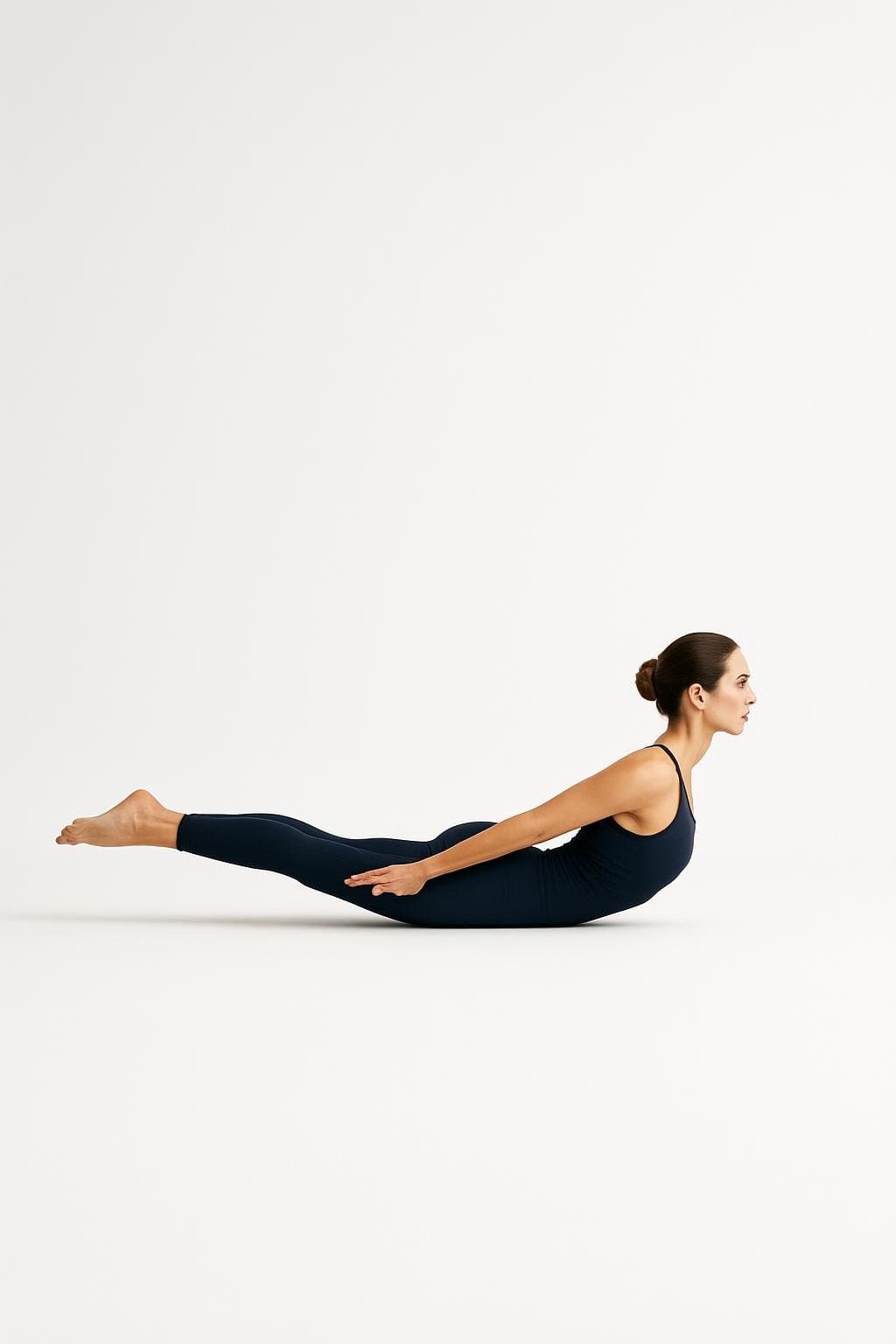 Locust Posebeginner
Salabhasana
A prone backbend powered entirely by your back body — chest, arms, and legs lift with no help from the hands. Locust looks modest and works hard.
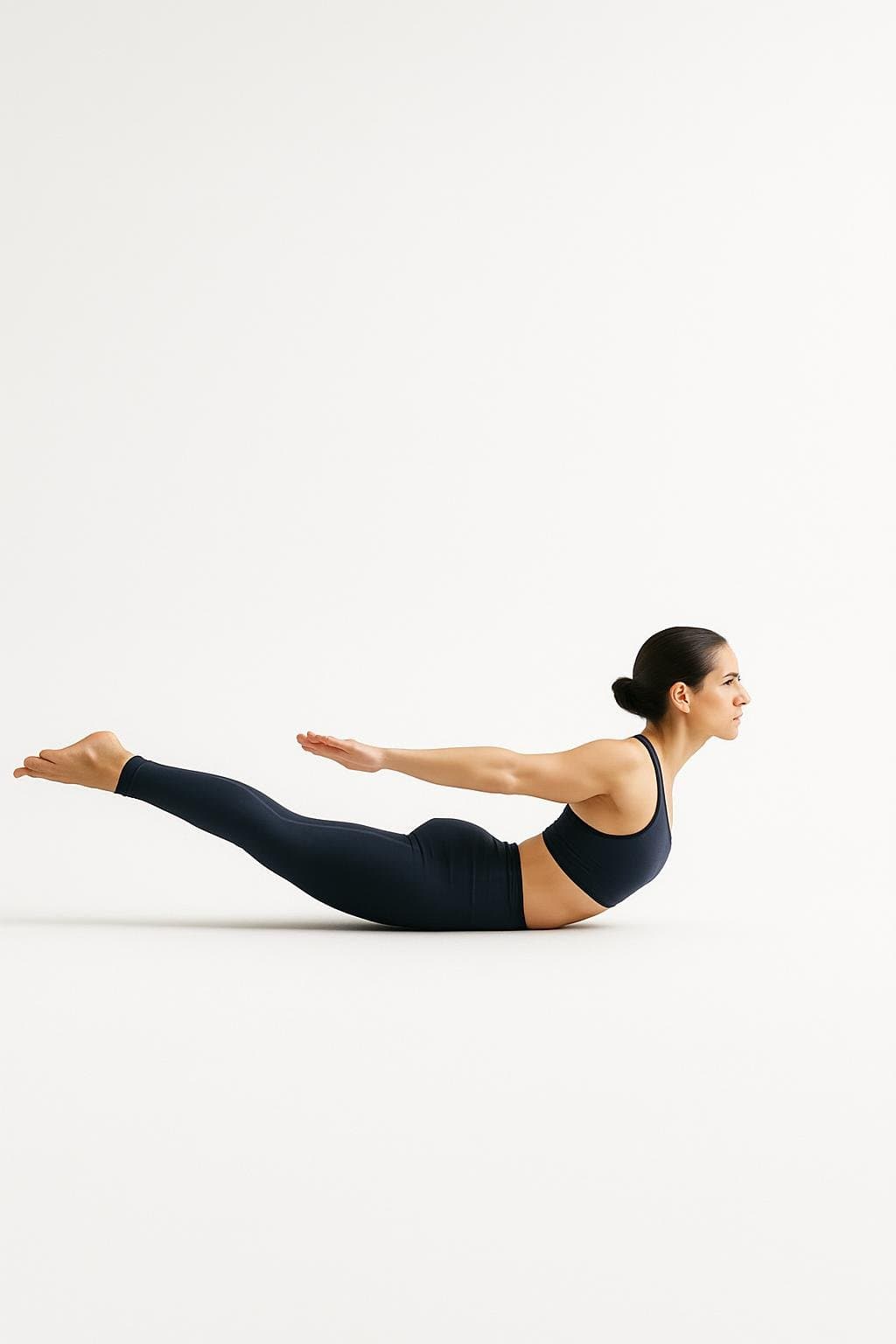 Full Locust Poseintermediate
Poorna Salabhasana
The stronger locust from the Bikram/Hot 26 series: arms out like wings, everything lifting at once, the body shaped like a shallow airplane. Pure back-body strength, no props, no hands.
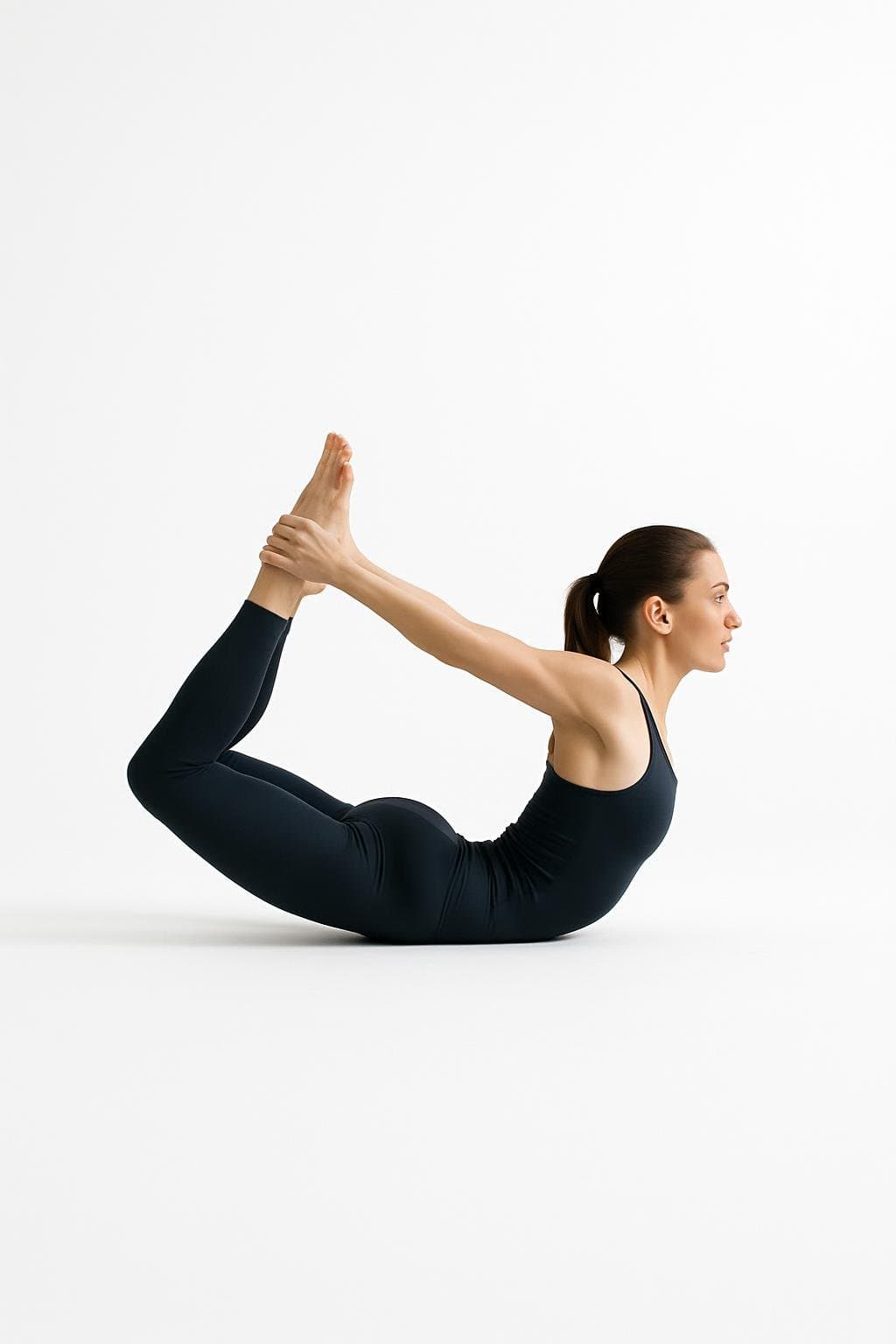 Bow Poseintermediate
Dhanurasana
Lying on your belly, you catch your ankles and let leg power draw the chest open — the body curved like an archer's bow. The kick of the legs, not the pull of the arms, creates the shape.
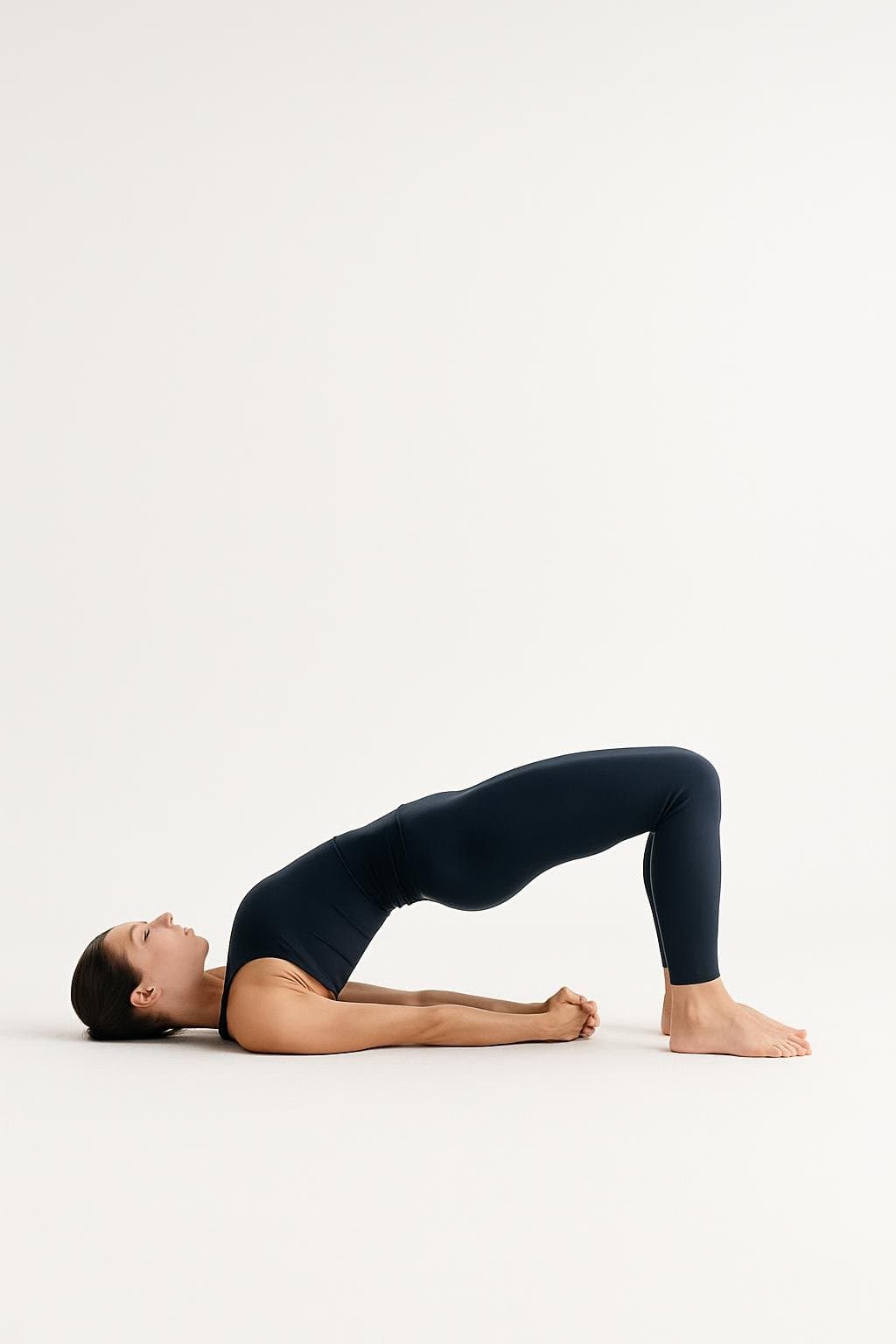 Bridge Posebeginner
Setu Bandha Sarvangasana
A supine backbend where the feet and shoulders carry the load and the hips rise between them. Bridge is the friendliest doorway into backbending, and with a block under the sacrum it becomes a resting pose.
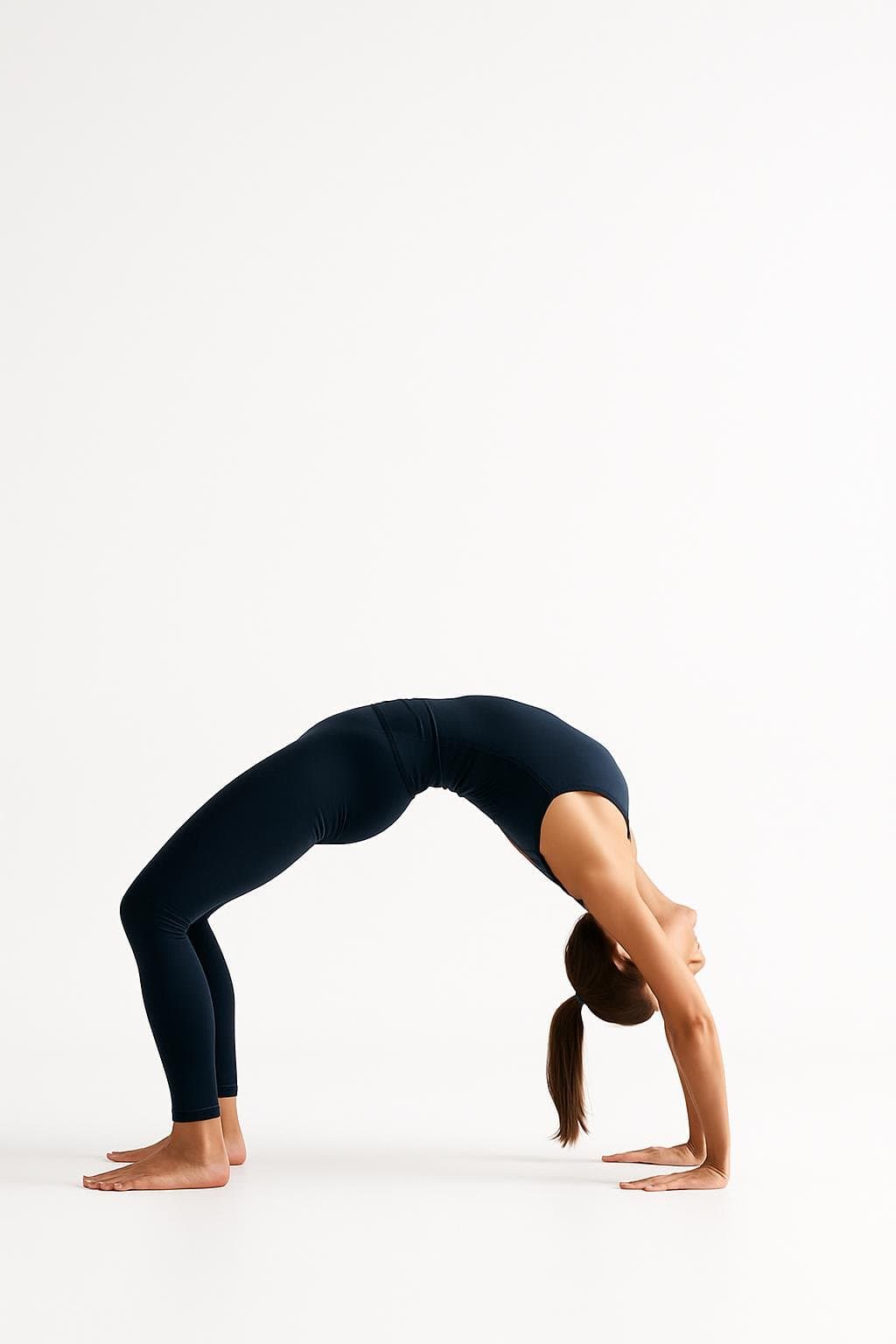 Wheel Poseadvanced
Urdhva Dhanurasana
The full backbend: hands and feet on the floor, the whole front of the body arched open toward the ceiling. Wheel demands open shoulders, strong legs, and honest preparation — it is a pose to build toward, not to force.
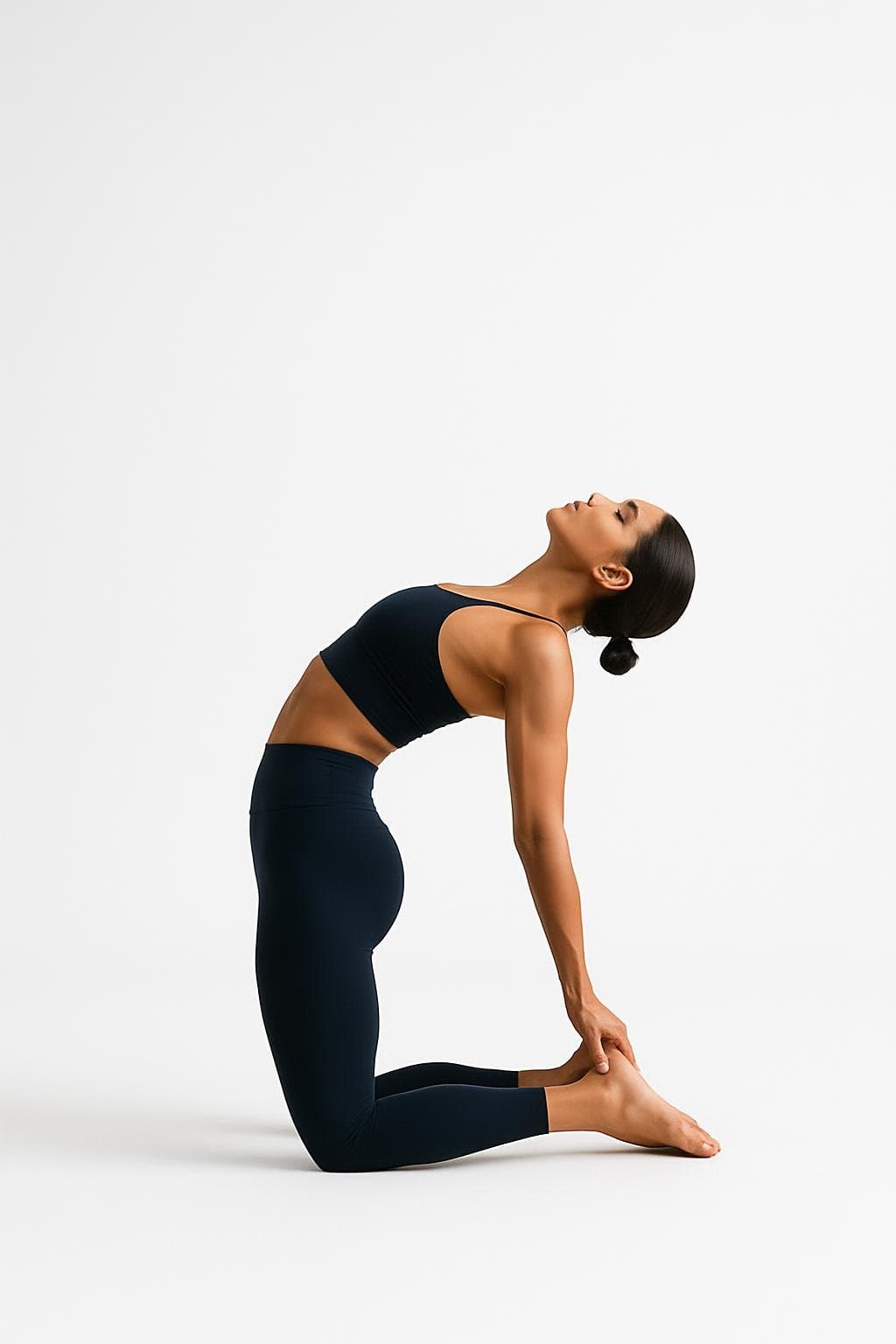 Camel Poseintermediate
Ustrasana
A kneeling backbend where the hips press forward and the hands reach back to the heels. Camel opens the entire front body and can feel intense quickly — going halfway is a complete practice.
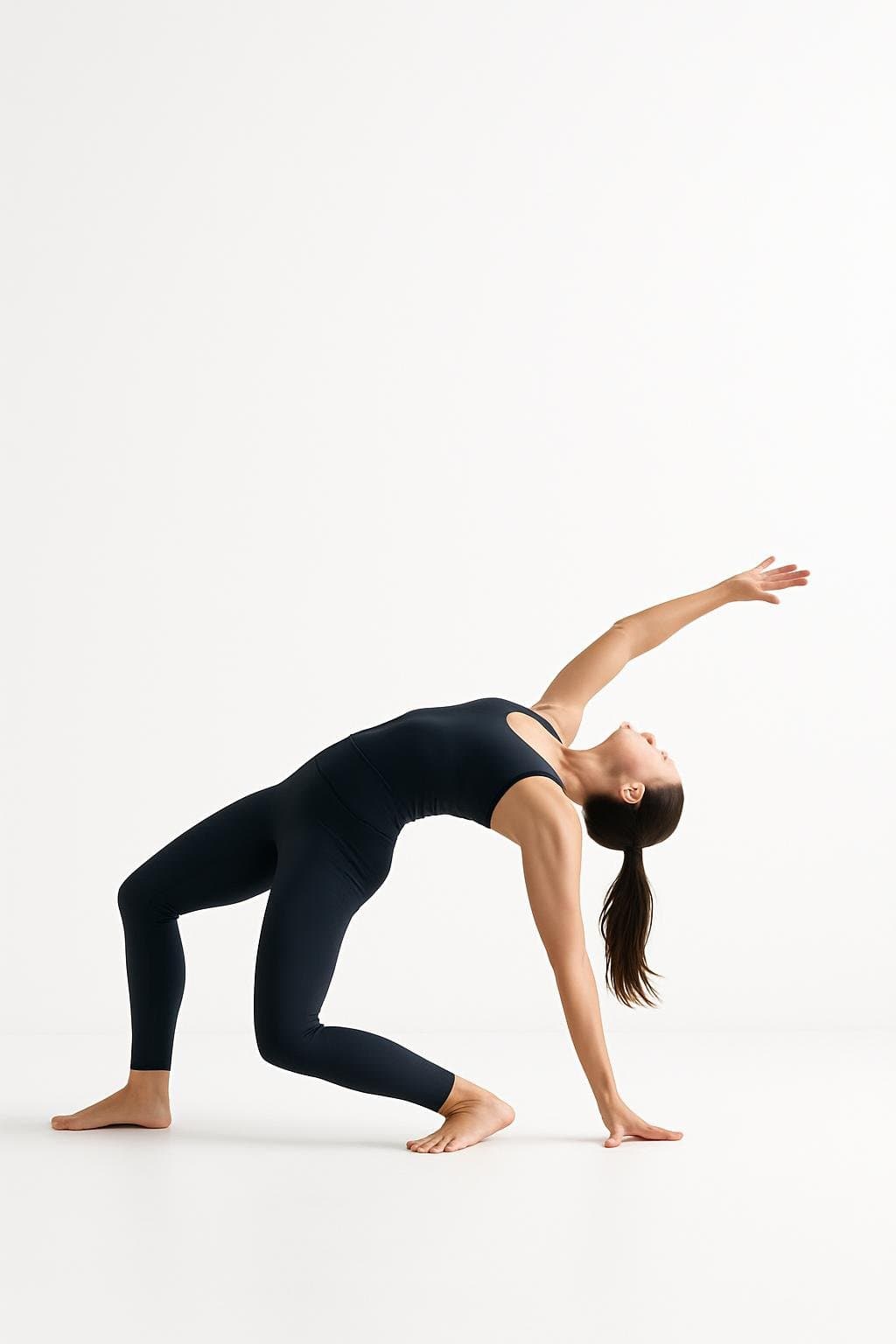 Wild Thingintermediate
Camatkarasana
A one-armed backbend that flips open from Side Plank or Three-Legged Dog: one hand and both feet grounded, chest spiraling toward the sky. Playful, but the supporting shoulder is doing serious work.
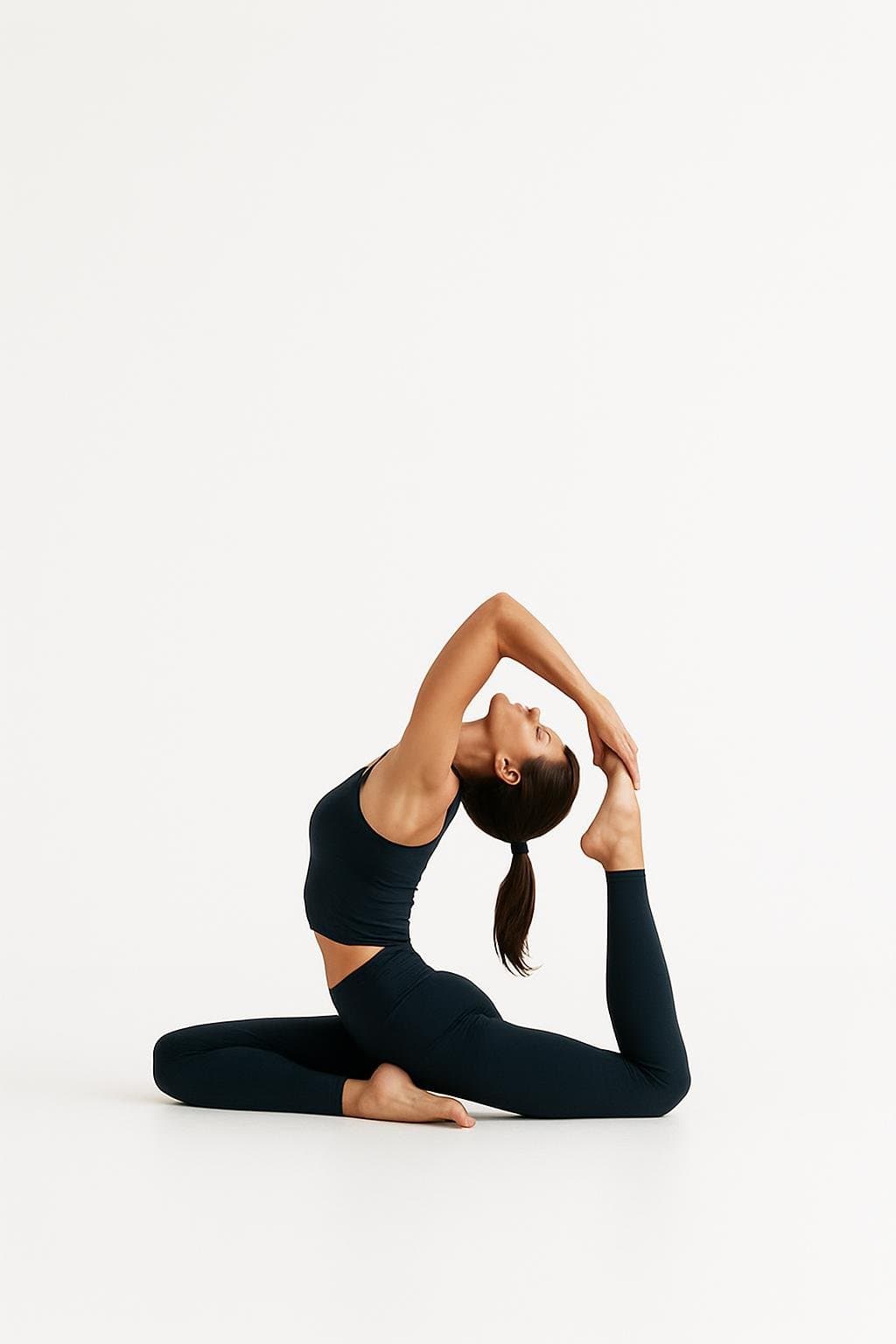 King Pigeon Poseadvanced
Eka Pada Rajakapotasana
The full expression of pigeon: from the hip-opening base, the back foot is caught and drawn toward the head as the chest lifts. It asks for open hips, open shoulders, and a mobile spine all at once, which is why it comes last, not first.
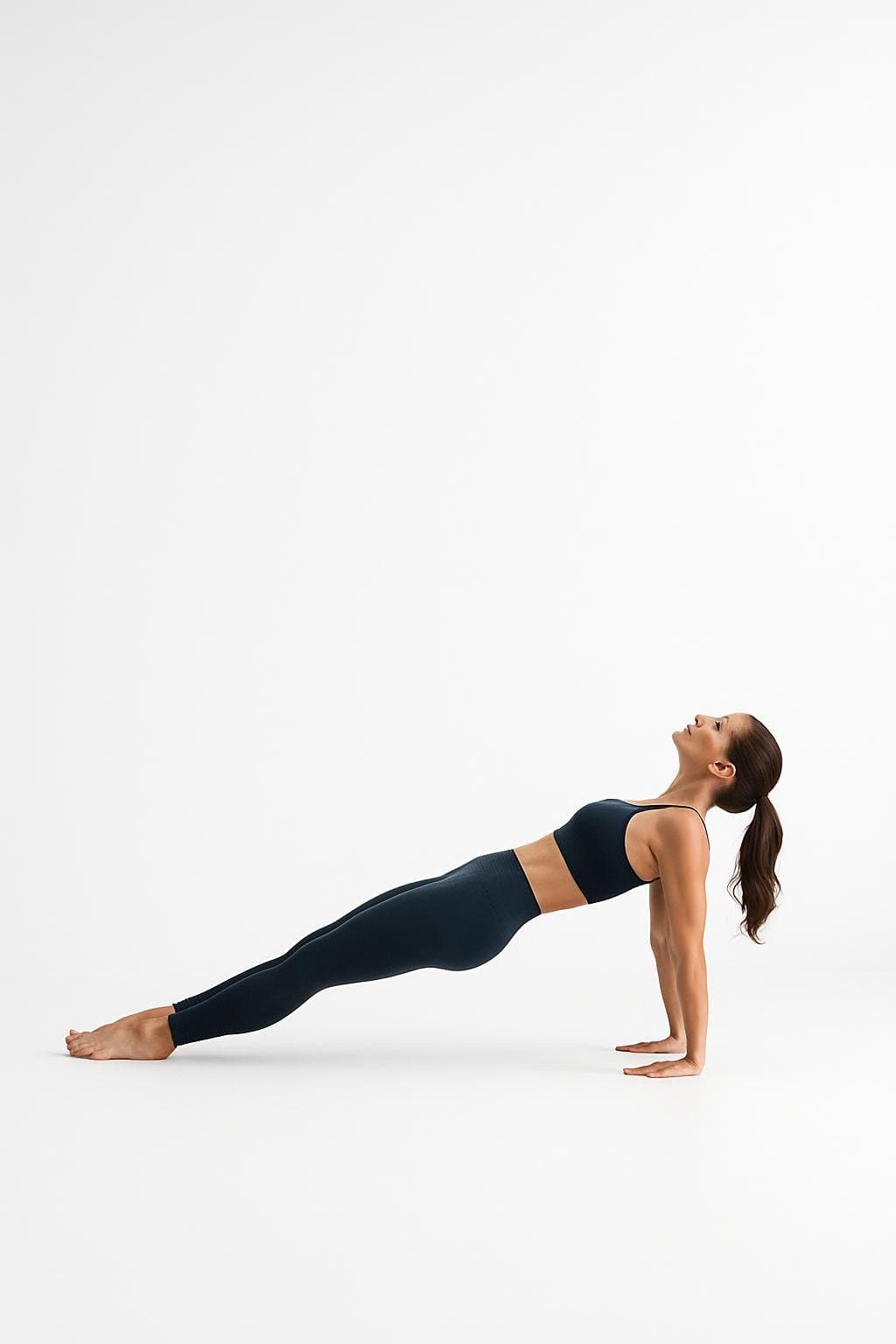 Upward Plank Poseintermediate
Purvottanasana
The mirror image of Plank: face up, legs straight, hips pressing high while the hands and heels hold you up. A strength pose as much as a backbend — the whole back body works so the front body can open.
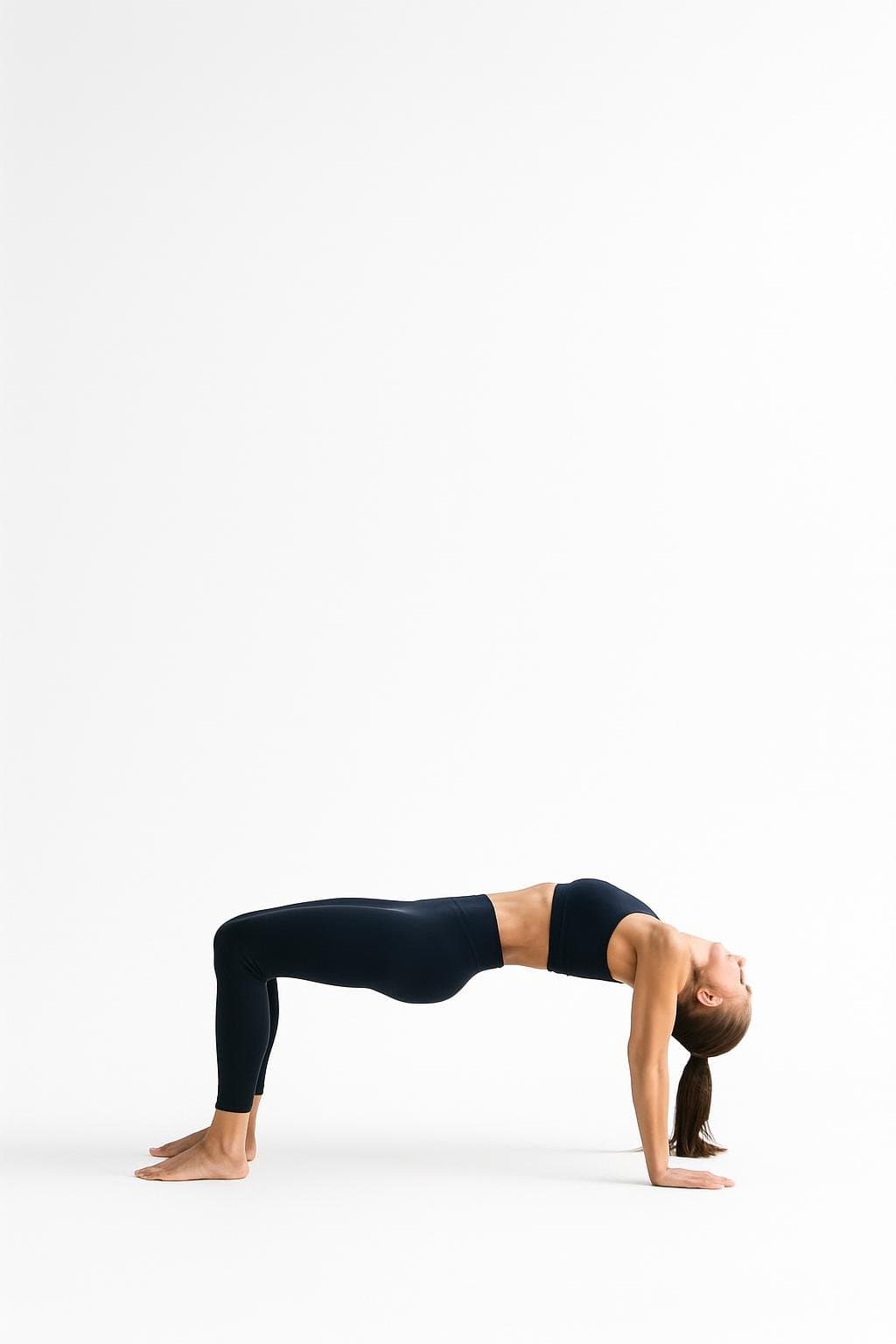 Reverse Tabletopbeginner
Ardha Purvottanasana
A bent-knee version of Upward Plank: hands and feet down, hips lifted until the torso is flat like a tabletop facing the ceiling. Accessible, sturdy, and a satisfying counterpose to sitting.
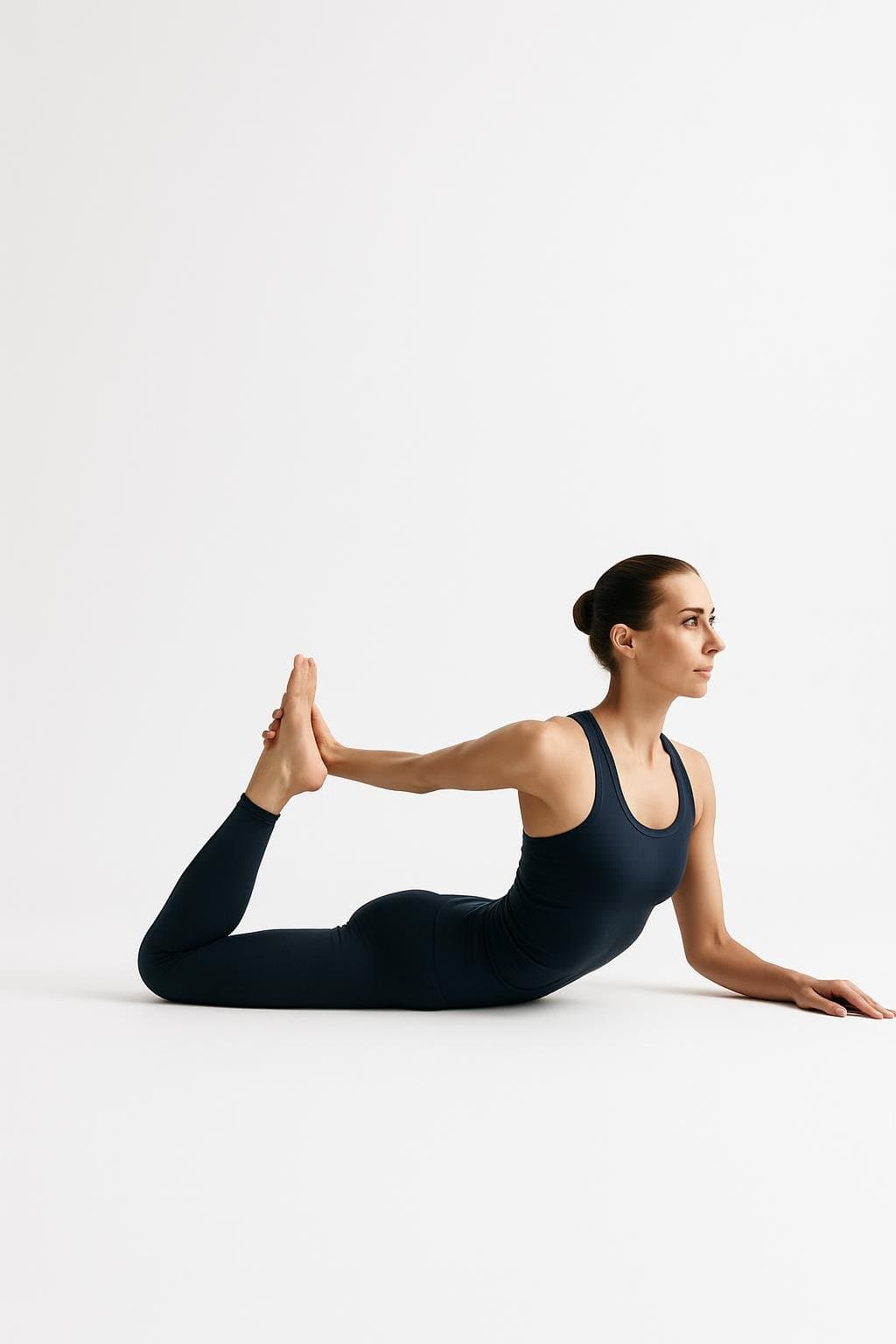 Half Frog Poseintermediate
Ardha Bhekasana
A prone backbend with a deep quad stretch: propped on one forearm, you press the other-side foot toward your hip. Half Frog quietly combines a chest opener with one of the strongest front-of-thigh stretches in the practice.
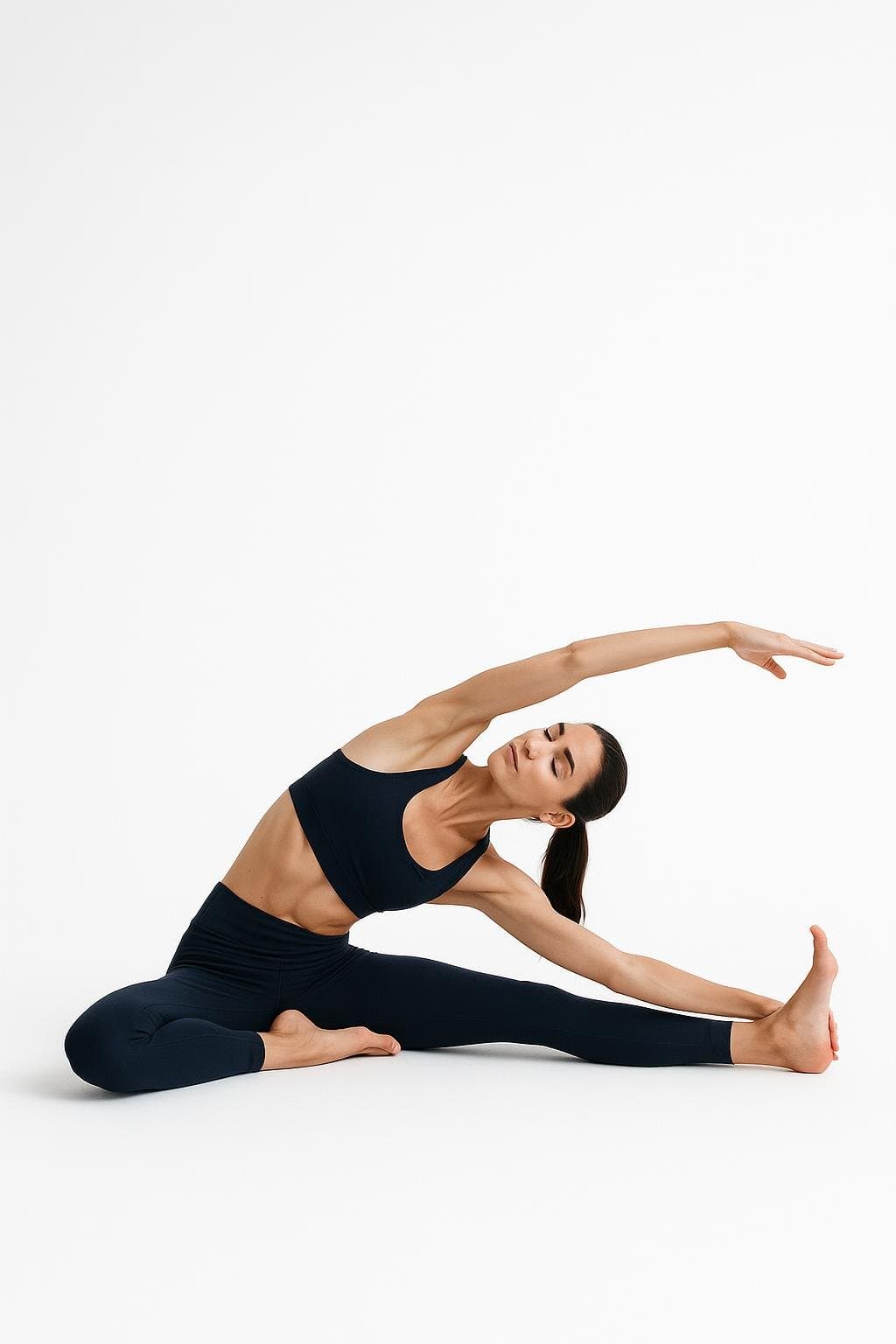 Revolved Head-to-Kneeintermediate
Parivrtta Janu Sirsasana
A seated side stretch with a twist: one leg extends, the torso tilts sideways over it, and the chest revolves toward the ceiling. It opens the whole side body from hip to fingertips.
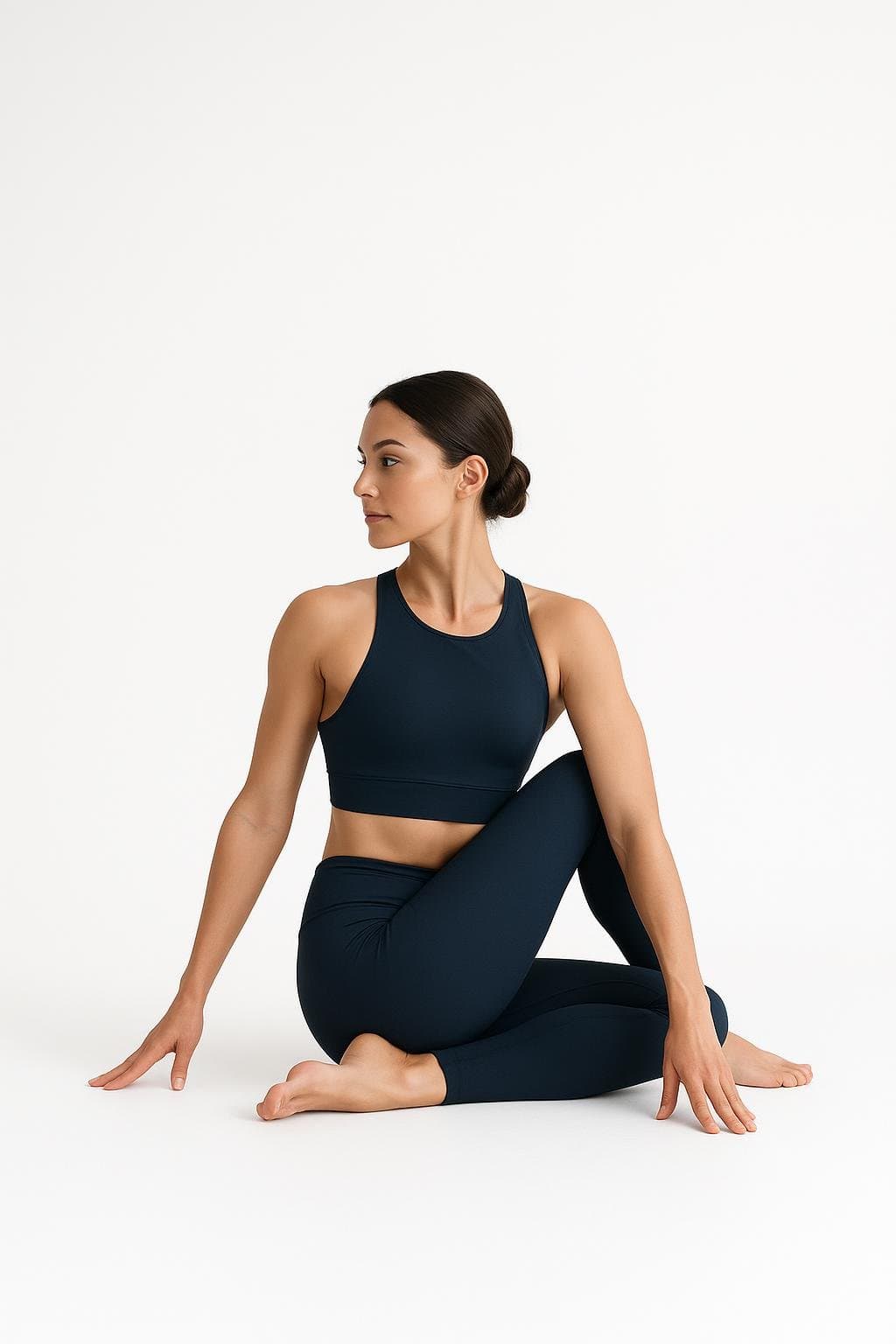 Half Lord of the Fishesbeginner
Ardha Matsyendrasana
The classic seated twist: one knee points up, the opposite elbow hooks outside it, and the spine rotates from the base upward. Simple to set up and easy to adjust to whatever your back wants today.
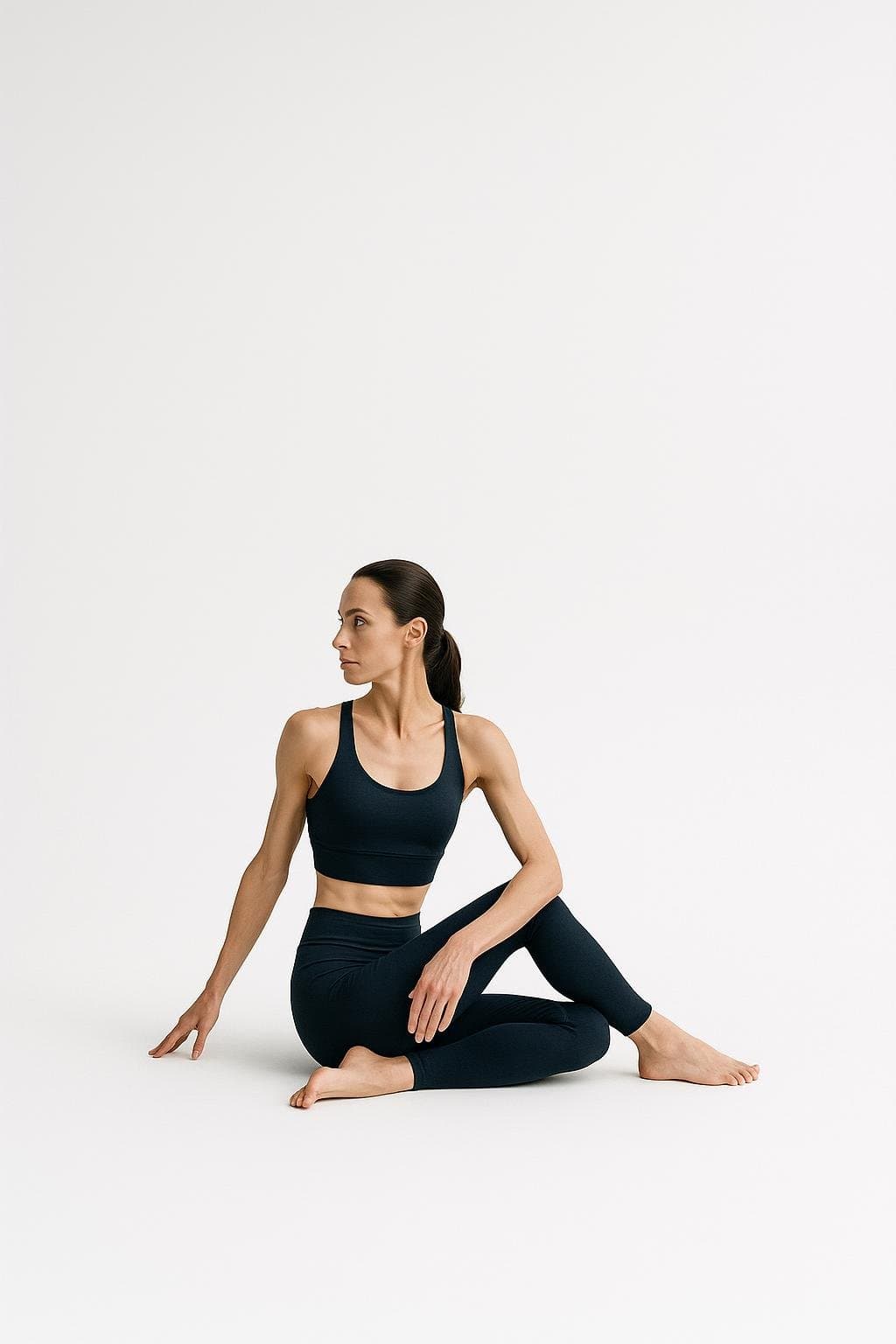 Bharadvaja's Twistbeginner
Bharadvajasana
A gentle seated twist with the legs swept to one side, so the spine rotates without much pressure on the belly. A quieter, kinder alternative when stronger twists feel like too much.
- Revolved Triangleintermediate
Parivrtta Trikonasana
Triangle's demanding sibling: the legs stay in a short, grounded stance while the torso folds forward and revolves across the front leg. It asks for balance, hamstring length, and patience all at once.
- Revolved Side Angleintermediate
Parivrtta Parsvakonasana
A lunge with a deep twist: the opposite elbow hooks outside the front thigh and the chest spirals open. Strong legs, long spine, and a twist you can feel from hip to shoulder.
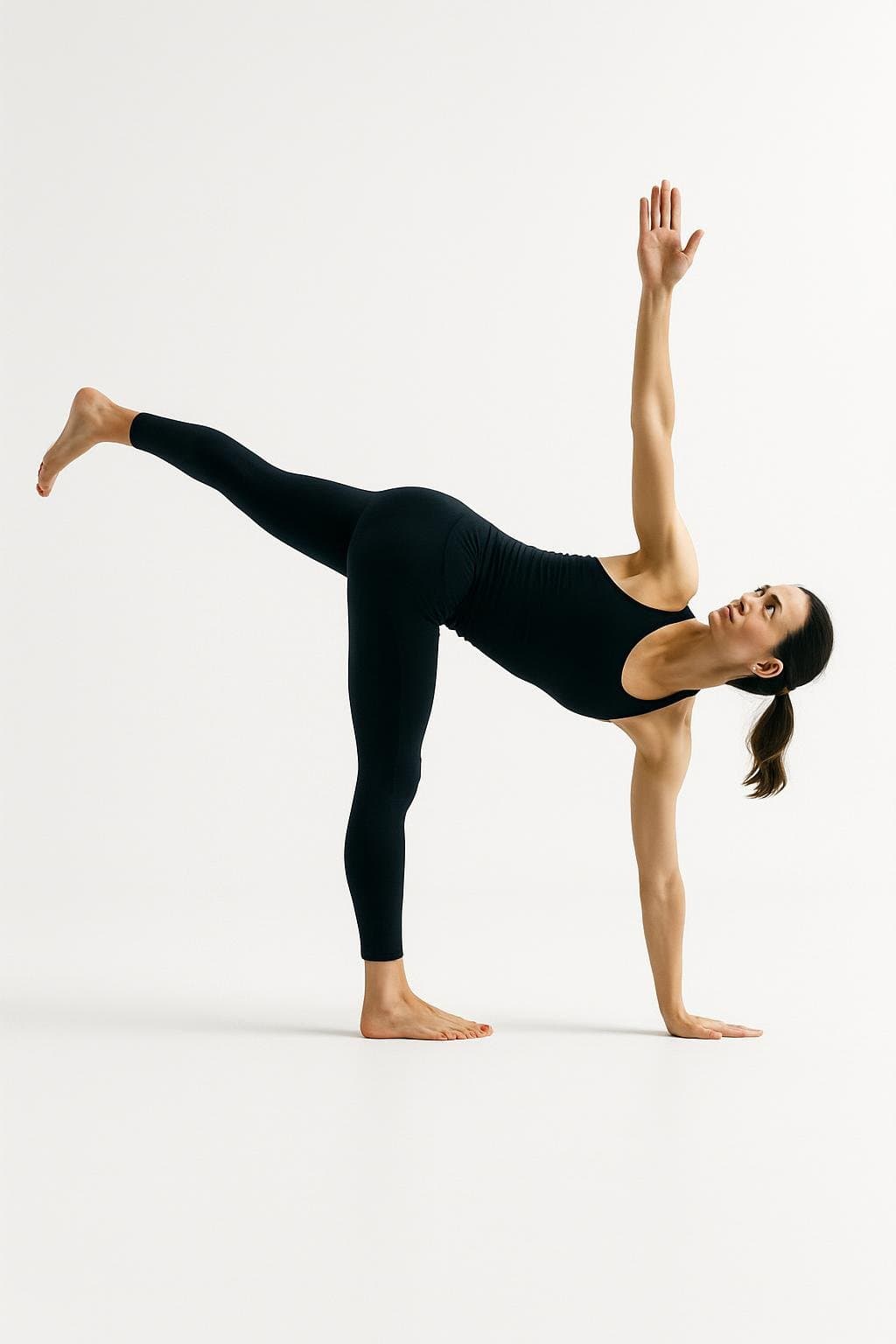 Revolved Half Moonadvanced
Parivrtta Ardha Chandrasana
A one-legged balance and a spinal twist at the same time: standing on one leg, torso parallel to the floor, chest revolving toward the standing-leg side. Expect wobbles — they're part of the pose.
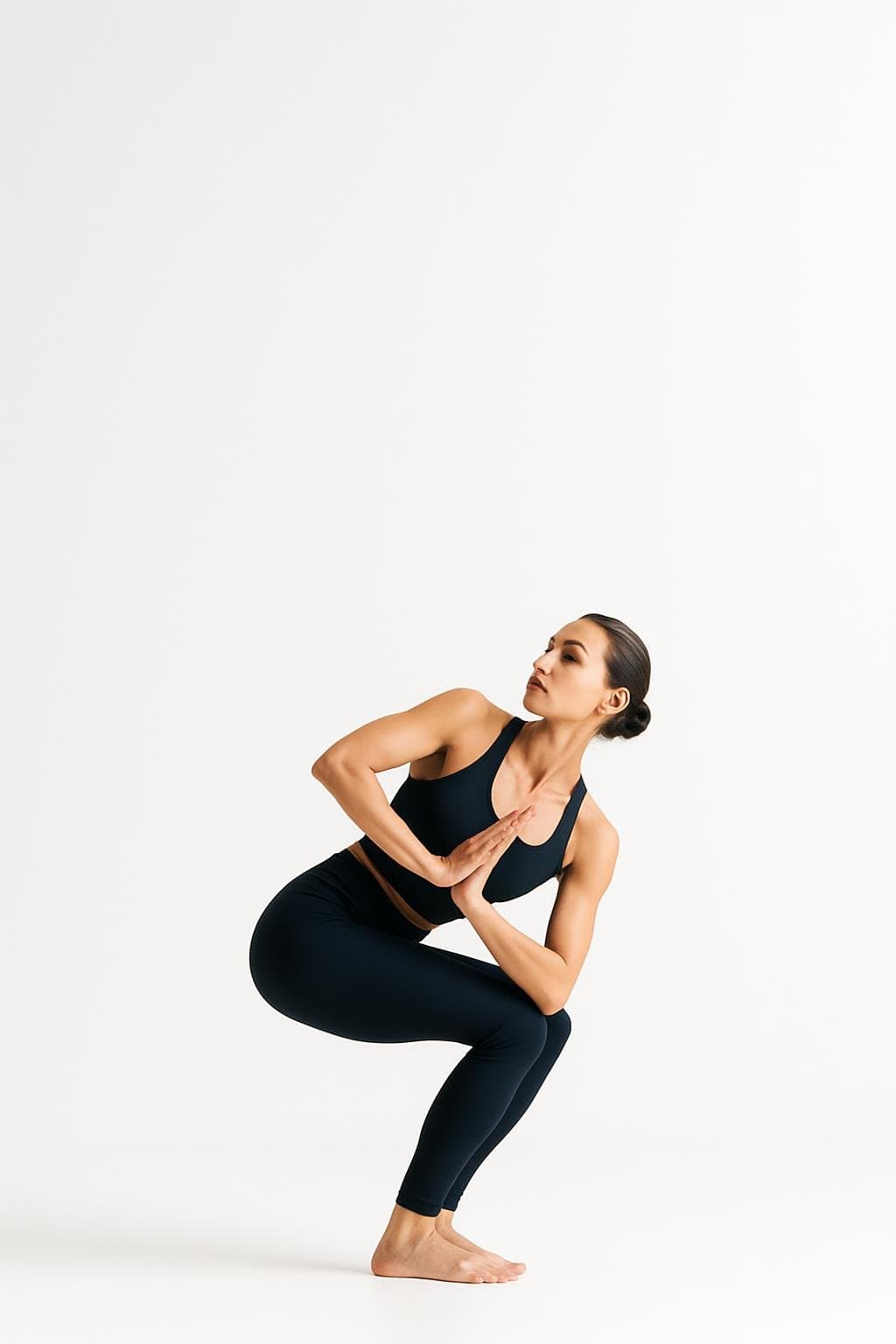 Revolved Chairintermediate
Parivrtta Utkatasana
Chair Pose with a twist: knees bent and level, palms pressed together, one elbow hooked outside the opposite thigh. The legs burn, the spine rotates, and keeping the knees even is the real work.
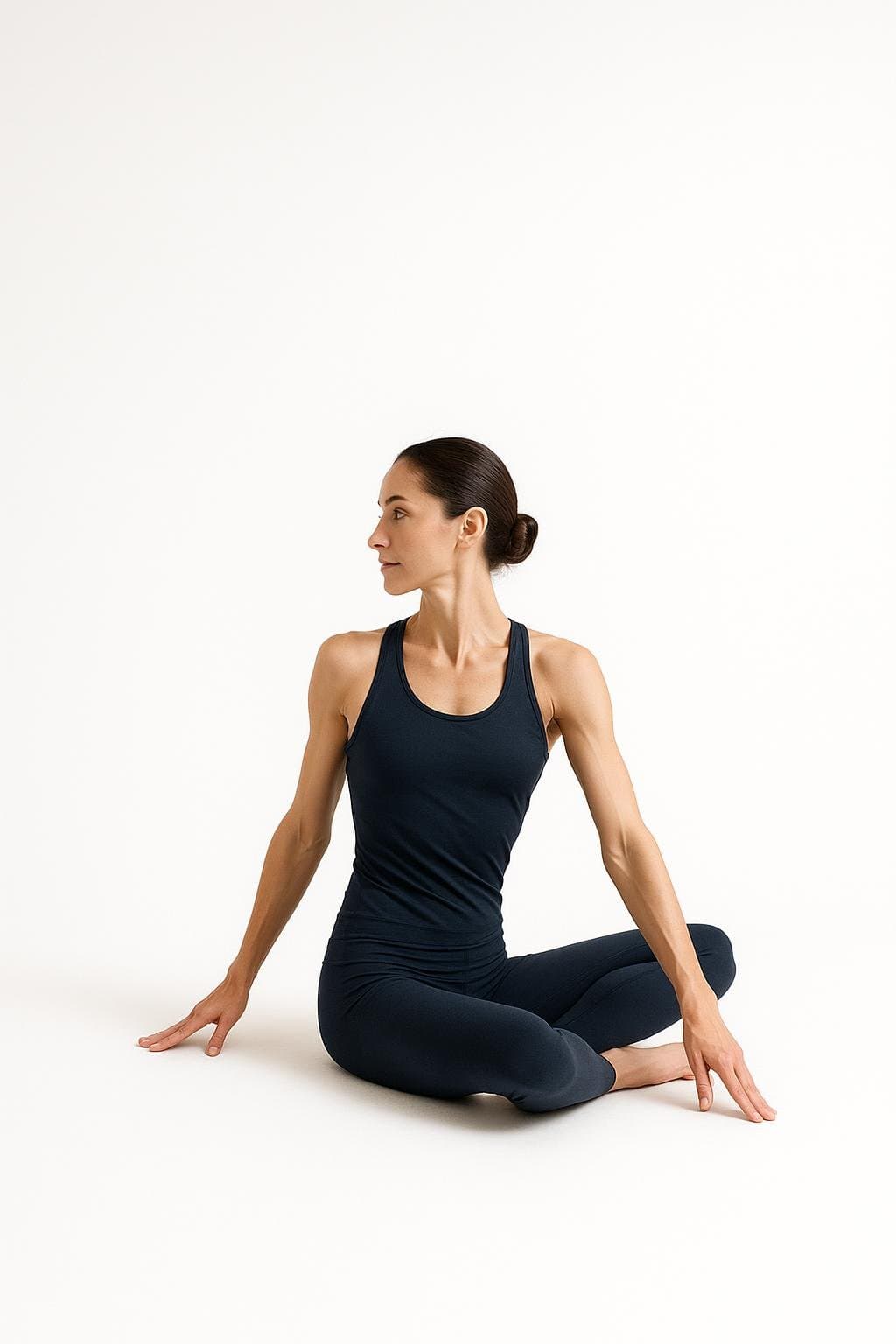 Simple Seated Twistbeginner
Parivrtta Sukhasana
Cross-legged, sitting tall, turning gently to one side — the simplest twist there is. A good way to start or end almost any practice, and the shape most other twists grow from.
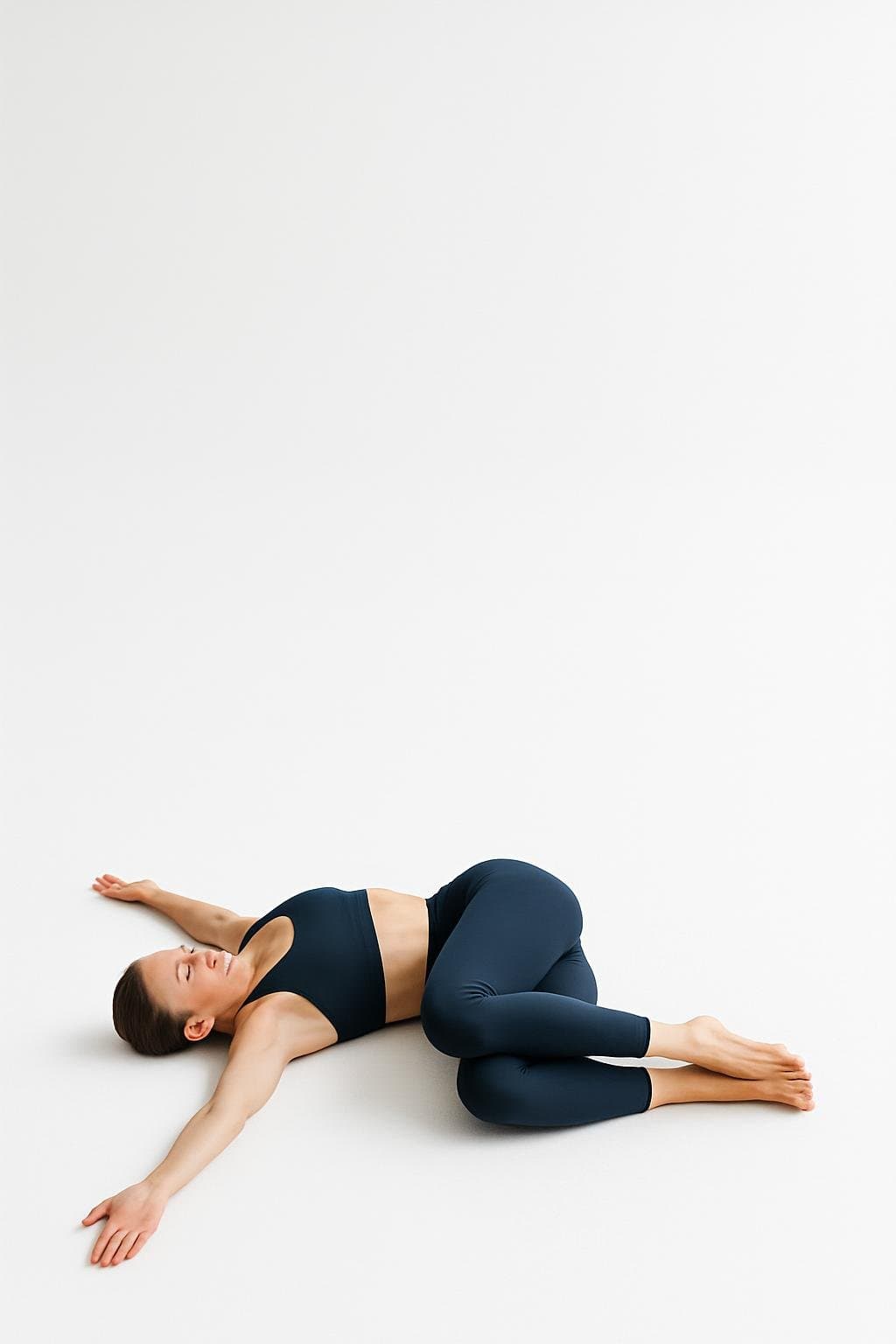 Supine Twistbeginner
Supta Matsyendrasana
Lying on your back, knees dropping to one side, arms wide: gravity does the twisting for you. Usually one of the last poses of a practice, and one of the easiest to relax into.
- Thread the Needlebeginner
Parsva Balasana
From hands and knees, one arm threads under the other until shoulder and ear rest on the mat. A soft twist that targets the space between the shoulder blades better than almost anything.
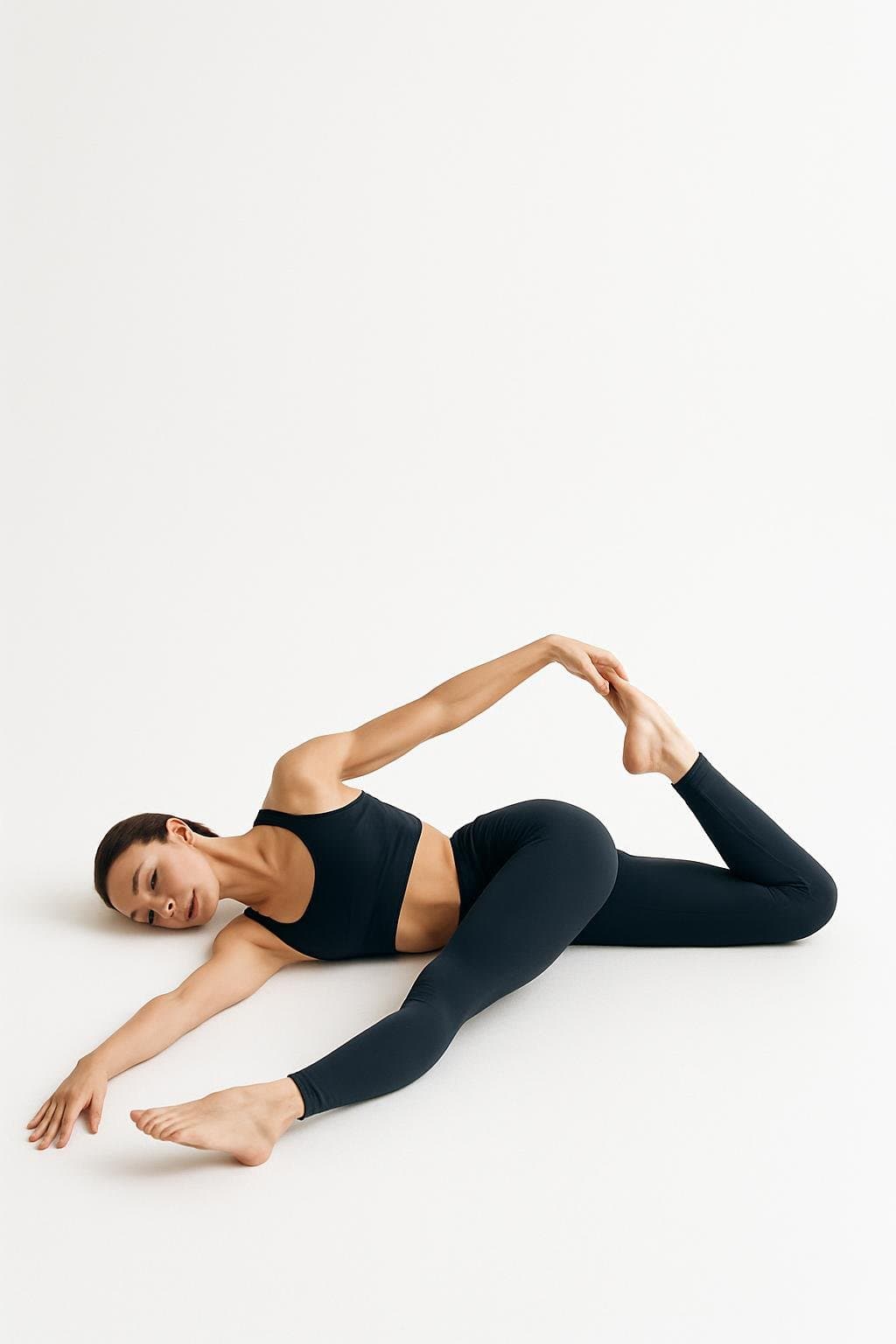 Cat Pulling Its Tailbeginner
—
A reclined Yin twist with a quad stretch built in: lying half on your side, you reach back for the bottom foot while the top leg keeps the twist anchored. Odd-looking, strangely comfortable, held for minutes rather than breaths.
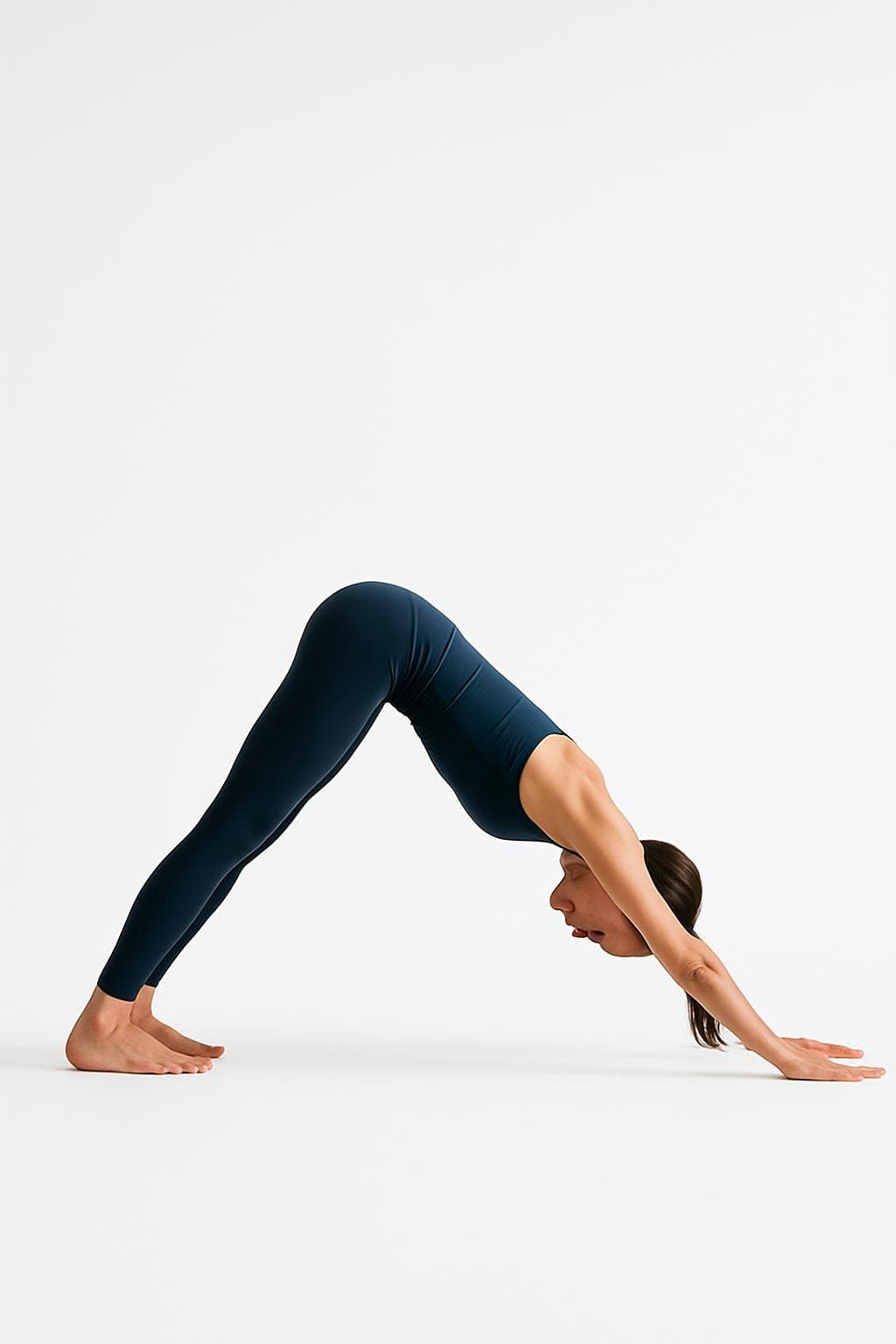 Downward-Facing Dogbeginner
Adho Mukha Svanasana
The most practiced pose in modern yoga: an upside-down V that stretches the whole back body while building shoulder and arm strength. Simple to attempt, surprisingly hard to do well.
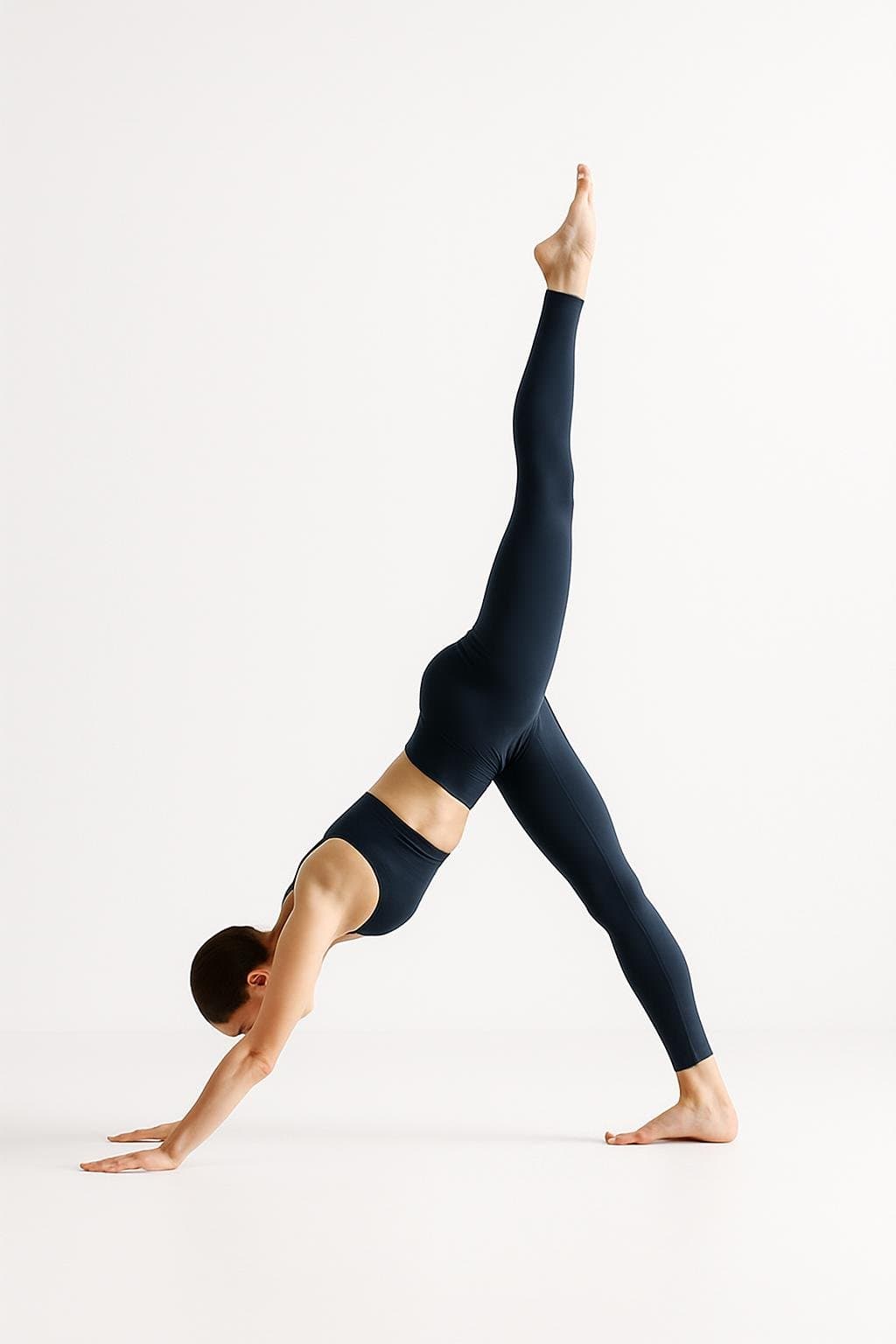 Three-Legged Dogbeginner
Eka Pada Adho Mukha Svanasana
Downward dog with one leg lifted behind you. It adds a hip and hamstring stretch, a light balance challenge, and is the usual doorway into lunges and standing poses.
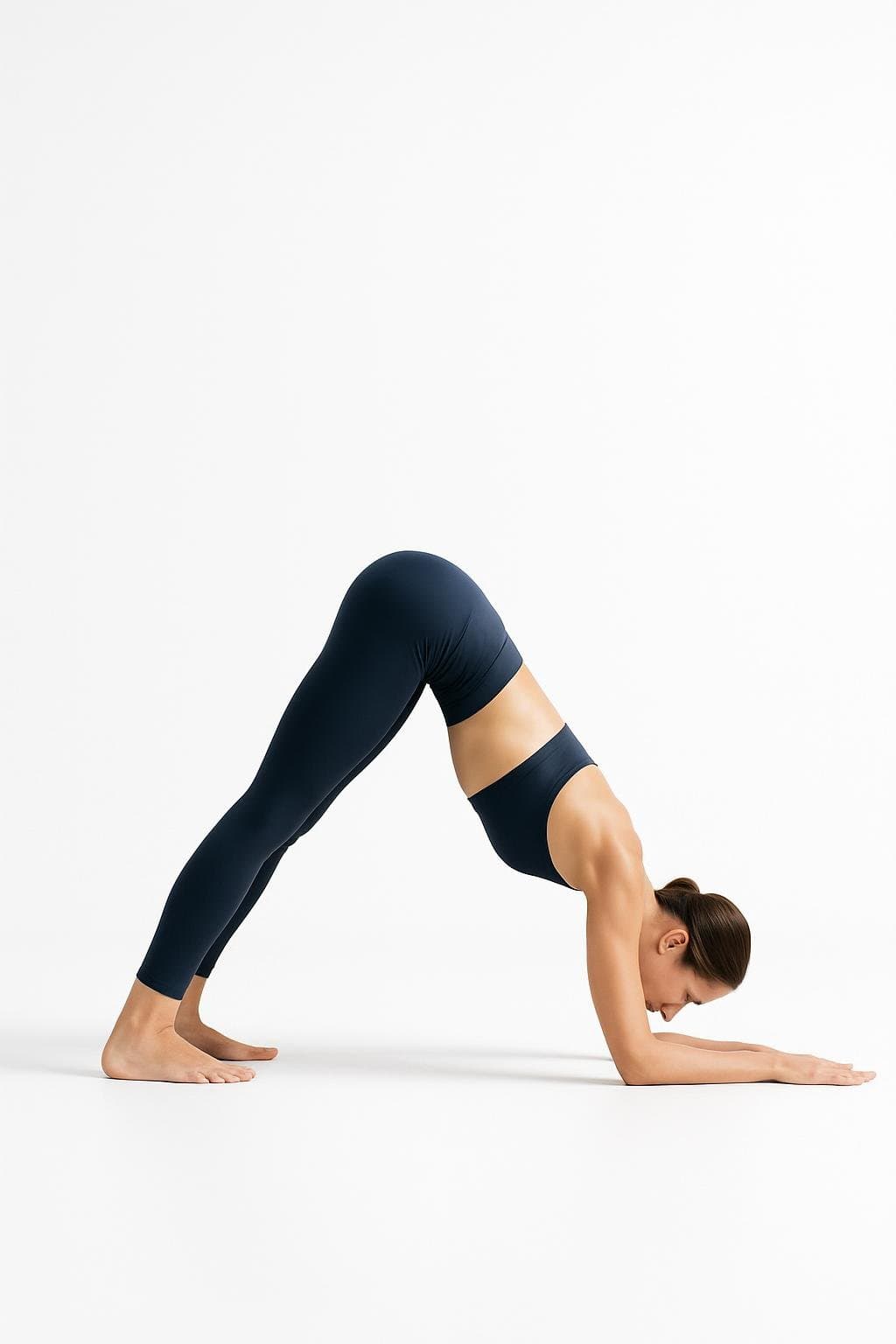 Dolphin Poseintermediate
Ardha Pincha Mayurasana
Downward dog on your forearms. It demands more shoulder openness and strength than down dog, which is exactly why it is the standard preparation for forearm stand and headstand.
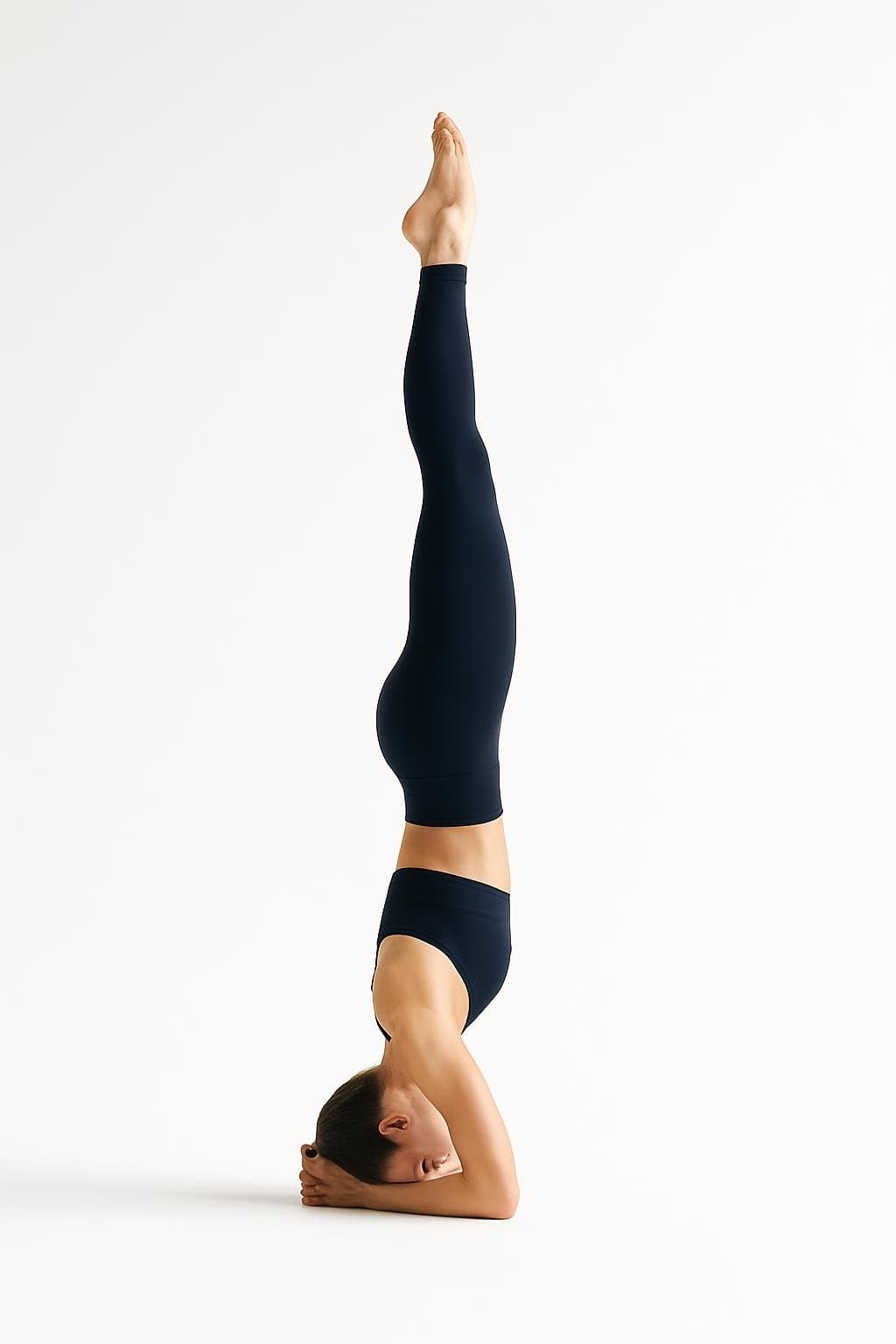 Supported Headstandadvanced
Salamba Sirsasana
A full inversion balanced on the forearms and crown of the head. Rewarding, but genuinely advanced: it loads the neck, and it deserves months of patient preparation at a wall, ideally with a teacher.
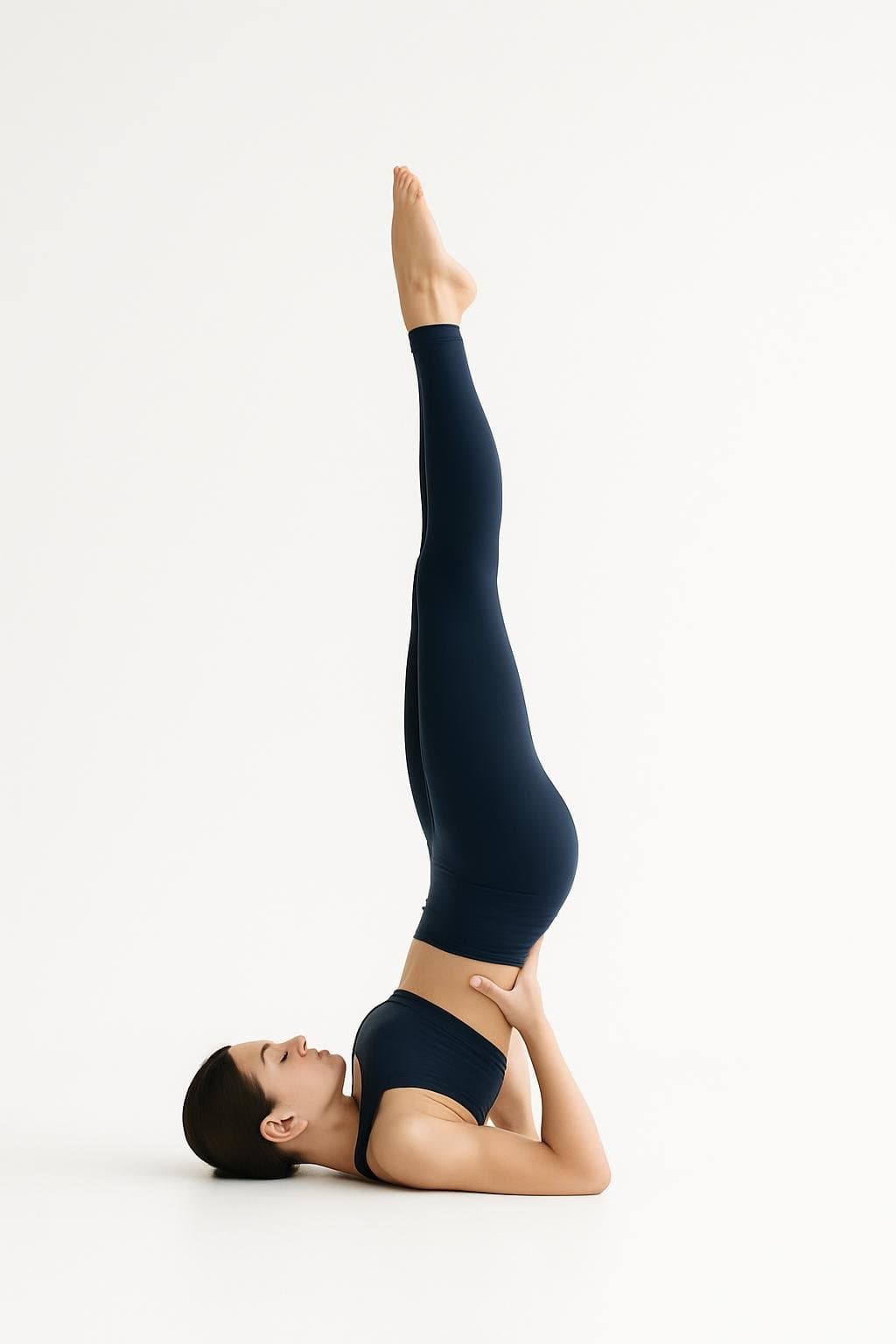 Supported Shoulderstandintermediate
Salamba Sarvangasana
An inversion balanced on the shoulders and upper arms with the hands supporting the back. Traditionally a calming, cooling pose — but it flexes the neck strongly, so careful setup with blankets matters more here than in almost any other pose.
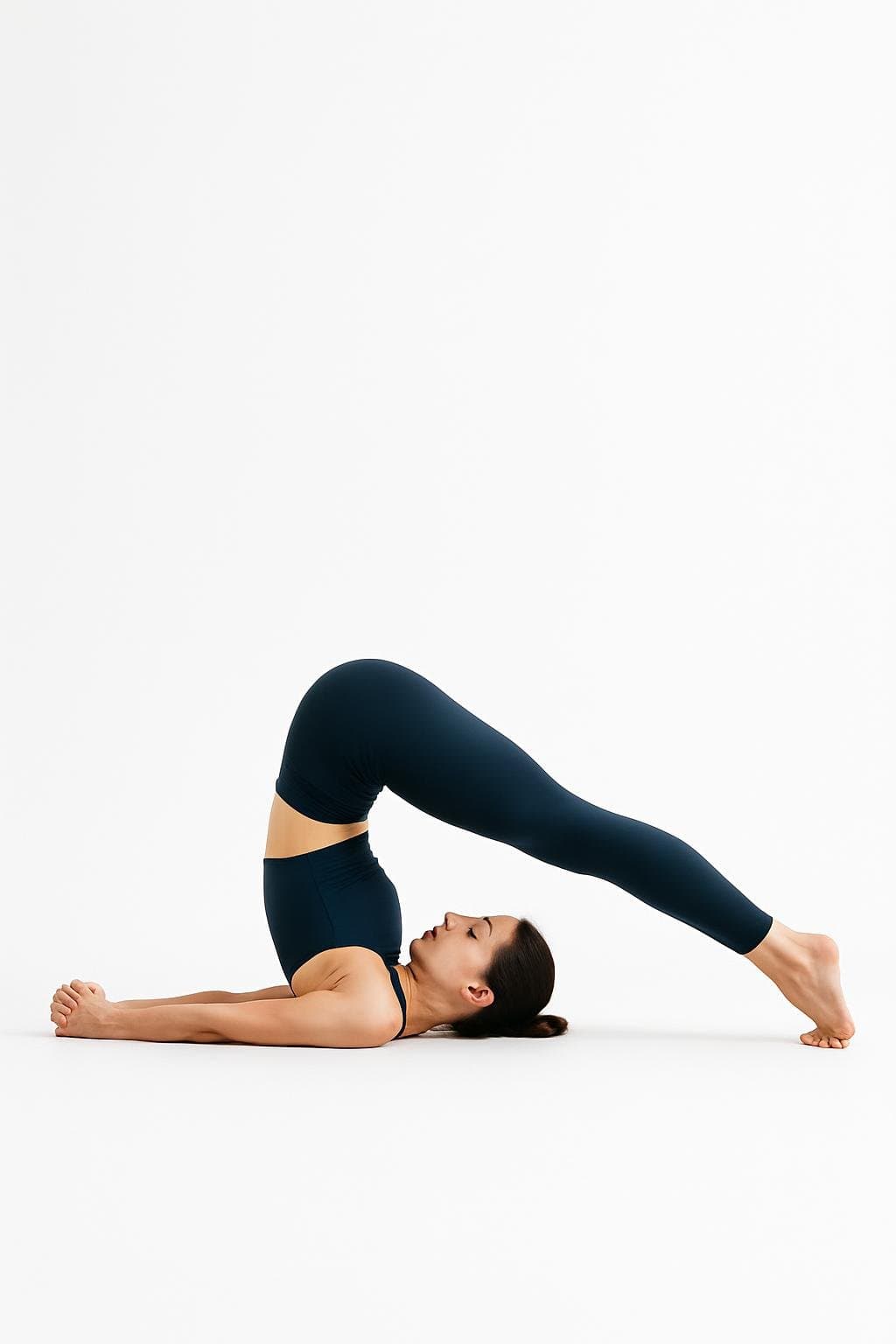 Plow Poseintermediate
Halasana
From shoulderstand, the legs fold overhead until the toes reach the floor behind your head. A deep stretch for the entire back body and neck — and one where blanket support under the shoulders really matters.
- Ear-Pressure Poseintermediate
Karnapidasana
The folded-up cousin of plow: knees bend beside the ears, gently closing off outside sound. A deep, inward-turning shape that asks for a very flexible spine and a well-supported neck.
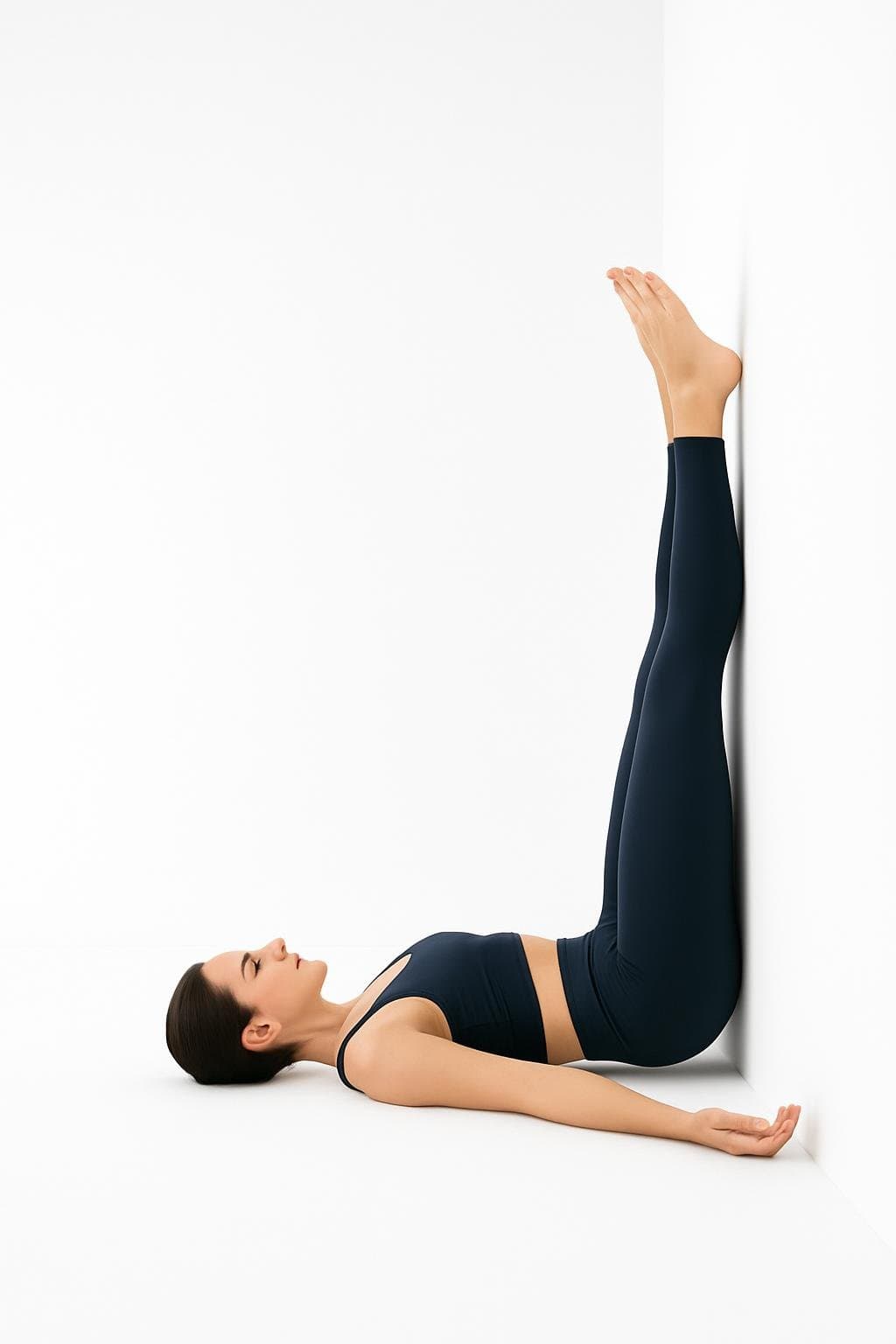 Legs Up the Wallbeginner
Viparita Karani
Lie on your back with your legs resting up a wall. The gentlest inversion there is — no strength, no balance, no neck load — and one of the most reliably restful poses in all of yoga.
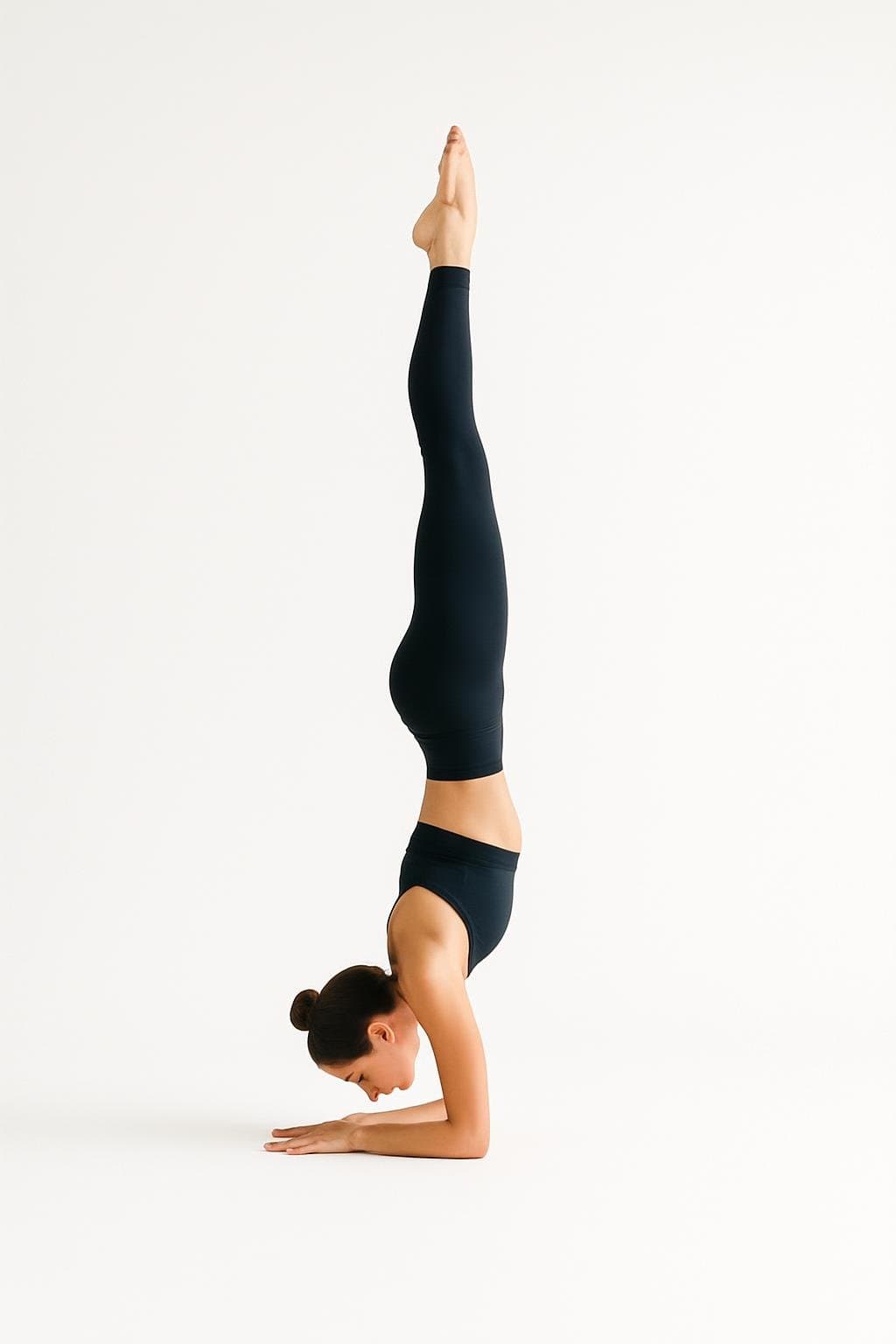 Forearm Standadvanced
Pincha Mayurasana
A full inversion balanced on the forearms — more stable than handstand at the base, but demanding real shoulder strength and openness. Expect a long, humbling apprenticeship at the wall.
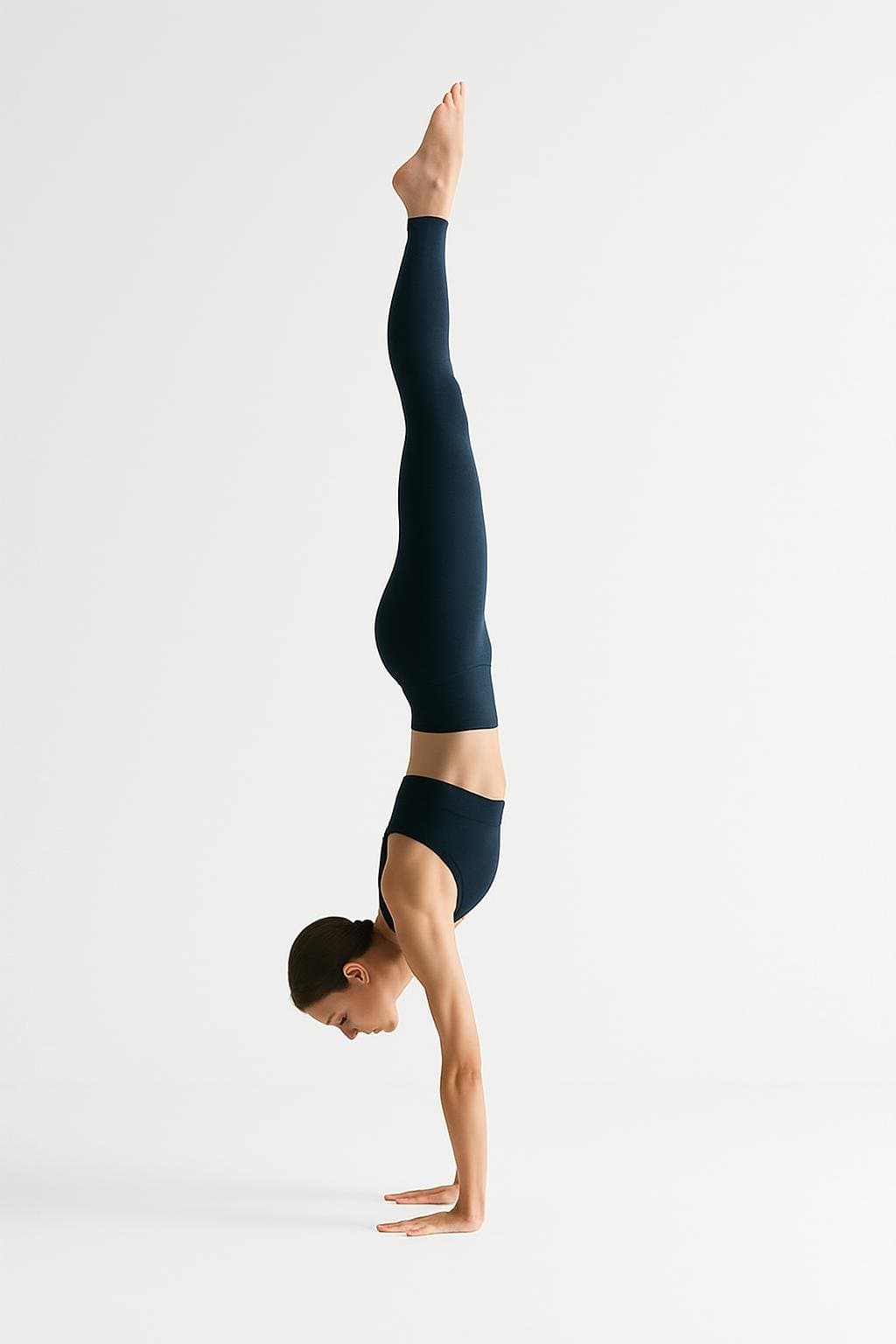 Handstandadvanced
Adho Mukha Vrksasana
Balancing fully inverted on the hands — the most demanding balance in the inversion family. Strong wrists, strong shoulders, and hundreds of patient attempts at a wall are the honest price of admission.
- Upward Lotusadvanced
Urdhva Padmasana
Lotus pose folded into shoulderstand, from the Ashtanga finishing sequence. It requires a secure, well-supported shoulderstand and comfortable full lotus — both, without compromise, before combining them upside down.
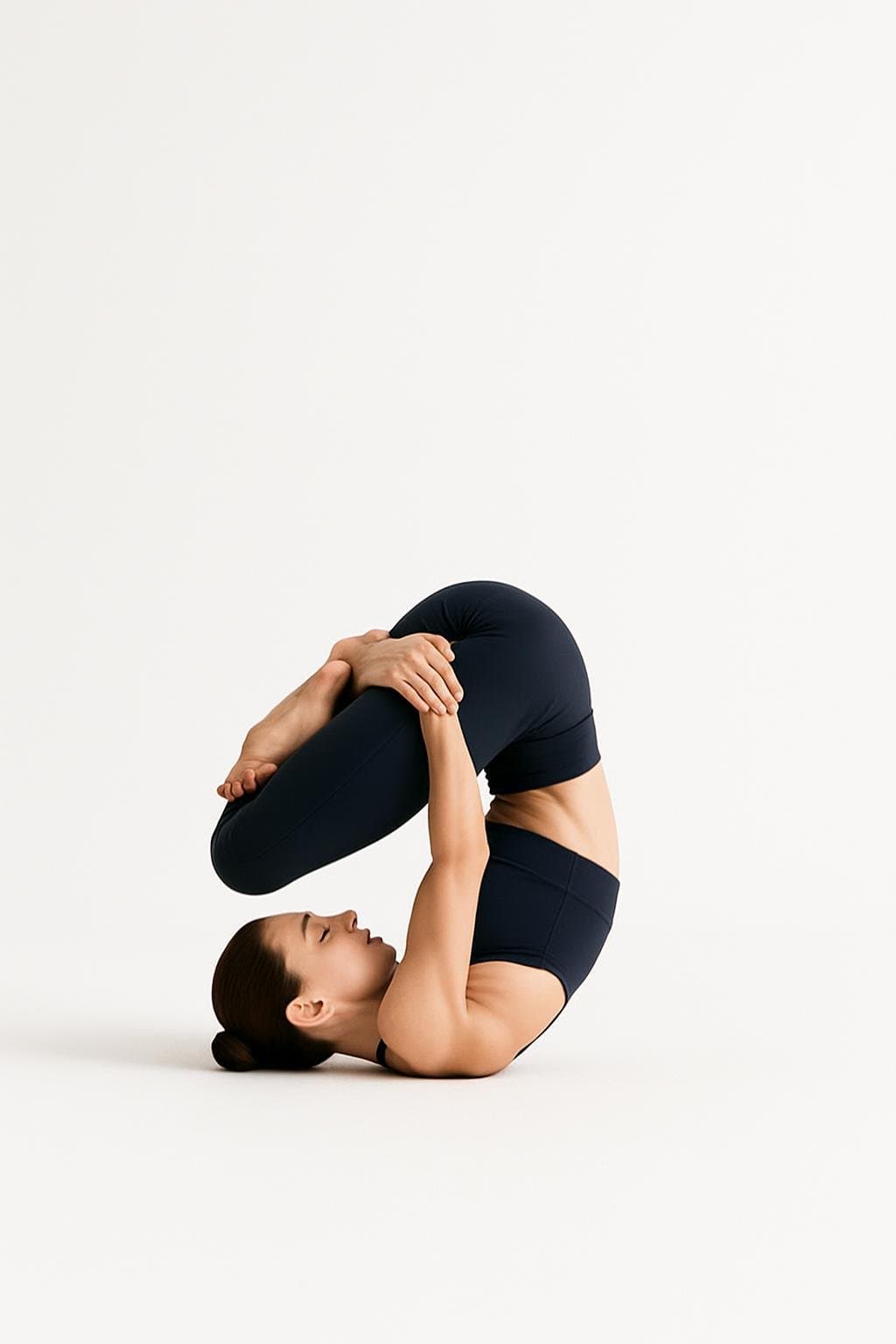 Embryo in Shoulderstandadvanced
Pindasana
From upward lotus, the folded legs lower toward the face and the arms wrap around them — a tightly curled shape from the Ashtanga finishing sequence. It stacks lotus, deep spinal flexion, and an inversion all at once, so nothing about it should be rushed.
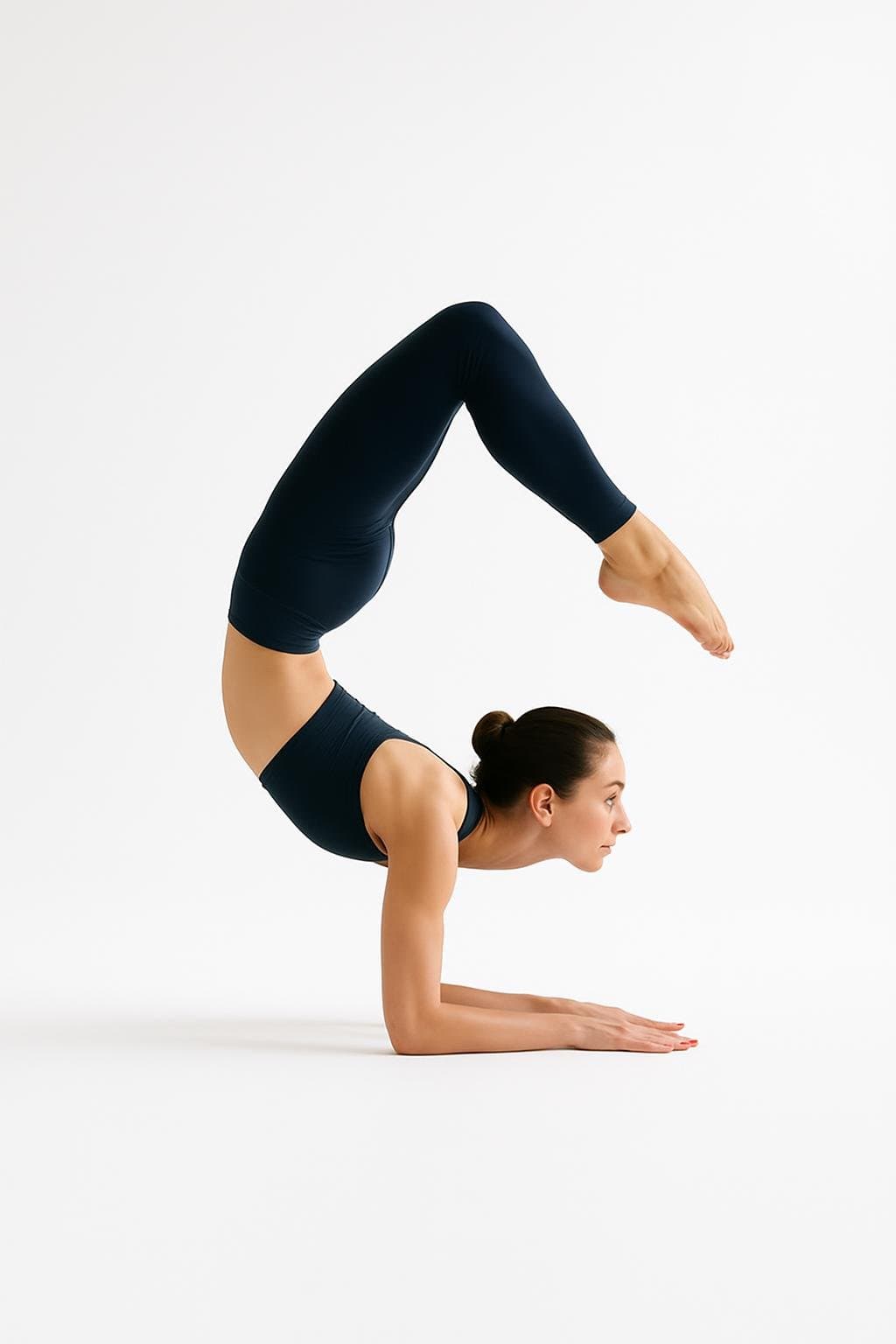 Scorpion Poseadvanced
Vrschikasana
Forearm stand with a deep backbend, the feet arching toward the head like a scorpion's tail. One of the most demanding shapes in yoga — it should only be explored after forearm stand away from the wall is genuinely comfortable, and ideally with a teacher.
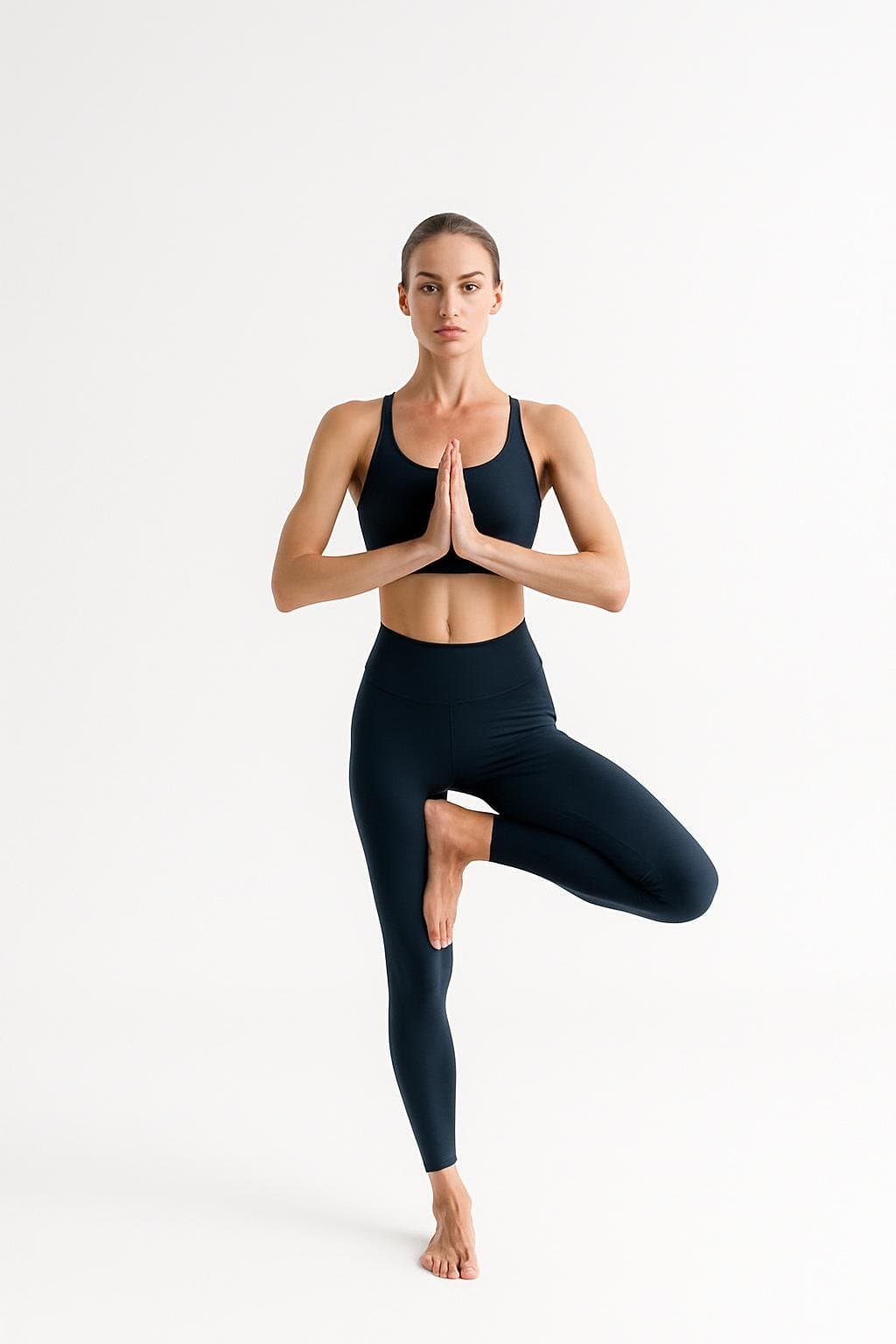 Tree Posebeginner
Vrksasana
The classic one-legged balance: root down through one foot, press the other sole into your inner leg, and grow tall. Tree teaches you that balancing is constant small corrections, not stillness.
- Eagle Poseintermediate
Garudasana
Wrap one leg over the other, one arm under the other, and sit down into the tangle. Eagle squeezes everything toward your midline and gives the outer shoulders and hips a stretch that is hard to find anywhere else.
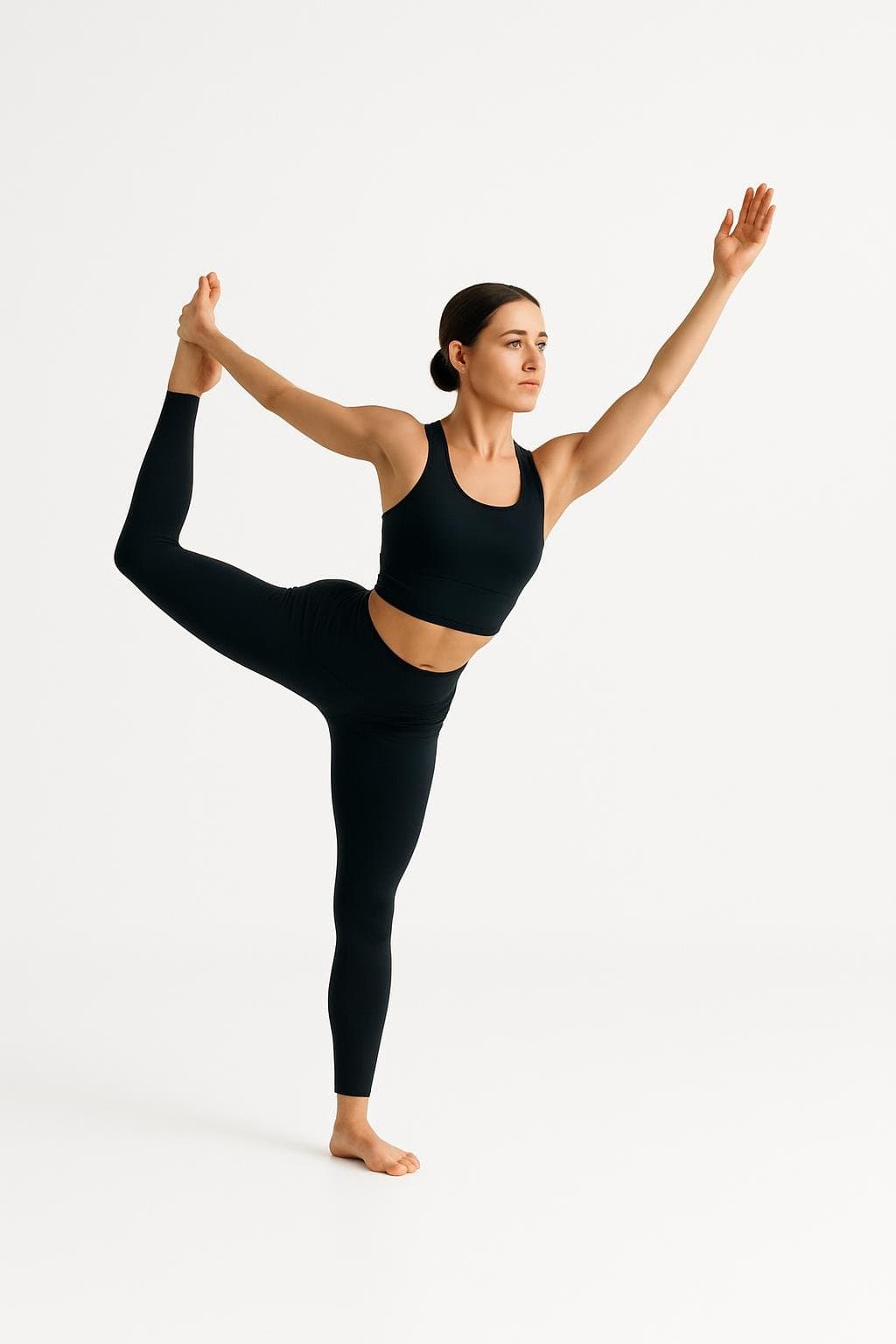 Dancer Poseintermediate
Natarajasana
Hold one foot behind you, kick it into your hand, and reach forward — a balance and a backbend at once. Dancer rewards patience: the kick creates the shape, not the pull.
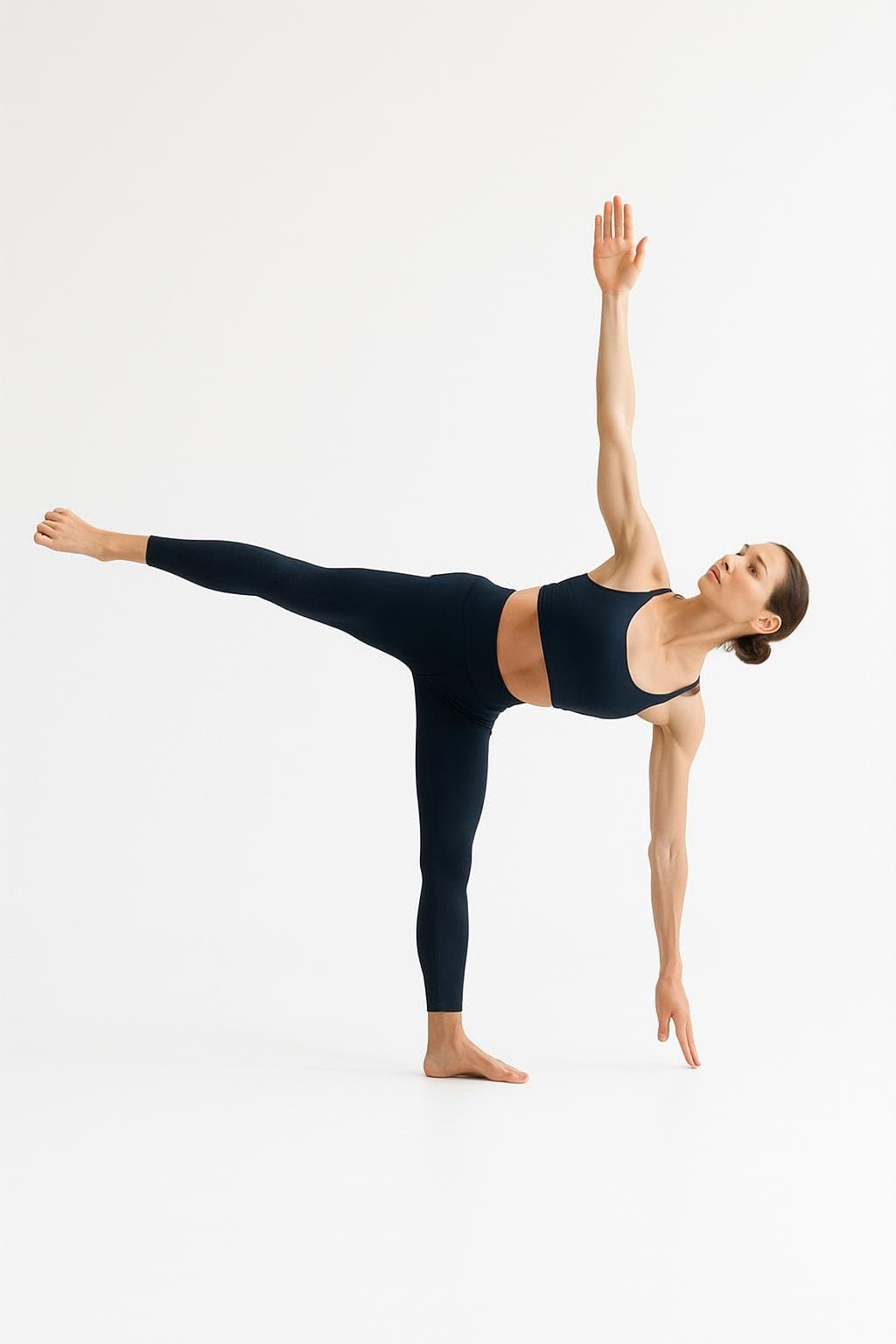 Half Moon Poseintermediate
Ardha Chandrasana
Balance on one leg and one hand with the other leg floating parallel to the floor, hips stacked open to the side. Half Moon is Triangle set free of the ground — and a block under the hand makes it honest instead of heroic.
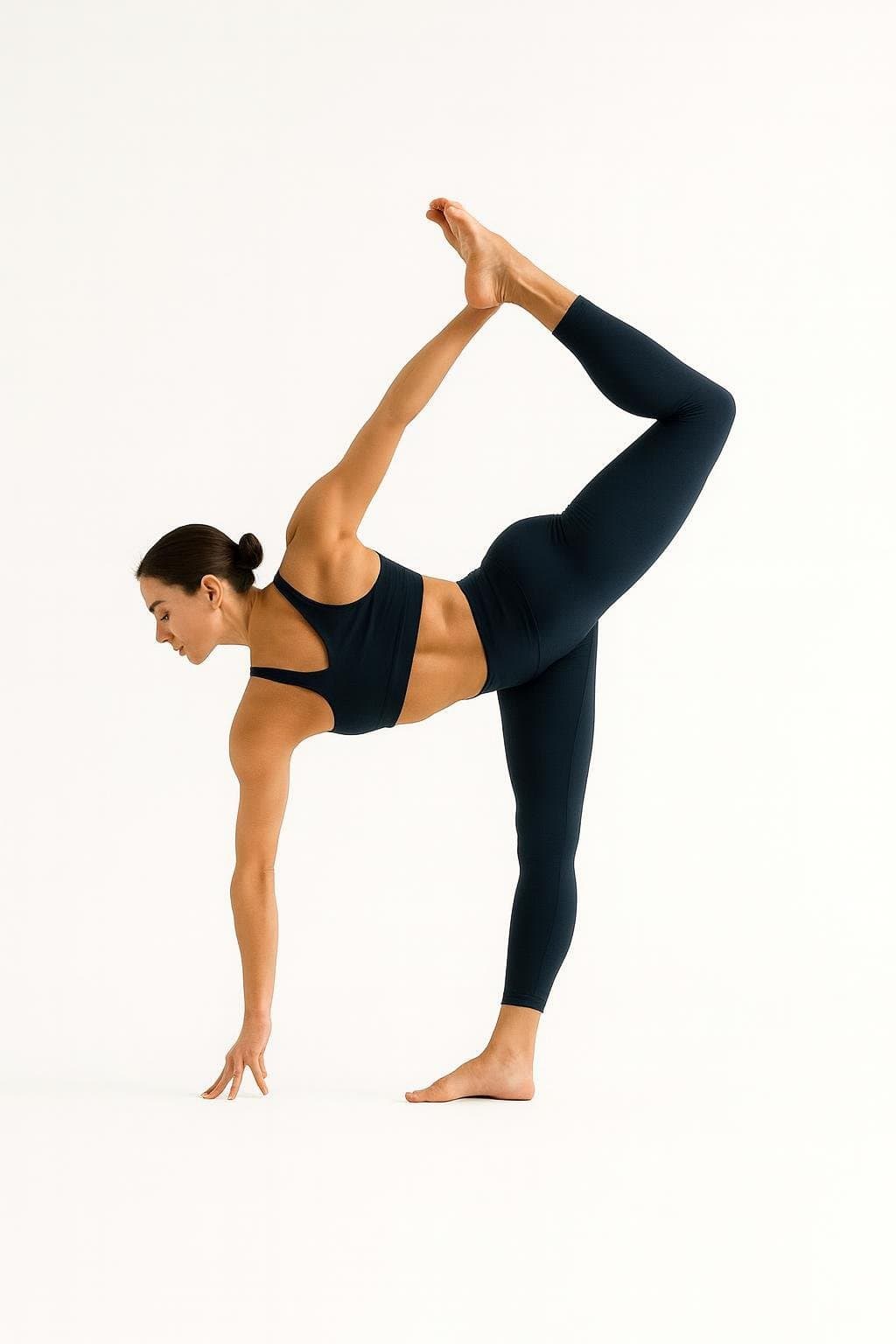 Sugarcane Poseadvanced
Ardha Chandra Chapasana
From Half Moon, bend the floating leg and catch the foot behind you, kicking into the hand to bow the body. Sugarcane adds a backbend and quad stretch to an already demanding balance — earn Half Moon first.
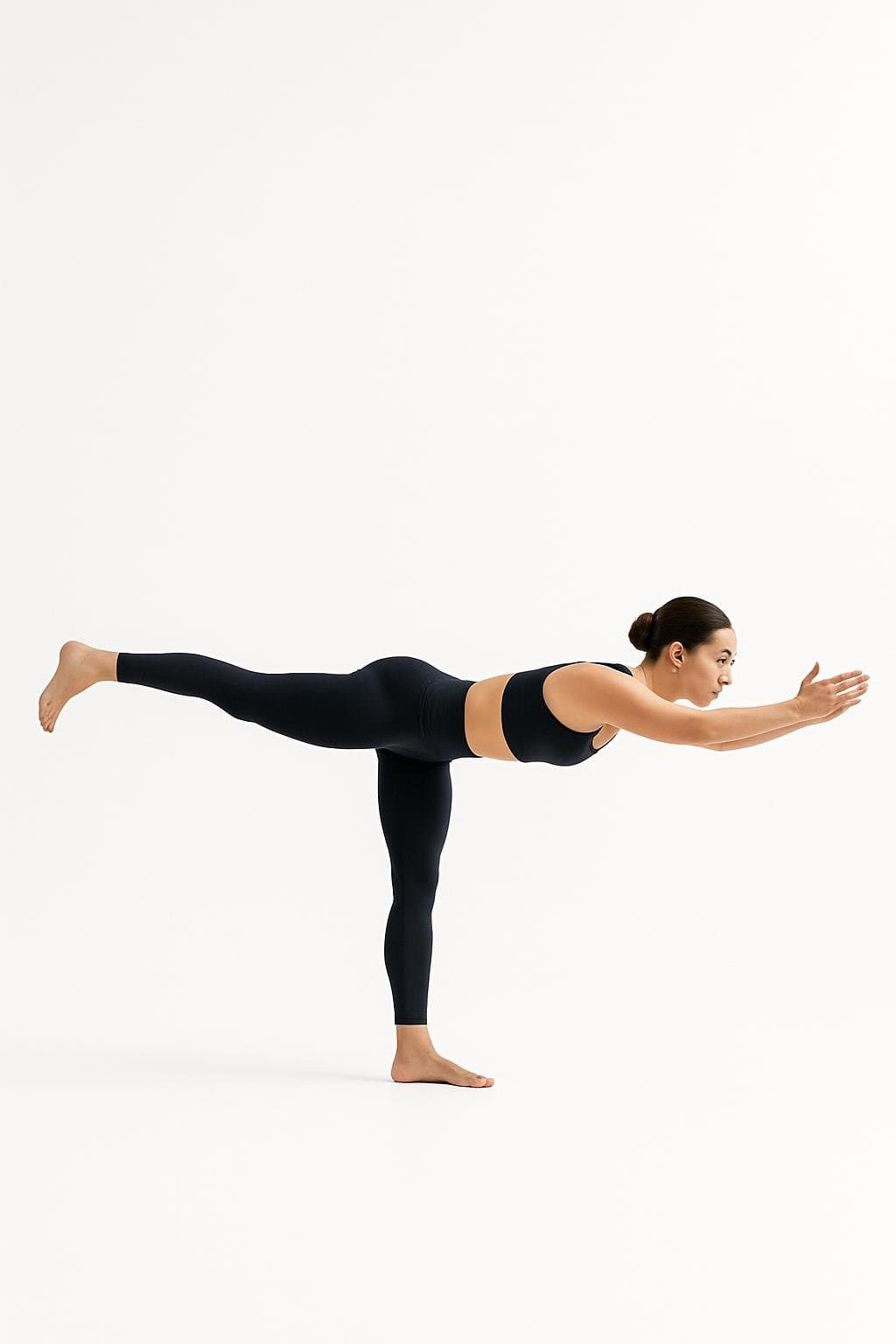 Warrior IIIintermediate
Virabhadrasana III
Tip your whole body into a capital T: torso and lifted leg parallel to the floor, arms reaching where they help most. Warrior III is less about the standing leg than about keeping the hips level while everything wants to twist.
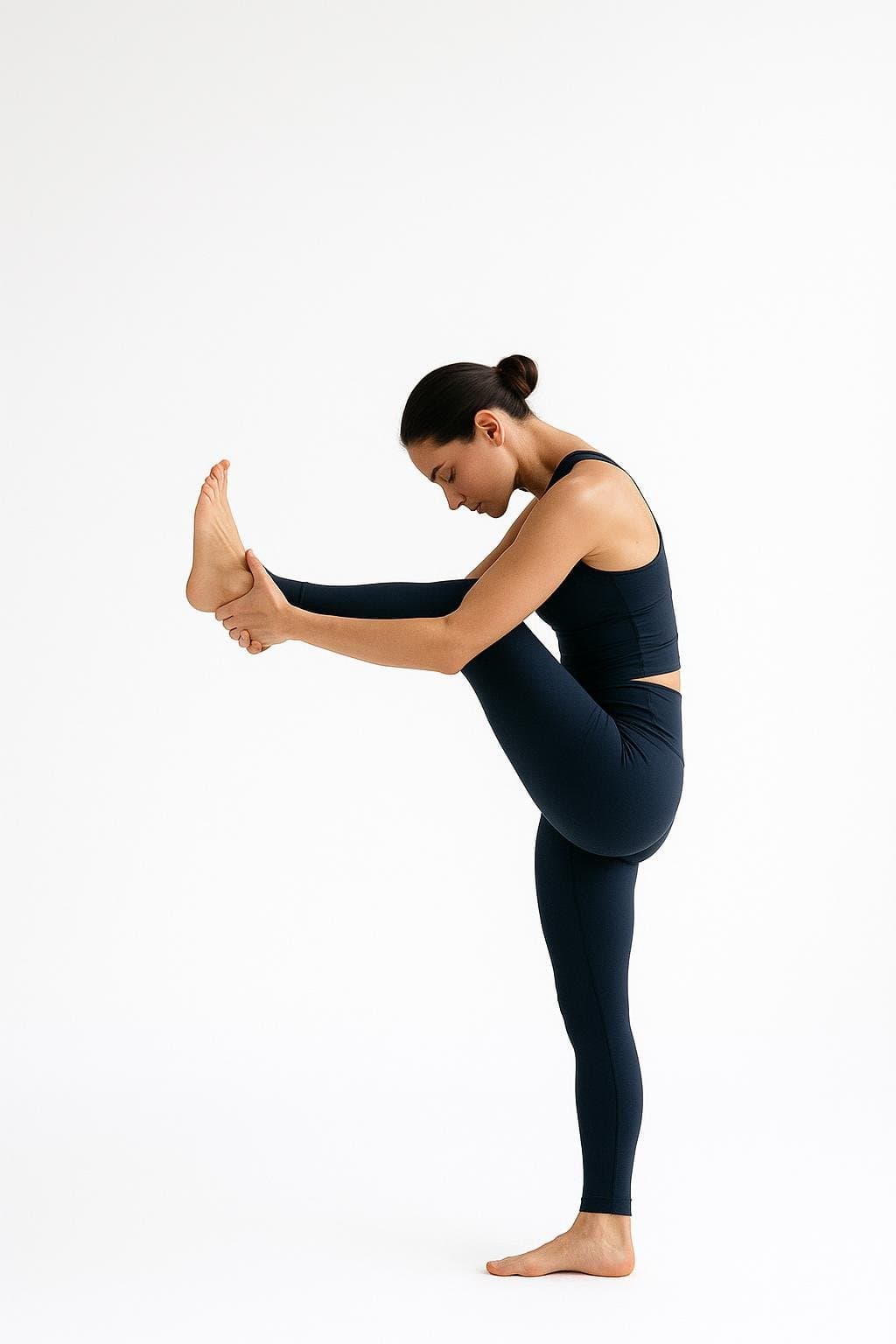 Standing Head-to-Kneeintermediate
Dandayamana Janushirasana
The classic hot-yoga balance: stand on a firmly straight leg, hold the lifted foot in both hands, extend it forward, and eventually fold your forehead toward the knee. Most people spend years on the first stage — that is the pose working as intended.
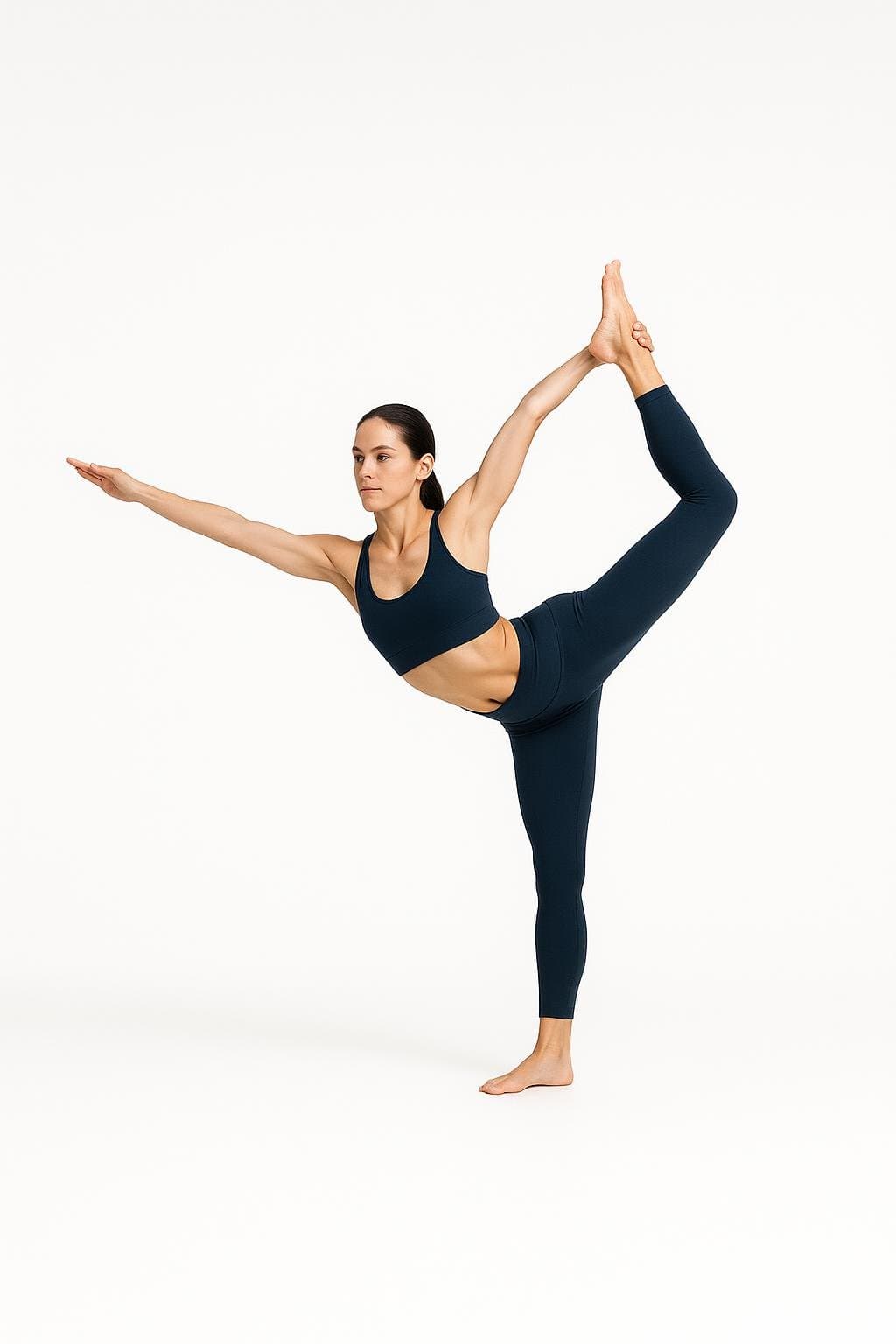 Standing Bow Poseintermediate
Dandayamana Dhanurasana
Grip one foot from the inside, stretch the other arm high, then kick back hard while the body tips forward — a moving counterbalance between kick and reach. Falling out and stepping back in is a normal part of practicing it.
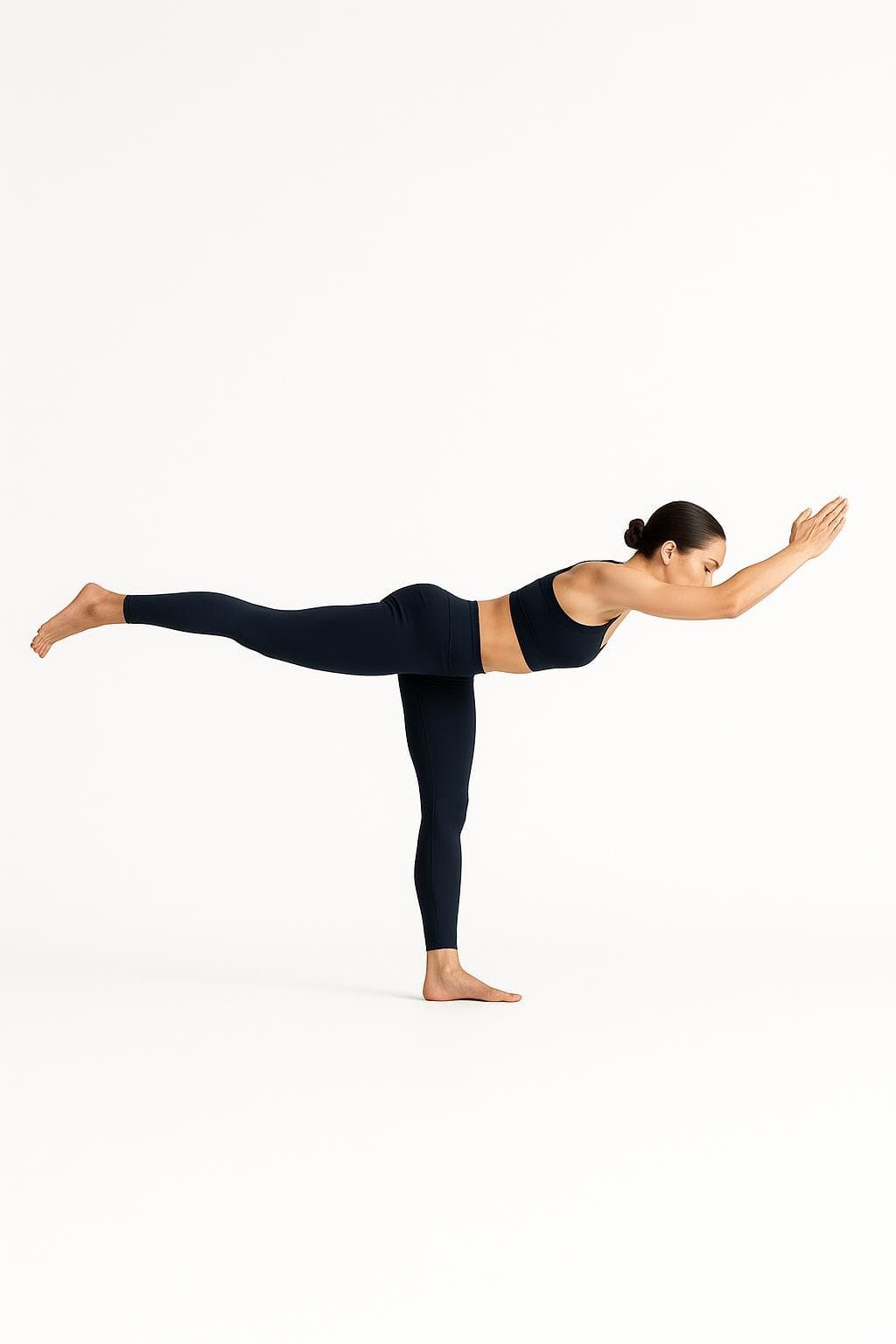 Balancing Stickintermediate
Tuladandasana
Arms overhead, step forward, and pivot your whole body into a level T — one straight line from fingertips to lifted heel. It is held only about ten seconds, and honestly, ten seconds is plenty.
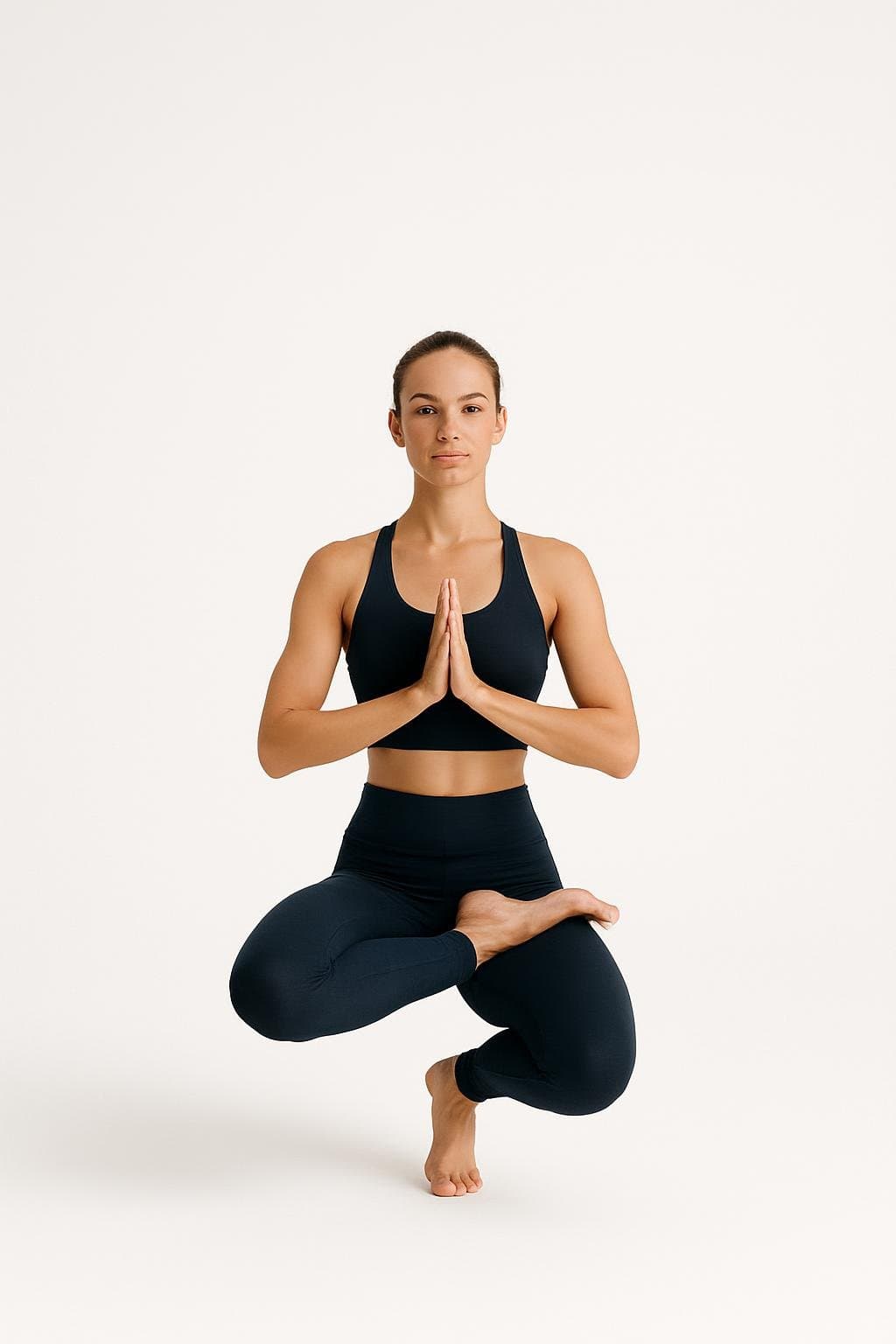 Toe Standadvanced
Padangustasana (Bikram)
Fold one foot into half lotus, then sink all the way down to balance on the ball of the standing foot, hands at your heart. Toe Stand demands open hips, a strong ankle, and a calm head — in that order.
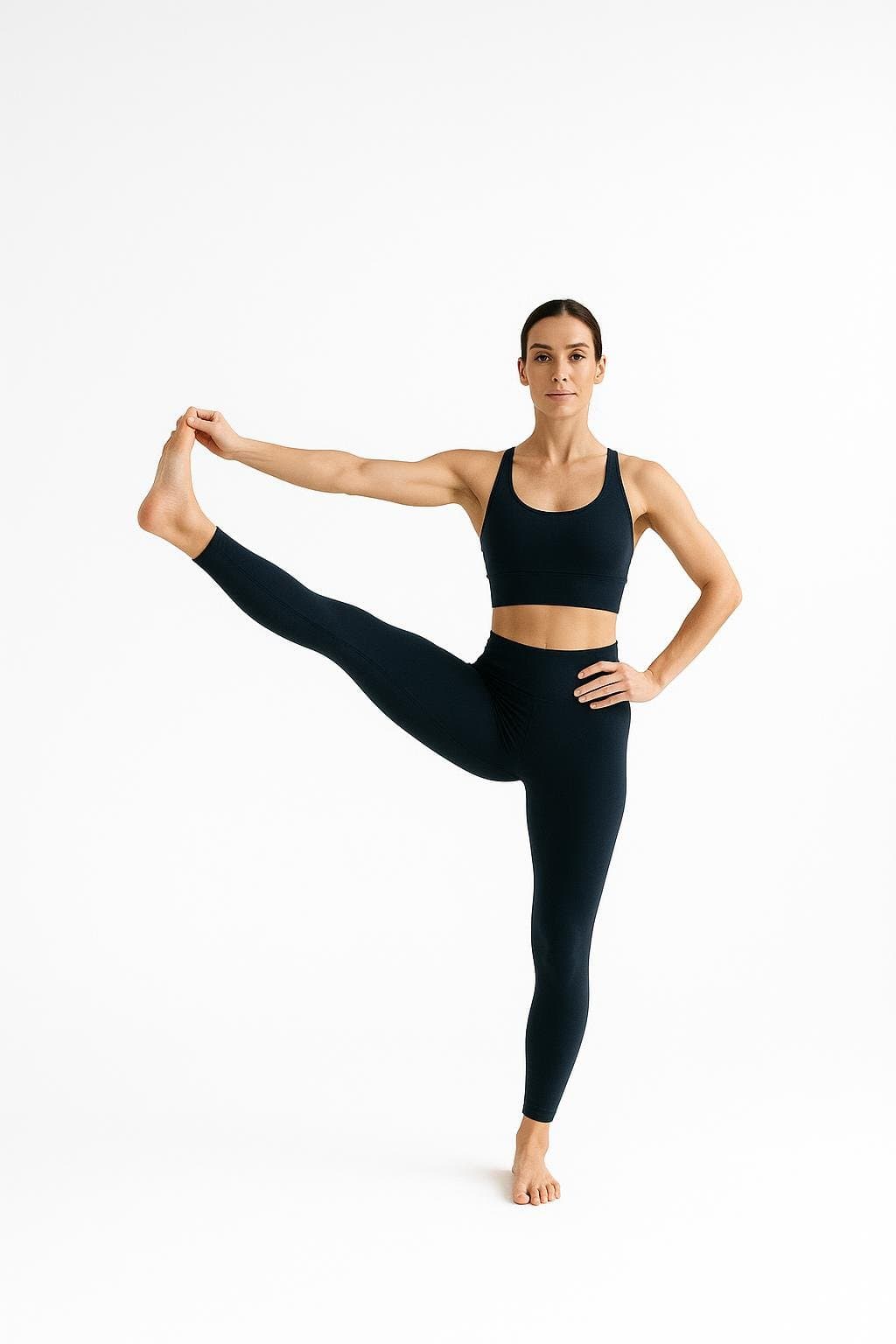 Extended Hand-to-Big-Toeintermediate
Utthita Hasta Padangusthasana
Hold your big toe and extend the leg forward while standing tall — then, if steady, open it out to the side. A strap or a bent knee makes this pose available to almost everyone; a straight spine matters more than a straight leg.
- Half-Bound-Lotus Standing Forward Foldadvanced
Ardha Baddha Padmottanasana
One foot in half lotus, the same-side arm wrapped behind you to bind the toes, then a forward fold over the standing leg. An Ashtanga standing pose that combines three demands — hip opening, the bind, and balance — and each can be practiced separately.
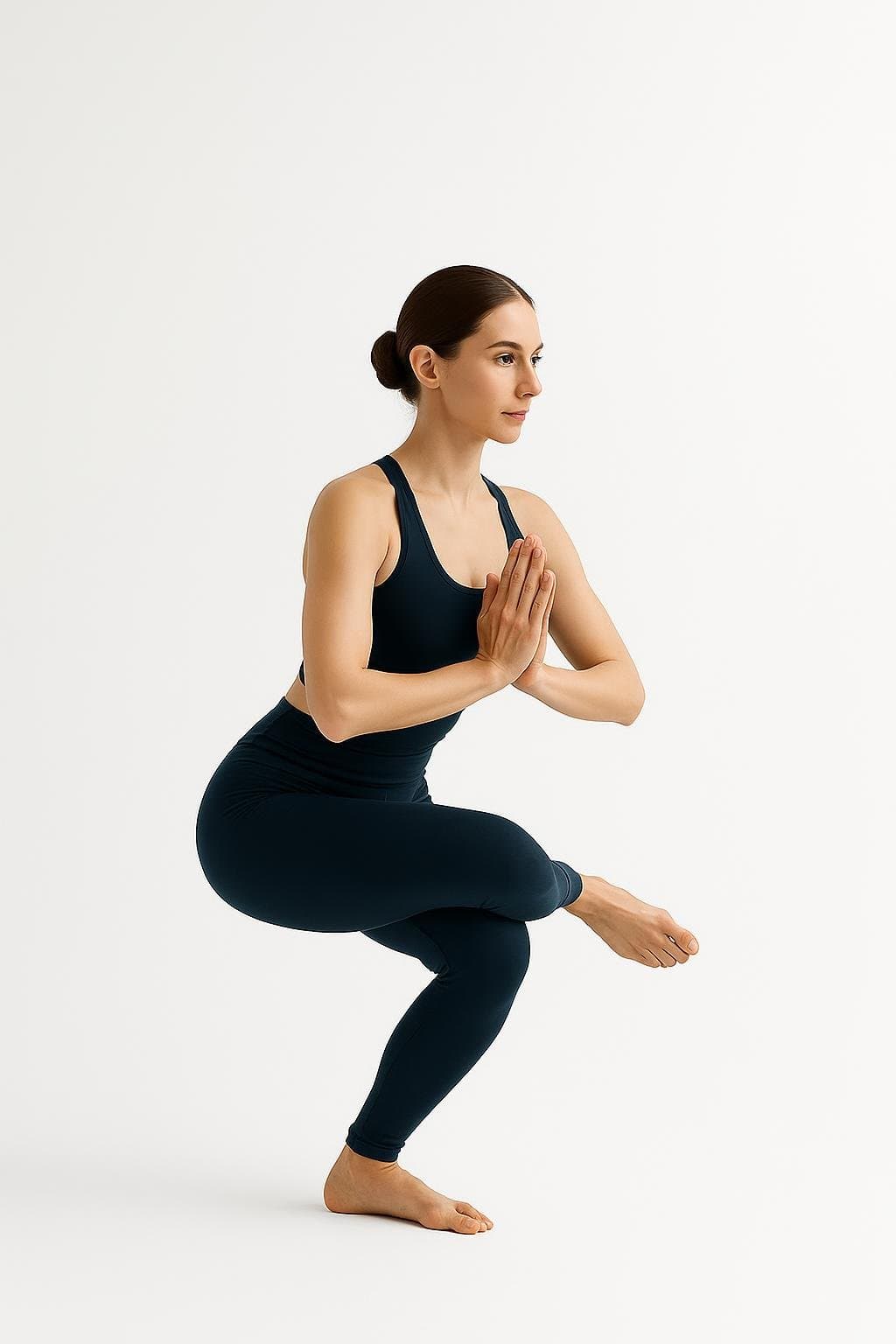 Standing Figure Fourbeginner
Eka Pada Utkatasana
Cross one ankle over the opposite thigh and sit back as if into a chair — a strong outer-hip stretch you can take anywhere, no floor required. The deeper you sit, the more it opens.
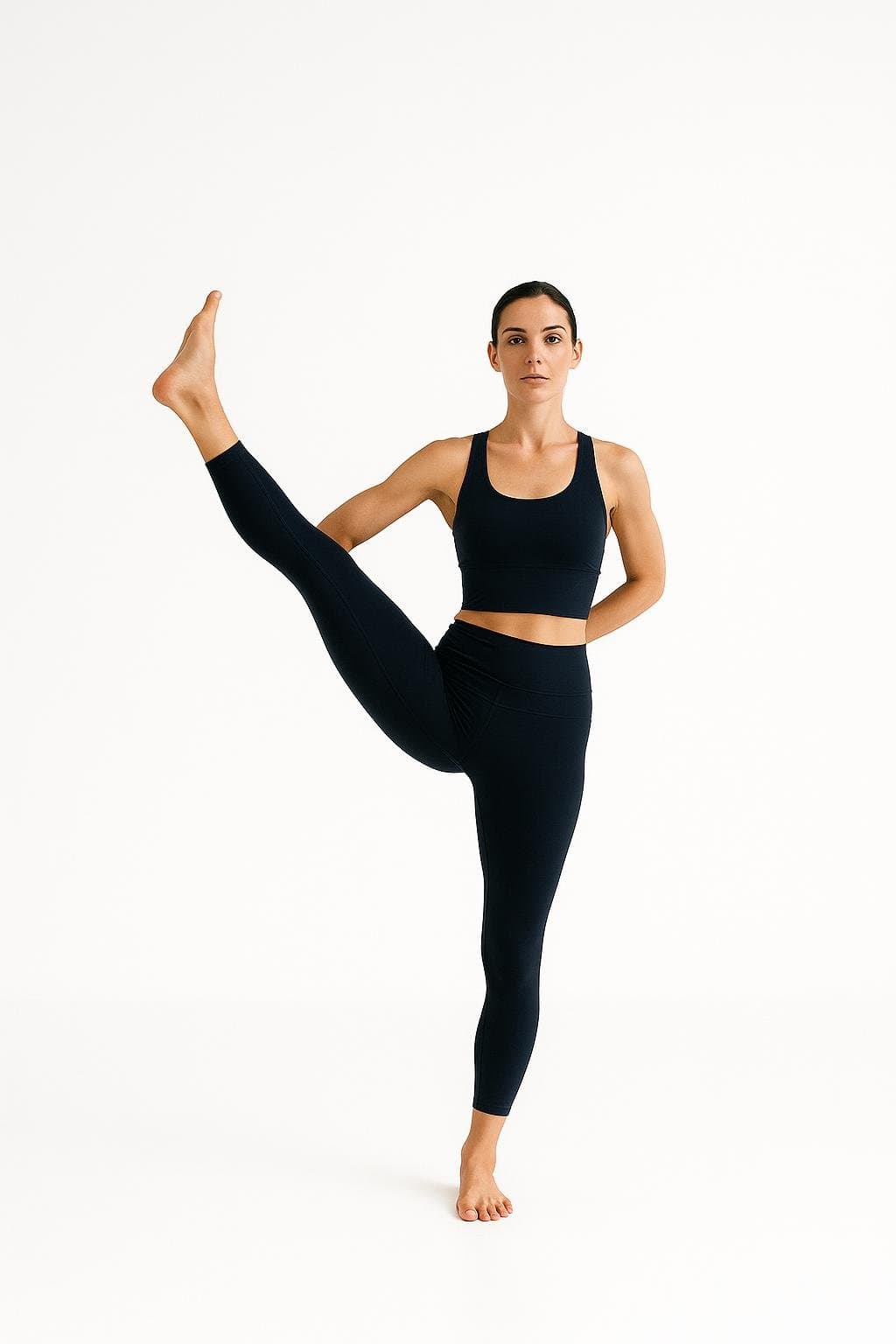 Bird of Paradiseadvanced
Svarga Dvijasana
Bind your arms around one leg, then stand up and unfold that leg toward the sky. Bird of Paradise is really three poses stacked — a bound side angle, a balance, and a hamstring stretch — and the bind, not the straight leg, is the hard-won part.
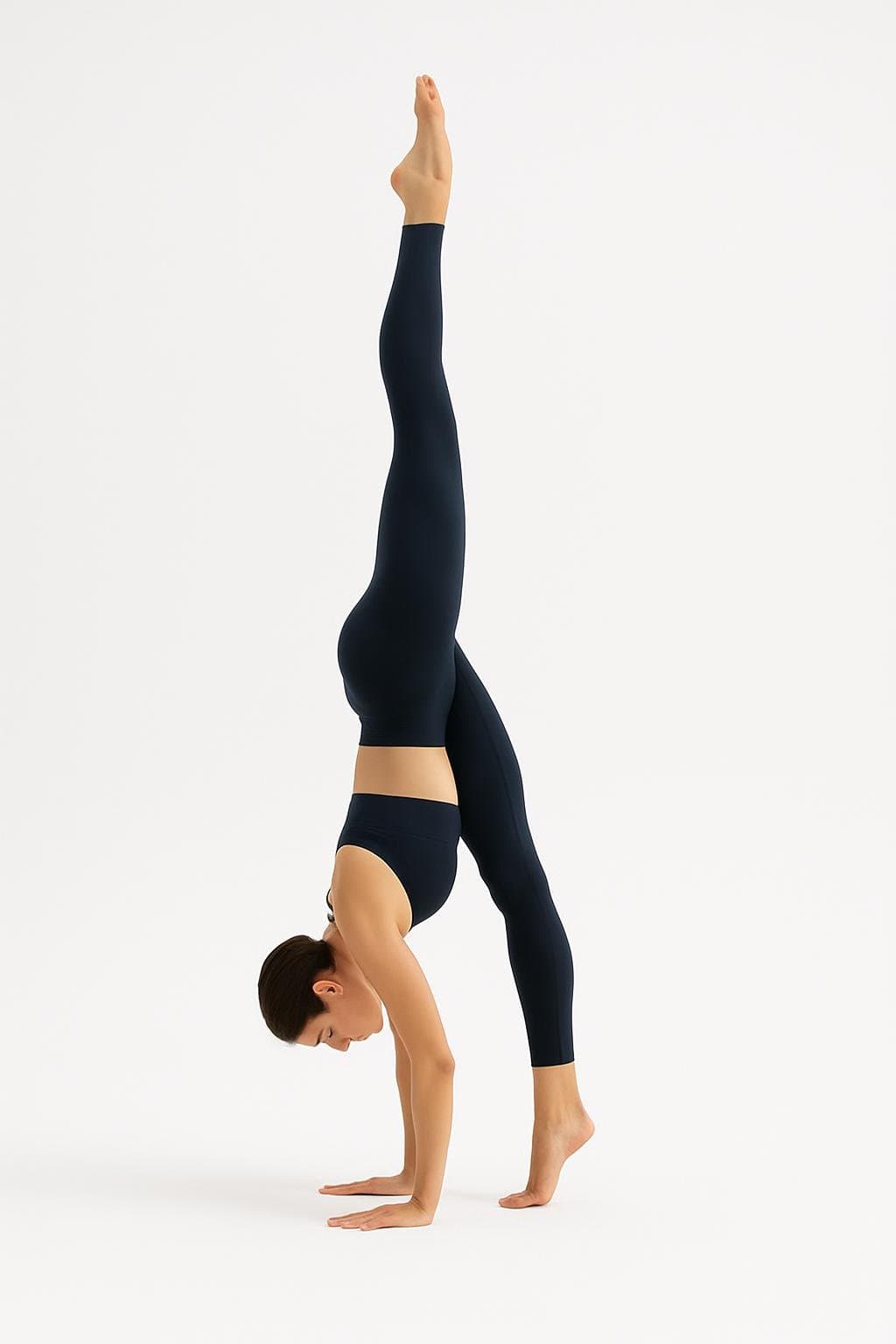 Standing Splitadvanced
Urdhva Prasarita Eka Padasana
Fold over your standing leg and reach the other leg toward the ceiling. Despite the name, how high the leg goes matters far less than keeping the fold deep and the standing hip steady — most of the pose happens in the leg on the ground.
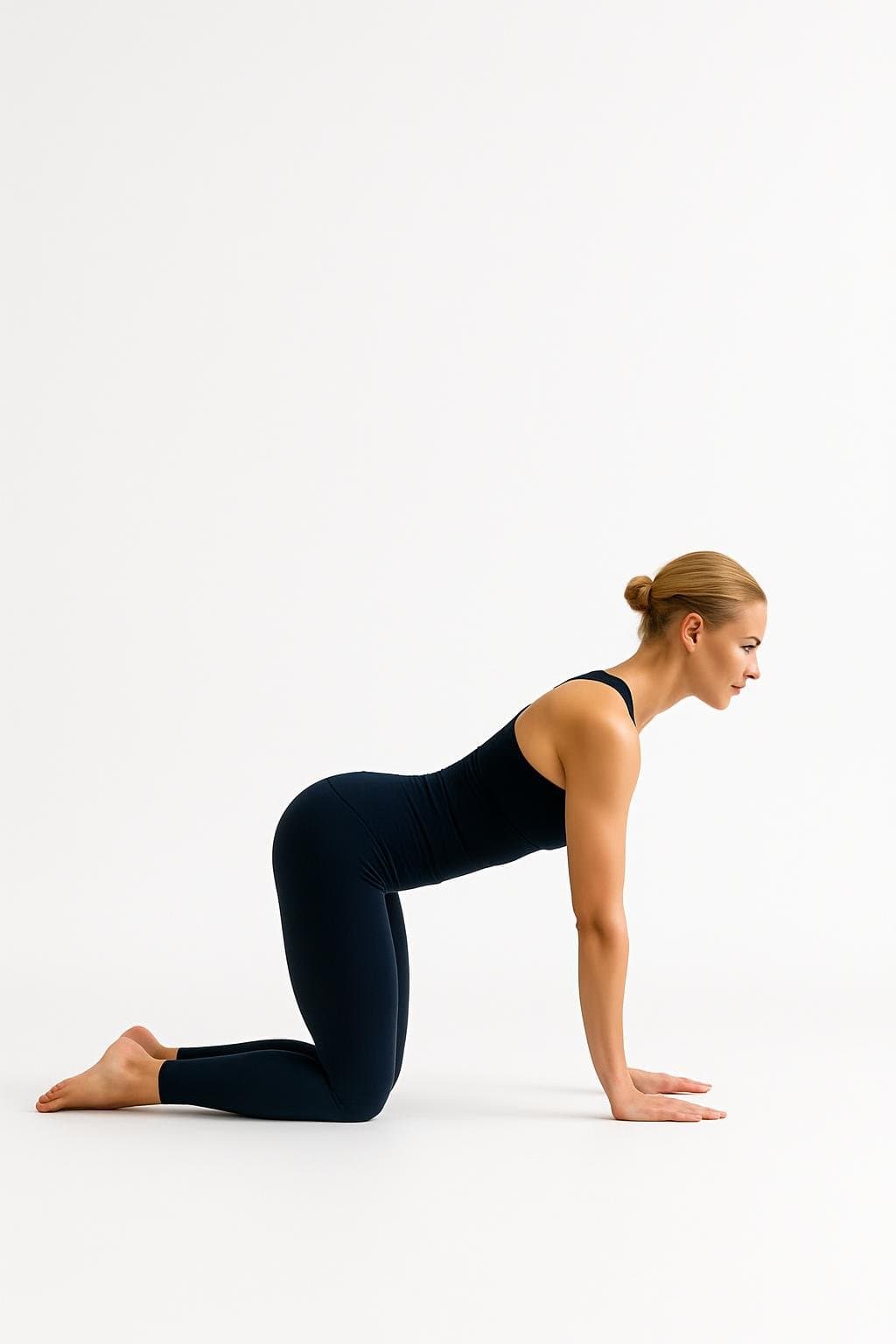 Tabletopbeginner
Bharmanasana
The neutral hands-and-knees position that most floor work starts from. Tabletop is where you learn what a level spine actually feels like.
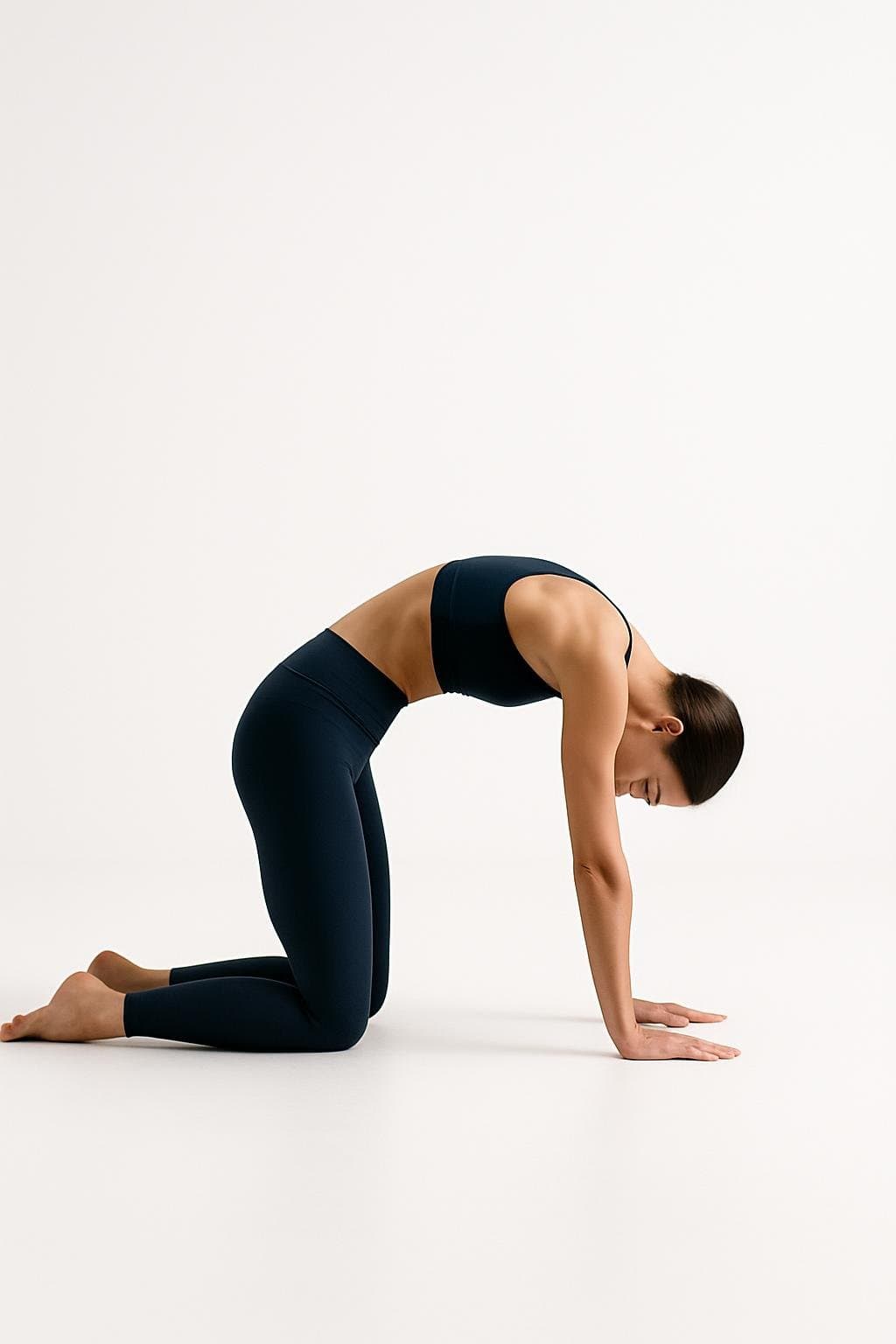 Cat–Cowbeginner
Marjaryasana–Bitilasana
A flowing pair of spinal shapes — round up like a cat, arch down like a cow — moved with the breath. It's the simplest way to warm up the whole spine.
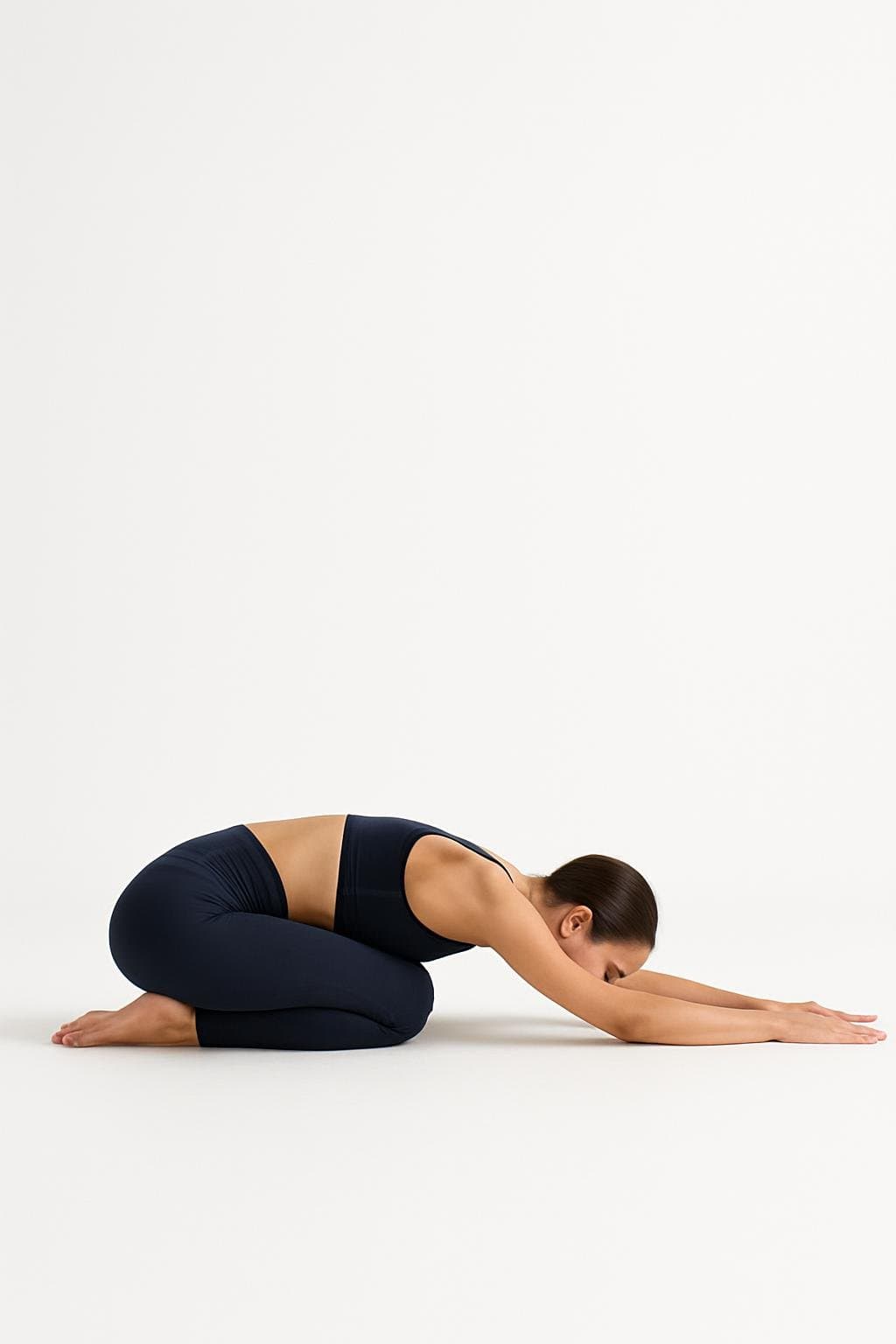 Child's Posebeginner
Balasana
Knees down, hips back toward the heels, forehead to the floor. Child's Pose is the standing invitation to rest — you can come here any time a practice gets to be too much.
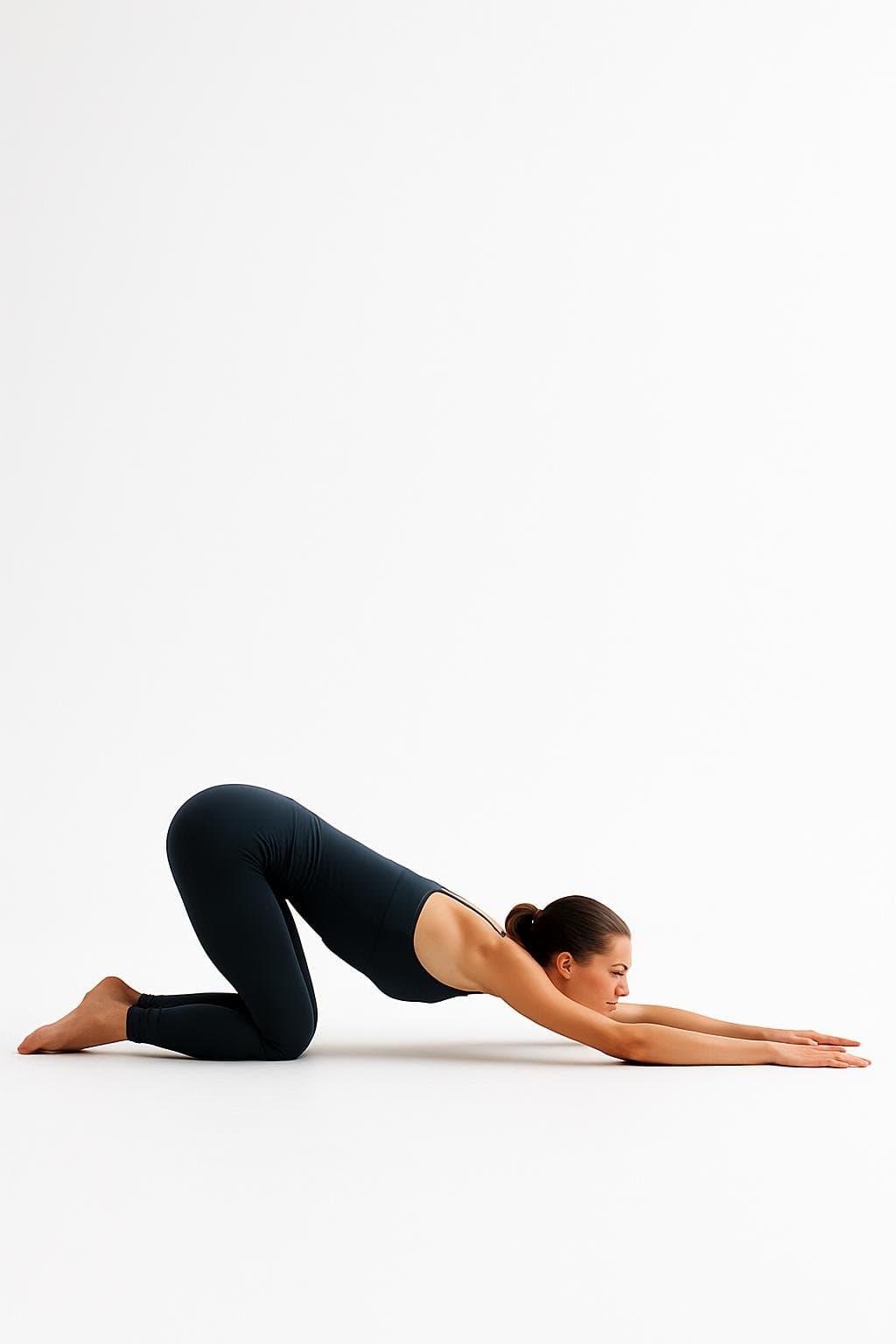 Extended Puppy Posebeginner
Uttana Shishosana
Halfway between Child's Pose and Downward Dog: hips stay over the knees while the chest melts toward the floor. A generous shoulder and upper-back opener that asks very little of the rest of you.
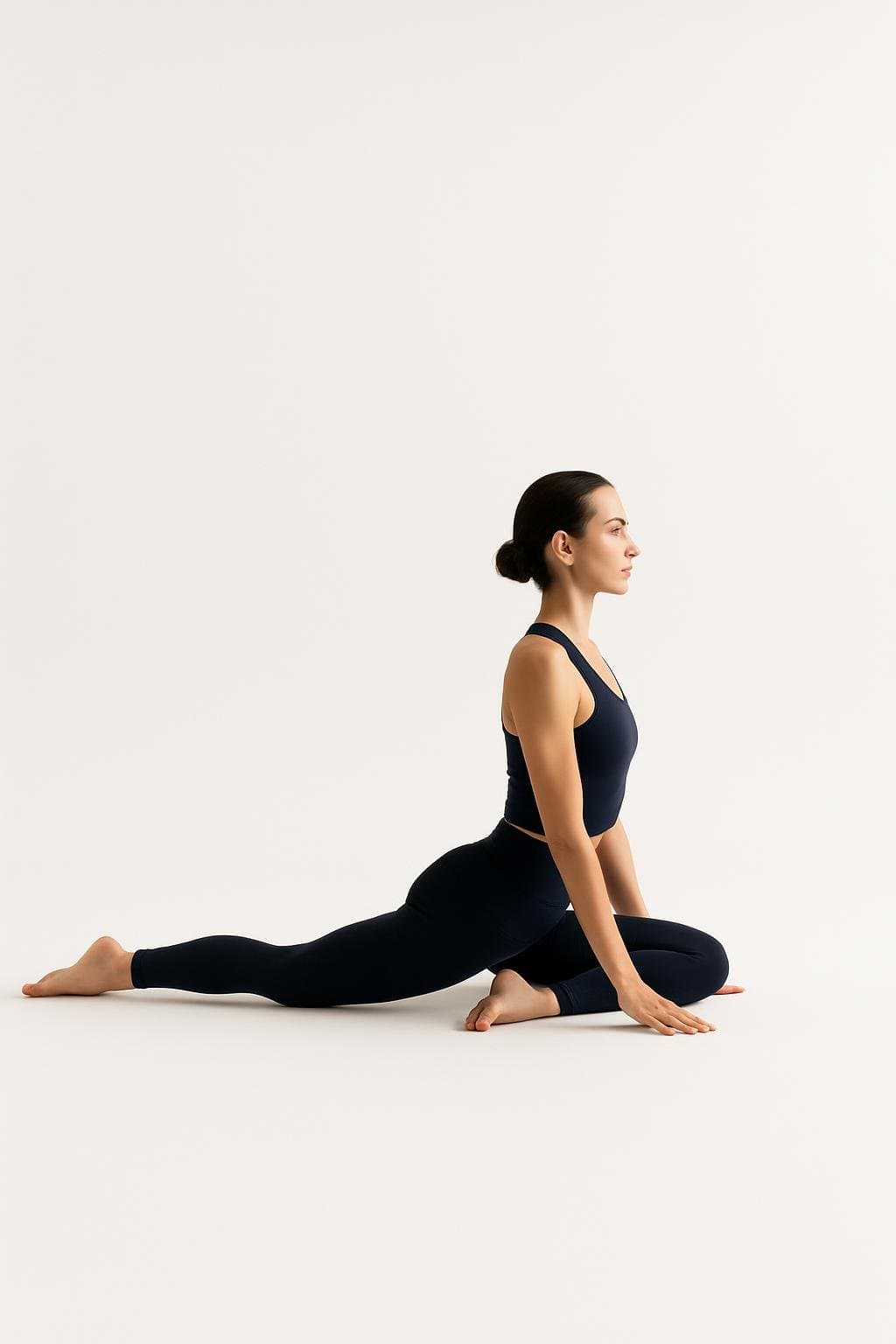 Pigeon Poseintermediate
Eka Pada Rajakapotasana (prep)
One shin forward, the other leg stretched straight back — a deep stretch for the outer hip of the front leg. In Yin practice the folded version is called Sleeping Swan and is held much longer.
- Frog Poseintermediate
Mandukasana
Knees wide, feet in line with the knees, hips sinking between them — one of the deepest inner-thigh stretches in the practice. In Yin classes it's simply called Frog and held for minutes at a time.
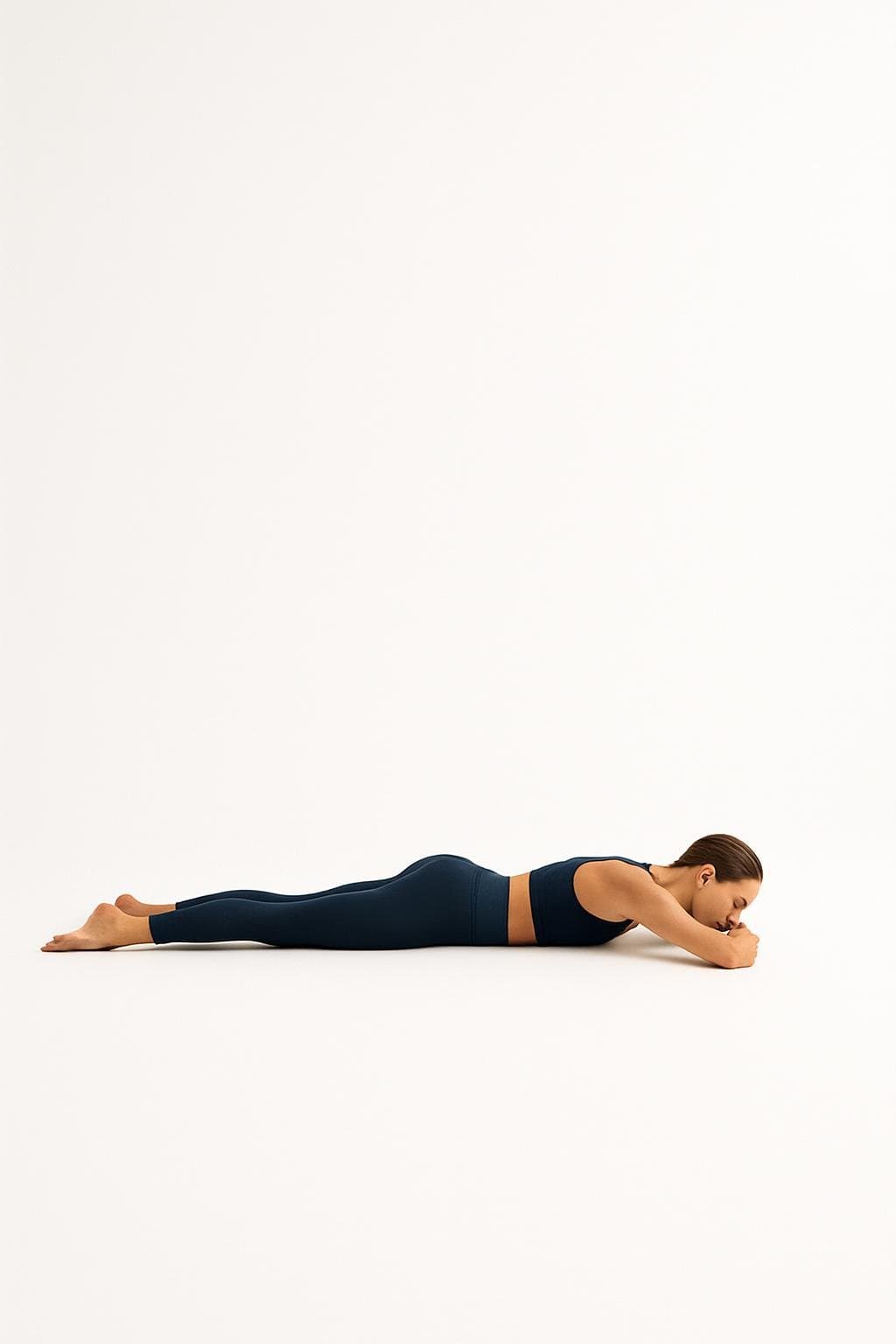 Crocodile Posebeginner
Makarasana
Lying face-down with the forehead resting on stacked forearms — the belly-down cousin of Savasana. Crocodile is a rest pose that doubles as quiet breath training, since you can feel each inhale press into the floor.
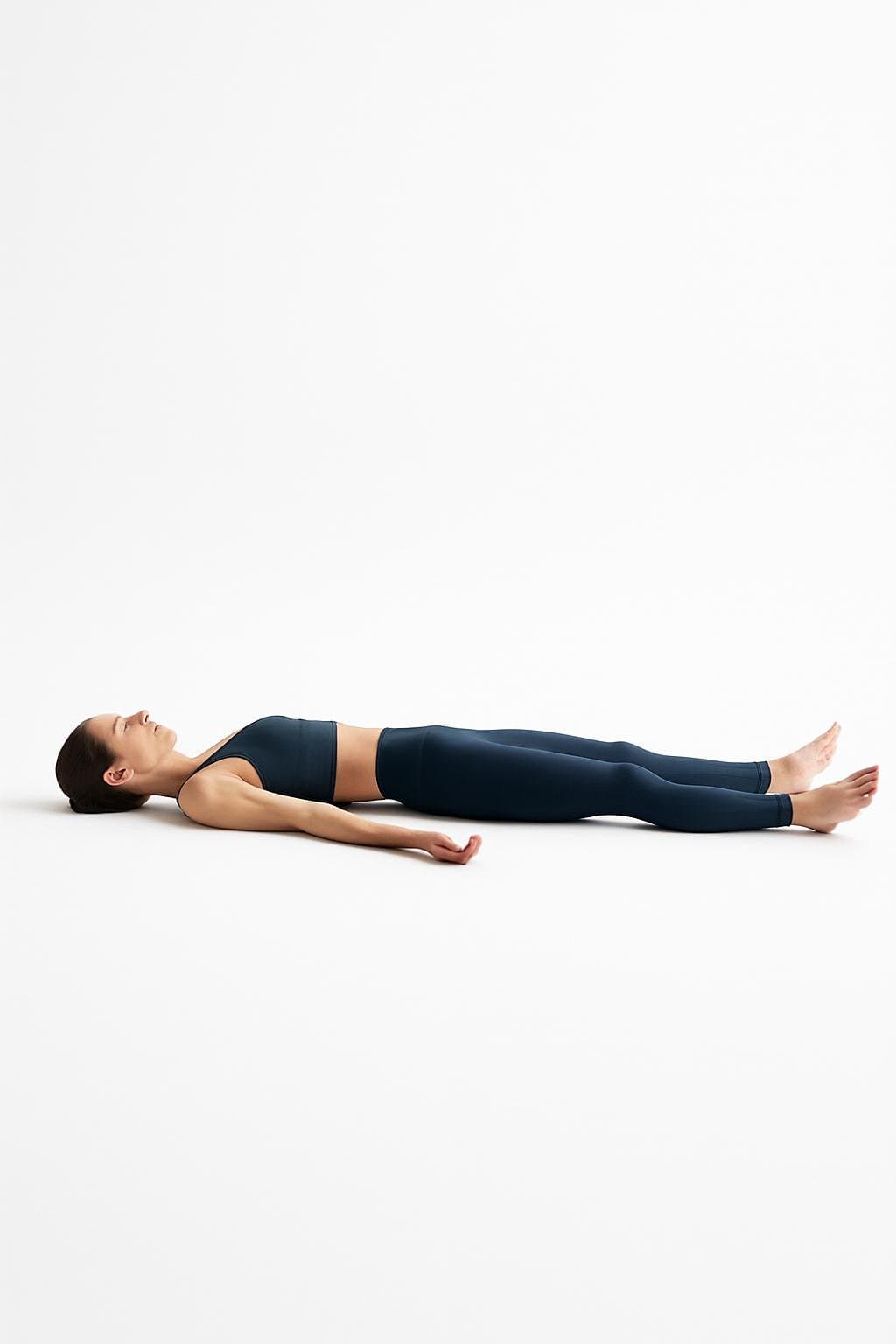 Corpse Posebeginner
Savasana
Lie flat, let everything go, and do nothing on purpose for several minutes. Corpse Pose is the simplest shape in yoga and often the hardest to actually settle into.
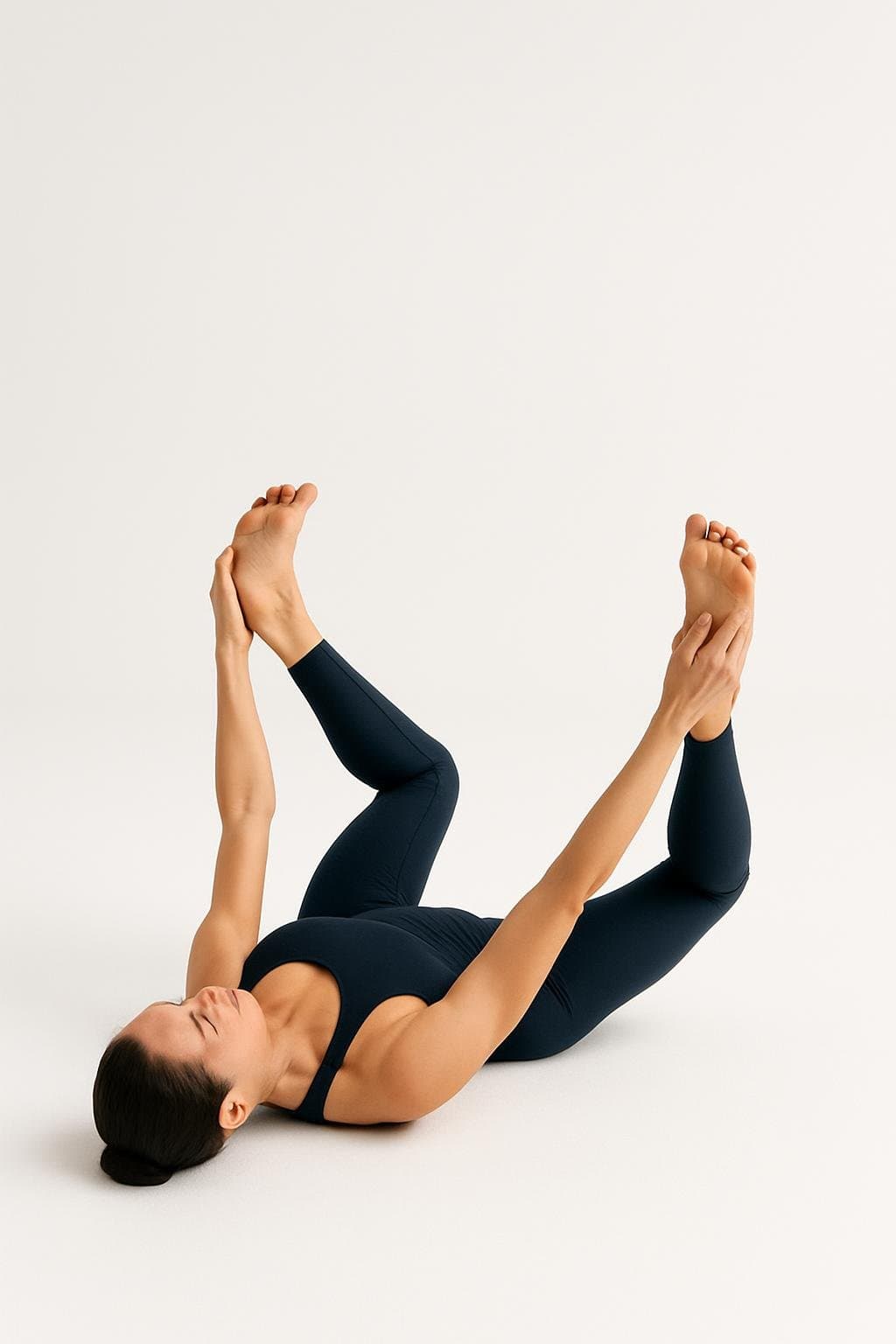 Happy Babybeginner
Ananda Balasana
On your back, knees drawn wide toward your armpits, hands holding the outsides of your feet. A playful, grounding hip opener that keeps the spine safe on the floor.
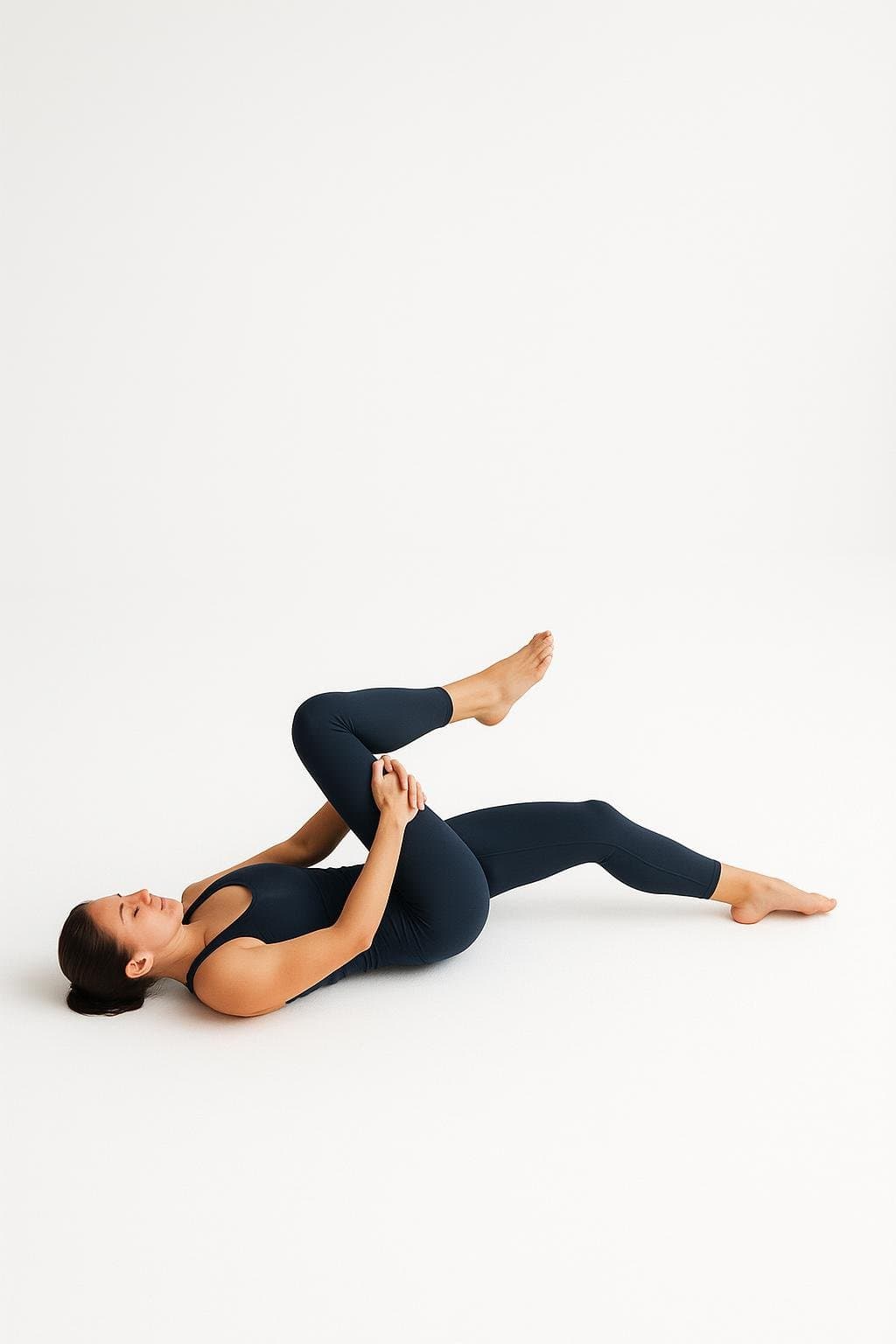 Wind-Relieving Posebeginner
Pavanamuktasana
Hug one or both knees into your chest while lying on your back. A simple, honest pose: it compresses the belly, releases the lower back, and the name means what you think it means.
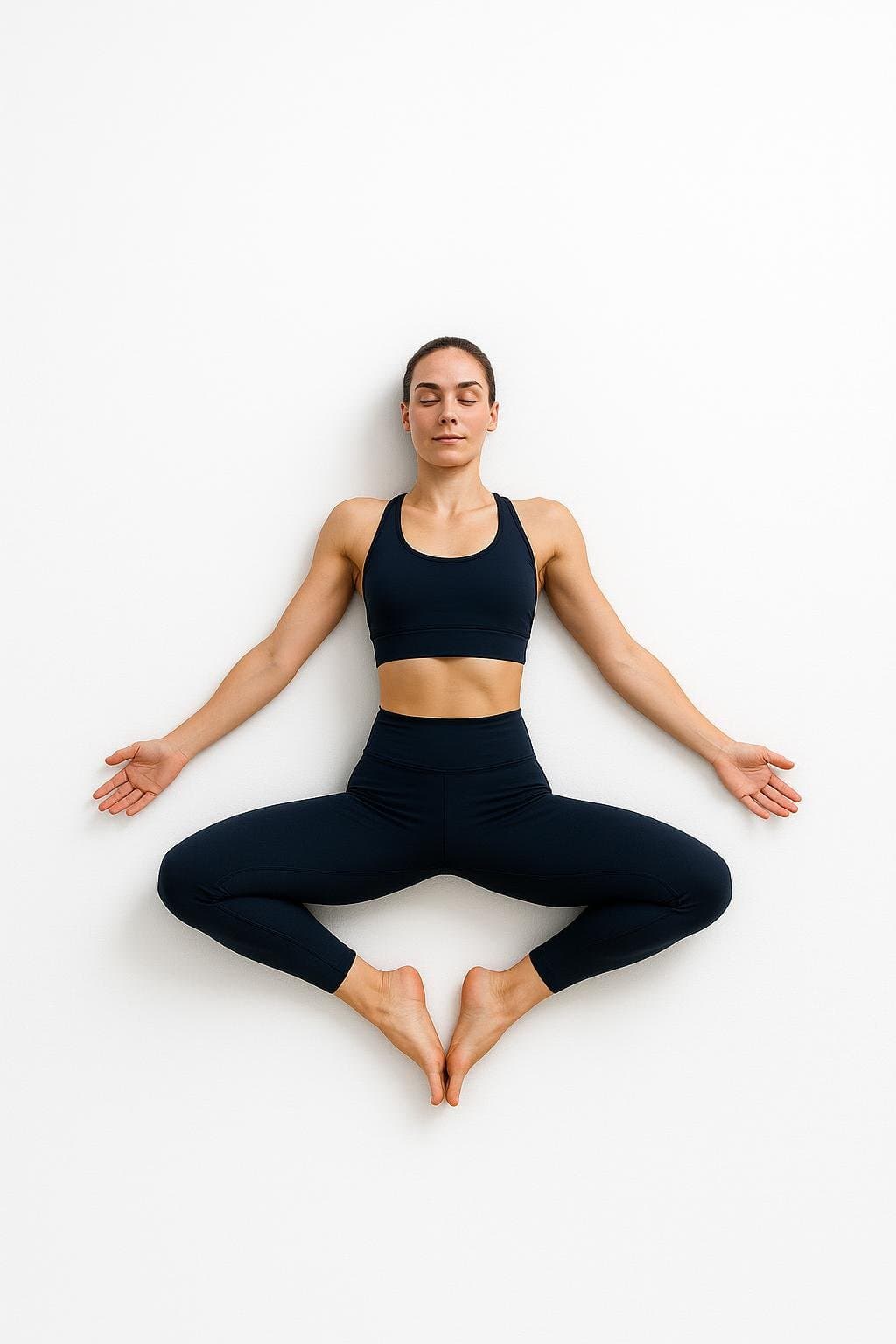 Reclining Bound Anglebeginner
Supta Baddha Konasana
Lie back, bring the soles of your feet together, and let your knees fall open. With a bolster under the spine this is one of the most restful shapes in yoga.
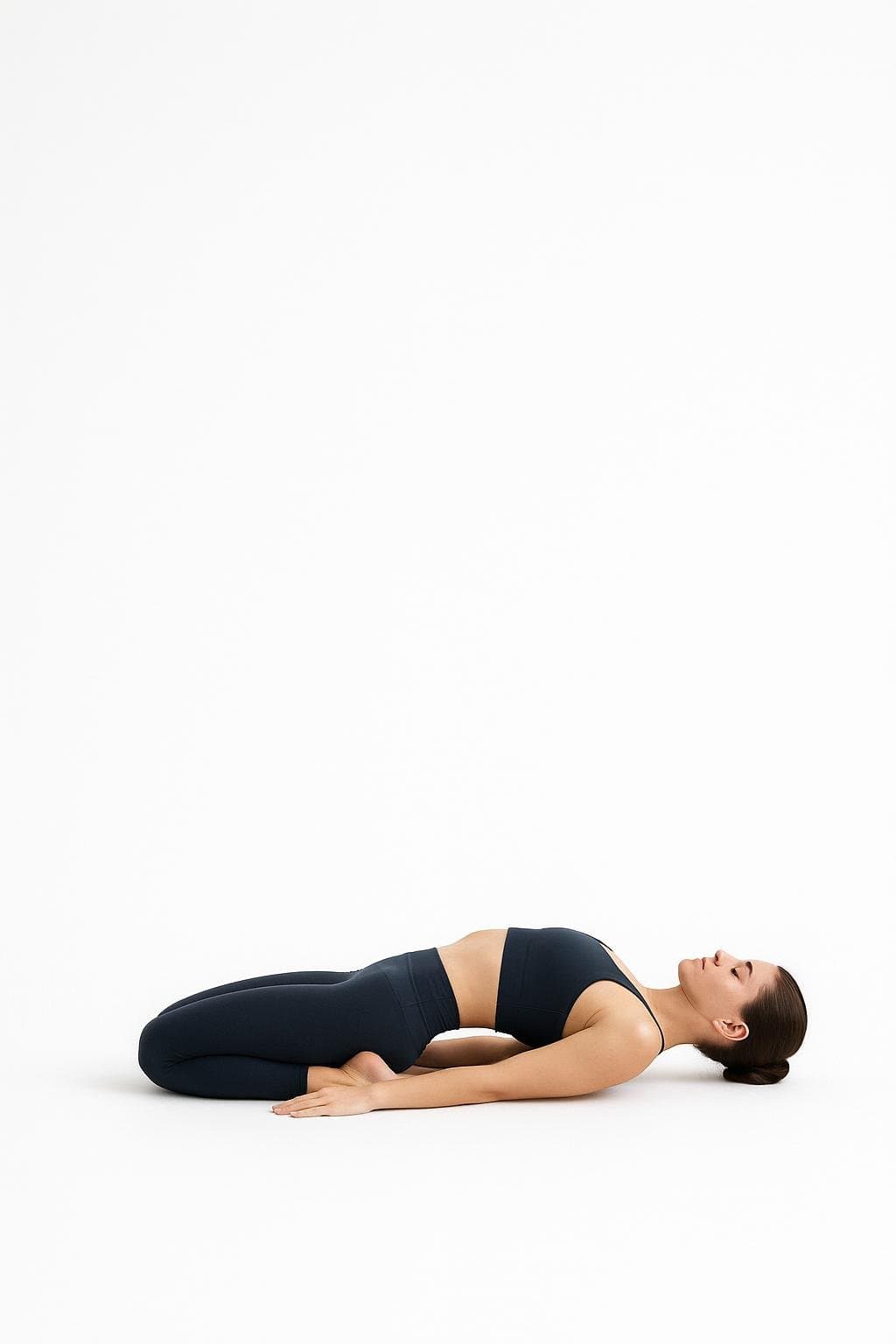 Reclining Herointermediate
Supta Virasana
From kneeling between your heels, you recline back toward the floor, stretching the front thighs, hip flexors, and ankles. Known as Fixed Firm in Bikram and Saddle in Yin — and in every tradition, a pose to enter gradually.
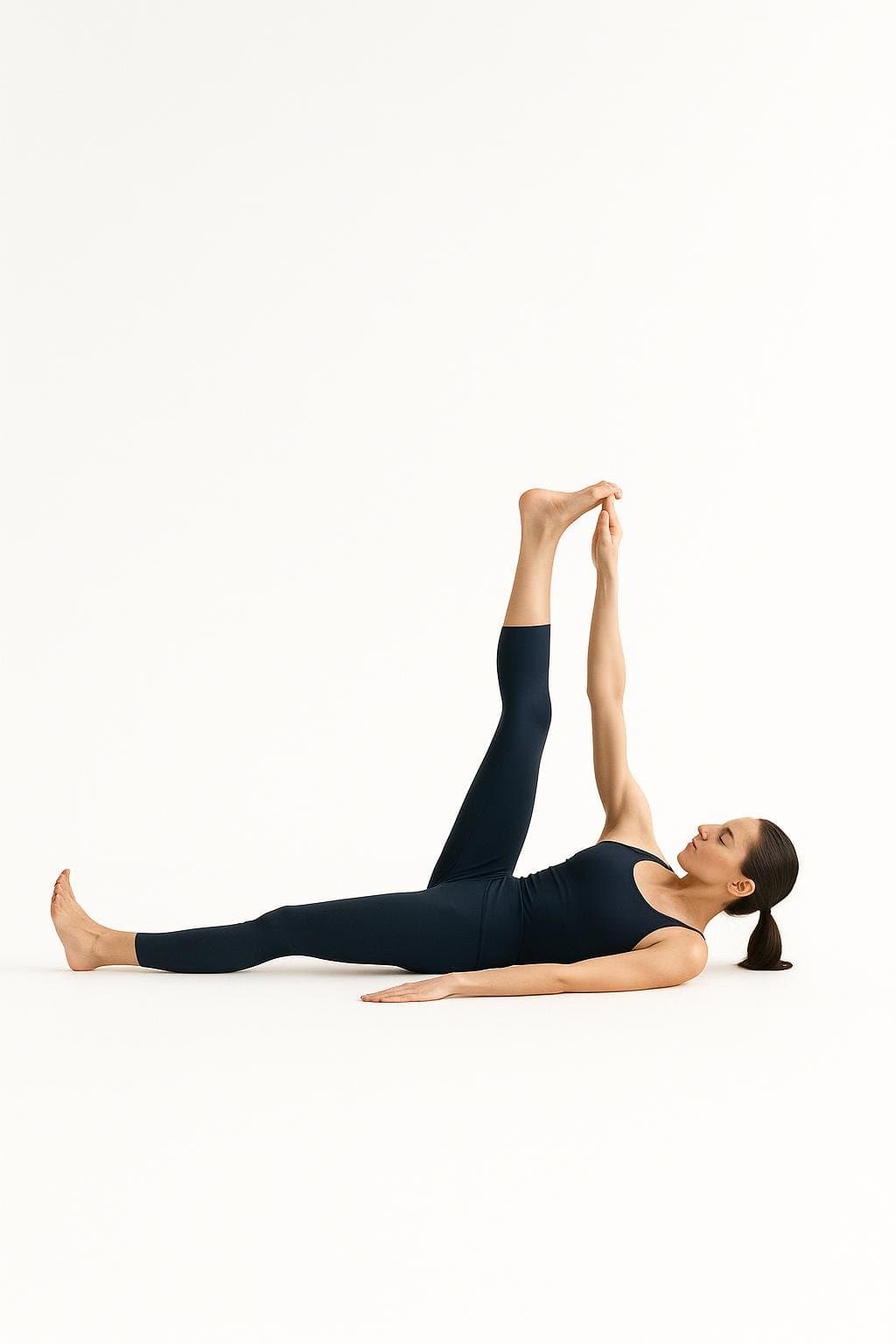 Reclining Hand-to-Big-Toebeginner
Supta Padangusthasana
Lying on your back, you extend one leg to the ceiling and hold the big toe or a strap around the foot. All the hamstring stretch of a standing fold, with none of the balance work — the floor does the stabilizing.
- Reclining Angle Poseintermediate
Supta Konasana
A wide-legged relative of Plow Pose from the Ashtanga finishing sequence: legs sweep overhead and apart, hands holding the big toes. It stretches the whole back body and the inner thighs at once.
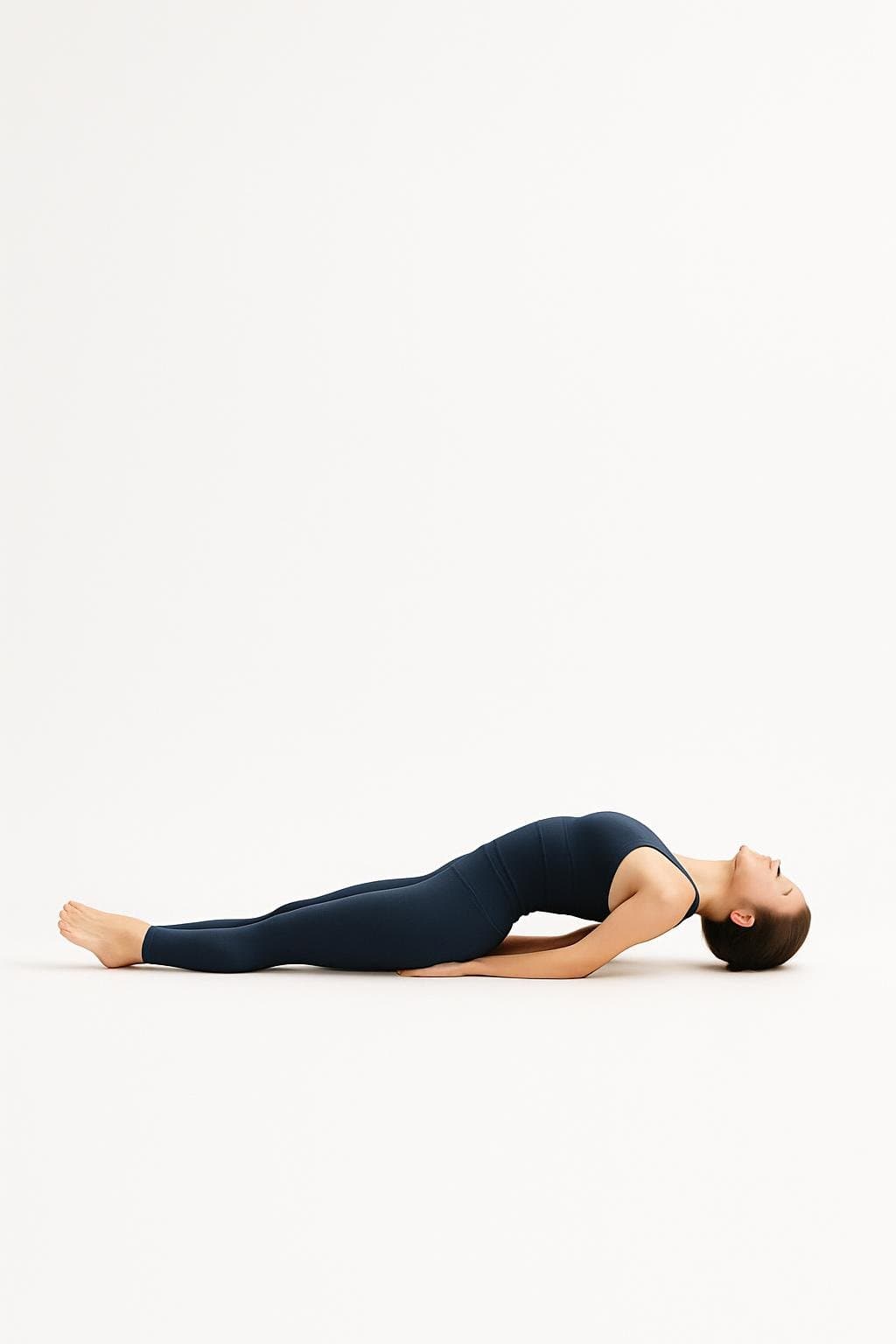 Fish Poseintermediate
Matsyasana
Lying on your back, you arch your chest toward the ceiling and rest lightly on the crown of your head, forearms bearing most of the weight. The classic counterpose to Shoulderstand and Plow.
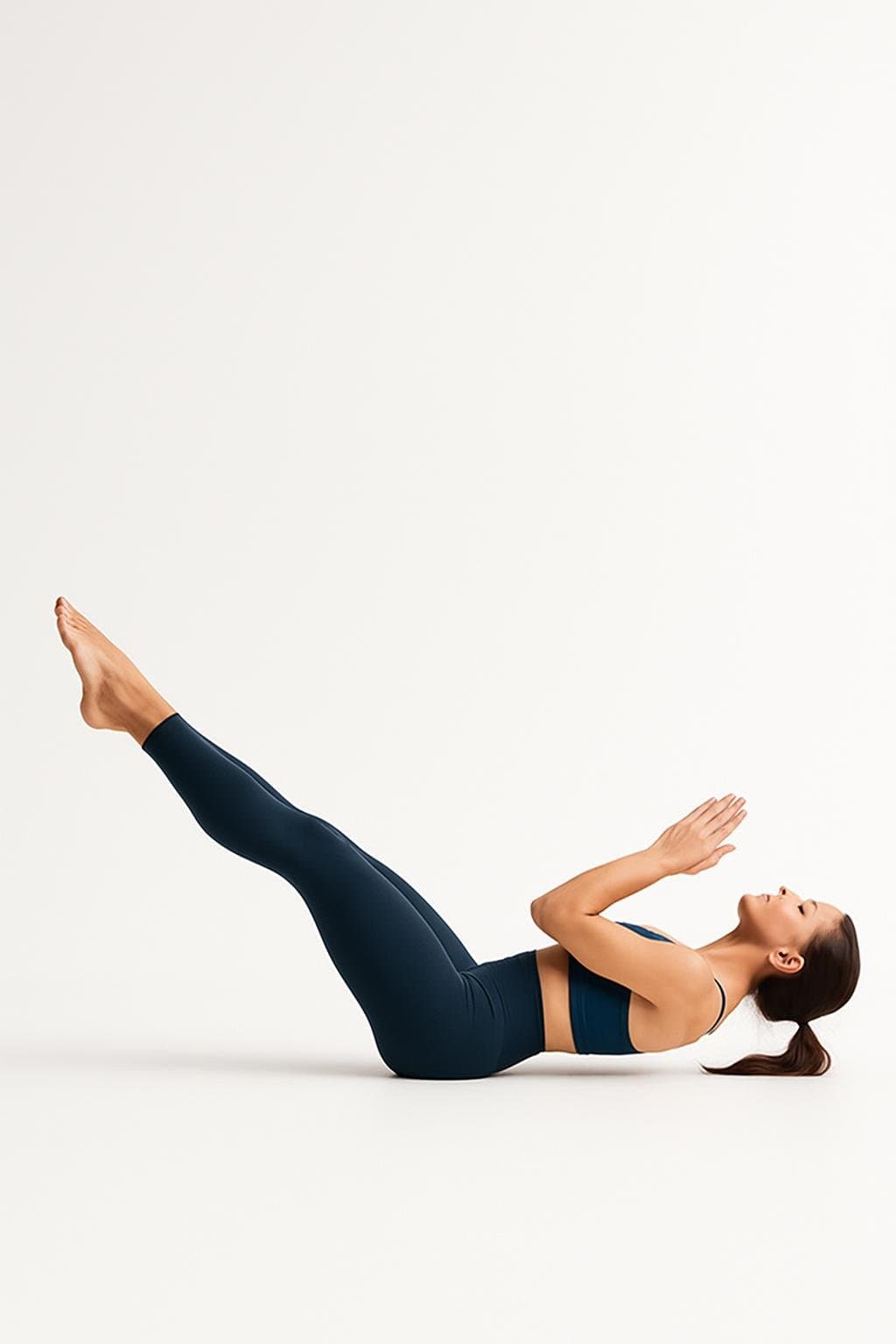 Extended-Leg Fishadvanced
Uttana Padasana
Fish Pose with the legs and arms lifted to about 45 degrees, palms pressed together. It appears in the Ashtanga finishing sequence and demands strong legs, an open chest, and a careful neck all at once.
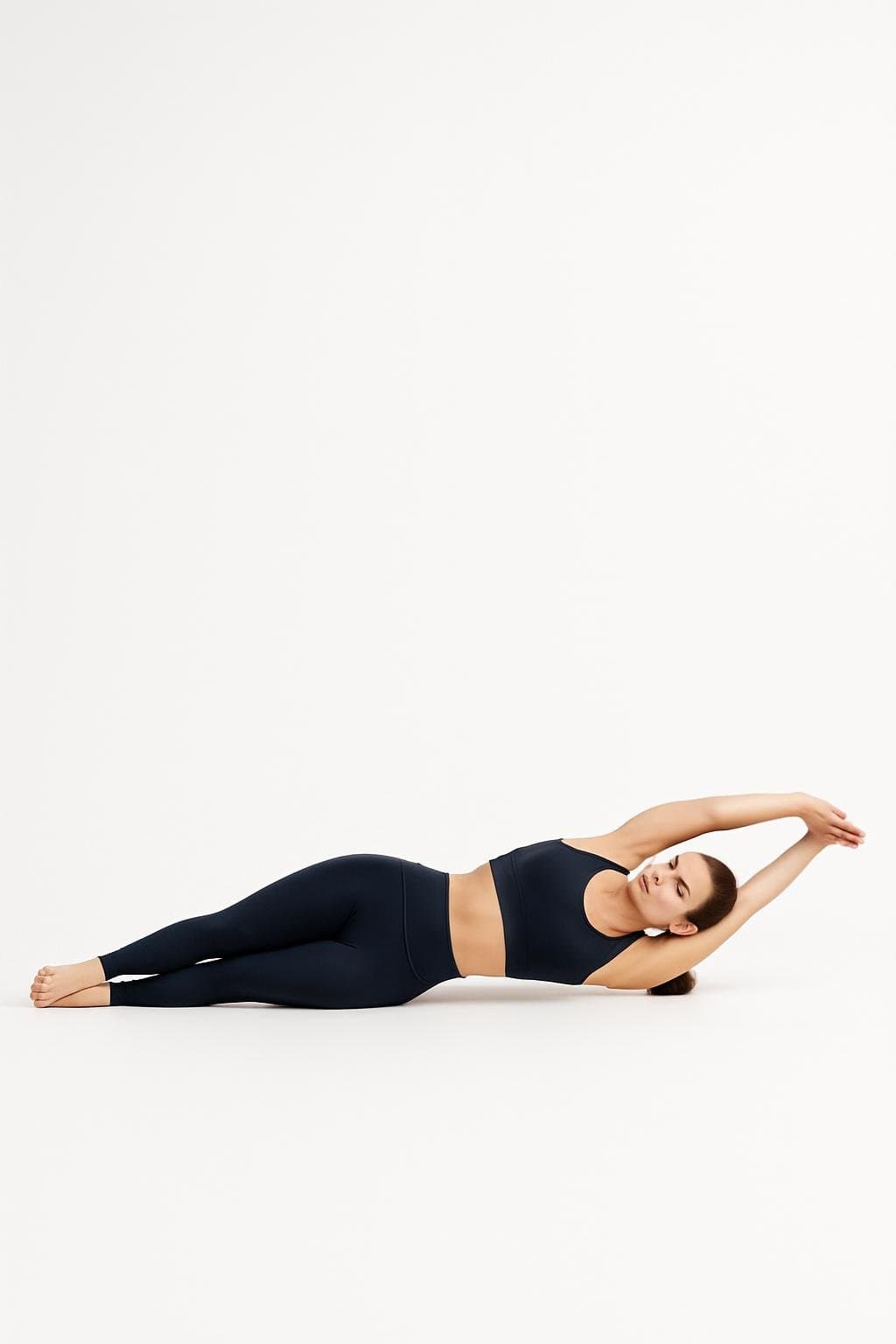 Banana Posebeginner
Bananasana
A Yin favorite: lying on your back, you curve your whole body into a crescent — feet to one side, shoulders and arms to the same side — and stay a while. A long, lazy stretch for the entire side body.
- Reclined Figure Fourbeginner
Supta Kapotasana
Lying on your back, you cross one ankle over the opposite thigh and draw the legs in, stretching the outer hip. All the benefit of Pigeon Pose with the spine resting safely on the floor.
- Stretch Posebeginner
—
A core staple of Kundalini yoga: lying on your back, you lift your head and heels a few inches, point your fingers toward your toes, and hold — usually with Breath of Fire. Simple to describe, demanding to hold.
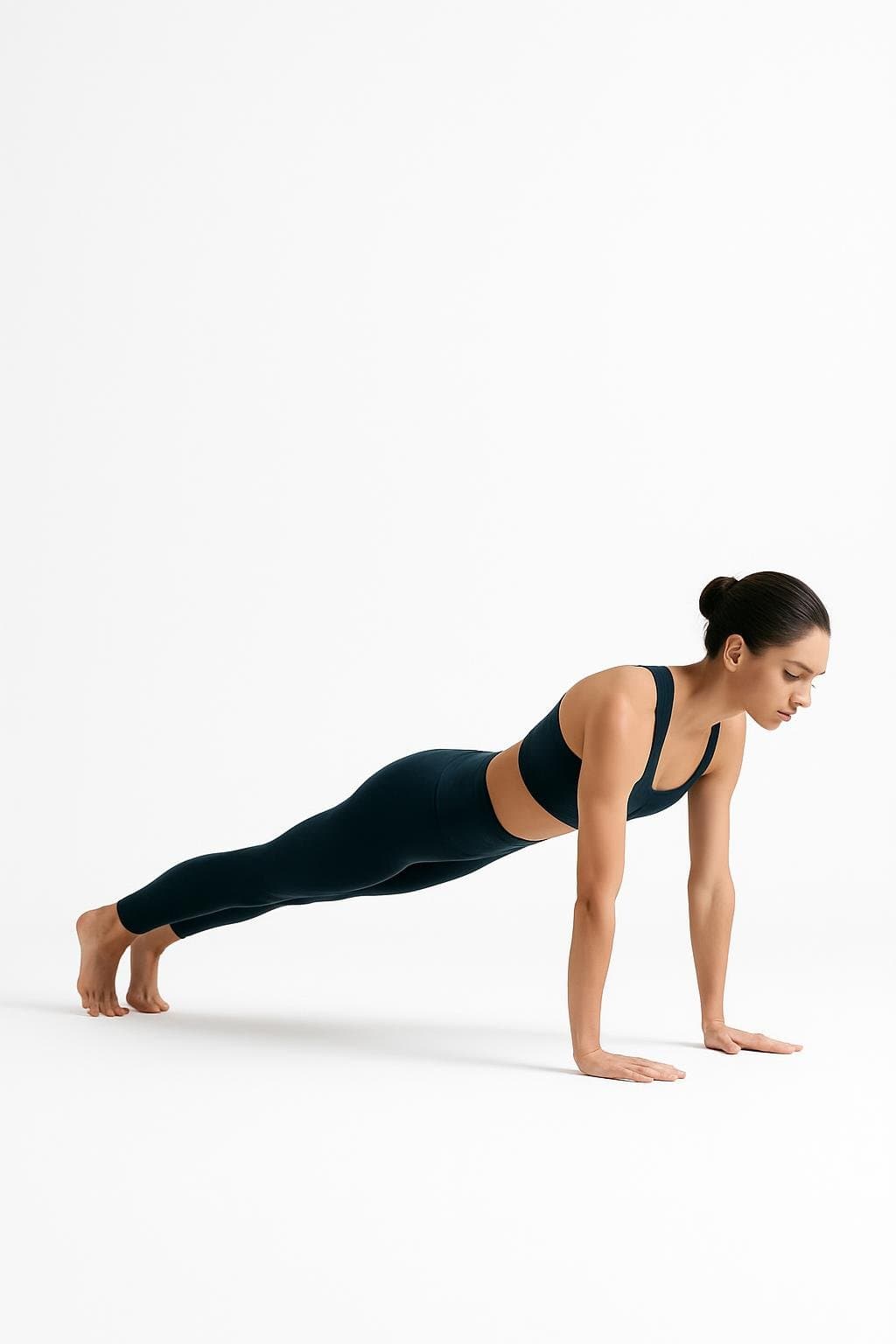 Plank Posebeginner
Phalakasana
The top of a push-up, held: one straight line from heels to head with your whole core working. Simple to set up, honest work to hold well.
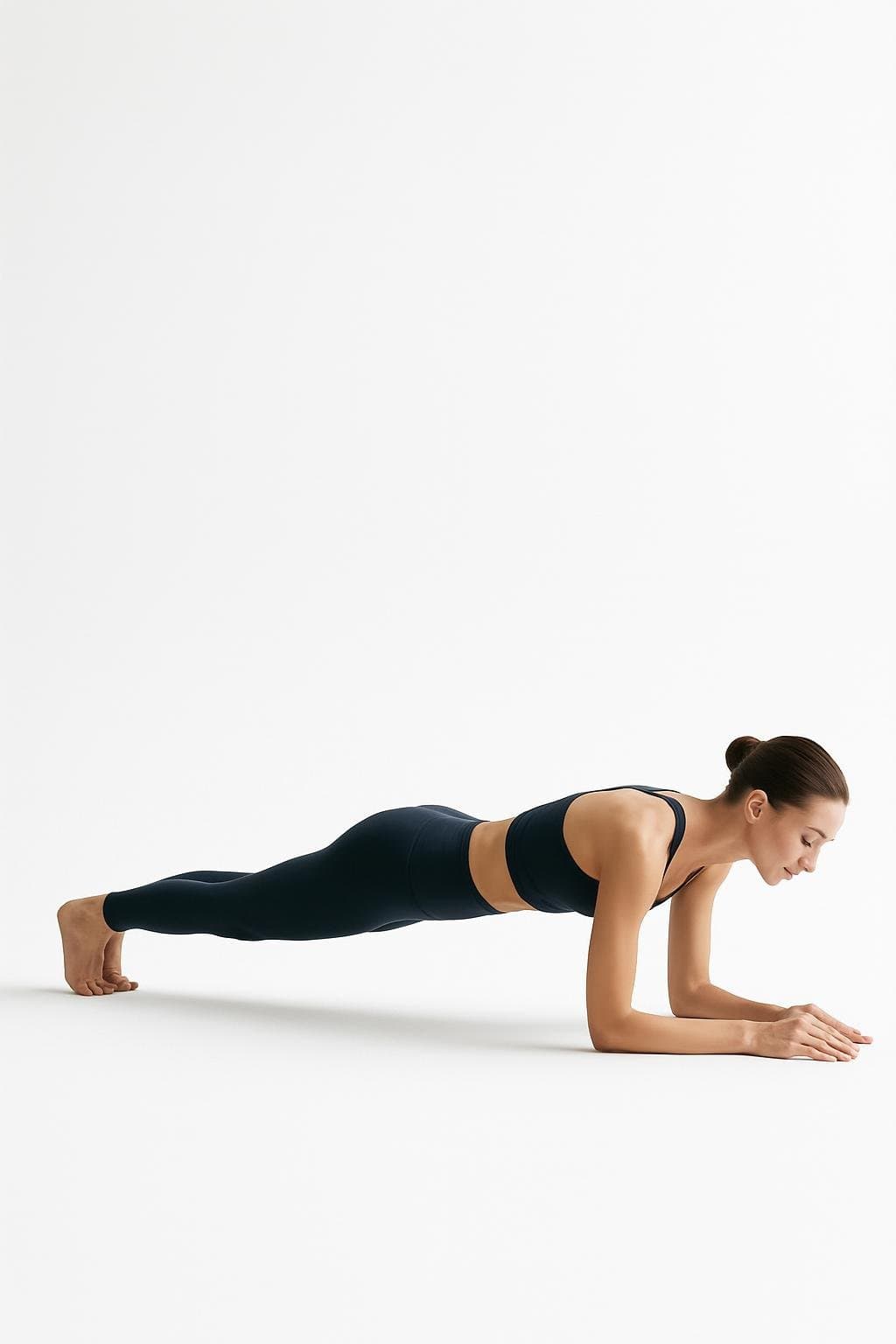 Forearm Plankbeginner
Makara Adho Mukha Svanasana
Plank on your forearms: the same straight line, no wrist load, and if anything more core work. A reliable substitute whenever your wrists need a break.
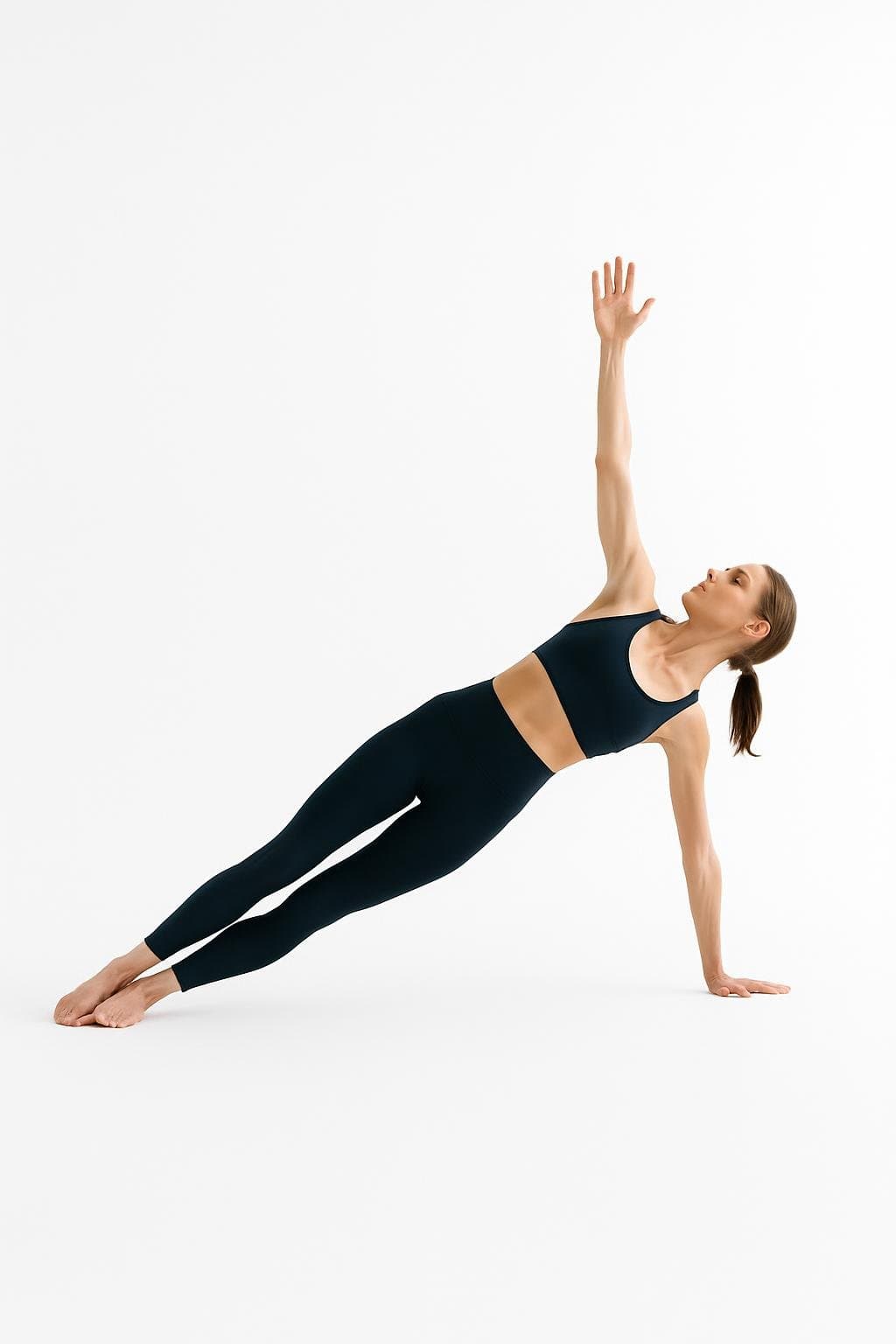 Side Plankintermediate
Vasisthasana
Balance on one hand and the edge of one foot, body in a single tilted line. It asks a lot of one shoulder and the side waist, so build up with the supported versions first.
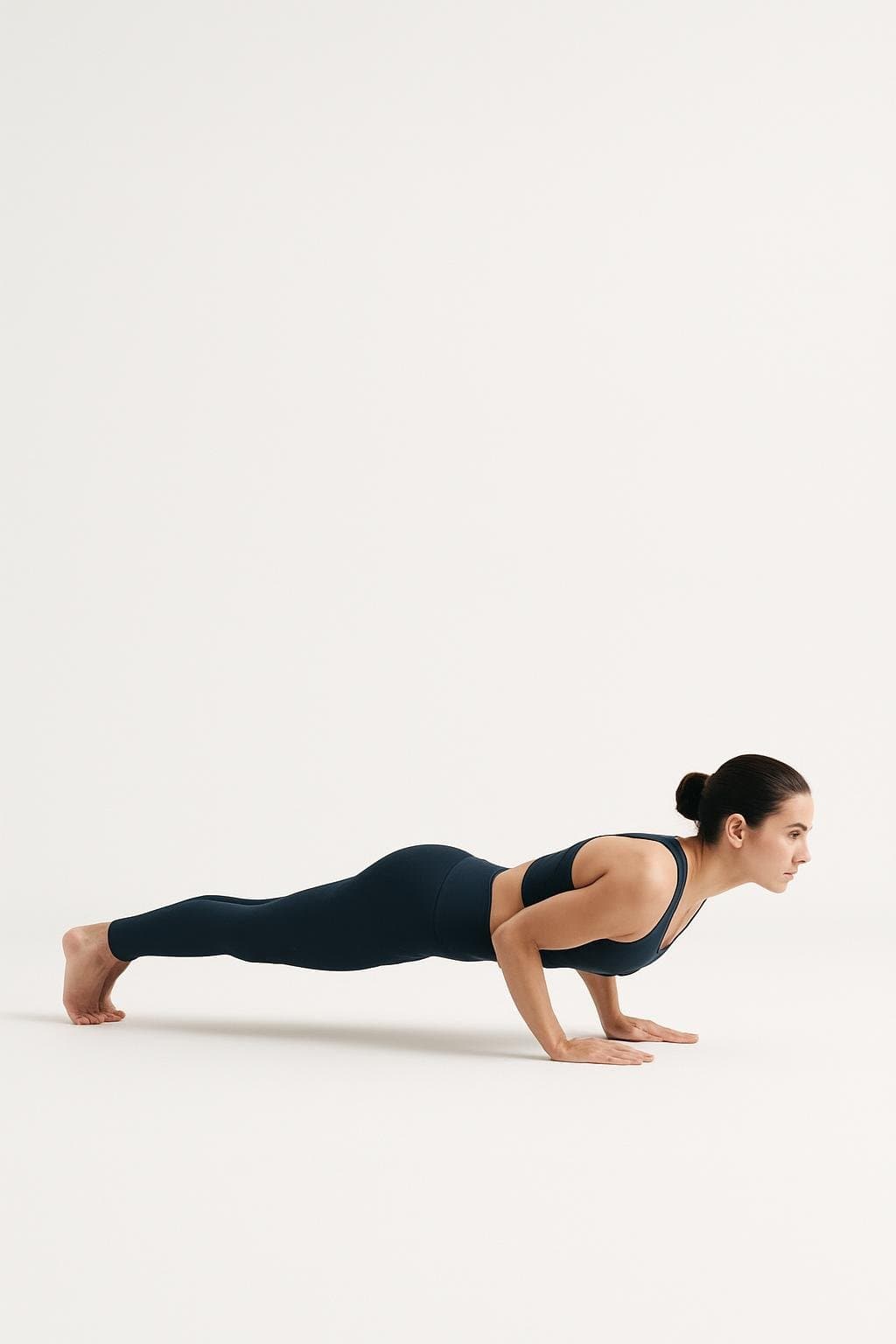 Four-Limbed Staff Poseintermediate
Chaturanga Dandasana
A slow half push-up held with the elbows at ninety degrees, hugging the ribs. It shows up in nearly every vinyasa class, and doing it sloppily is how shoulders get grumpy — knees down is the smarter version for most people, most days.
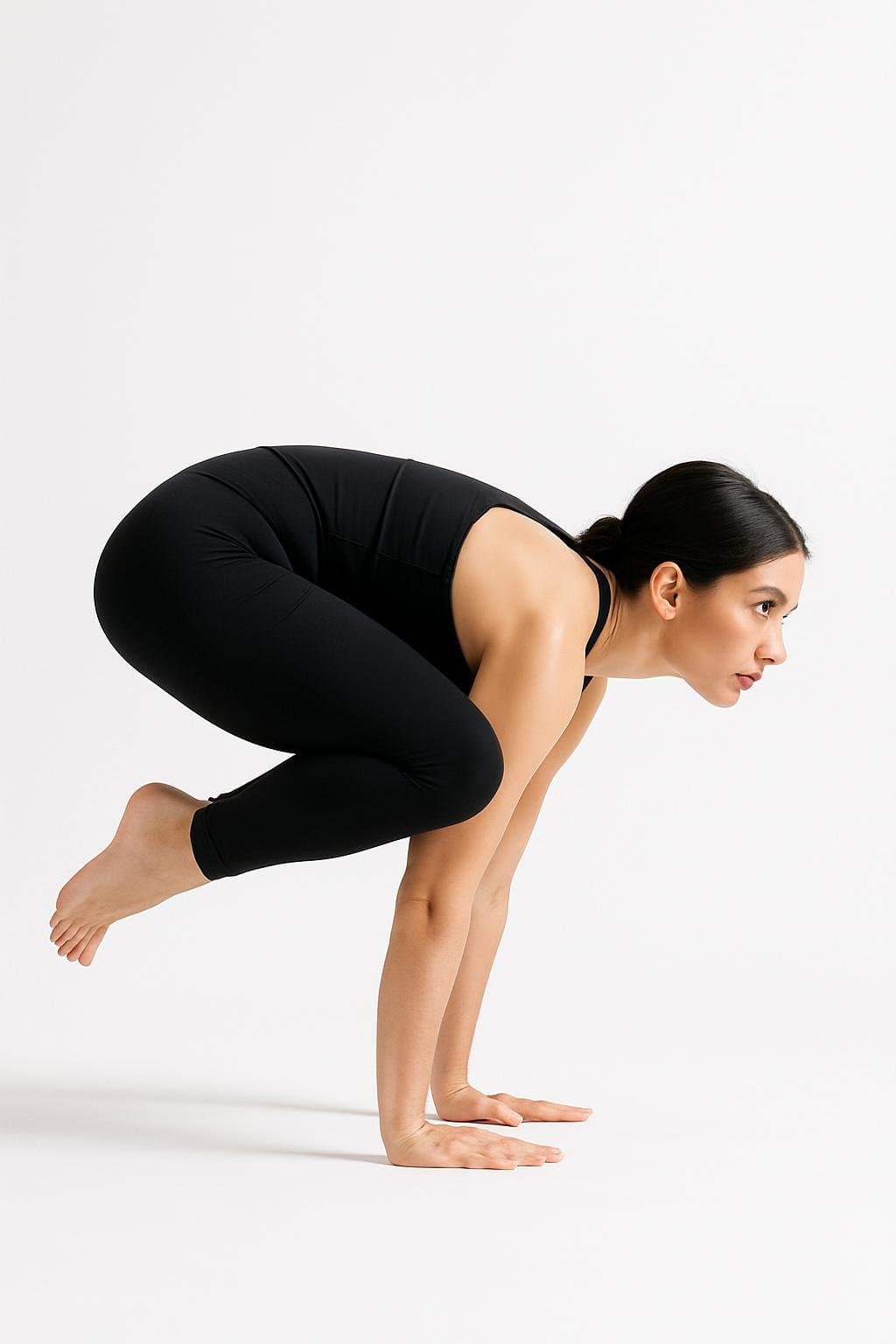 Crow Poseintermediate
Bakasana
Your first flying pose: knees perched on the backs of your upper arms, feet floating off the floor. It's more about balance and knowing where your weight is than raw strength — and everyone falls a few times on the way there.
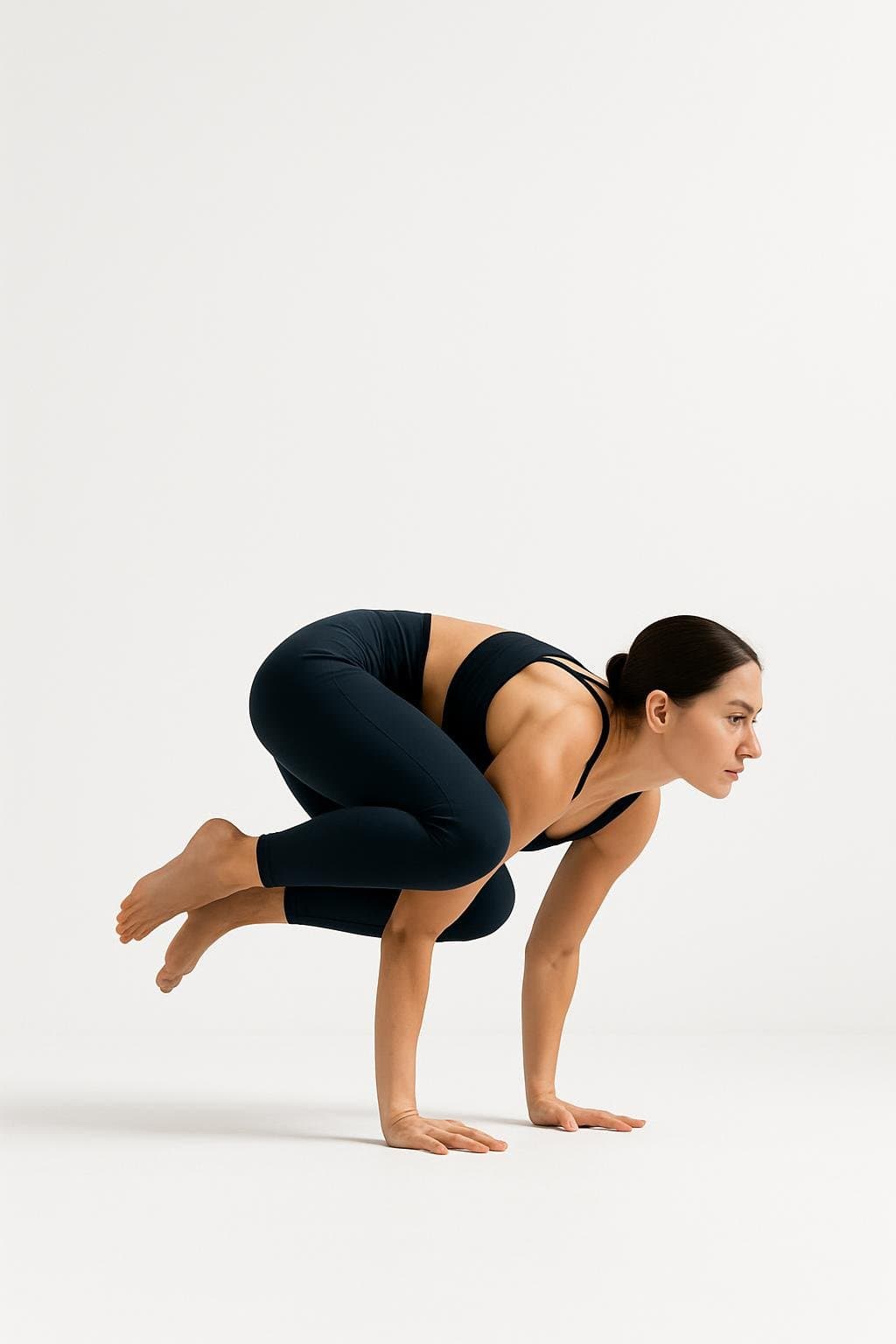 Side Crowadvanced
Parsva Bakasana
Crow's twisted sibling: both legs stacked to one side, knees resting on one upper arm. You need a solid seated twist and a comfortable Crow before this one makes sense — expect to tip sideways while you find the balance point.
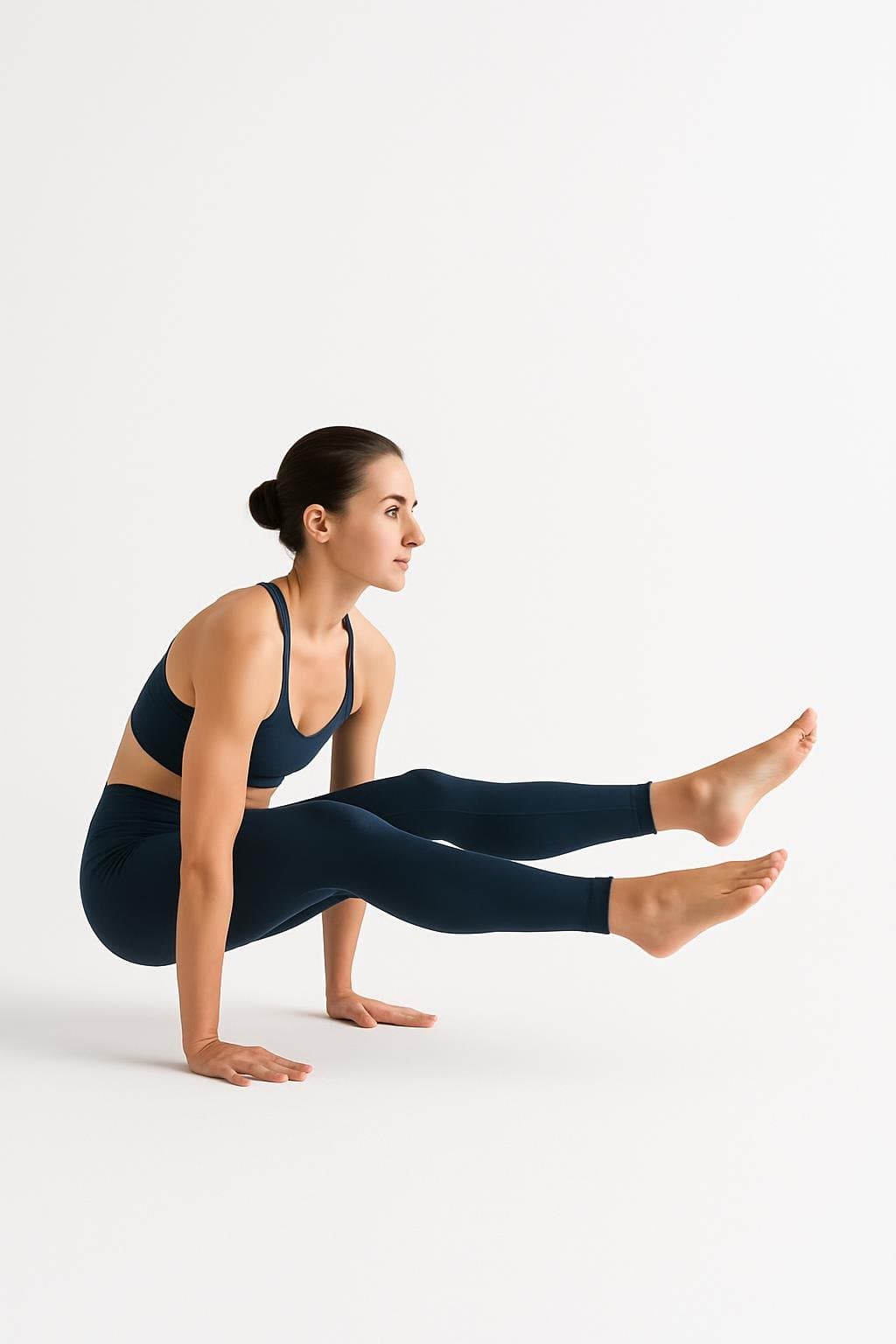 Firefly Poseadvanced
Tittibhasana
Legs stretched straight past your upper arms, hips floating behind your hands. It looks like an arm-strength trick but it's mostly open hamstrings and a strong core — if forward folds are still a work in progress, this will be too, and that's fine.
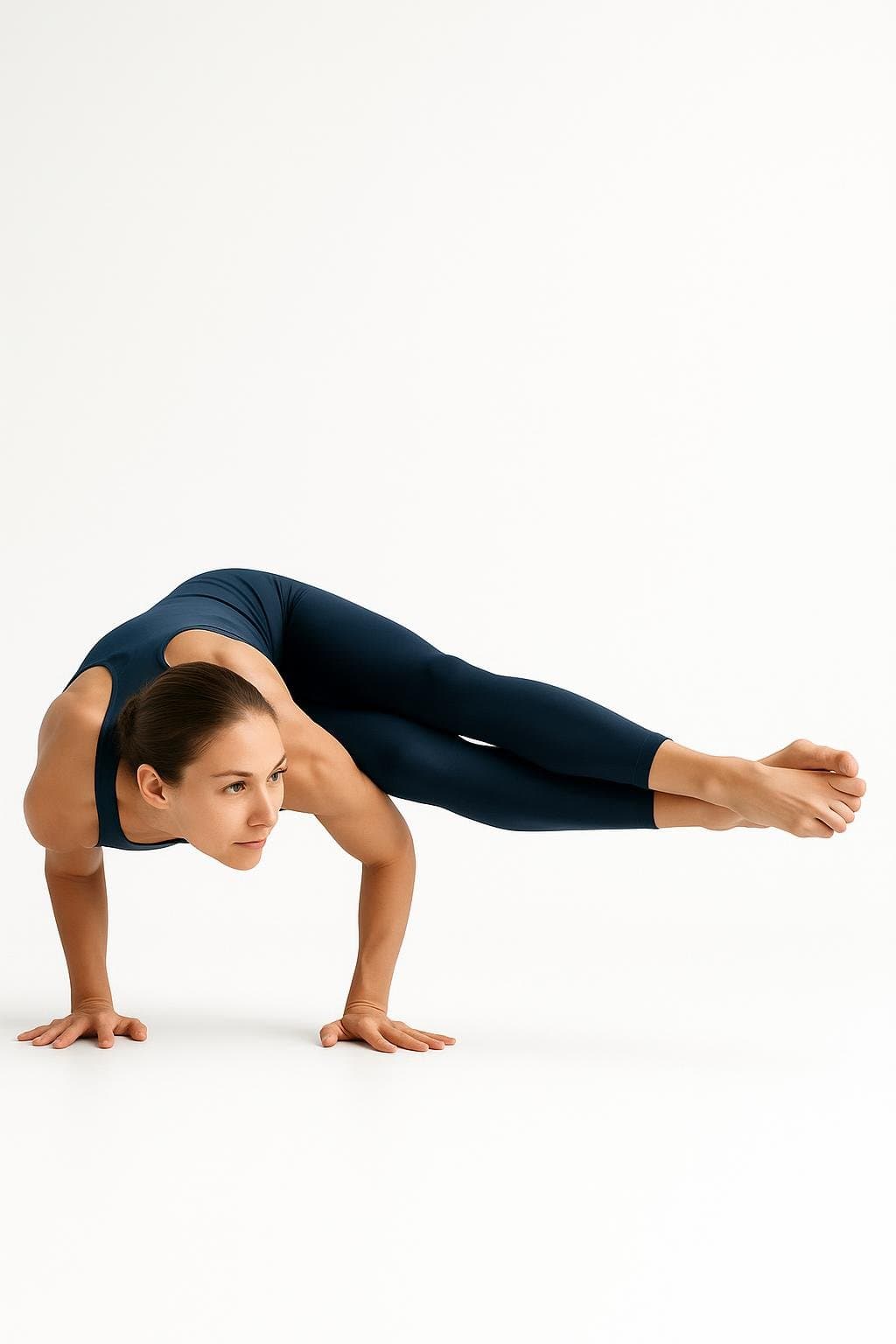 Eight-Angle Poseadvanced
Astavakrasana
An asymmetric arm balance: legs scissored around one arm, hips swung out to the side, elbows bent like Chaturanga. It looks impossibly tangled, but it breaks down into steps — one leg over the shoulder, ankles hooked, lean and lift.
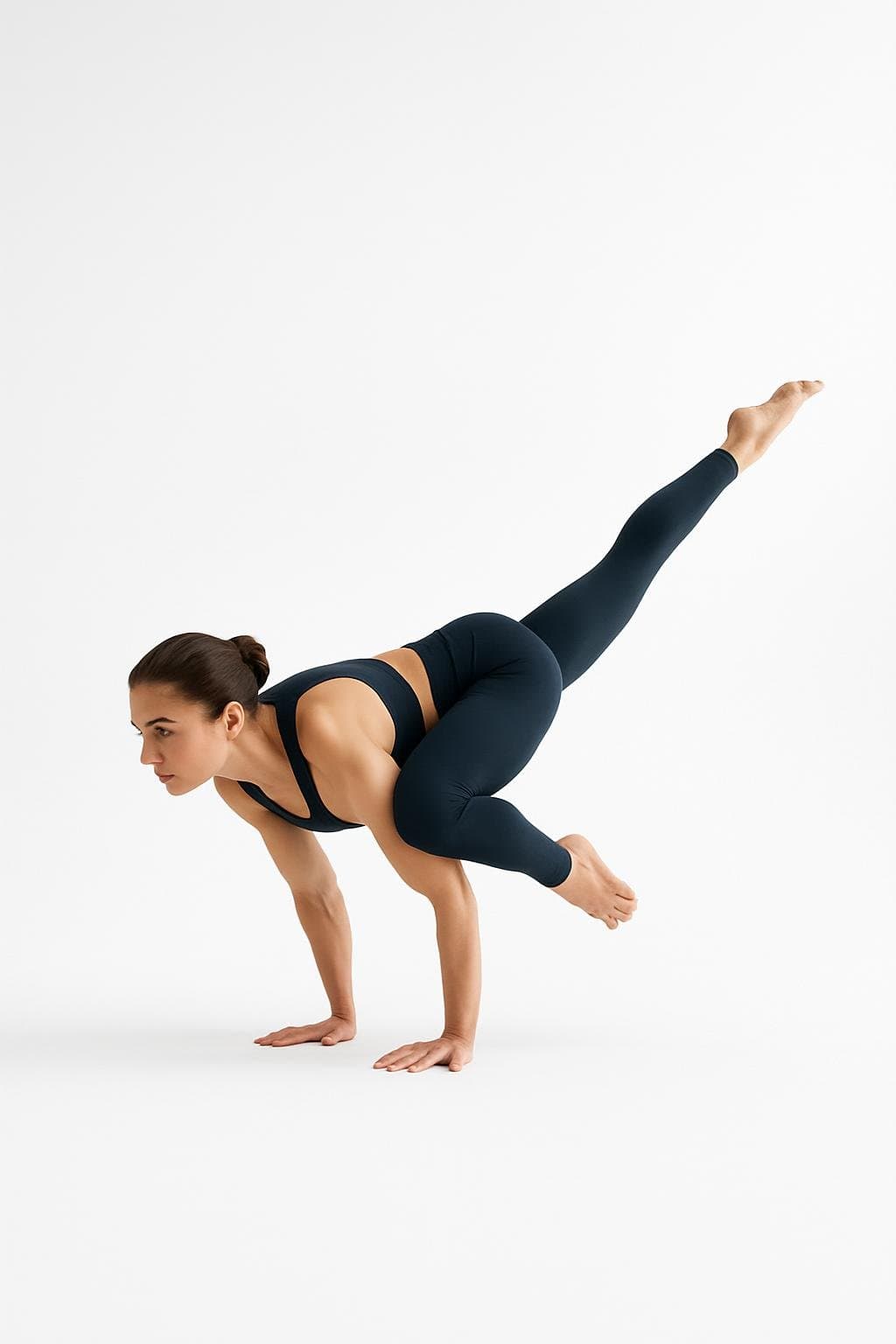 Flying Pigeonadvanced
Eka Pada Galavasana
A figure-four shape balanced on your hands, back leg reaching straight behind you. It needs open hips, a trustworthy Crow, and a willingness to fall forward onto a cushion a few times before it clicks.
- Peacock Poseadvanced
Mayurasana
Your whole body balances horizontally on two bent elbows pressed into your belly, fingers pointing back toward your feet. The wrist position is unusual and intense — warm up thoroughly and expect this one to take a long time.
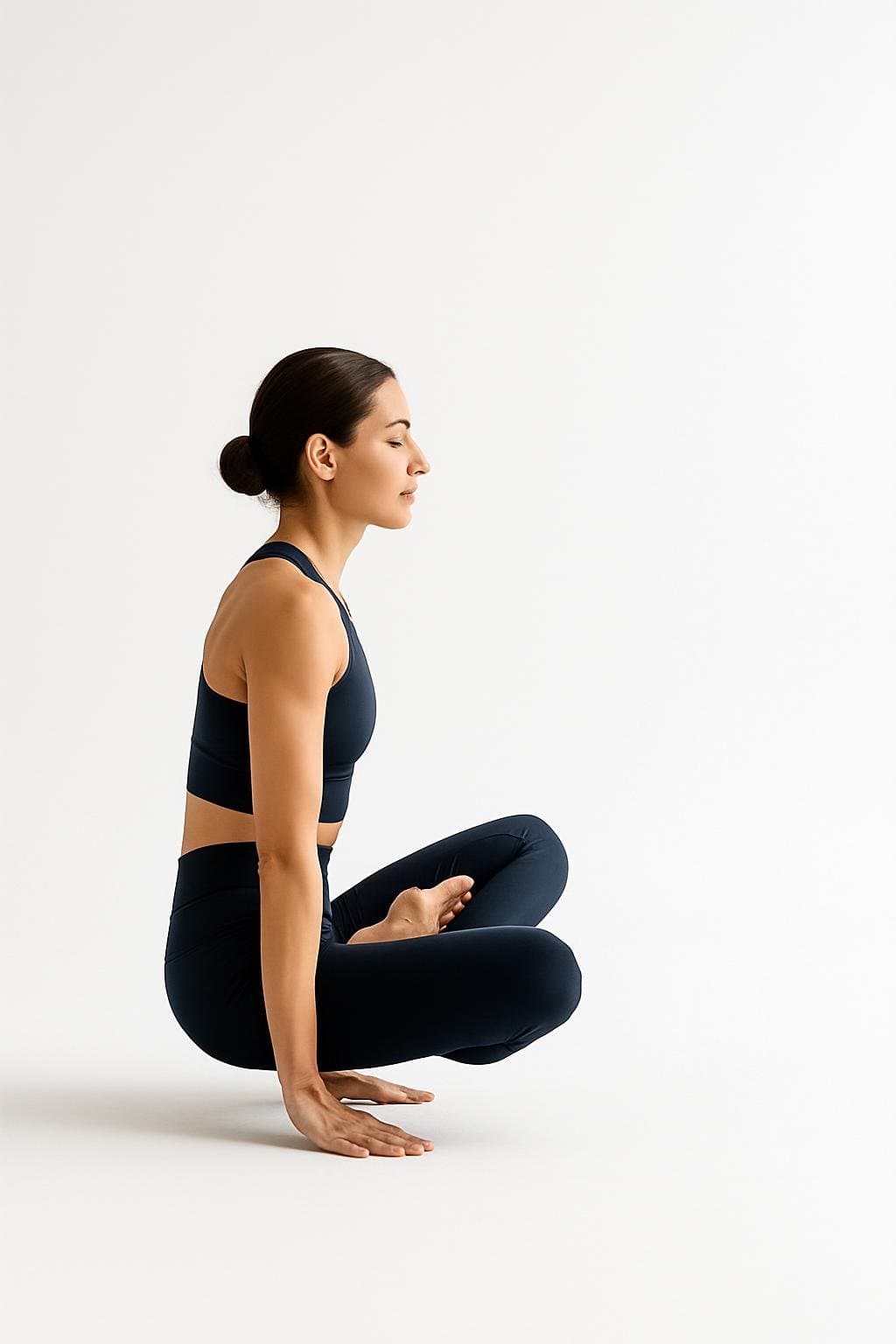 Scale Poseadvanced
Tolasana
Sitting in Lotus, you press your hands down and lift your whole seat off the floor. The catch is the prerequisite: a genuinely comfortable Lotus, which many practiced students never force — blocks under the hands make the lift itself accessible.
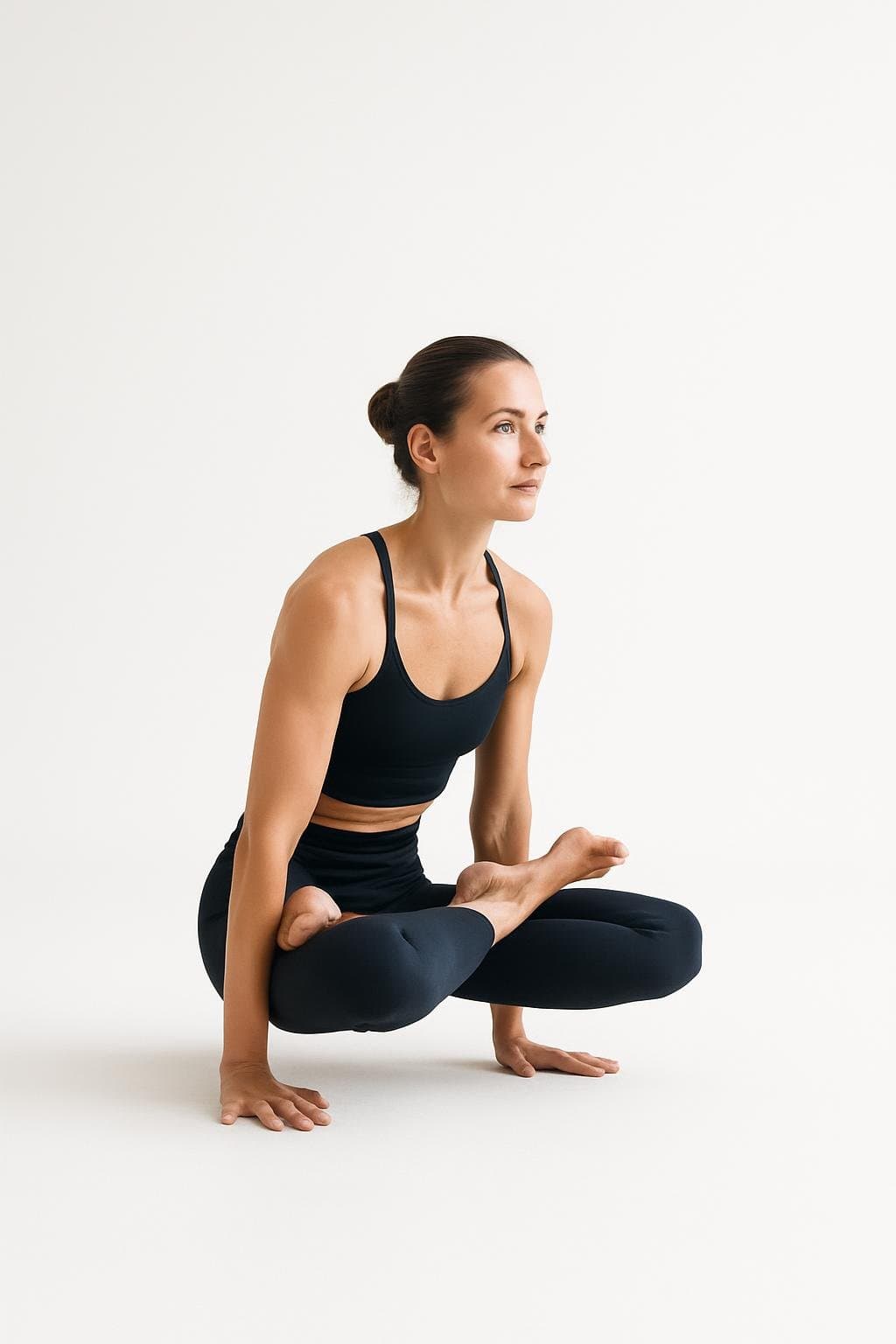 Rooster Poseadvanced
Kukkutasana
From Lotus, you thread your arms through the gaps between calves and thighs, then press up to balance. It demands a deep, easeful Lotus and slim tolerance for shortcuts — treat it as a long-term curiosity, not a goal to rush.
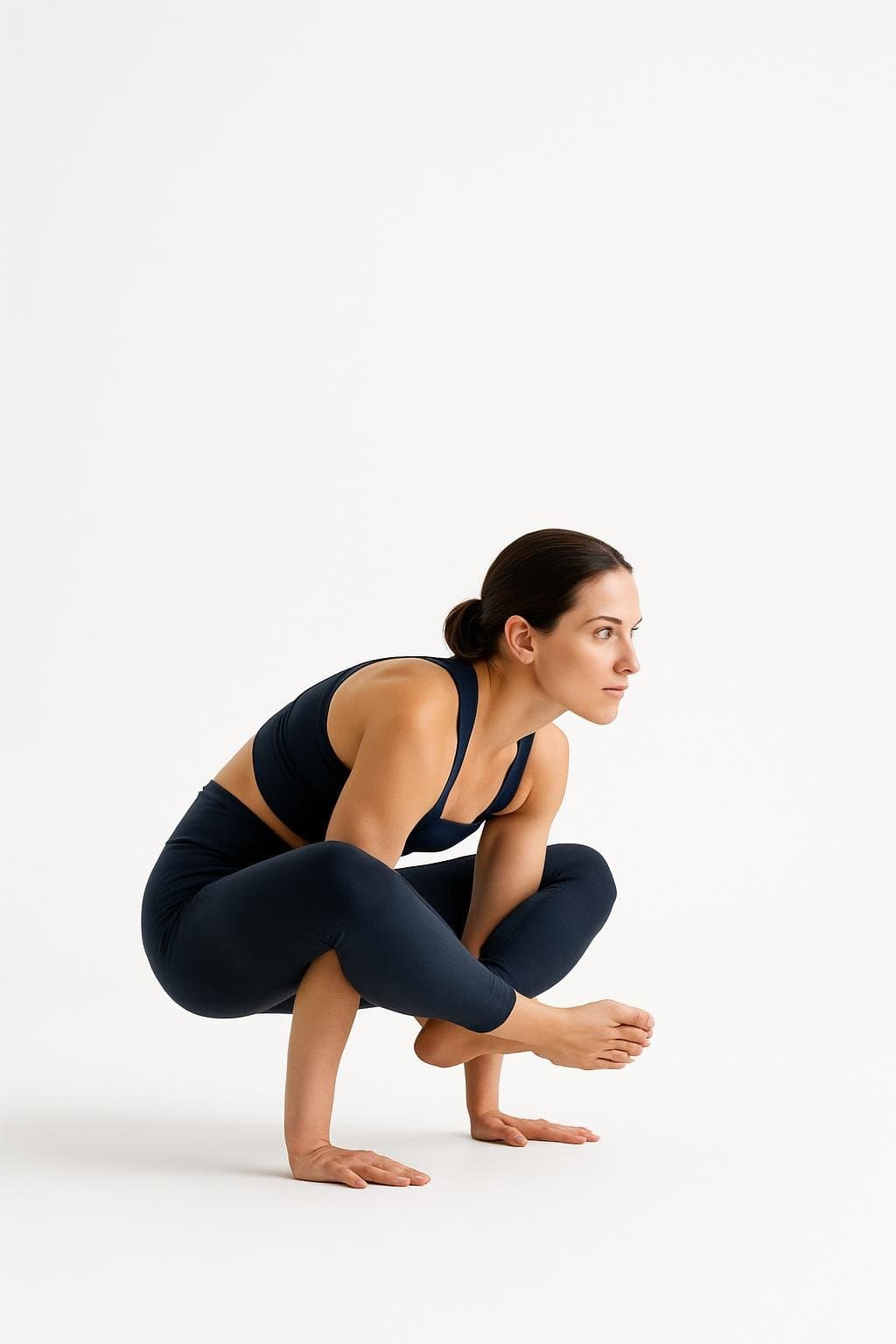 Shoulder-Pressing Poseadvanced
Bhujapidasana
Thighs squeeze your upper arms, ankles cross in front, and you sit back onto your hands in mid-air. It's the bent-knee cousin of Firefly and usually the first of the two to arrive, since it asks less of the hamstrings.
- Fallen Triangleintermediate
Patita Tarasana
From a three-legged dog, one leg sweeps under and across while you open into a side-plank-like shape, one foot's edge and two hands (then one) holding you up. A playful transition pose that sneaks real side-body work into a flow.