Balancing Yoga Poses
15 poses, every one explained in full
Balancing poses hold a shape on one leg. They train ankle stability, hip strength and the constant small corrections that keep you upright — the capacity that degrades first and most quietly with age, and the one that decides whether a stumble becomes a fall.
Balance is a skill rather than a trait. It is trainable, it is measurably worse when you are tired or distracted, and it improves fastest with a fixed gaze on something still and a wall within reach. Wobbling is the mechanism working, not the pose failing.
What to watch for
Locking the standing knee. Keep a soft micro-bend so the leg muscles hold you up rather than the joint, and stand near a wall until the shape is familiar.
New to these? Start with Tree Pose, Standing Figure Four, then Warrior III.
Beginner (2)
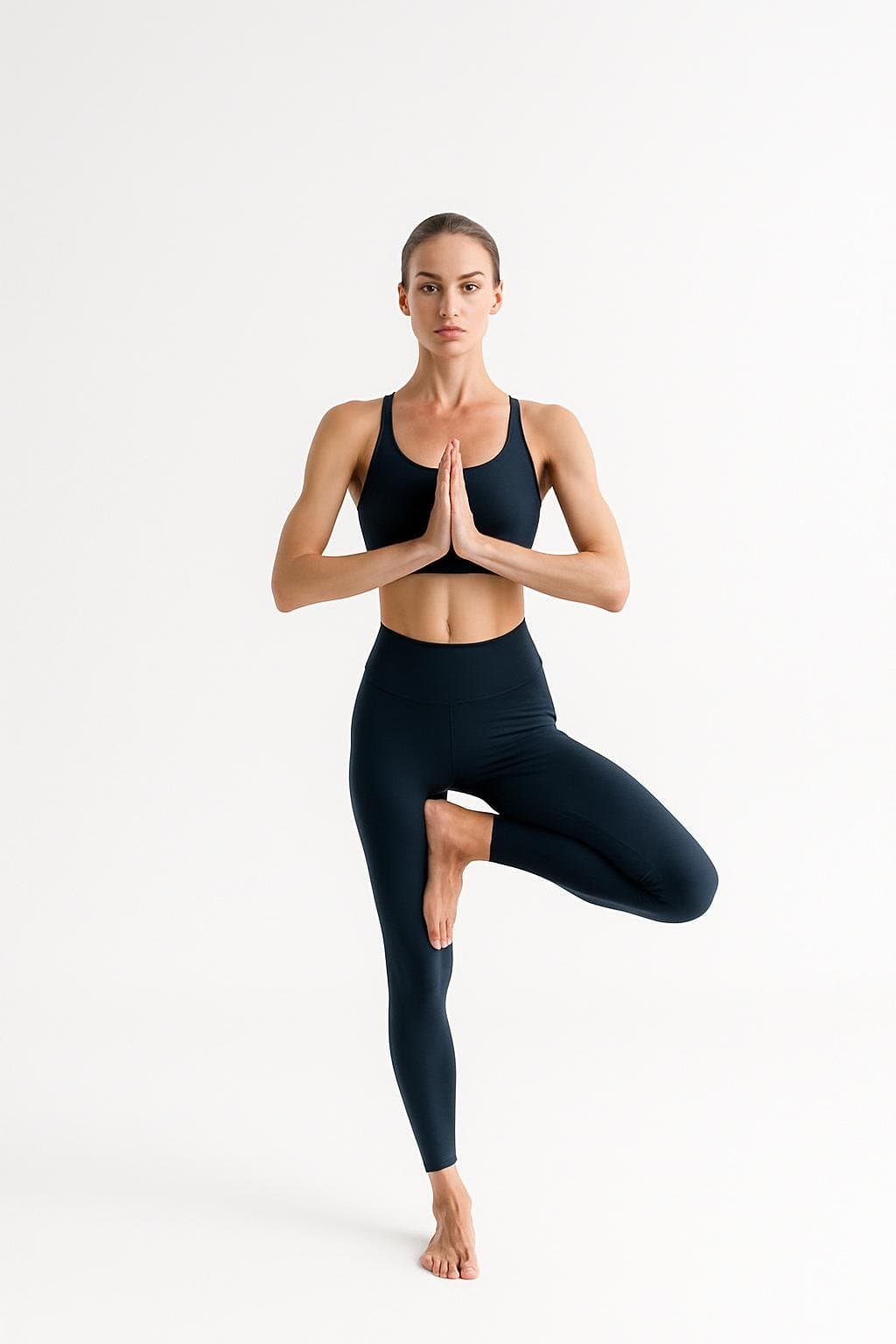 Tree Posebeginner
Vrksasana
The classic one-legged balance: root down through one foot, press the other sole into your inner leg, and grow tall. Tree teaches you that balancing is constant small corrections, not stillness.
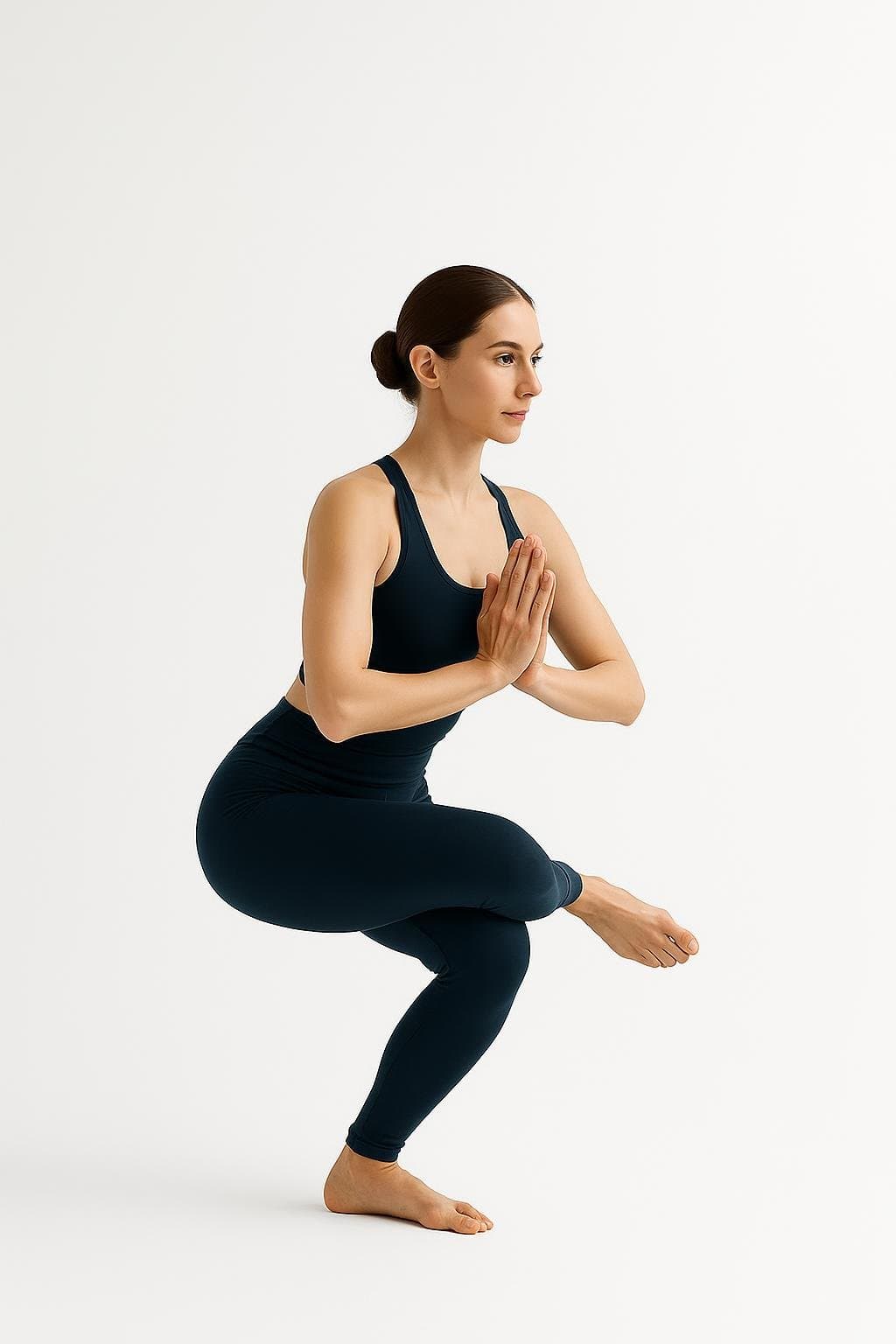 Standing Figure Fourbeginner
Eka Pada Utkatasana
Cross one ankle over the opposite thigh and sit back as if into a chair — a strong outer-hip stretch you can take anywhere, no floor required. The deeper you sit, the more it opens.
Intermediate (8)
- Eagle Poseintermediate
Garudasana
Wrap one leg over the other, one arm under the other, and sit down into the tangle. Eagle squeezes everything toward your midline and gives the outer shoulders and hips a stretch that is hard to find anywhere else.
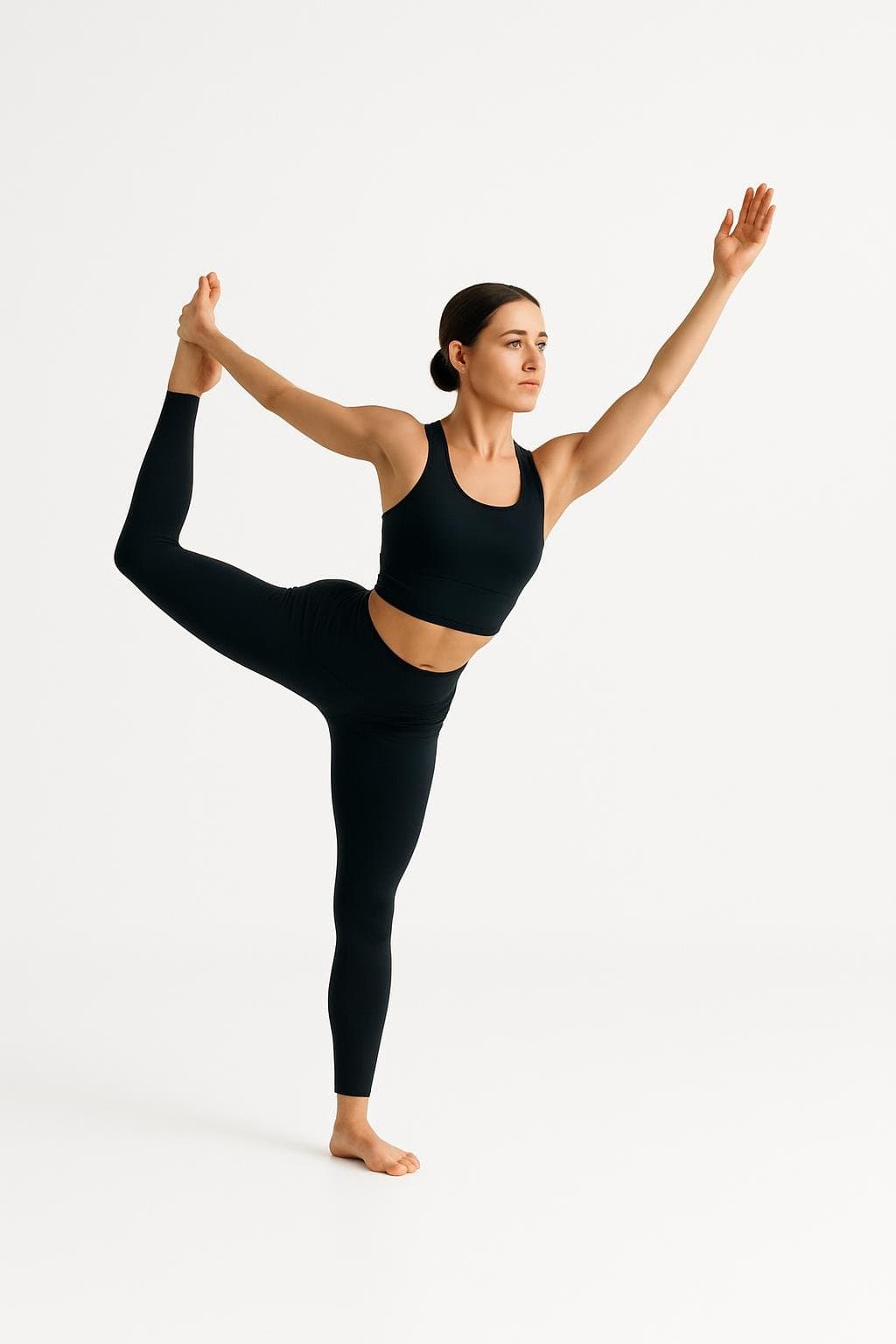 Dancer Poseintermediate
Natarajasana
Hold one foot behind you, kick it into your hand, and reach forward — a balance and a backbend at once. Dancer rewards patience: the kick creates the shape, not the pull.
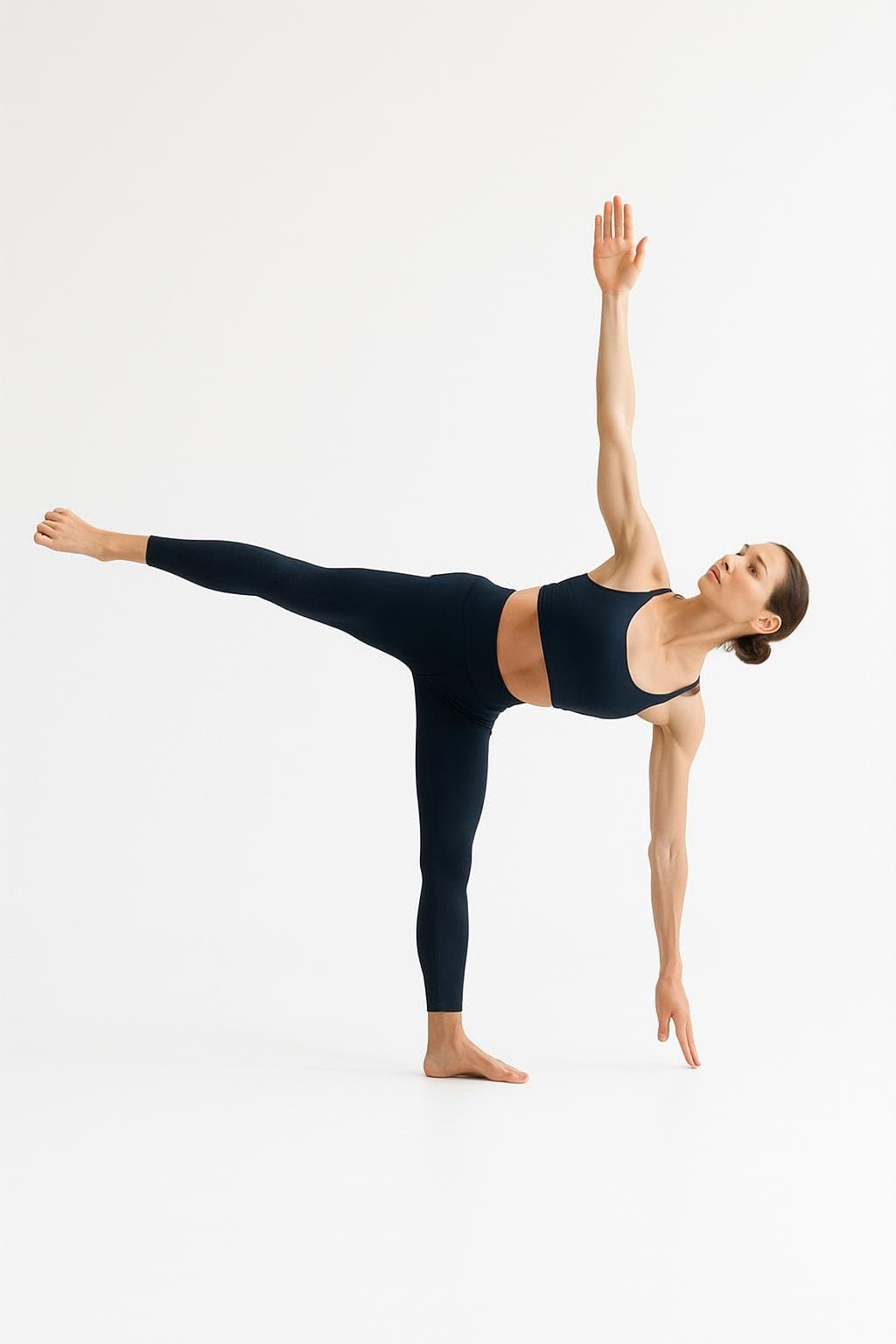 Half Moon Poseintermediate
Ardha Chandrasana
Balance on one leg and one hand with the other leg floating parallel to the floor, hips stacked open to the side. Half Moon is Triangle set free of the ground — and a block under the hand makes it honest instead of heroic.
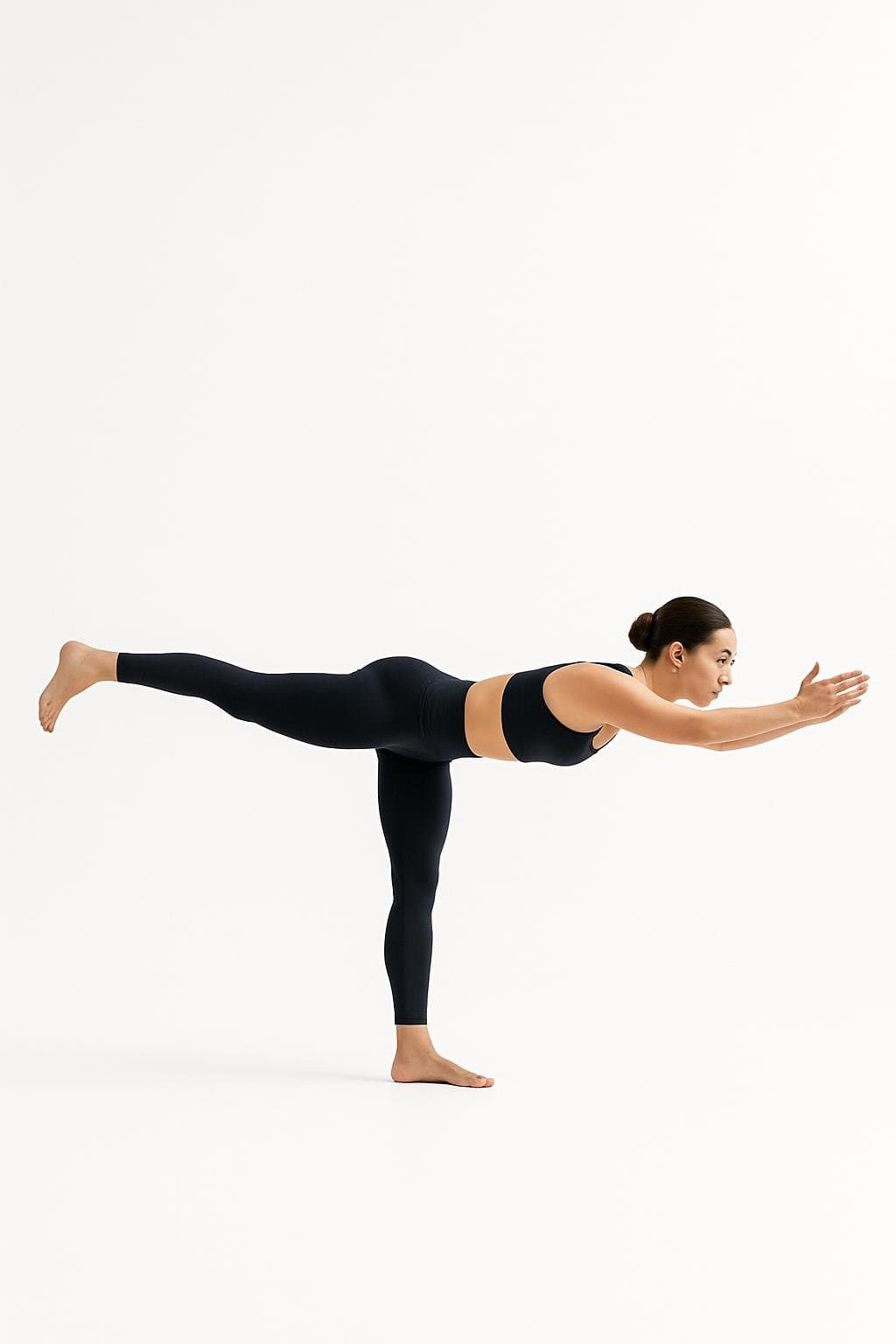 Warrior IIIintermediate
Virabhadrasana III
Tip your whole body into a capital T: torso and lifted leg parallel to the floor, arms reaching where they help most. Warrior III is less about the standing leg than about keeping the hips level while everything wants to twist.
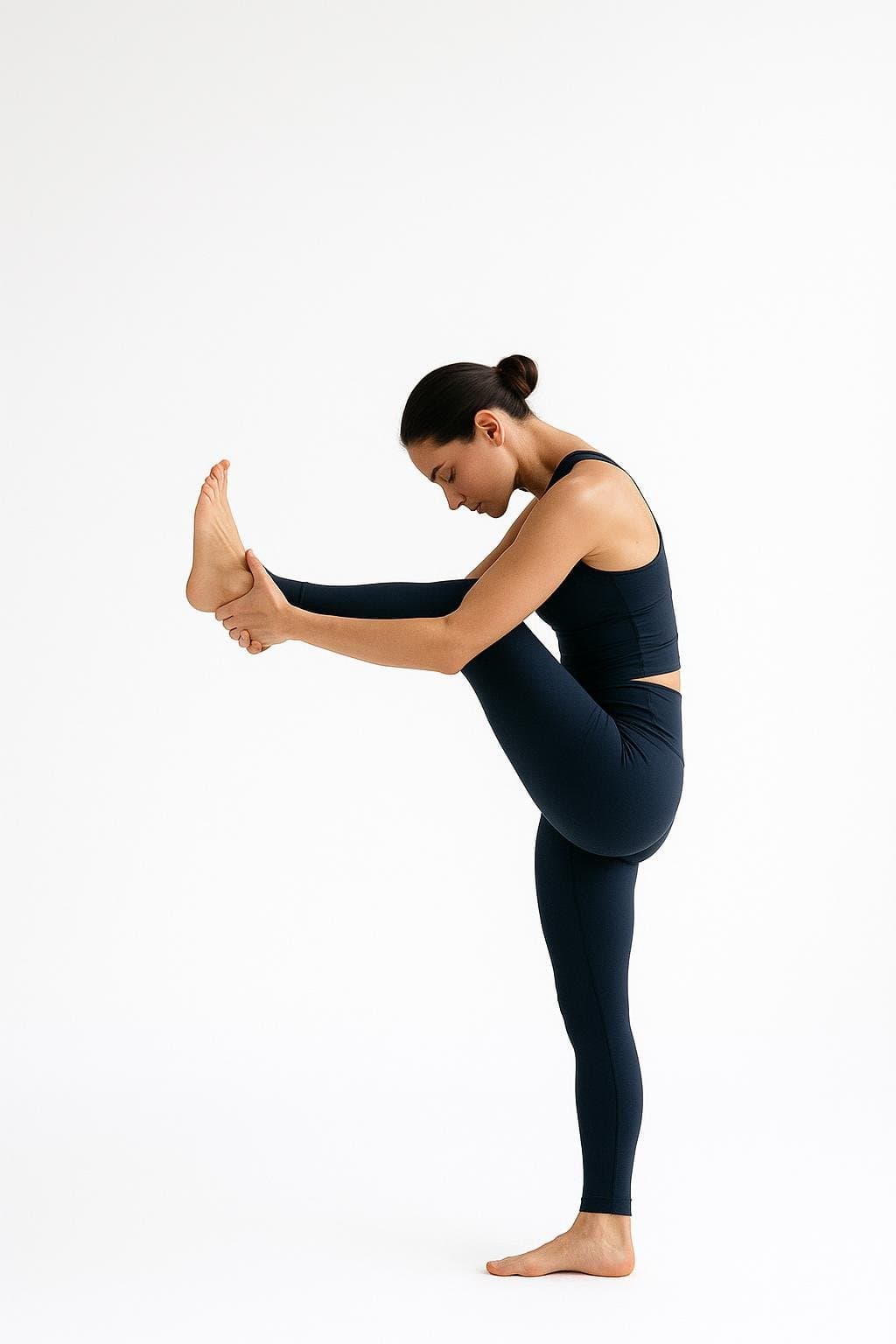 Standing Head-to-Kneeintermediate
Dandayamana Janushirasana
The classic hot-yoga balance: stand on a firmly straight leg, hold the lifted foot in both hands, extend it forward, and eventually fold your forehead toward the knee. Most people spend years on the first stage — that is the pose working as intended.
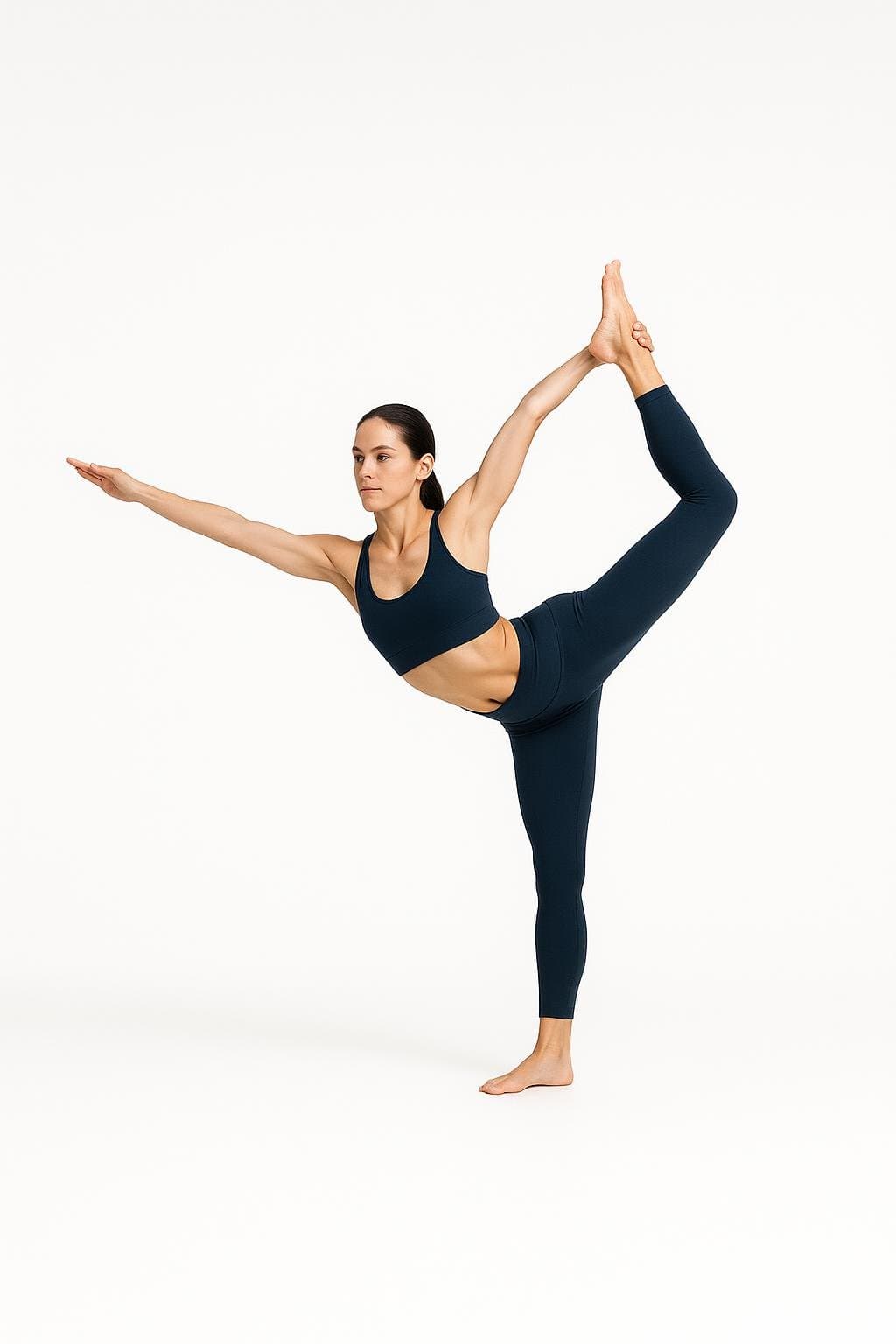 Standing Bow Poseintermediate
Dandayamana Dhanurasana
Grip one foot from the inside, stretch the other arm high, then kick back hard while the body tips forward — a moving counterbalance between kick and reach. Falling out and stepping back in is a normal part of practicing it.
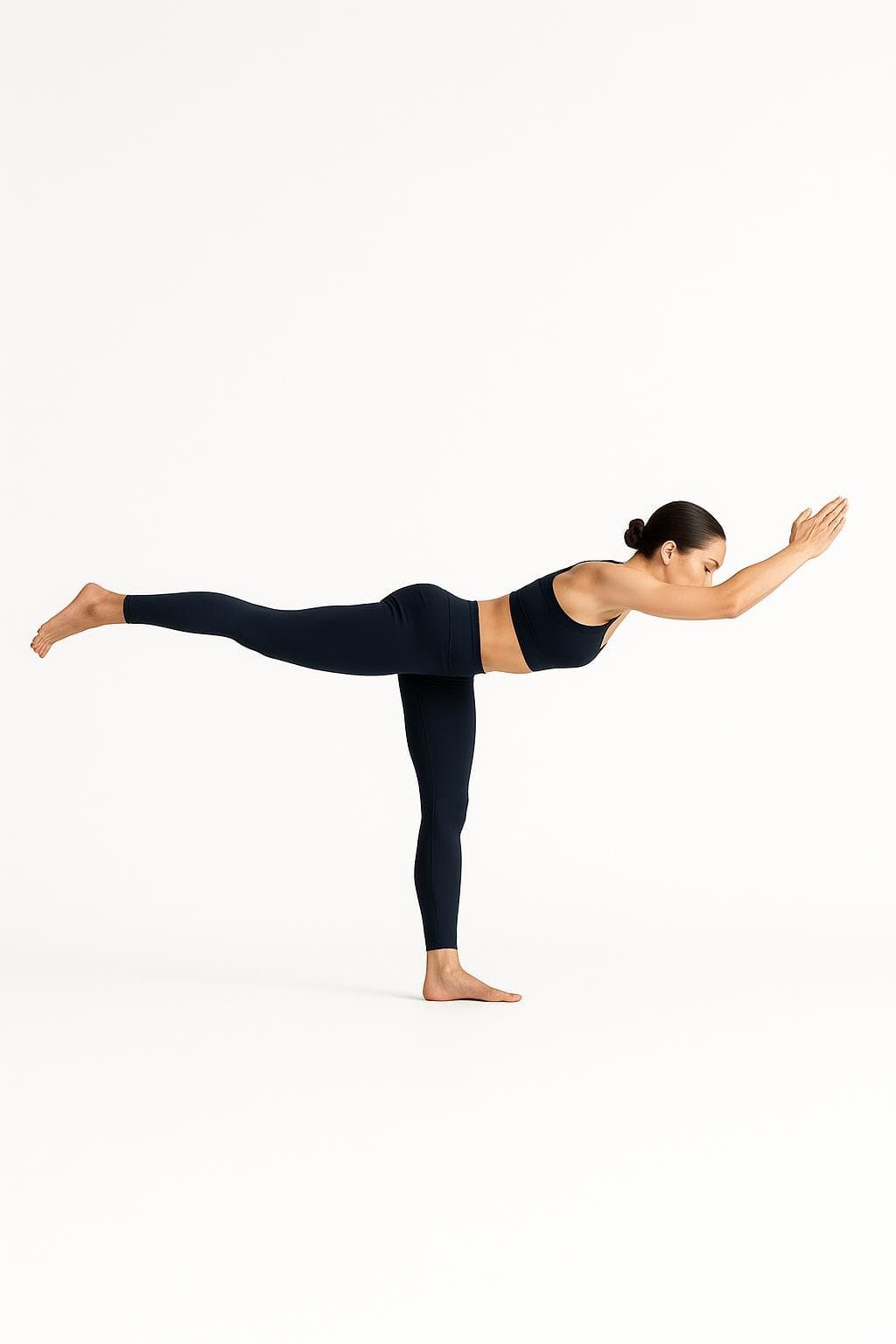 Balancing Stickintermediate
Tuladandasana
Arms overhead, step forward, and pivot your whole body into a level T — one straight line from fingertips to lifted heel. It is held only about ten seconds, and honestly, ten seconds is plenty.
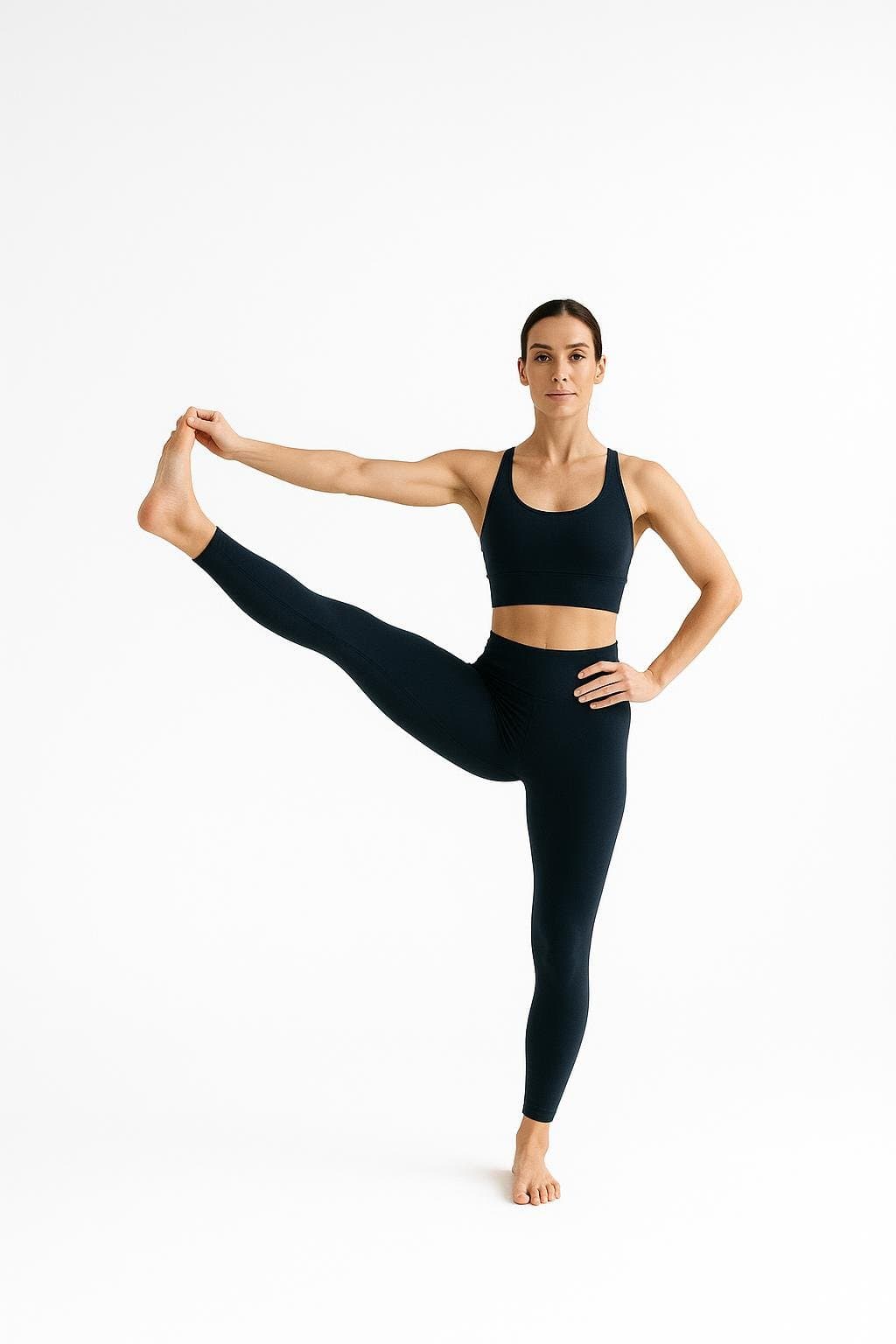 Extended Hand-to-Big-Toeintermediate
Utthita Hasta Padangusthasana
Hold your big toe and extend the leg forward while standing tall — then, if steady, open it out to the side. A strap or a bent knee makes this pose available to almost everyone; a straight spine matters more than a straight leg.
Advanced (5)
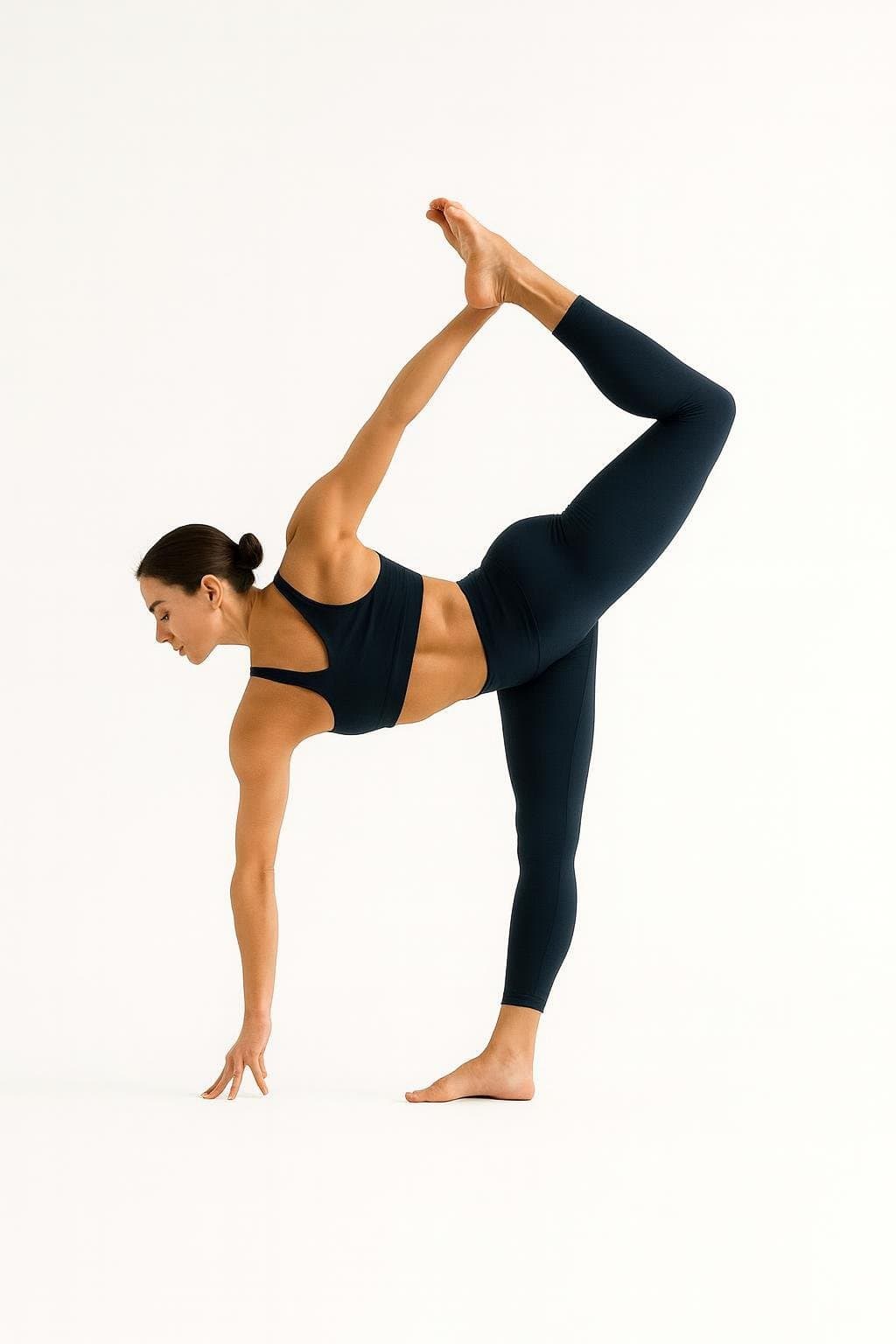 Sugarcane Poseadvanced
Ardha Chandra Chapasana
From Half Moon, bend the floating leg and catch the foot behind you, kicking into the hand to bow the body. Sugarcane adds a backbend and quad stretch to an already demanding balance — earn Half Moon first.
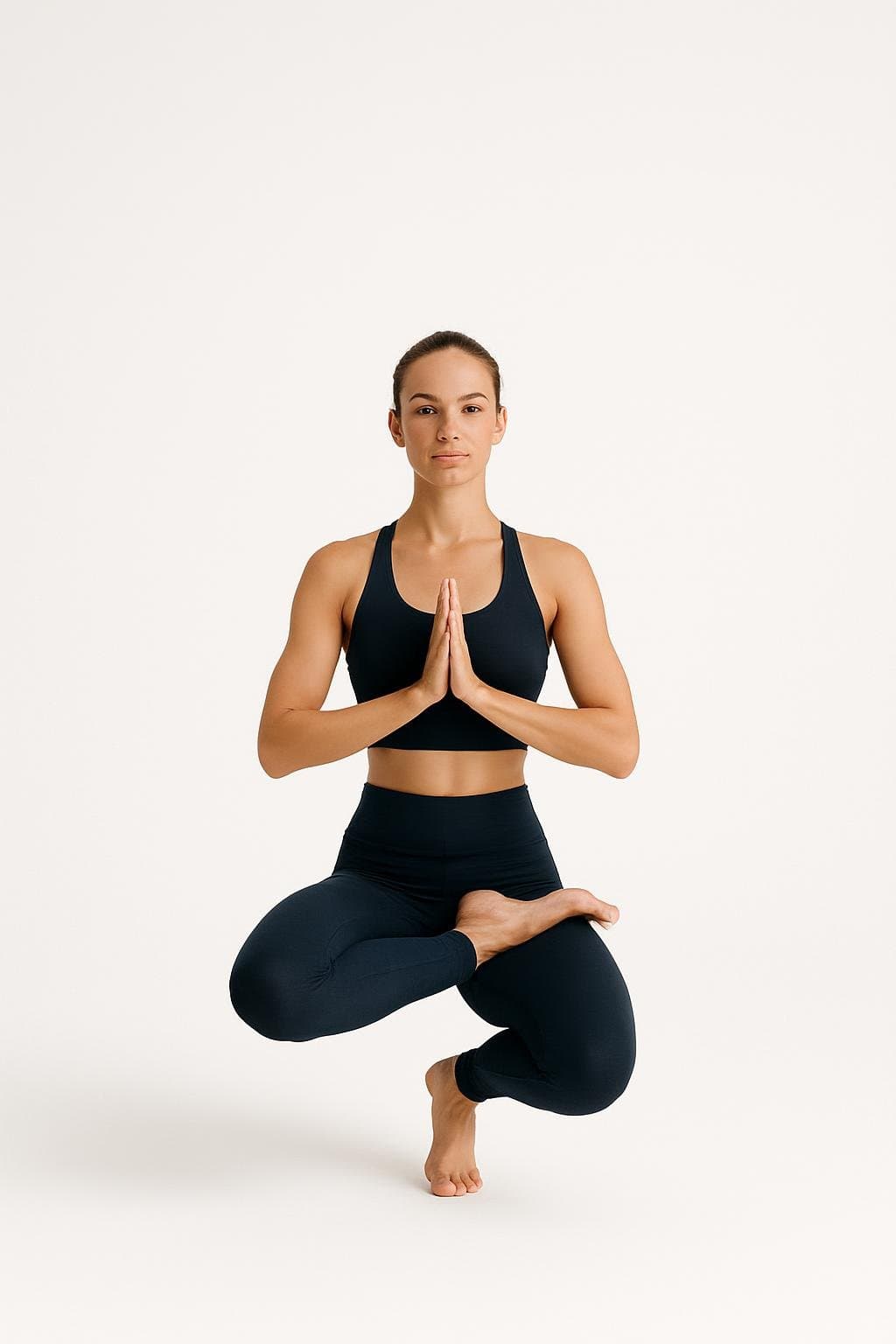 Toe Standadvanced
Padangustasana (Bikram)
Fold one foot into half lotus, then sink all the way down to balance on the ball of the standing foot, hands at your heart. Toe Stand demands open hips, a strong ankle, and a calm head — in that order.
- Half-Bound-Lotus Standing Forward Foldadvanced
Ardha Baddha Padmottanasana
One foot in half lotus, the same-side arm wrapped behind you to bind the toes, then a forward fold over the standing leg. An Ashtanga standing pose that combines three demands — hip opening, the bind, and balance — and each can be practiced separately.
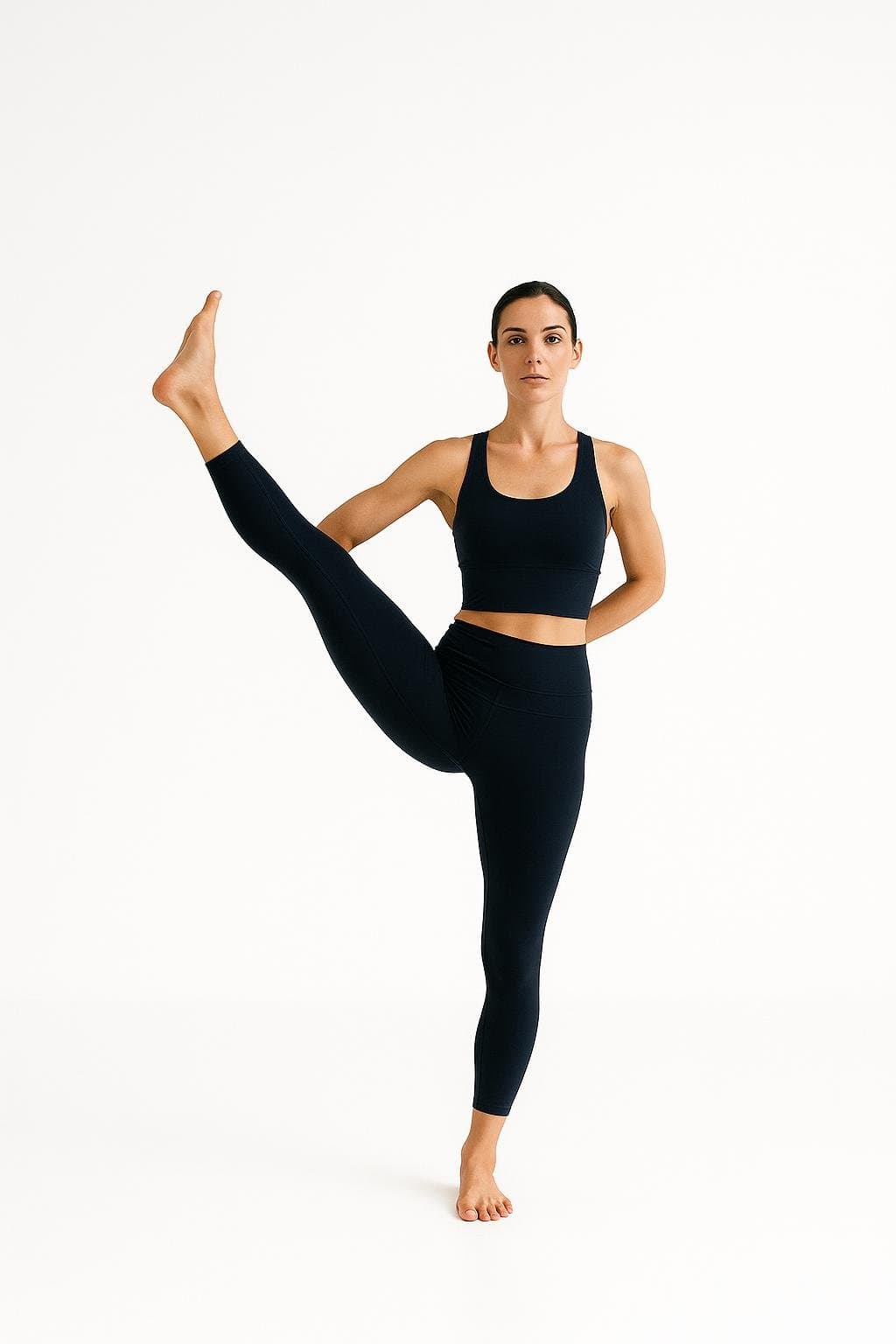 Bird of Paradiseadvanced
Svarga Dvijasana
Bind your arms around one leg, then stand up and unfold that leg toward the sky. Bird of Paradise is really three poses stacked — a bound side angle, a balance, and a hamstring stretch — and the bind, not the straight leg, is the hard-won part.
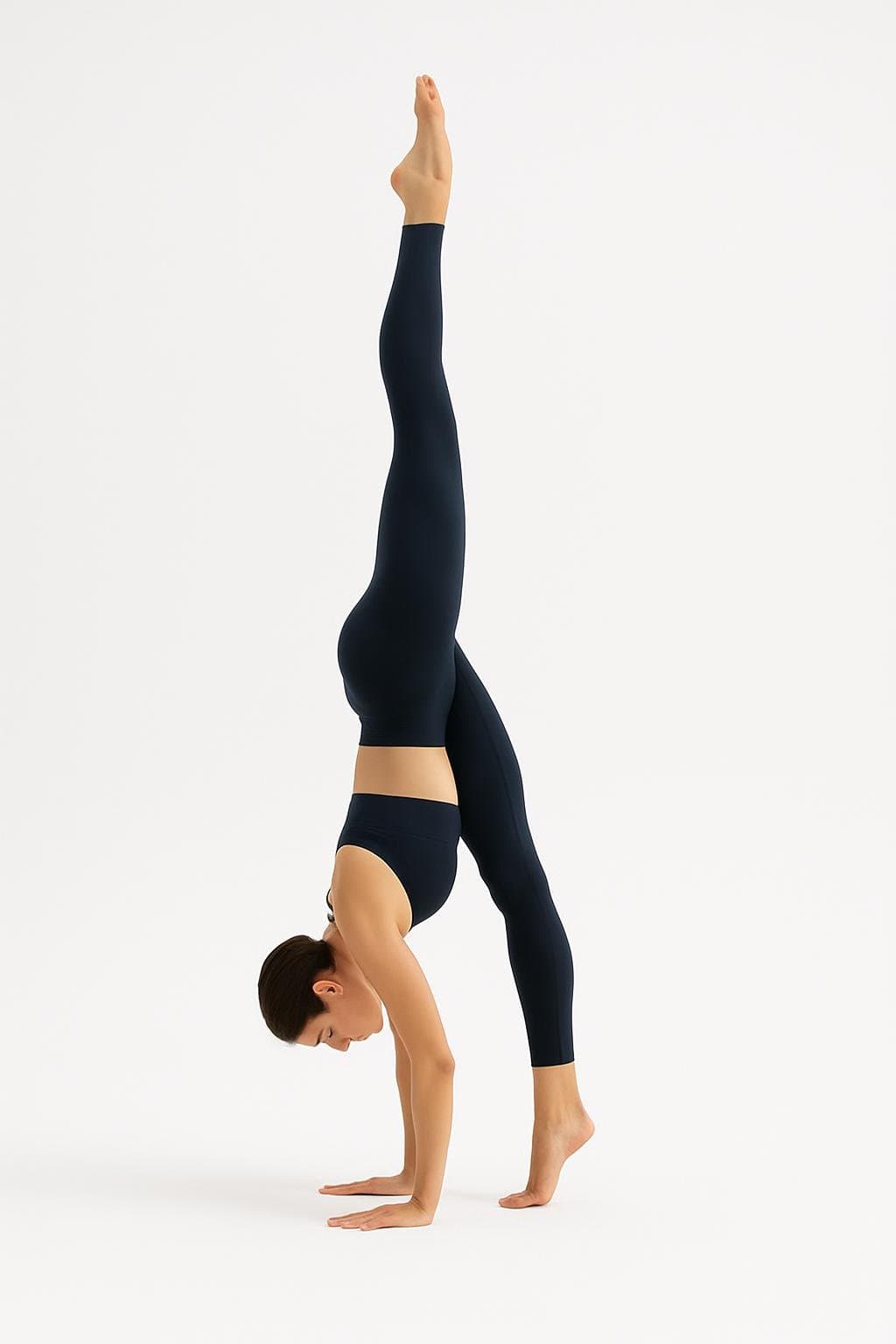 Standing Splitadvanced
Urdhva Prasarita Eka Padasana
Fold over your standing leg and reach the other leg toward the ceiling. Despite the name, how high the leg goes matters far less than keeping the fold deep and the standing hip steady — most of the pose happens in the leg on the ground.
Other categories
Or browse every pose in one list, searchable by English or Sanskrit name.