- Category
- Inversions
- Level
- advanced
- Hold
- 5–10 breaths at the wall, building to 1 minute
- Type
- Asana
- Breath
- Steady breathing throughout — hold your balance, never your breath.
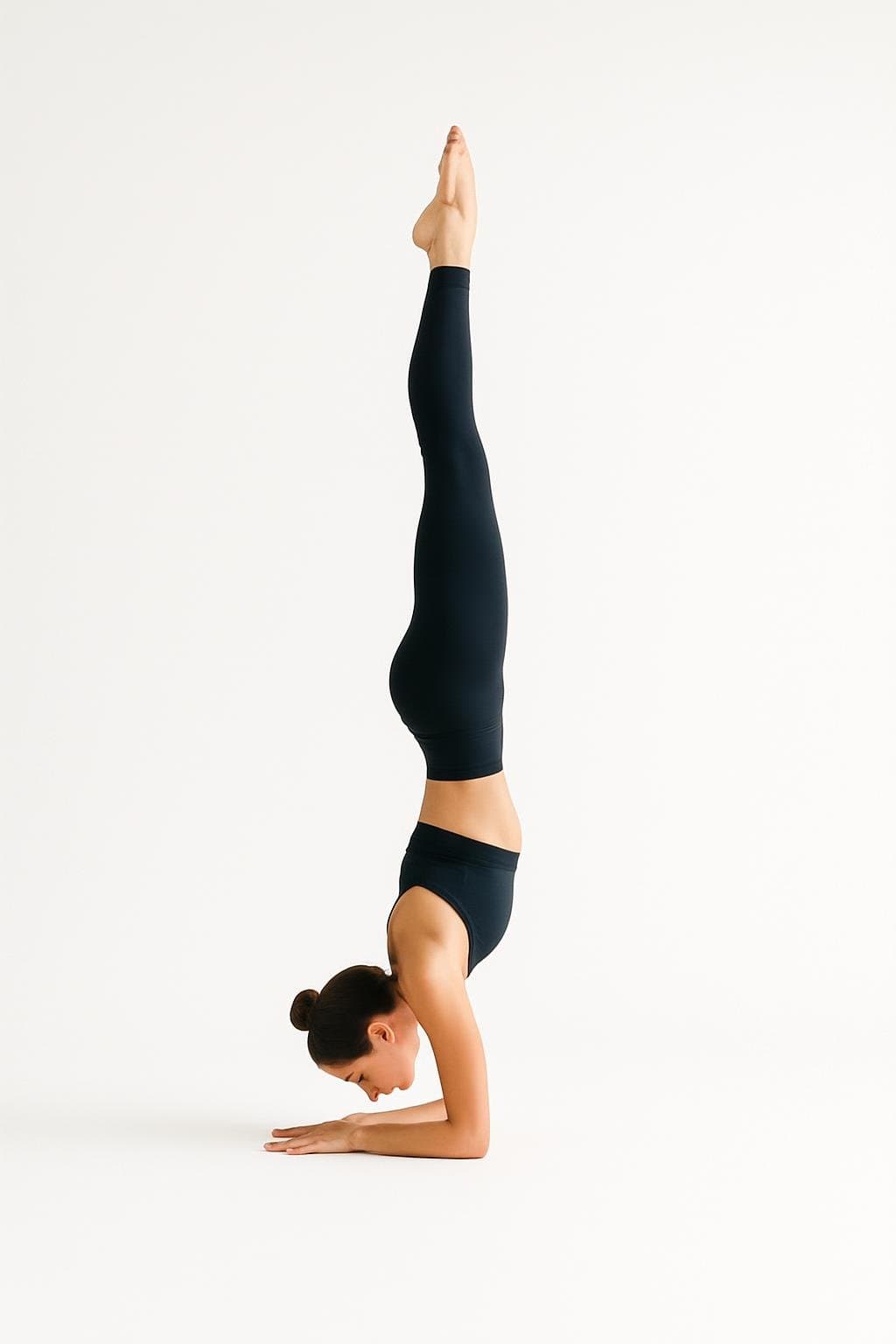
Forearm Stand
Pincha Mayurasana — "feathered peacock posture"
Also known as: Elbow Stand, Feathered Peacock
A full inversion balanced on the forearms — more stable than handstand at the base, but demanding real shoulder strength and openness. Expect a long, humbling apprenticeship at the wall.
Step by step
- 1Learn this pose at a wall — set up in dolphin pose with your fingertips a few inches from the wall so it can catch your heels.
- 2Press your forearms down firmly, parallel and shoulder-width apart; a block between the hands helps.
- 3Walk your feet in toward your elbows until your hips stack over your shoulders.
- 4Reach one leg straight up toward the ceiling.
- 5Push off the bottom foot with a small, controlled hop and let your heels land lightly on the wall.
- 6Press the floor away, draw your front ribs in, and reach up through your feet.
- 7Practice floating one heel, then both, off the wall for a breath at a time.
- 8To come down, lower one leg at a time with control and rest in child's pose.
Benefits
- ✓ Builds exceptional shoulder, arm, and core strength
- ✓ Trains balance and calm concentration upside down
- ✓ Opens the shoulders and chest through the sustained overhead position
- ✓ Keeps all weight off the head and neck, unlike headstand
Make it yours
- · Spend weeks or months in dolphin pose and dolphin push-ups before attempting to kick up.
- · Loop a strap above your elbows and squeeze a block between your hands to keep the foundation from collapsing.
- · Practice L-shaped dolphin with feet walking up a wall to feel hips over shoulders without kicking.
Take care
- Avoid with shoulder or neck injuries — the pose demands healthy, strong shoulders.
- Full inversions are generally not advised with high blood pressure, glaucoma or other eye conditions, or during pregnancy.
- There is a real risk of falling while learning; always use a wall or an experienced spotter, and skip it when tired.
This is general practice guidance, not medical advice. If something hurts, ease out of it.
Props that help here
- Yoga blanket — Folded under the hips in seated poses, under the knees in kneeling ones, under the shoulders for shoulderstand. A firm household blanket works too. find one
- Wrist wedge — Reduces the wrist angle in plank, chaturanga, and arm balances. Worth trying before concluding your wrists can't do this. find one
Affiliate links — we may earn a commission at no cost to you. All gear recommendations