- Category
- Inversions
- Level
- advanced
- Hold
- A few breaths, building to 20–30 seconds
- Type
- Asana
- Breath
- Slow and deliberate; the deep backbend shortens the breath, so keep each one full.
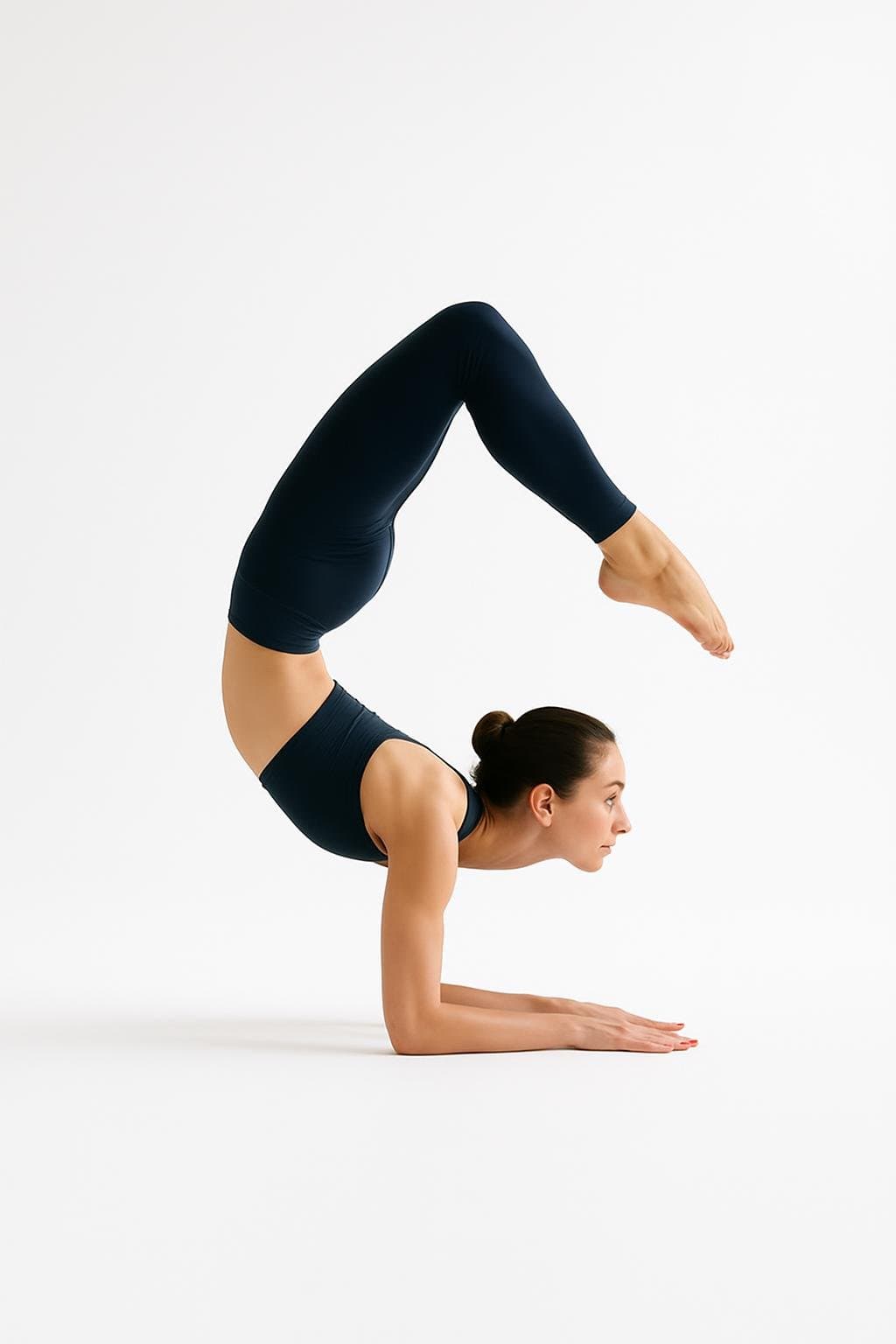
Scorpion Pose
Vrschikasana — "scorpion posture"
Forearm stand with a deep backbend, the feet arching toward the head like a scorpion's tail. One of the most demanding shapes in yoga — it should only be explored after forearm stand away from the wall is genuinely comfortable, and ideally with a teacher.
Step by step
- 1Learn this pose at a wall — kick up into forearm stand facing away from the wall, or walk into it from a backbend with a teacher, so the wall can support your feet as they drop toward your head.
- 2Establish a strong forearm stand: forearms parallel, shoulders pressing away from the floor.
- 3Lift your head and chest, shifting your gaze forward between your hands.
- 4Bend your knees and slowly let your feet travel toward your head, arching your upper back — not just your lower back.
- 5Keep pressing the floor away; the shoulders carry the pose even as the spine bends.
- 6Let your feet rest lightly on the wall, and over time work them lower with control.
- 7To exit, straighten your legs back to forearm stand and lower one leg at a time, then rest in child's pose.
Benefits
- ✓ Combines the strength of forearm stand with a profound backbend
- ✓ Opens the chest, shoulders, and hip flexors deeply
- ✓ Develops extraordinary balance, control, and body awareness
- ✓ A long-term practice goal that keeps foundational work honest
Make it yours
- · Practice forearm stand with only a slight knee bend and gaze lift — a baby scorpion — before chasing the deep arch.
- · Work backbend capacity separately in wheel and camel so the arch comes from the whole spine.
- · Rest your feet on a wall or a raised surface behind you rather than reaching for your head.
Take care
- Avoid with shoulder, neck, or lower-back injuries — this pose is unforgiving of all three.
- As a full inversion, generally not advised with high blood pressure, glaucoma or other eye conditions, or during pregnancy.
- Do not attempt until forearm stand is stable without a wall; the risk of collapsing into the backbend is real, so practice with a wall or spotter and never when fatigued.
This is general practice guidance, not medical advice. If something hurts, ease out of it.
Props that help here
- Yoga blanket — Folded under the hips in seated poses, under the knees in kneeling ones, under the shoulders for shoulderstand. A firm household blanket works too. find one
- Wrist wedge — Reduces the wrist angle in plank, chaturanga, and arm balances. Worth trying before concluding your wrists can't do this. find one
Affiliate links — we may earn a commission at no cost to you. All gear recommendations