- Category
- Inversions
- Level
- advanced
- Hold
- A few seconds at first, building to 30–60 seconds at the wall
- Type
- Asana
- Breath
- Keep breathing — short holds with steady breath beat long holds with a clenched one.
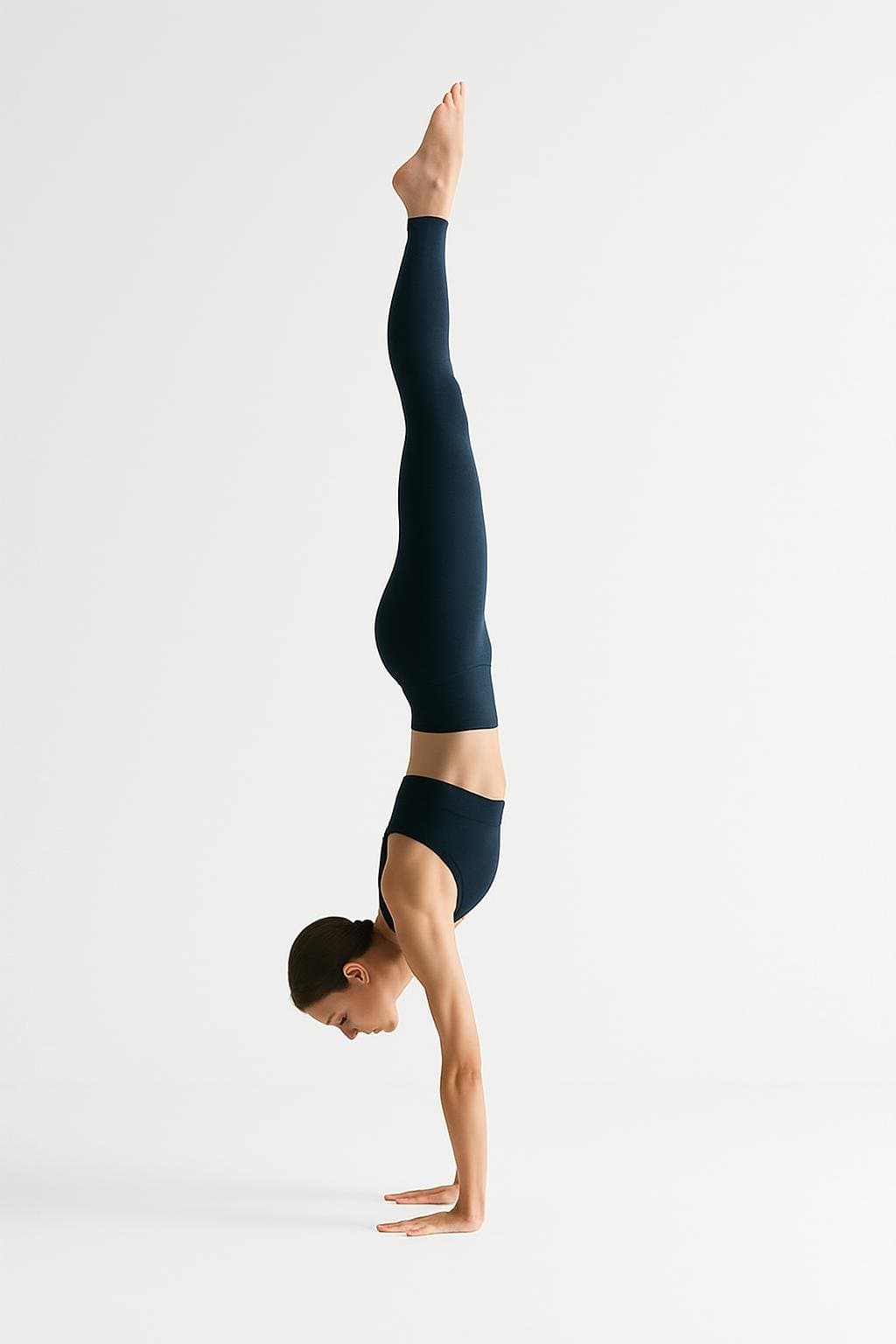
Handstand
Adho Mukha Vrksasana — "downward-facing tree posture"
Balancing fully inverted on the hands — the most demanding balance in the inversion family. Strong wrists, strong shoulders, and hundreds of patient attempts at a wall are the honest price of admission.
Step by step
- 1Learn this pose at a wall — place your hands shoulder-width apart about a hand's length from the wall, fingers spread wide.
- 2Start in a short downward dog with your shoulders stacked over your wrists.
- 3Gaze between your thumbs and reach one leg high behind you.
- 4Take small controlled hops off the bottom foot, swinging the top leg up, letting the wall catch your heels.
- 5Press the floor away hard, wrap your upper arms outward, and pull your front ribs in.
- 6Squeeze your legs together and point through your feet, making one straight line.
- 7Practice taking one heel, then both, off the wall for a moment at a time.
- 8To come down, lower one leg at a time, or learn to cartwheel out to the side with a teacher.
Benefits
- ✓ Builds full-body strength, especially wrists, shoulders, and core
- ✓ Sharpens balance, proprioception, and focus like little else
- ✓ Develops fearlessness through gradual, repeatable practice
- ✓ Energizing — most people feel awake and clear after practicing it
Make it yours
- · Build up with L-shaped handstand: feet walking up the wall, hips over shoulders, body in an L.
- · Practice handstand hops that never reach vertical — the takeoff is a skill in itself.
- · Strengthen wrists and shoulders in plank and downward dog long before kicking up.
Take care
- Avoid with wrist, shoulder, or neck injuries — the wrists bear everything here.
- Full inversions are generally not advised with high blood pressure, glaucoma or other eye conditions, or during pregnancy.
- Falling is part of learning; use a wall or spotter, clear the space around you, and never practice it rushed or tired.
This is general practice guidance, not medical advice. If something hurts, ease out of it.
Props that help here
- Yoga blanket — Folded under the hips in seated poses, under the knees in kneeling ones, under the shoulders for shoulderstand. A firm household blanket works too. find one
- Wrist wedge — Reduces the wrist angle in plank, chaturanga, and arm balances. Worth trying before concluding your wrists can't do this. find one
Affiliate links — we may earn a commission at no cost to you. All gear recommendations